
Loading, please wait...
LOT 0575
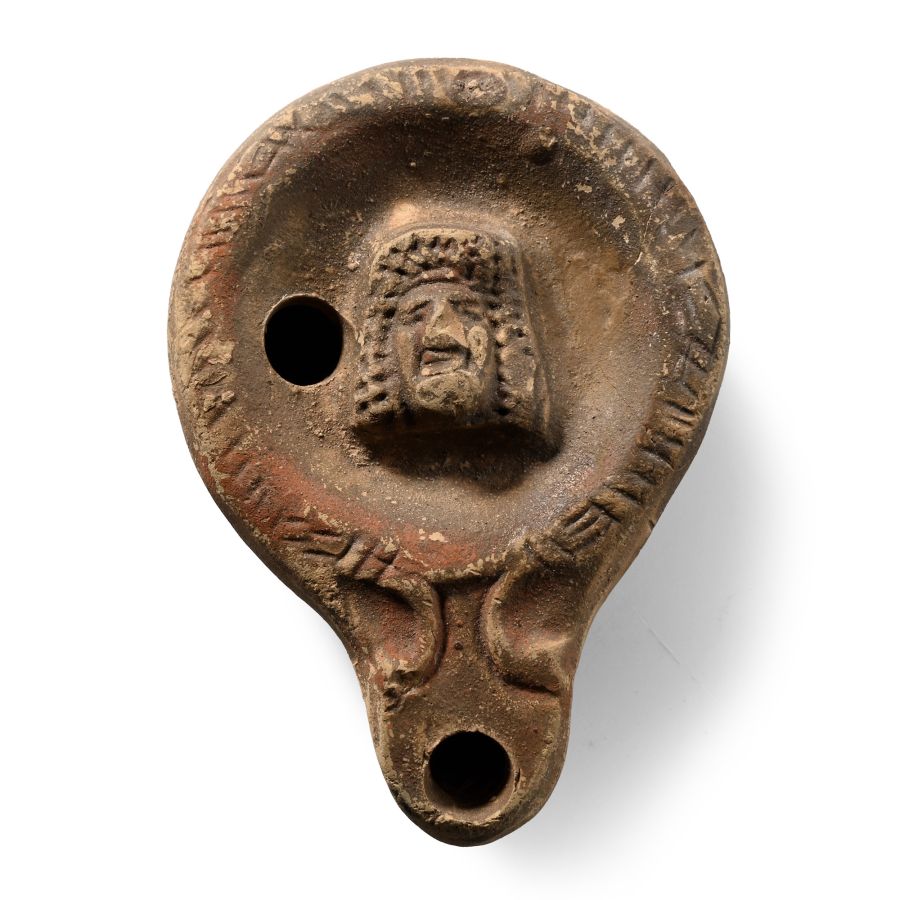
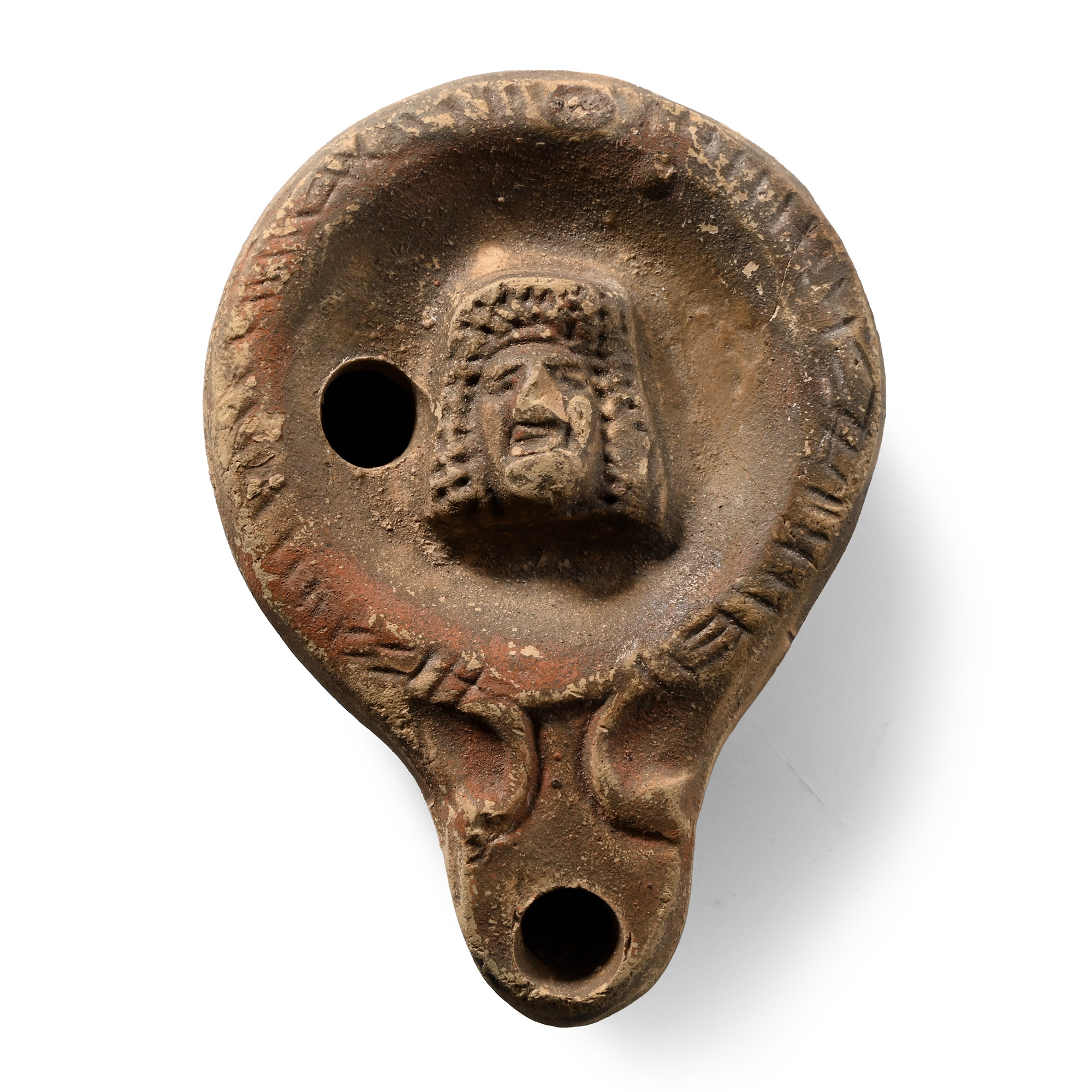
Roman Terracotta Oil Lamp with Actor's Mask
CIRCA 1ST-2ND CENTURY A.D.
3 in. (34 grams, 75 mm).
Small oil lamp decorative rim surrounding the discus with an actor's mask, inked collector's number 'L100' on the base.
ProvenanceEx important German collection, 1960-1990.
LiteratureSee Bussière, J. & Lindros Wohl, B., Ancient Lamps in the J. Paul Getty Museum, Malibu, 2017, nos.225ss, pp.153ss., for type (Bailey type B group iv).
CONDITIONTimeLine Auctions follows a vetting process to ensure the authenticity and legality of all items, reinforcing our commitment to integrity and responsible trading. Each antiquity, antique, and coin lot undergoes thorough examination by a vetting committee of at least ten external specialists, professional trade association members, scientists, and archaeologists: Our Vetting Process
AUCTIONS:
TimeLine is a leading auction house specialising in antiquities, ancient art, collectables, natural history, coins, medals, and books. Our auctions offer museums, collectors, historians, and enthusiasts the opportunity to acquire unique and historically significant pieces.
-
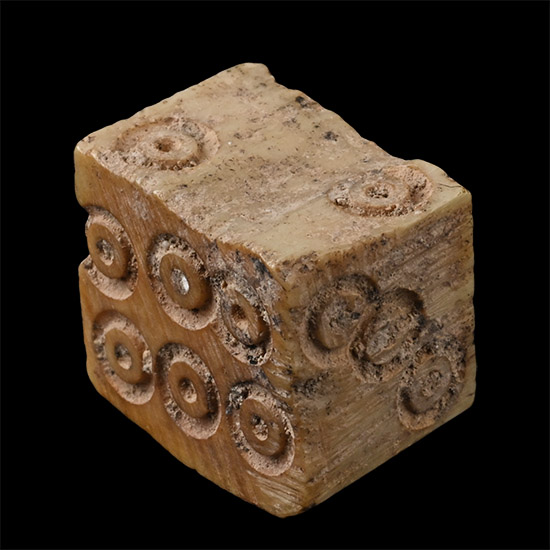
Roman Bone Gaming Die
Circa 1st-4th century A.D.Sold for (Inc. bp): £104
Polygonal die with ring-and-dot markings arranged 1:6, 2:5, 3:4. 2.9 grams, 13 mm
Ex Cambridgeshire, UK, collection, 1990s. -
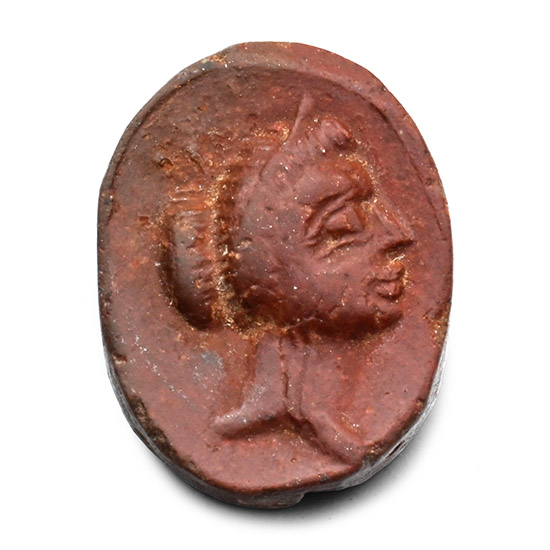
Roman Brown Stone Cameo with Female Bust
2nd-3rd century A.D.Sold for (Inc. bp): £33
Ellipsoid in plan with a low-relief female profile portrait bust with hair dressed in a chignon. 0.57 grams, 13 mm
Property of a European gentleman, acquired from the estate of a London collector (formed before 2000). -
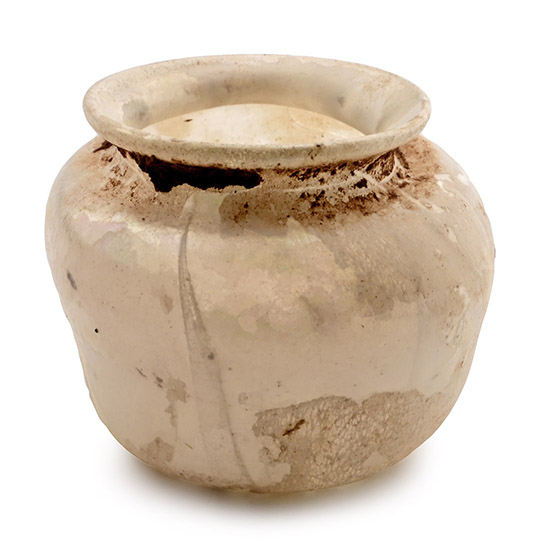
Roman Glass Vase
4th century A.D.Estimate: £100 - 140 (‡+bp*)
Opening Bid: £50
Squat in profile with sloped shoulder, everted flange rim. 13.7 grams, 50 mm
Acquired in the late 1980s. Private collection, thence by descent. Private collection, since the late 1990s.
