
Loading, please wait...
LOT 0582
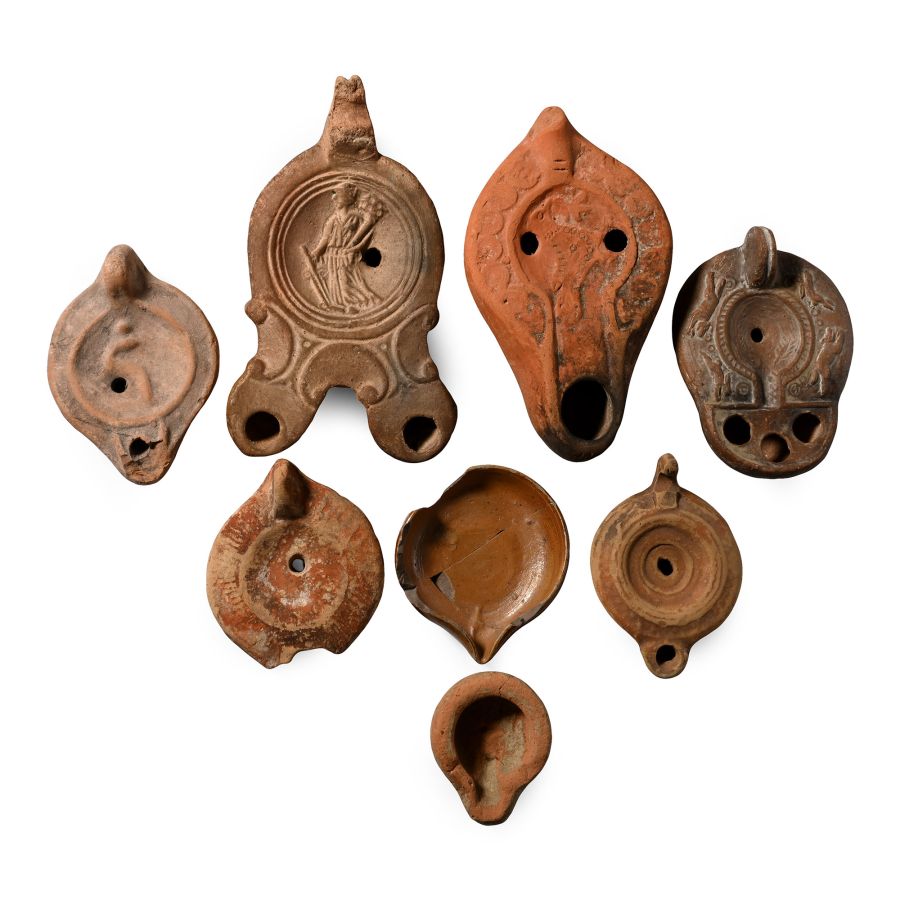
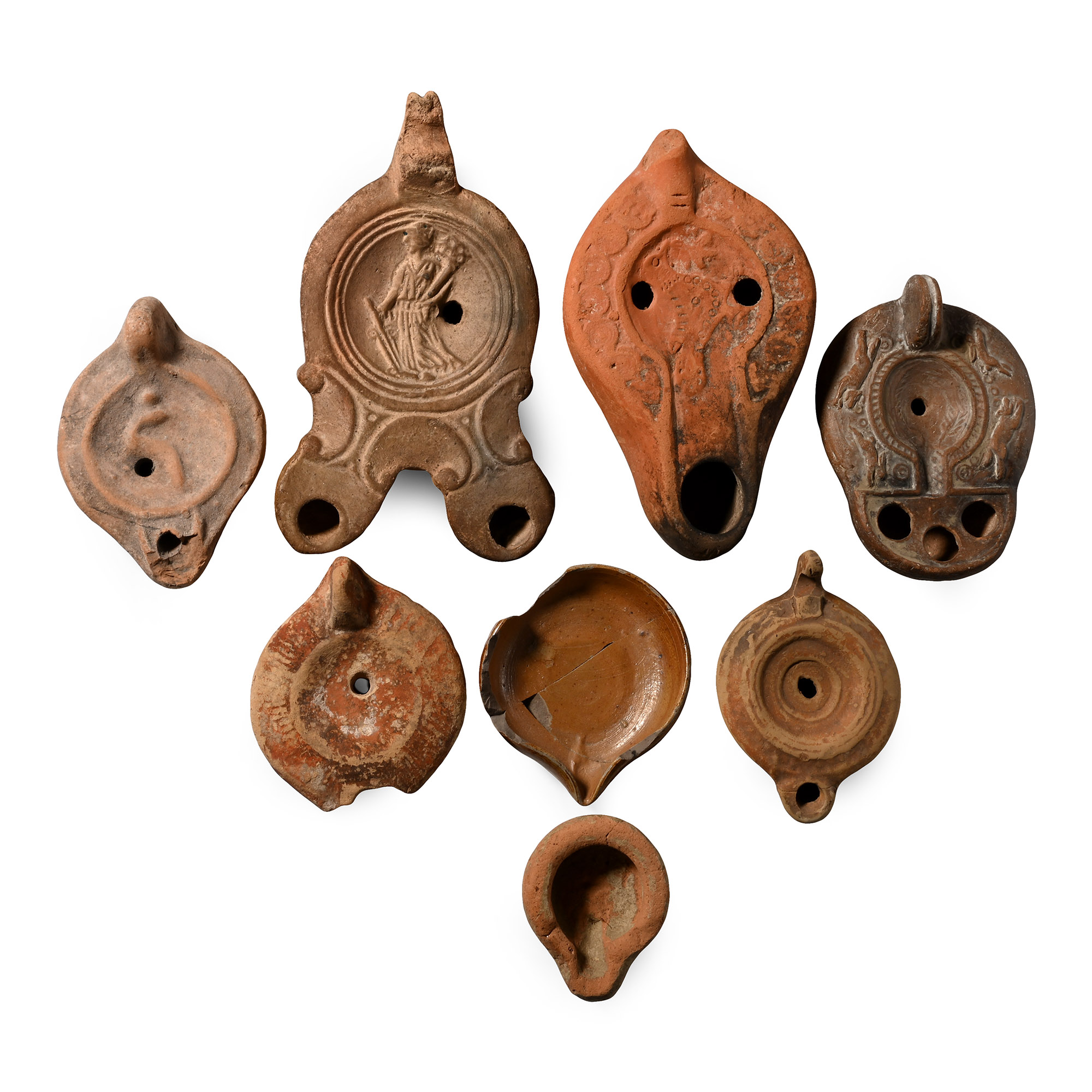
Roman Terracotta Oil Lamp Collection
1ST CENTURY B.C.-6TH CENTURY A.D.
2 1/8 - 5 3/4 in. (743 grams total, 5.5-14.8 cm).
Mixed group of eight oil lamps, including one with a triple nozzle and dogs chasing hares on the shoulder, a double-spouted oil lamp with Abundantia holding a cornucopia, one with a bird in profile holding a branch in its beak, and others. [8]
ProvenanceFrom an important collection of lamps, Germany, 1970s.
LiteratureCf. for similar examples Bussière, J. & Lindros Wohl, B., Ancient Lamps in the J. Paul Getty Museum, Malibu, 2017, no.1 (Vessberg type 1); no.156 (Loeschcke III); nos.278-280 (Loeschcke VIII; Bussière form D I 3); no.360 (Loeschcke VIII; Bussière form D X 1a); no.493 (Atlante X; Hayes II A); Brooner, O., Isthmia, volume III, Terracotta Lamps, Princeton, 1977, fig.9 (Type 1); Krogulska, M., ‘Clay lamps from the Temenos of Allat in Palmyra’ in Polish Archaeology in the Mediterranean 28/1, pp.385-422, fig.2.
CONDITIONTimeLine Auctions follows a vetting process to ensure the authenticity and legality of all items, reinforcing our commitment to integrity and responsible trading. Each antiquity, antique, and coin lot undergoes thorough examination by a vetting committee of at least ten external specialists, professional trade association members, scientists, and archaeologists: Our Vetting Process
AUCTIONS:
TimeLine is a leading auction house specialising in antiquities, ancient art, collectables, natural history, coins, medals, and books. Our auctions offer museums, collectors, historians, and enthusiasts the opportunity to acquire unique and historically significant pieces.
-
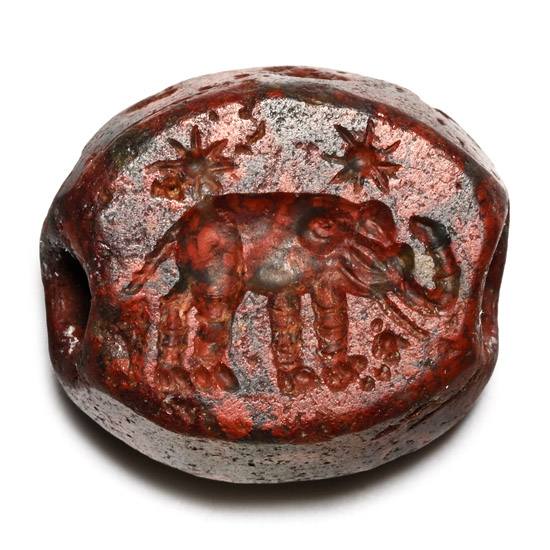
Roman Red Variegated Gemstone with Elephant
3rd century A.D.Sold for (Inc. bp): £1,040
Scaraboid type with incuse design to the underside of an elephant with stars above; supplied with a museum-quality impression. 3.04 grams, 17 mm
From the private collection of a European gentleman (1942-2024), formed since the 1970s.
The Romans first encountered elephants in Pyrrhos' army, and the representation of elephants in Roman art begins from this period. Victorious emperors like Caesar and Vespasian celebrated elephants on their coins. Apart from the celebration of elephants as ‘war machines’, the image of elephants was linked to other aspects in the Roman Imperial Period. Before becoming emperor, Elagabalus was one of the priests of Helios-Sun worship in Emesa. He had elephant depictions on his coins during his reign. The elephants raise their heads to the sun when the sun rises. Thus, the sun is represented on the gemstone together with the elephant. -
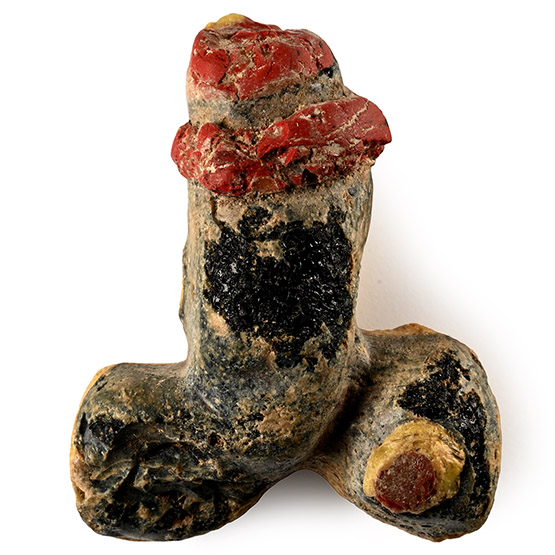
Roman Glass Phallic Amulet
1st century B.C.-1st century A.D.Sold for (Inc. bp): £468
Modelled in the round with applied red-glass collar, pierced through the shaft for suspension. 11.4 grams, 32 mm
Acquired in the mid 1980s-1990s. Private collection, Switzerland, thence by descent. Private collection, since the late 1990s.
In the Roman world, the phallus was a symbol of luck or fertility, and it was believed to have apotropaic functions. Pendants, amulets and small objects were worn by all sorts of people as symbols of protection, especially by young children, according to Varro and Pliny the Elder. The phallus is also commonly found on reliefs, frescoes and lamps from the Graeco-Roman world. -
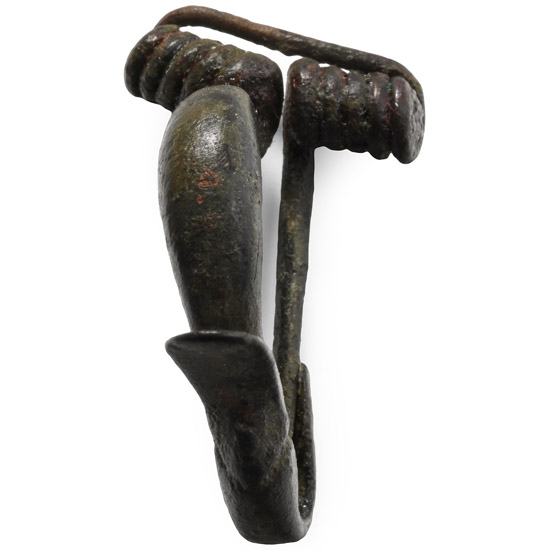
Romano-Celtic Bronze Duck Head Bow Brooch
2nd-3rd century A.D.Sold for (Inc. bp): £65
Comprising a deep bow and a recurved footplate formed as a duck's head, with a coiled pin. 6.37 grams, 27 mm
From the private coin collection of a West London, UK, gentleman, formed since the mid 1980s.
