
Loading, please wait...
LOT 0648
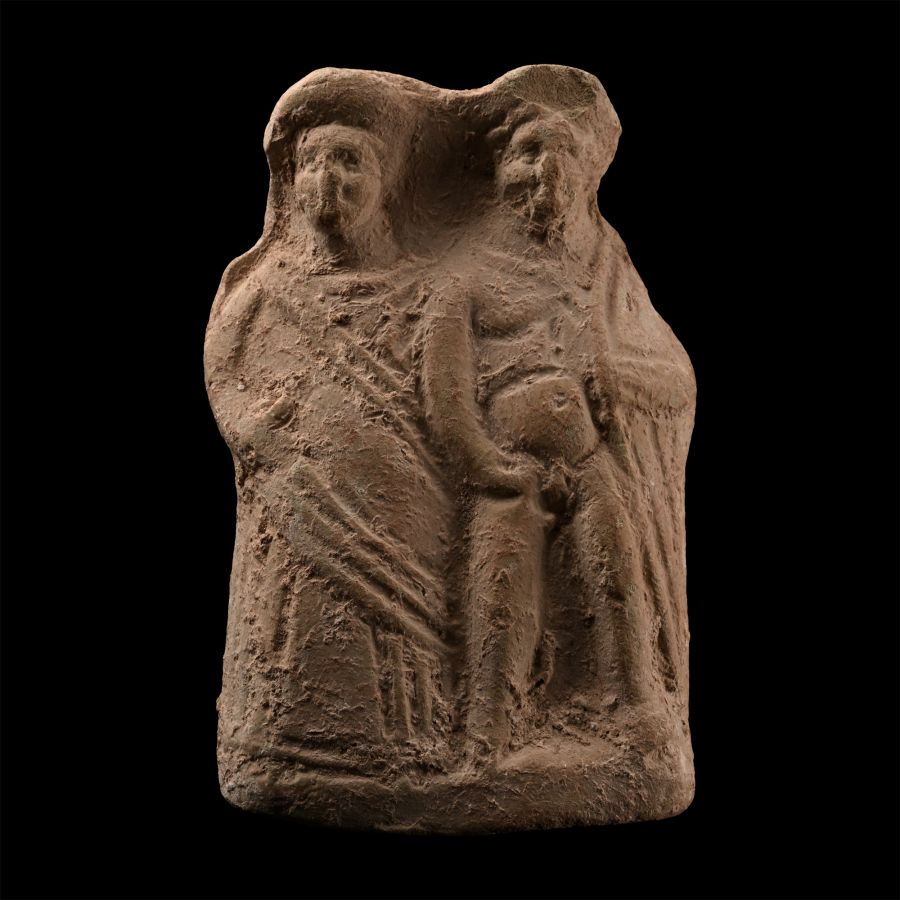
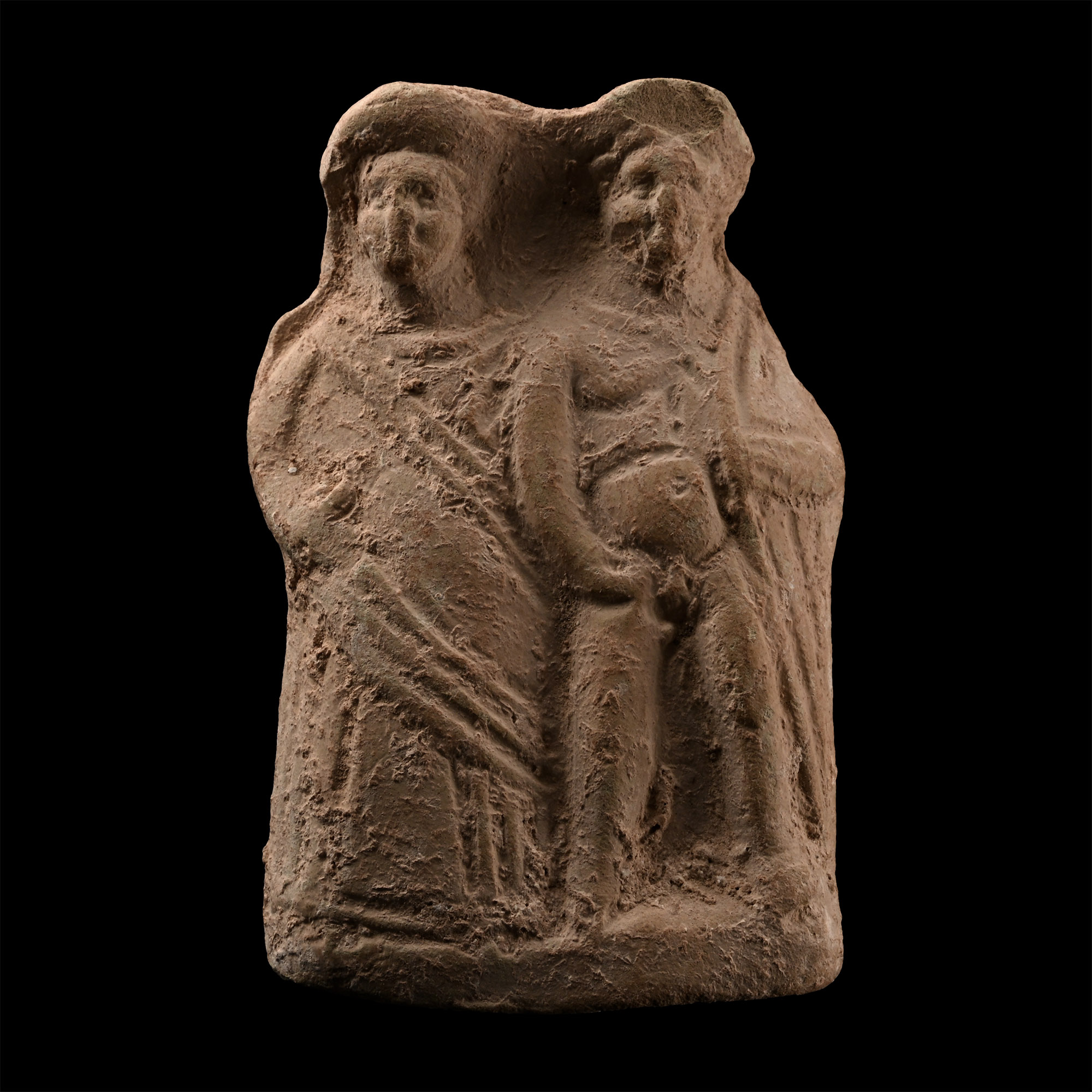
Roman Terracotta of a Couple
1ST-4TH CENTURY A.D.
3 3/4 in. (122 grams, 95 mm).
Modelled in the half-round, two standing figures in floor-length robes.
ProvenanceEx private collection, London, UK, 1969-1999.
CONDITIONTimeLine Auctions follows a vetting process to ensure the authenticity and legality of all items, reinforcing our commitment to integrity and responsible trading. Each antiquity, antique, and coin lot undergoes thorough examination by a vetting committee of at least ten external specialists, professional trade association members, scientists, and archaeologists: Our Vetting Process
AUCTIONS:
TimeLine is a leading auction house specialising in antiquities, ancient art, collectables, natural history, coins, medals, and books. Our auctions offer museums, collectors, historians, and enthusiasts the opportunity to acquire unique and historically significant pieces.
LOT 0648
Roman Terracotta of a Couple
Estimate £250 - 350€290 - 410 (for guidance only)$340 - 470 (for guidance only)
-
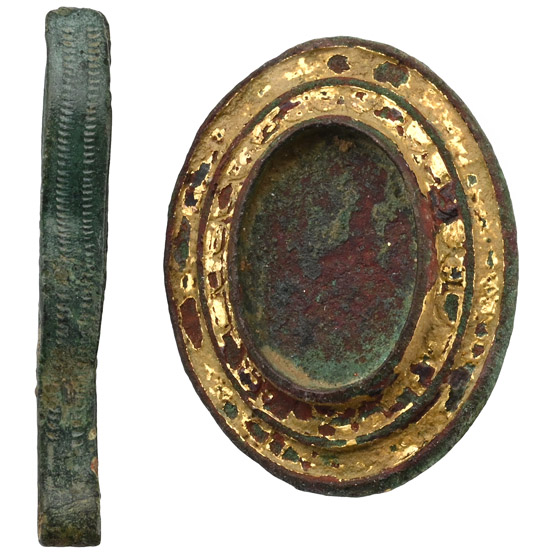
Roman Gilt Bronze Brooch and Medieval Tweezers
2nd-15th century A.D.Sold for (Inc. bp): £52
Comprising: ellipsoid plate brooch with gilt border and central cell, pin-lug and catch to reverse; flat-section tweezers found in association with the brooch. 12.5 grams total, 32-37.6 mm
Found whilst searching with a metal detector near Dullingham, East Cambridgeshire, UK, on Friday 13th December 2024 and Thursday 1st May 2025. Accompanied by copies of the British Museum's Portable Antiquities Scheme (PAS) report nos.SF-9D6556 and SF-CF180C. -
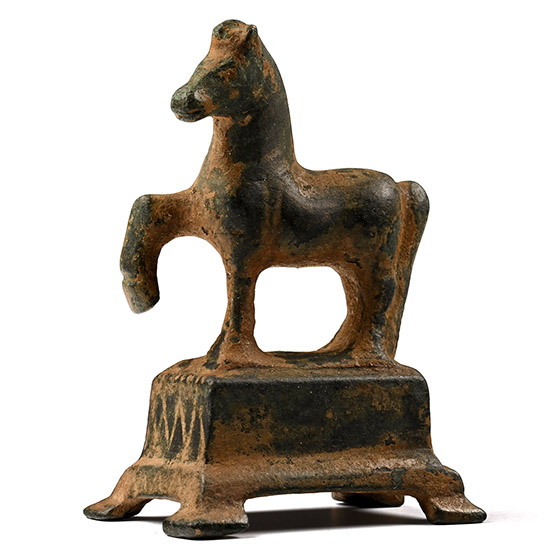
Roman Bronze Standing Horse Statuette
1st-2nd century A.D.Sold for (Inc. bp): £845
Modelled in the round as a prancing horse standing on a rectangular plinth base; voluminous mane swept to one side and head turned to the left. 80 grams, 60 mm
Acquired in the mid 1980s-1990s. Private collection, Switzerland, thence by descent. Private collection, since the late 1990s. -
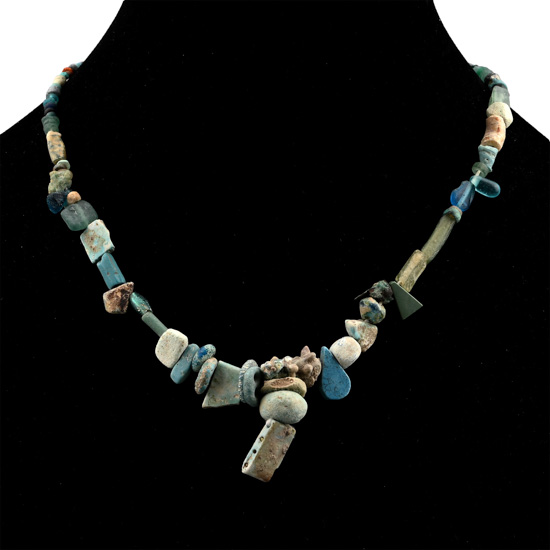
Roman and Other Mixed Bead Necklace String
1st-4th century A.D. and laterSold for (Inc. bp): £52
Mixed group of graduated beads in glass, faience and stone, including some amuletic beads and pendants; restrung. 21.57 grams, 36 cm
From London, UK, gallery collection, 1990s.
