
Loading, please wait...
LOT 0677
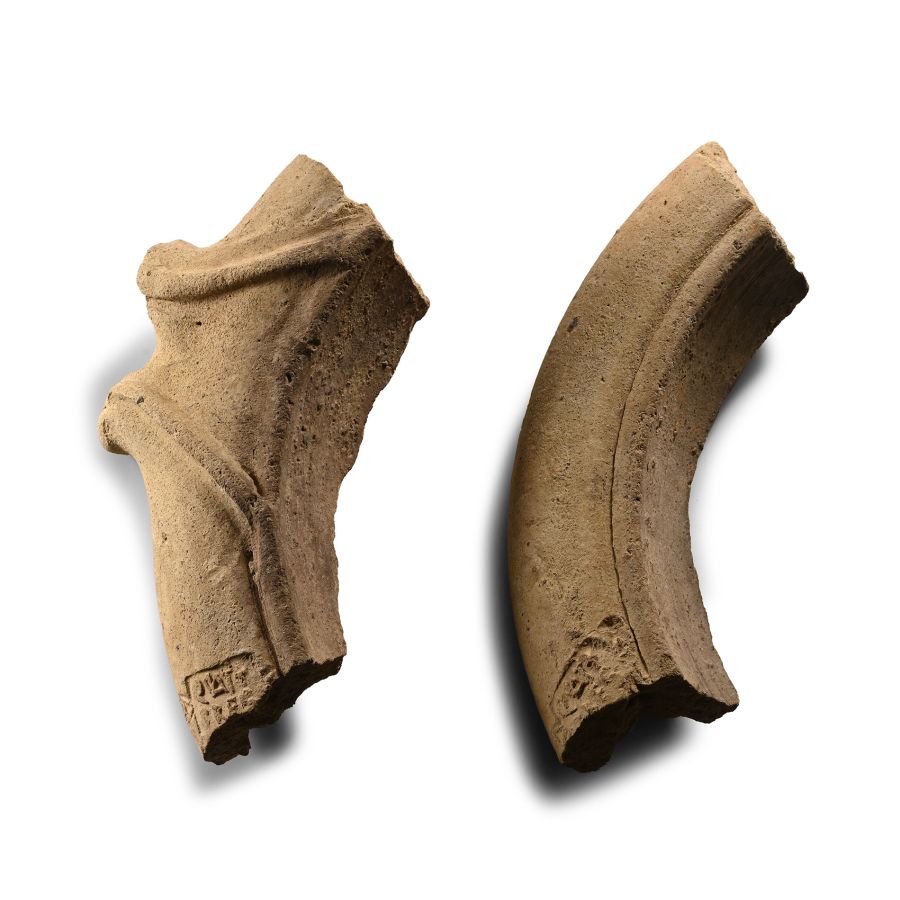
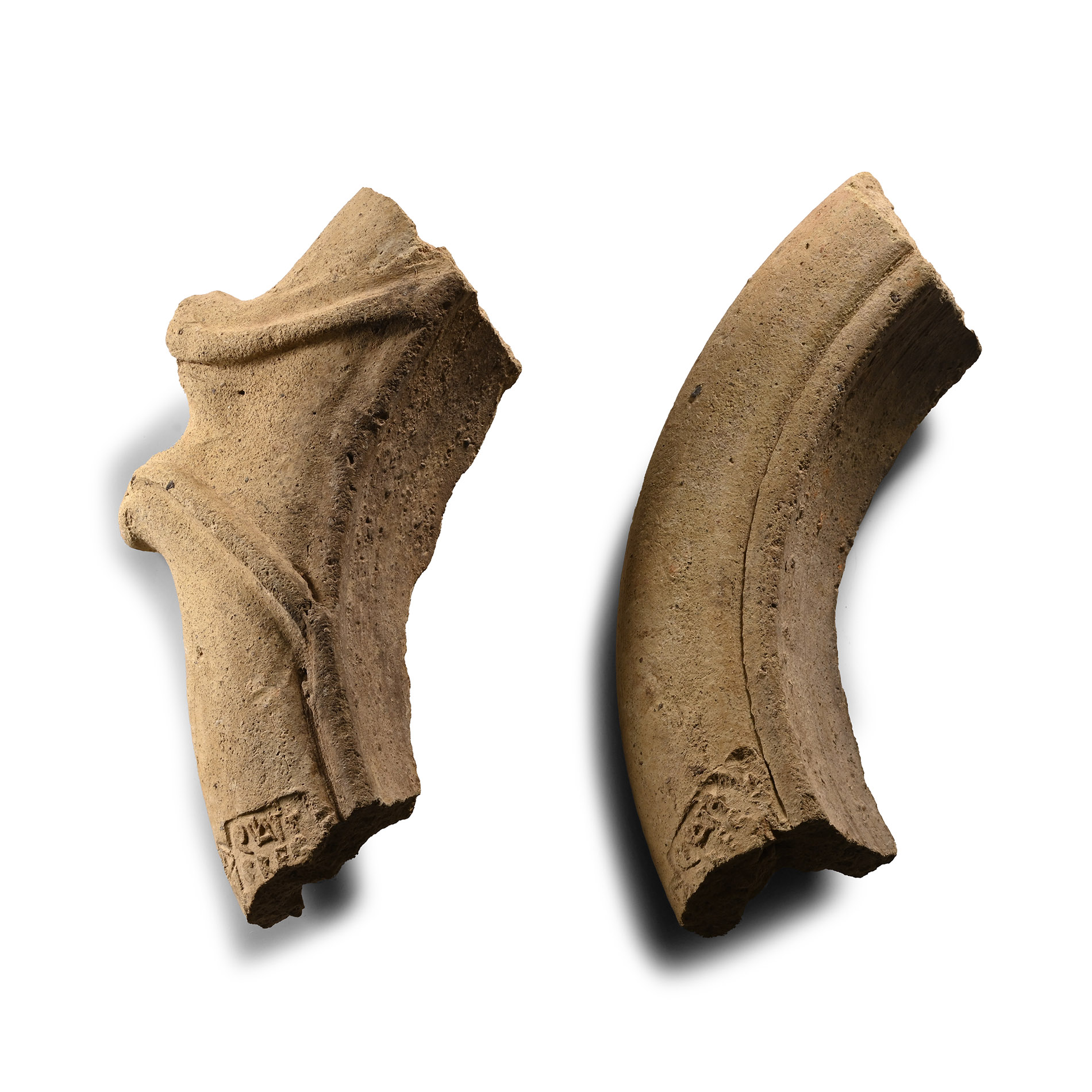
Roman Terracotta Mortarium Fragments with Maker's Stamps in Tabula Ansata
2ND CENTURY A.D.
6 7/8 - 7 3/4 in. (707 grams total, 17.5-19.8 cm).
Two fragments of the returned rim of a mortarium, one with the convergent ribs for the pouring lip; each stamped with legend 'Q[I]V[S]-A / CRE[S]C = Quintus Iustius Crescens ?' in tabula ansata. [2, No Reserve]
ProvenanceFound UK, possibly from Lincolnshire.
From the collection of a late East Anglian teacher and antiquarian who retired to the Isle of Wight in Hampshire, UK.
He amassed a large collection of objects between the 1960s-1980s.
See Darling, M.J., Roman Pottery from the Upper Defences, Lincoln Archaeological Trust. Monograph, 16/2, Council for British Archaeology for the Lincoln Archaeological Trust, London, (1984), pp.69-73, for similar.
FootnotesSignificant mortaria were manufactured at several sites in and around Lincoln during 2nd century A.D.; they had a wide distribution across northern England and southern Scotland. Quintus Iustius Crescens was active producer in Lincolnshire during 100-140 A.D.
CONDITIONTimeLine Auctions follows a vetting process to ensure the authenticity and legality of all items, reinforcing our commitment to integrity and responsible trading. Each antiquity, antique, and coin lot undergoes thorough examination by a vetting committee of at least ten external specialists, professional trade association members, scientists, and archaeologists: Our Vetting Process
AUCTIONS:
TimeLine is a leading auction house specialising in antiquities, ancient art, collectables, natural history, coins, medals, and books. Our auctions offer museums, collectors, historians, and enthusiasts the opportunity to acquire unique and historically significant pieces.
LOT 0677
Roman Terracotta Mortarium Fragments with Maker's Stamps in Tabula Ansata
Sold for (Inc. bp): £46
-

Late Roman Bronze Oil Lamp with Gryphon Handle and Stand
5th-7th century A.D.Sold for (Inc. bp): £20,800
Comprising a rounded lamp with carinated body and elongated nozzle emerging from a lotus flower, a dolphin perching on top of one of the petals, the nozzle formed as an eight-pointed star with projecting knobs; a raised Chi Rho symbol to both sides of the body and a hinged lid to the top; the upcurving handle formed as a gryphon head emerging from the stem of a lotus flower, the gryphon holding a round object in its open beak, the mane formed of four spikes topped with spheres, carrying a Chi Rho topped with a dove between its ears; later modified to mount on a balustered tripod stand with lion's paw feet, reel-shaped drip tray and a tapering pricket to accept the lamp. 4.21 kg, 47 cm high
German art market. European private collection, 1970s-early 2000s. Acquired from the above; thence by descent. Private collection, London, UK. Accompanied by an academic report by Dr Raffaele D’Amato. This lot has been checked against the Interpol Database of stolen works of art and is accompanied by search certificate number no.12347-225589. -
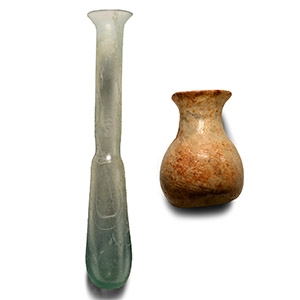
Roman Glass Vessel Group
3rd-4th century A.D.Sold for (Inc. bp): £104
Comprising: a slender pale blue unguentarium with flared mouth; squat piriform jar with dimple base. 24 grams total, 4.5-11 cm
Francesc Cambó i Batlle (1876-1947) a prominent Spanish politician, art patron and philanthropist. Gifted to his friend, the archaeologist Josep Gilbert i Buch. Acquired from Gilbert's family by the present owner's grandfather in the early 1980s. Private collection of a European noble.
Francesco Cambó i Batlle was a notable figure in early 20th-century Spain, best known for his role in politics as a leader of the Catalan nationalist movement and as a patron of the arts. He was a key benefactor of the Museo del Prado and left a significant legacy through his art collections. His deep connection to the cultural and artistic life of Spain makes items from his collection particularly valuable and historically significant. -

Roman Bronze Peacock Statuette
3rd-4th century A.D.Sold for (Inc. bp): £78
With rounded body and small lateral wings, broad fanned tail with radiating lines and ring-and-dt motifs; mounted on a custom-made stand. 60.7 grams total, 75 mm including stand
From a collection acquired on the UK art market from various auction houses and collections mostly before 2000. From an important Cambridgeshire estate; thence by descent.
The peacock had a dual symbolism in the Graeco-Roman world. In the pagan world it was the symbol of the goddess Hera (Roman Juno) and represented her beauty and immortality. In the Roman-Christian world it became a symbol of the resurrection of Christ, owing to its yearly moult and regrowth of its spectacular feathers.
