Loading, please wait...

Use mousewheel to zoom in and out, click to enlarge

Details

LOT 0651

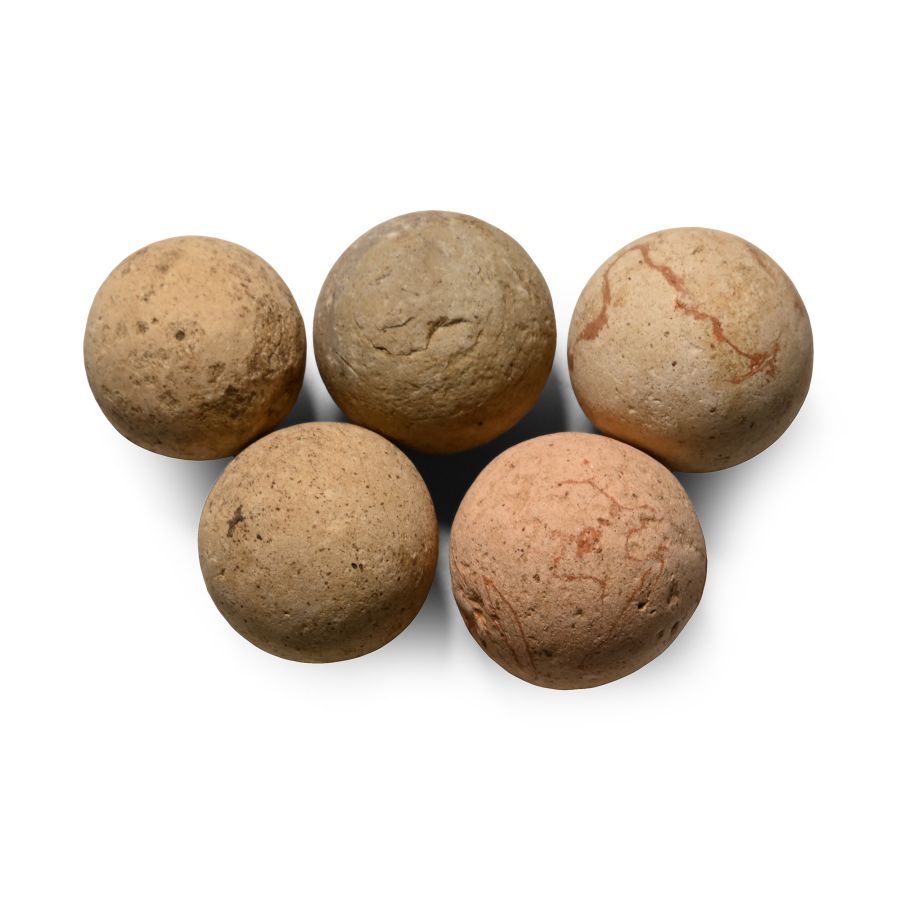
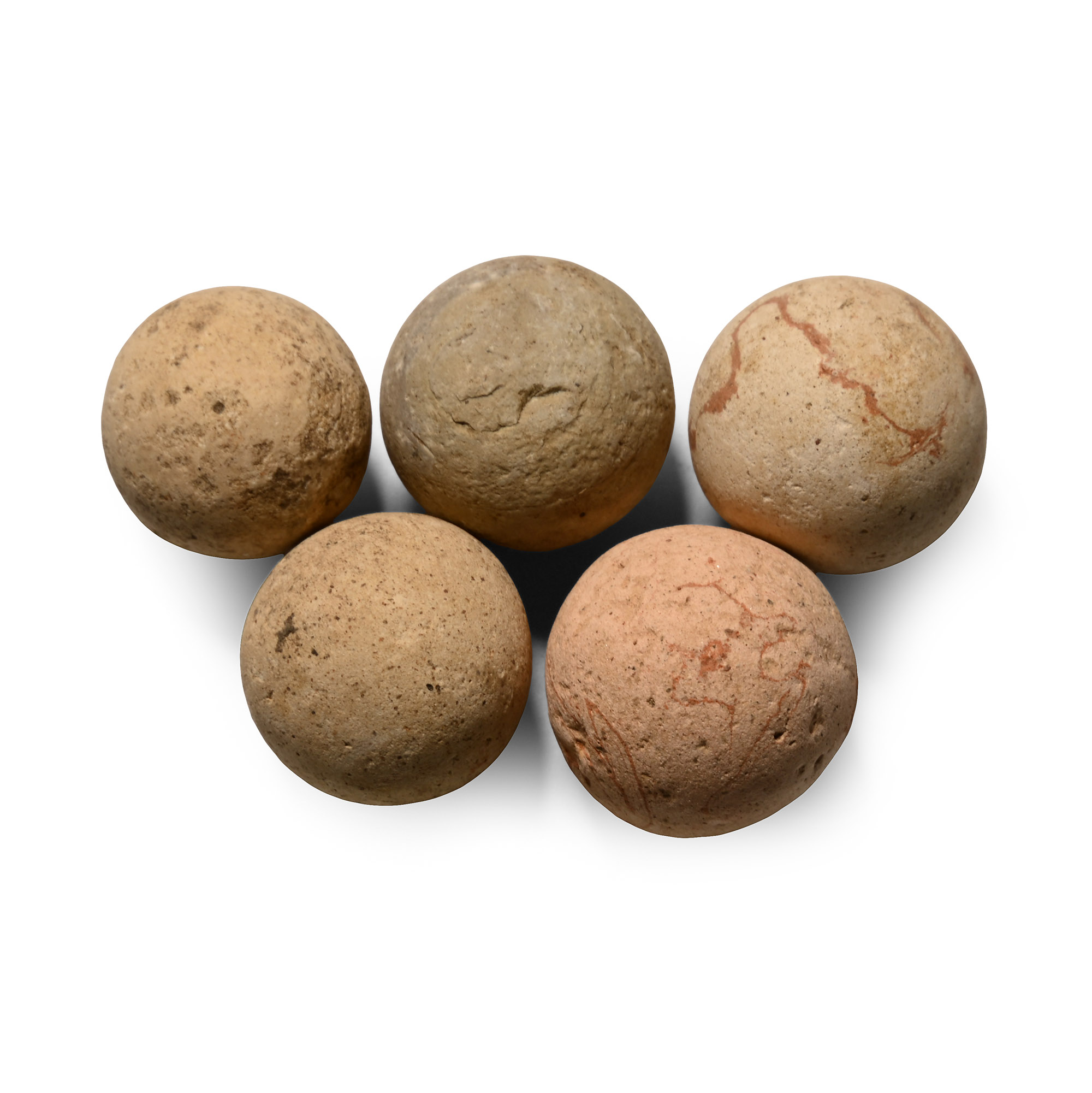
Roman Terracotta Marble Group

CIRCA 1ST-4TH CENTURY A.D.

1/2 - 5/8 in. (17 grams total, 13.6-15.7 mm).

Comprising five spherical marbles. [5, No Reserve]

Provenance

From the collection of a Buckinghamshire, UK, collector established from the earlier 1960s.

CONDITION

VETTING:

TimeLine Auctions follows a vetting process to ensure the authenticity and legality of all items, reinforcing our commitment to integrity and responsible trading. Each antiquity, antique, and coin lot undergoes thorough examination by a vetting committee of at least ten external specialists, professional trade association members, scientists, and archaeologists: Our Vetting Process


AUCTIONS:

TimeLine is a leading auction house specialising in antiquities, ancient art, collectables, natural history, coins, medals, and books. Our auctions offer museums, collectors, historians, and enthusiasts the opportunity to acquire unique and historically significant pieces.

LOT 0651

Roman Terracotta Marble Group

Sold for (Inc. bp): £169

Print page

RELATED LOTS

  • Roman Terracotta Bullae, Tesserae or Token Group
    Roman Terracotta Bullae, Tesserae or Token Group
    3rd century B.C.-1st century A.D.

    Sold for (Inc. bp): £65

    A mixed group of ceramic bullae, tesserae or theatre tokens bearing low-relief motifs, mainly consisting of profile busts of deities. 32 grams total, 14-20 mm


    From the private collection of a European gentleman (1942-2024), formed since the 1970s.

    The term 'tessera' was used in Roman times to convey the Greek term σύμβολον (token). Small tiles are known as tokens, often shaped like coins, made of metal (copper, lead, iron), clay, bone, wood, or glass, stamped as well as engraved. The tokens, however, are not exclusively coin-shaped, as the Latin term 'tessera' suggests by etymologically referring to a square or at least a four-sided shape and confirmed in several cases by material remains of the past. Tokens and tesserae seem to have been used both in Athens and Rome for the distribution of goods. According to written sources, the term token is identified with credentials of the official authorities. They have also been interpreted as tokens of identity, as entrance tickets to theatre performances, tribunals or assemblies of citizens, archival material of seal engraving, as pawns in games, Charon’s obols and even as amulets.

    Lot Details

  • Roman Limestone Stele with Nude Putti
    Roman Limestone Stele with Nude Putti
    2nd-3rd century A.D. and later

    Sold for (Inc. bp): £22,100

    Rectangular in plan with recessed panels to the lower edge, central bust of the deceased boy in a tondo supported by two nude horizontal putti with their legs extended towards a short column; deep undercuts to the columns and recess; later inscription in seriffed capitals 'DM / Q LOLLIVS / LOLLIANVS / VIXIT ANNIS VI / MENSES.V. DIES .XVIII.' 40.1 kg, 38 x 61.5 cm


    From the private Netherlands collection of Mr Edward P. Van Dijk (1942-2024); his collection formed since the 1970s. This lot has been checked against the Interpol Database of stolen works of art and is accompanied by search certificate number no.13243-251959.

    The inscription reports the usual dedication to the deceased, in this case a young boy six years of age: 'To the manes (spirits of the dead), Q(uintus) Lollius Lollianus, he lived 6 years, 5 months and 18 days'.

    Lot Details

  • Roman Bronze Three-Dimensional Vessel Mount
    Roman Bronze Three-Dimensional Vessel Mount
    2nd-3rd century A.D.

    Estimate: £2,500 - 3,500 (‡+bp*)

    Opening Bid: £1,250

    Comprising a plaque of three conjoined lobes with segmented border; at the top, a loop with segmented rim; vignette with a nude male with shoulder-length hair embracing a taller bearded figure with kilt and mantle to left shoulder (Hercules?); below, a satyr with horns and goat's legs beset by hunting dogs. 286 grams, 13.8 cm


    Acquired in 1992. Private collection, thence by descent. Private collection, since the late 1990s. This lot has been checked against the Interpol Database of stolen works of art and is accompanied by a search certificate number no.12865-241702.

    Vessel mounts of this form are not a commonly recovered artefact type, and the presence of two figures instead of one is a very singular feature. We can presume that the mount was attached to a vessel of large dimensions and of a certain importance.

    Lot Details

Stay up-to-date with the latest from TimeLine Auctions by joining our mailing list