
Loading, please wait...
_900x900.jpg "Roman Terracotta Lion Rhyton")
_200x200.jpg "Roman Terracotta Lion Rhyton")
.jpg "Roman Terracotta Lion Rhyton")
LOT 0113
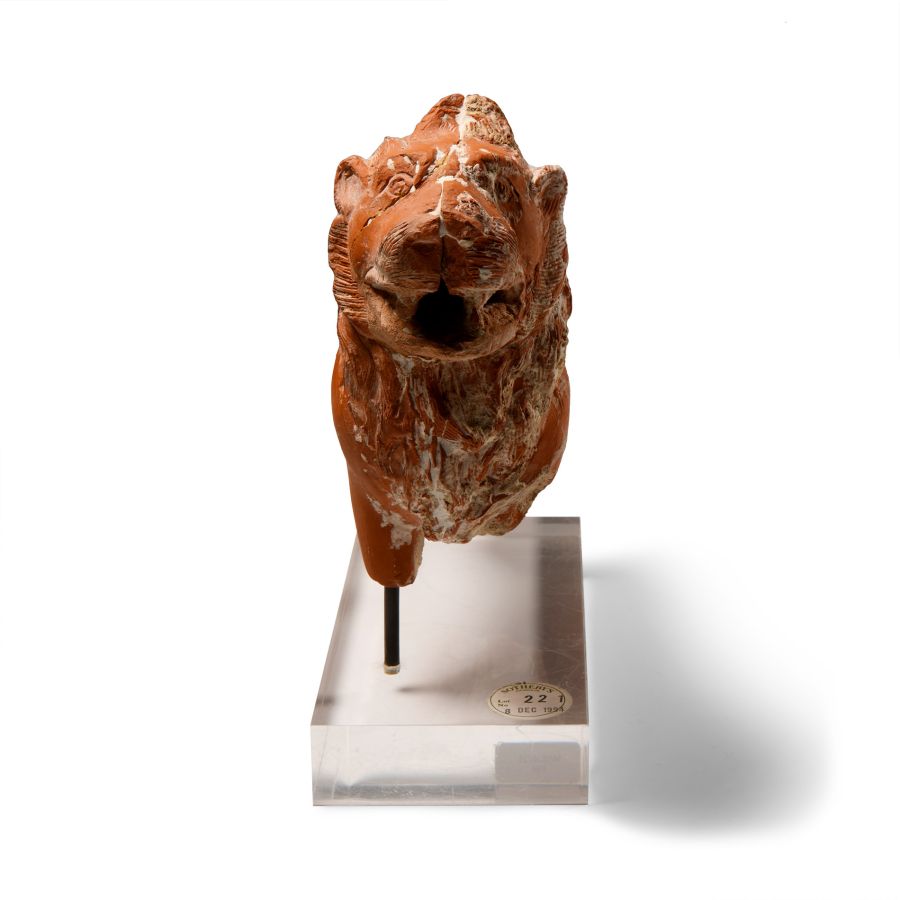
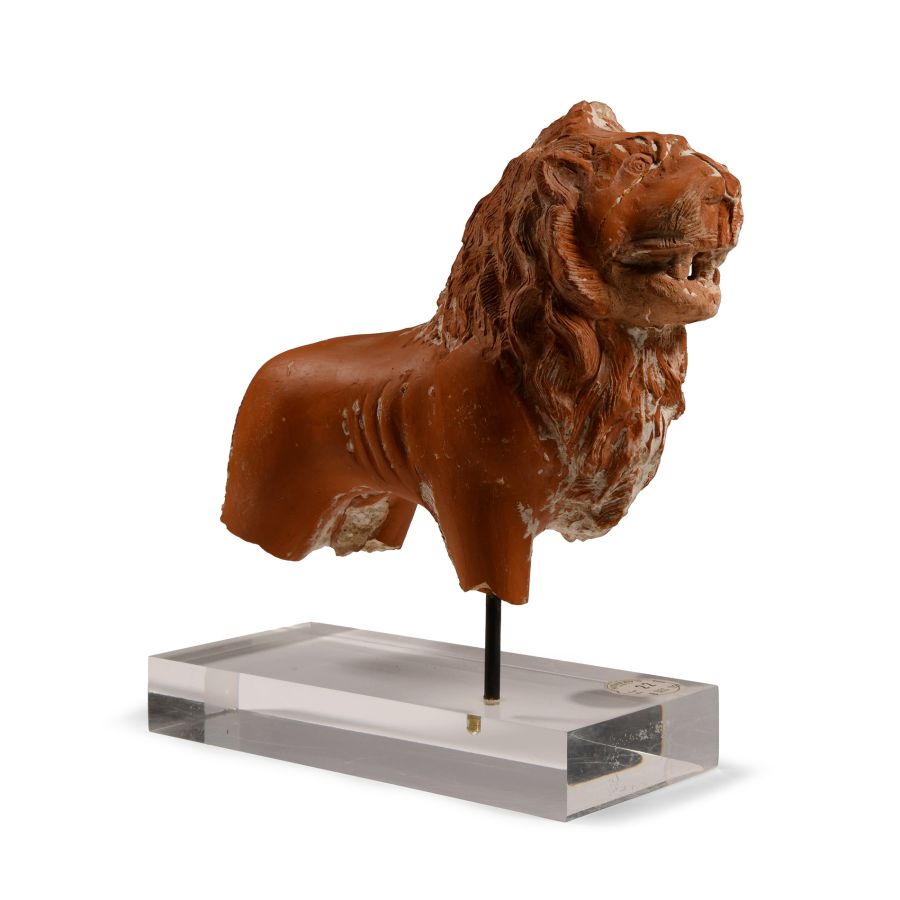
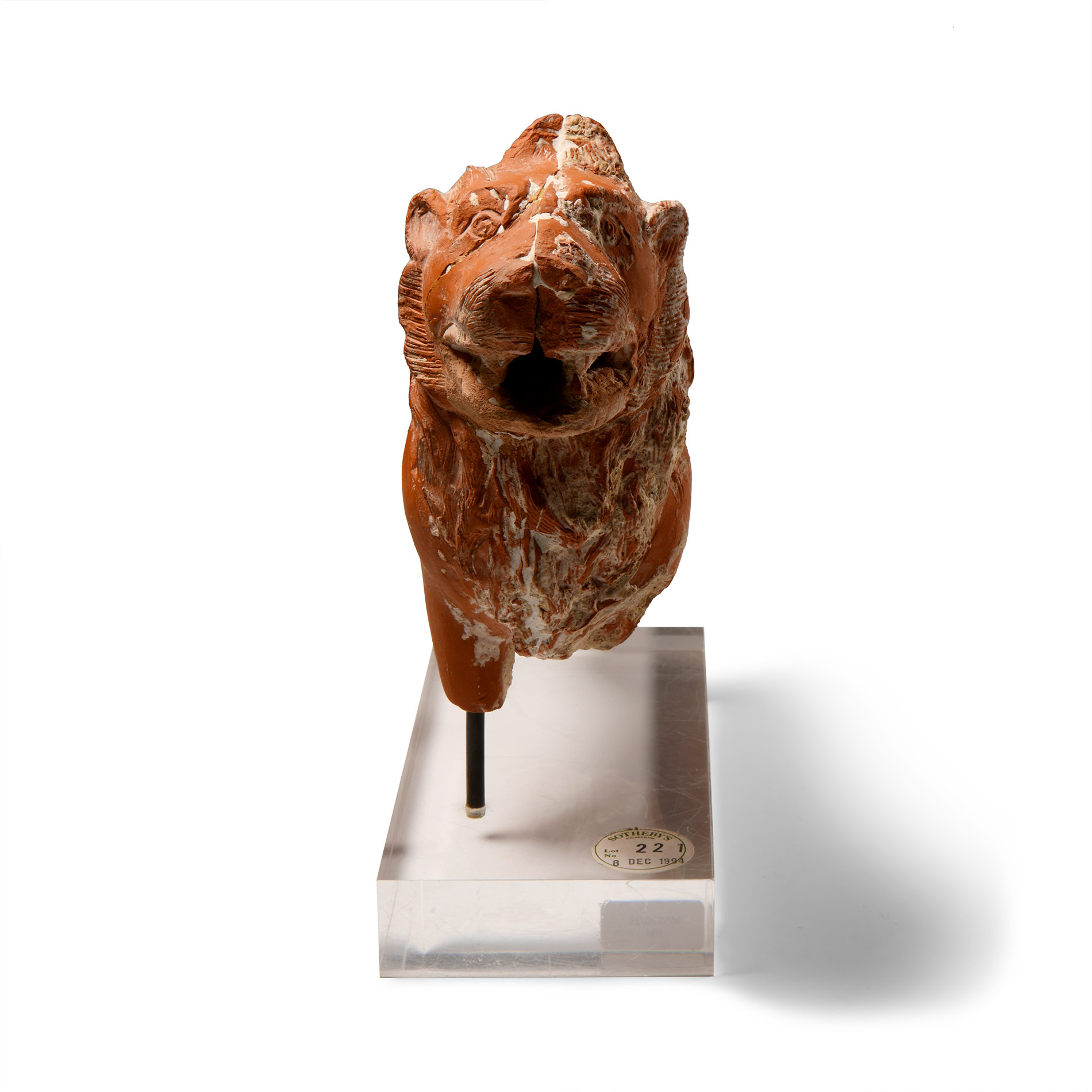
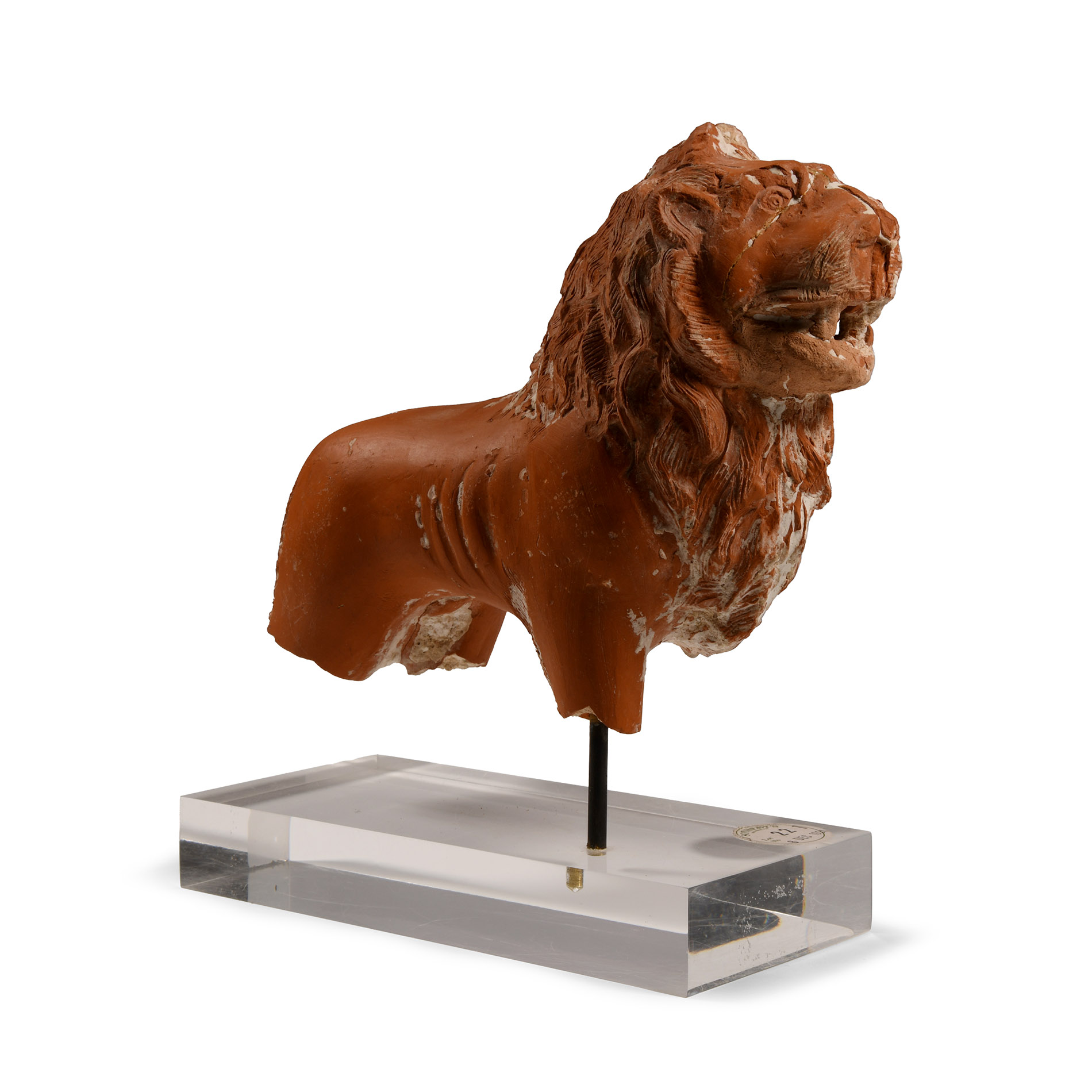
Roman Terracotta Lion Rhyton
LATE 2ND-EARLY 3RD CENTURY A.D.
8 in. (1.5 kg total, 20.5 cm high including stand).
Modelled naturalistically in the round in an advancing pose with face, muzzle and tooth detailing within the open mouth, the tufts of the animal's mature mane individually rendered; filling hole on the back; the mouth open acting as a spout; North African workmanship; mounted on a custom-made display stand.
Provenancewith Sotheby’s London, 9 December 1994, lot 221.
Accompanied by an academic report by Dr Raffaele D’Amato.
Accompanied by copies of relevant Sotheby's catalogue pages.
This lot has been checked against the Interpol Database of stolen works of art and is accompanied by search certificate number no.11797-206532.
Cf. Richter, G.M.A., Animals in Greek Sculpture, Oxford, 1930, pp.3ff; Toynbee, J.M.C., Tierwelt der Antike, Mainz-Rhine, 1983, pp.54ff.; Padgett, J.M. (ed.), Roman Sculpture in the Art Museum Princeton University, Princeton, 2001, p.257, no.97; Liverani, P., Spinola, G., Vaticano, La Sala degli animali nel Museo Pio-Clementino, City of Vatican, 2003.
FootnotesThe lion was famously featured in many ancient myths, perhaps the most famous being that of Hercules (Herakles) slaying the Nemean lion for his first labour, but it was also linked with the cult of the goddess Cybele, where it is usually represented sculptured in relief on either side of her throne.
CONDITIONTimeLine Auctions follows a vetting process to ensure the authenticity and legality of all items, reinforcing our commitment to integrity and responsible trading. Each antiquity, antique, and coin lot undergoes thorough examination by a vetting committee of at least ten external specialists, professional trade association members, scientists, and archaeologists: Our Vetting Process
AUCTIONS:
TimeLine is a leading auction house specialising in antiquities, ancient art, collectables, natural history, coins, medals, and books. Our auctions offer museums, collectors, historians, and enthusiasts the opportunity to acquire unique and historically significant pieces.
LOT 0113
Roman Terracotta Lion Rhyton
Estimate £6,000 - 8,000€6,960 - 9,280 (for guidance only)$8,100 - 10,800 (for guidance only)
-
Roman Golden Amber Glass Unguentarium
2nd-3rd century A.D.Estimate: £200 - 300 (+bp*)
Opening Bid: £50
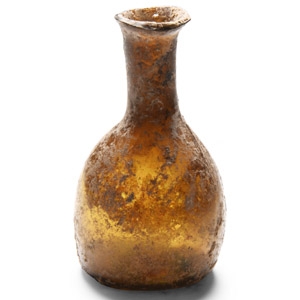
With bulbous body, flat bottom, barrel-shaped neck and everted rim. 12.6 grams, 68 mm
Acquired 1980-2015. Ex Abelita family collection. -
Roman Carnelian Gemstone with Serapis and Isis
2nd-3rd century A.D.Sold for (Inc. bp): £910
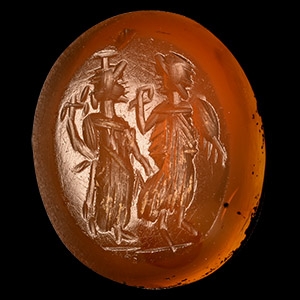
The oval intaglio showing Serapis holding a sceptre and wearing a modius upon his head; Isis, wearing a feather(?) headdress and holding a sistrum. 2.51 grams, 18 mm
Acquired in the late 1980s-early 1990s. Important North West London collection.
Serapis was known to the Greek and Roman world already in the 3rd century B.C. in Alexandria, where Ptolemy I built a serapeum in honour of the god. The name of the god is considered to be composed from the names Osiris and Apis bull and means 'Osiris the bull' since after his death he became the ruler of the outer world, while it was also believed that Osiris lived in the world through Apis. Isis, his spouse, was worshipped in the Roman Empire as a powerful divinity, mother of the gods. -
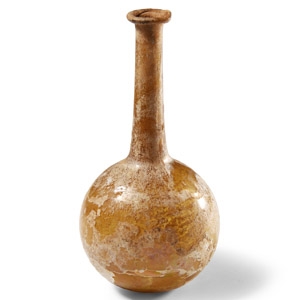
Roman Glass Bulbous Vase
2nd-3rd century A.D.Sold for (Inc. bp): £143
With long slender neck and everted rim. 37 grams, 12.5 cm
Acquired 1970s-1996. Property of a North American collector. London collection, 2016.
