
Loading, please wait...
LOT 0938
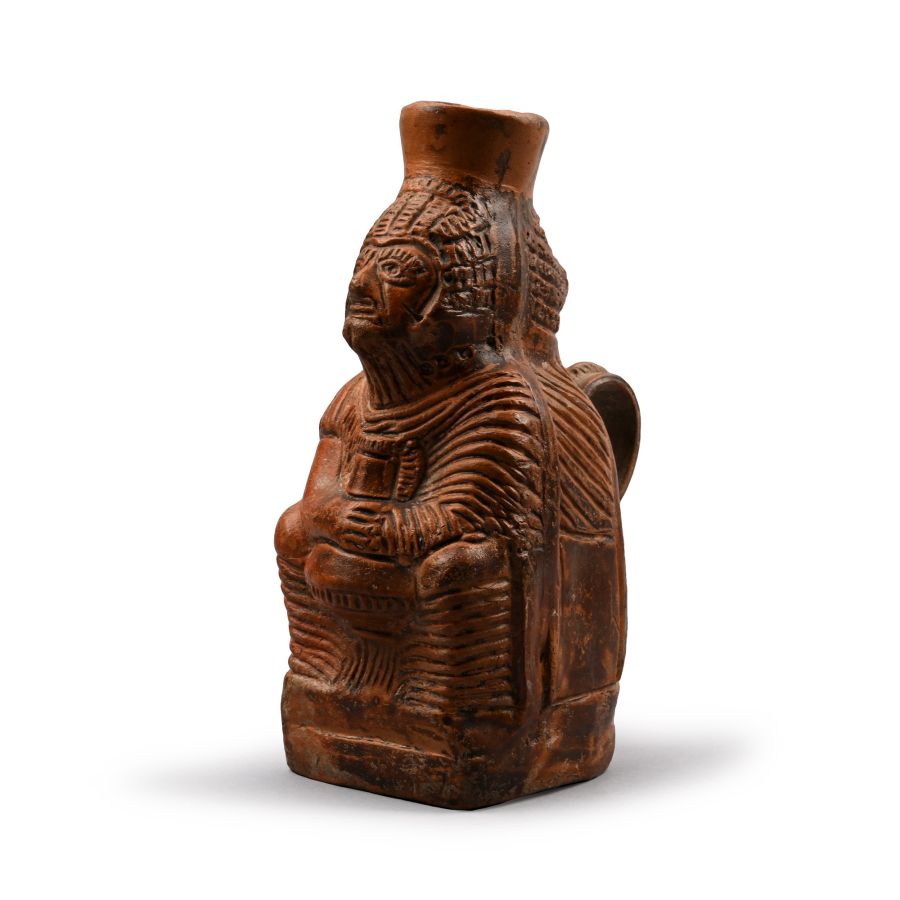
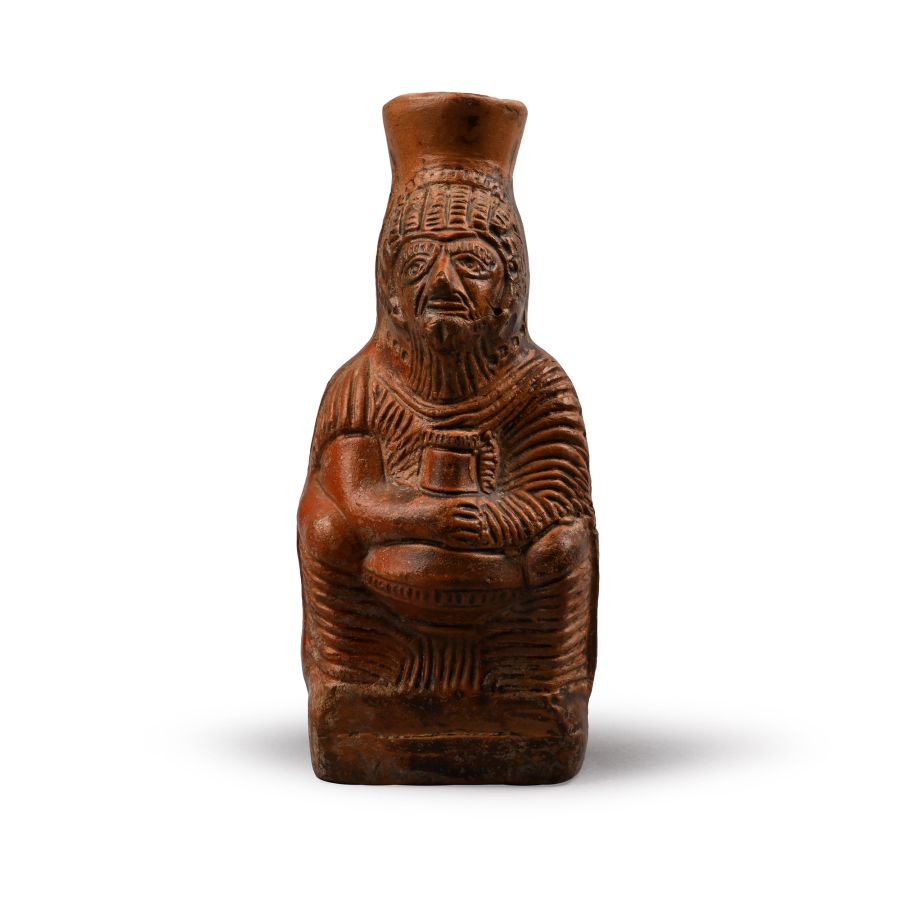
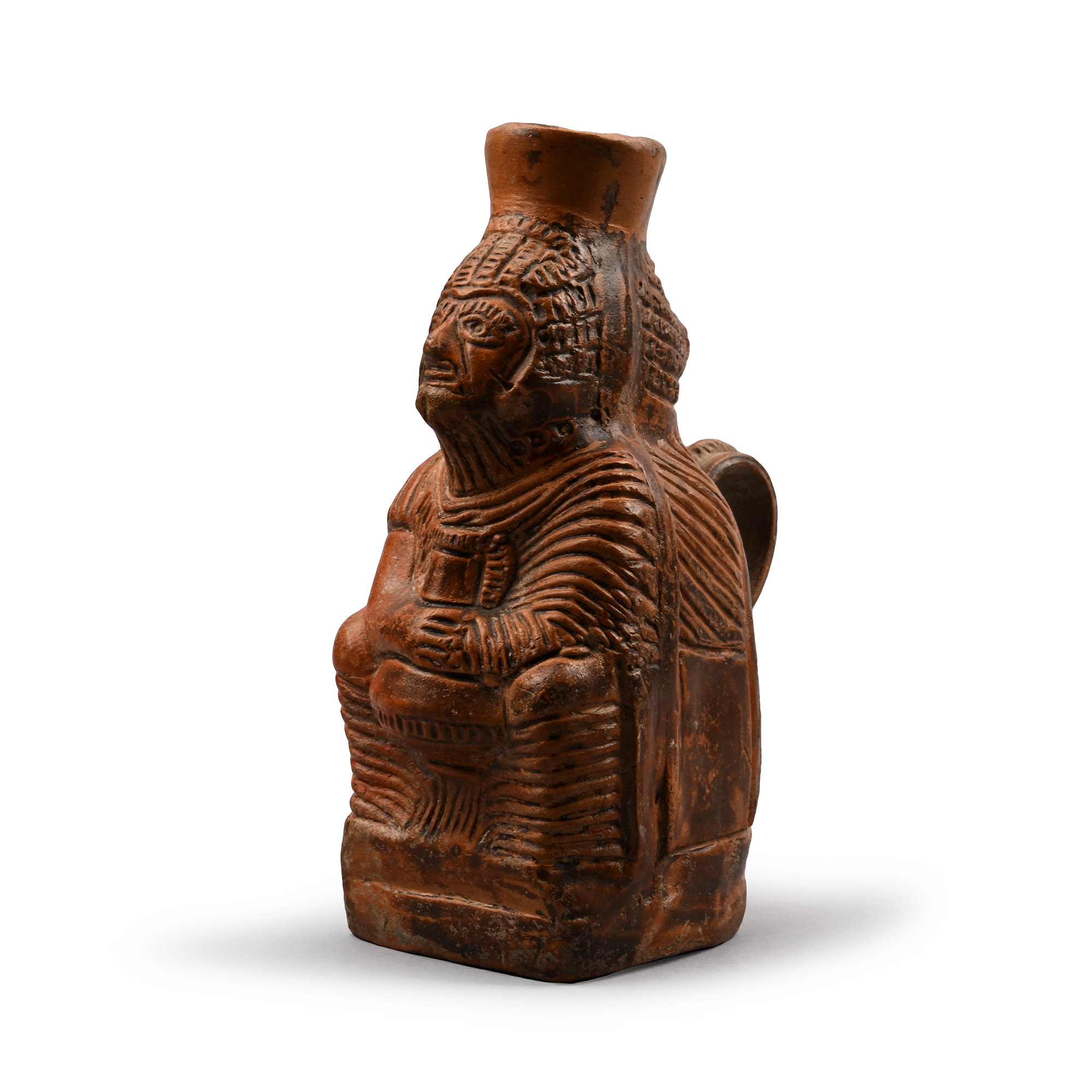
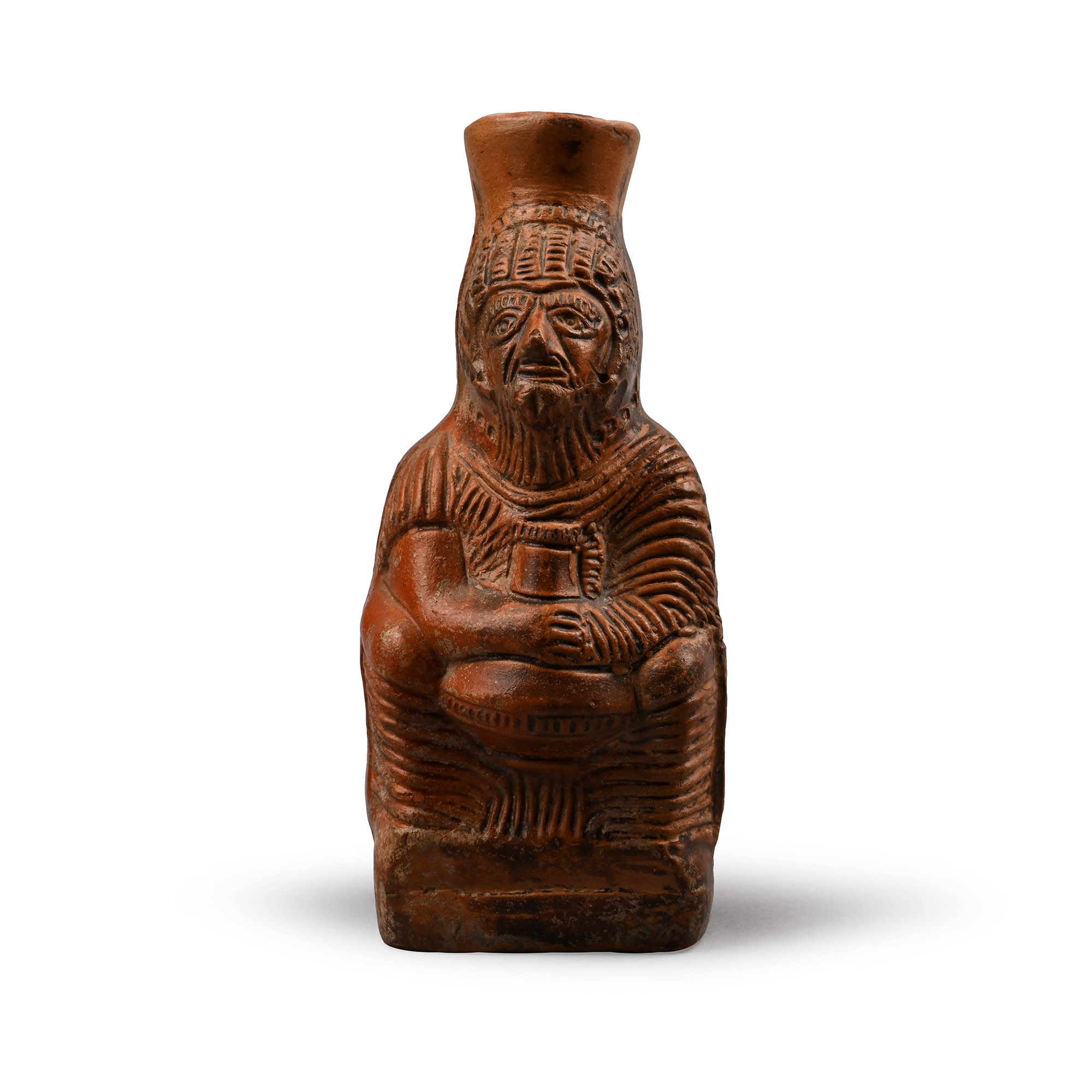
Roman Terracotta Jug of a Woman Holding a Flask
MID 3RD CENTURY A.D.
6 3/4 in. (345 grams, 17 cm).
Formed as a seated elderly woman with a short neck and handle with deep decorative ridges, stylised detailing to the face and hair tied in a bun, wine-jug (lagynos) gripped in her arms and between her knees, detailing to folds of garments; her pierced ears were likely once adorned with earrings.
ProvenanceAcquired 1980s.
Ex B Lee North collection.
Accompanied by a positive thermoluminescence analysis report, sample no.N122e54 from Oxford Authentication.
Accompanied by an academic report by Dr Raffaele D'Amato.
This lot has been checked against the Interpol Database of stolen works of art and is accompanied by a search certificate no.11312-188595.
Cf. Australian National University Classics Museum Catalogue, acquisition number 1987.04, for very similar; cf. Salomonson, J.W., ’Der Trunkenbold und die Trunkene Alte. Untersuchungen zur Herkunft, Bedeutung und Wanderung einiger plastischer Gefässtypen der römischen Kaiserzeit,’ in Bulletin Antieke Beschaving, 55, 1980, pp.65-135 and ‘Die trunkene Alte: eine afrikanischer Gefässtypus der mittleren Kaiserzeit. Überblick und allgemeine Bewertung des Materials,’ in Actes du colloque sur la céramique antique, Carthage 1980, Carthage, 1982, pp.197-212; cf. Yacoub, M., Le Musée du Bardo, (Tunis 1993) 275 fig.170, inv. I 115; cf. Hayes, J.W., Ancient Lamps in the Royal Ontario Museum I, (1980) 142, no.563, pl.57; Carandini, A., ‘Melanges d’Archéologie et d'Histoire’ in Ecole Française de Rome, 82, 1970, pp.781-3; Quevedo, A., ‘La "vieja borracha" : una nueva pieza minorasiática de época medioimperial en Cartagena,’ in Ex Officina Hispana, 2, 2010, pp.45-50, fig.3.
FootnotesThe motif of an old, drunken woman corresponds to a well-known Hellenistic repertoire. These jugs were produced in Africa and were widespread within the Empire. Recent analysis carried out on a North African bottle of the drink ‘anus’, found in an exceptional state of preservation in Valencia, concluded that the vessel contained a resin from the Pinocea family intended to waterproof the vessel, which probably contained vegetable oil.
CONDITIONTimeLine Auctions follows a vetting process to ensure the authenticity and legality of all items, reinforcing our commitment to integrity and responsible trading. Each antiquity, antique, and coin lot undergoes thorough examination by a vetting committee of at least ten external specialists, professional trade association members, scientists, and archaeologists: Our Vetting Process
AUCTIONS:
TimeLine is a leading auction house specialising in antiquities, ancient art, collectables, natural history, coins, medals, and books. Our auctions offer museums, collectors, historians, and enthusiasts the opportunity to acquire unique and historically significant pieces.
-
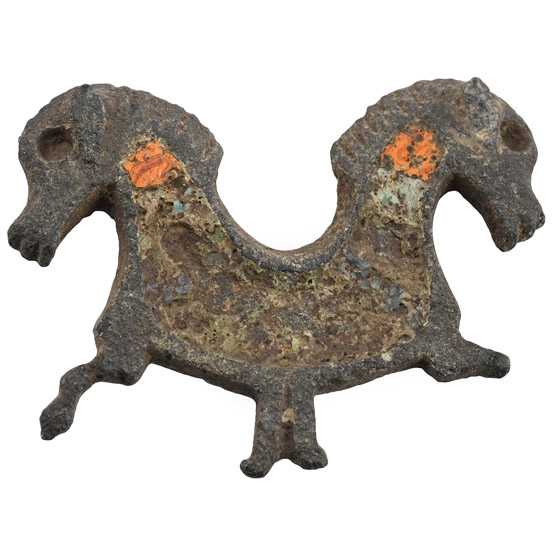
Roman Bronze Two-Headed Sea Horse Brooch
Circa 2nd-3rd century A.D.Sold for (Inc. bp): £683
Plate brooch with pin-lugs, pin and catch to reverse, addorsed equine heads with recesses to accept enamel. 9.25 grams, 37 mm
Ex German art market, 2000s. Acquired from an EU collector living in London. From the collection of a Surrey, UK, gentleman. -
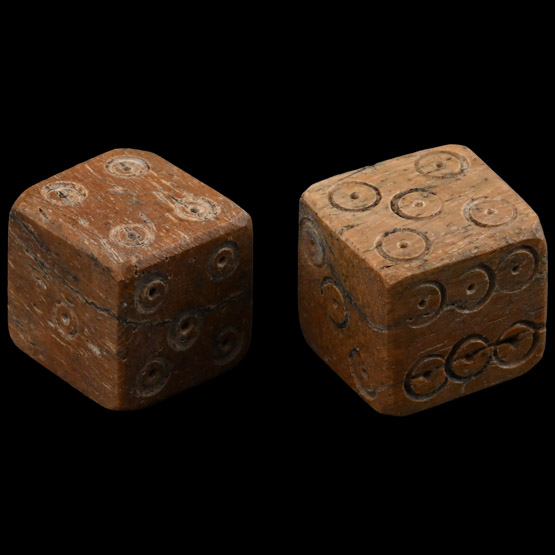
Roman Bone Gaming Dice Pair
3rd-4th century A.D.Sold for (Inc. bp): £390
Cuboid type, each with ring-and-dot markings disposed 1:6, 2:5, 3:4. 8.42 grams total, 13 mm each
From a Cambridgeshire, UK, collection, 1990s. -
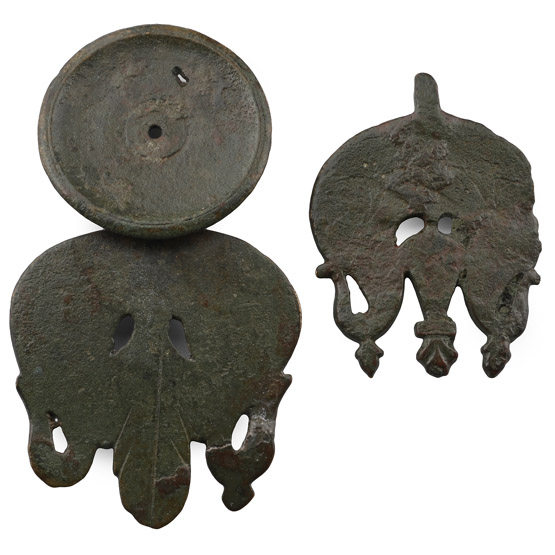
Roman Bronze Military Horse Harness Pendant Collection
1st century A.D.Sold for (Inc. bp): £78
Comprising a dished roundel with strap-sliders to the reverse, hinged ivy-leaf pendant below; separate pendant with openwork detailing. 50 grams total, 50-81 mm
Ex German art market, 2000s. Acquired from an EU collector living in London. From the collection of a Surrey, UK, gentleman.
