
Loading, please wait...
LOT 1014
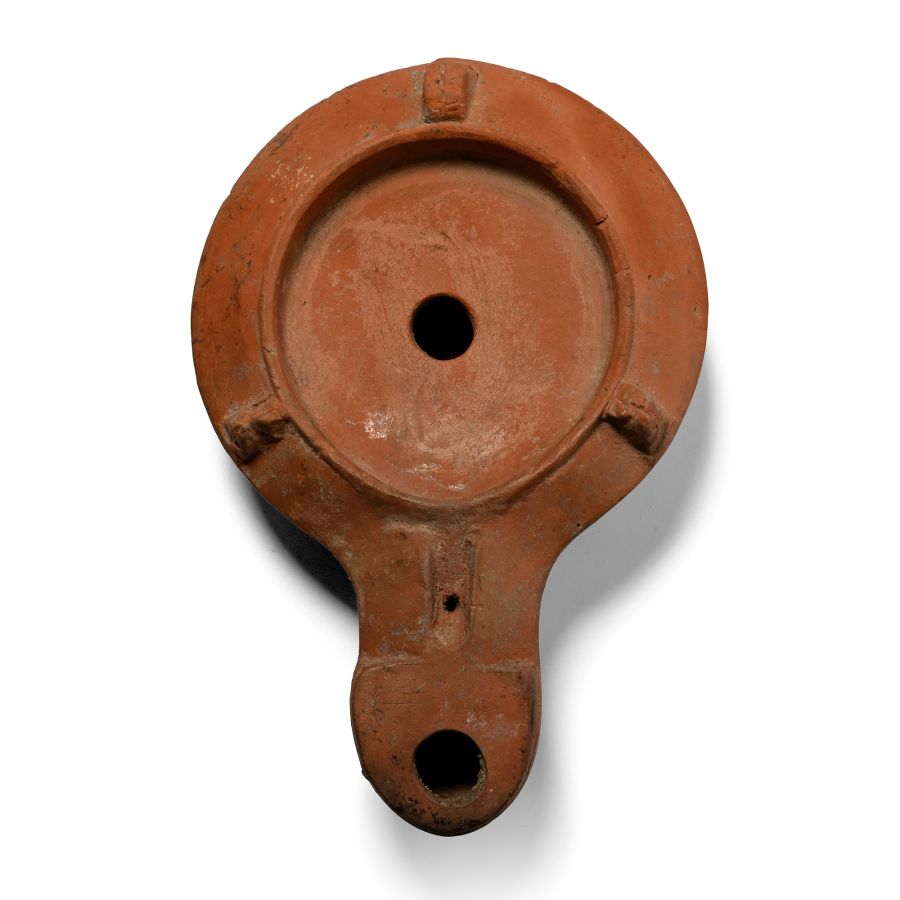
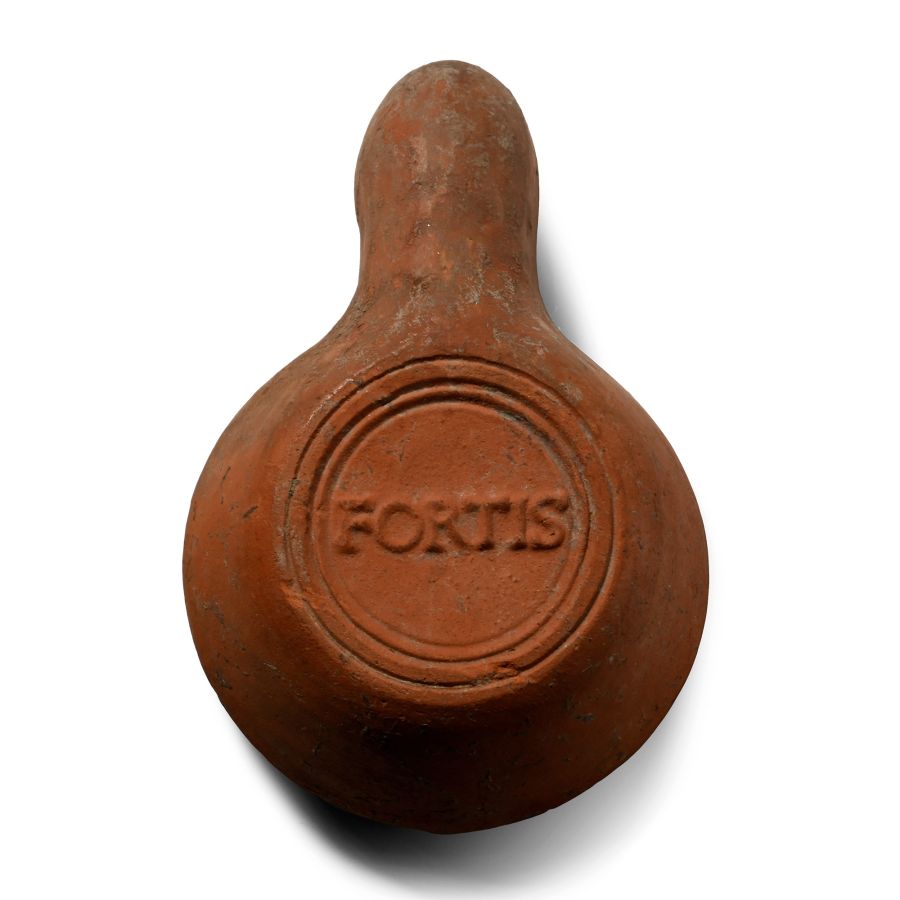
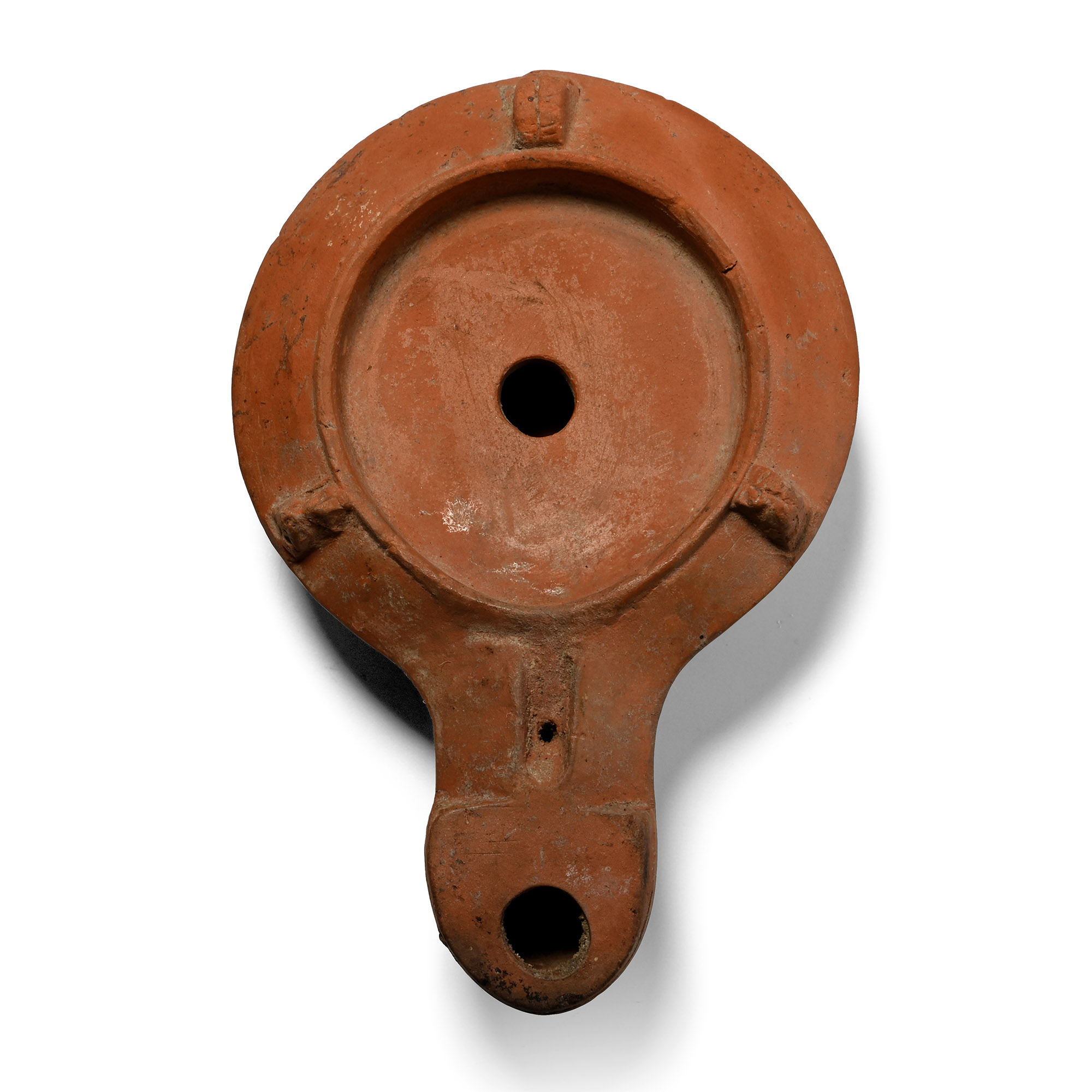
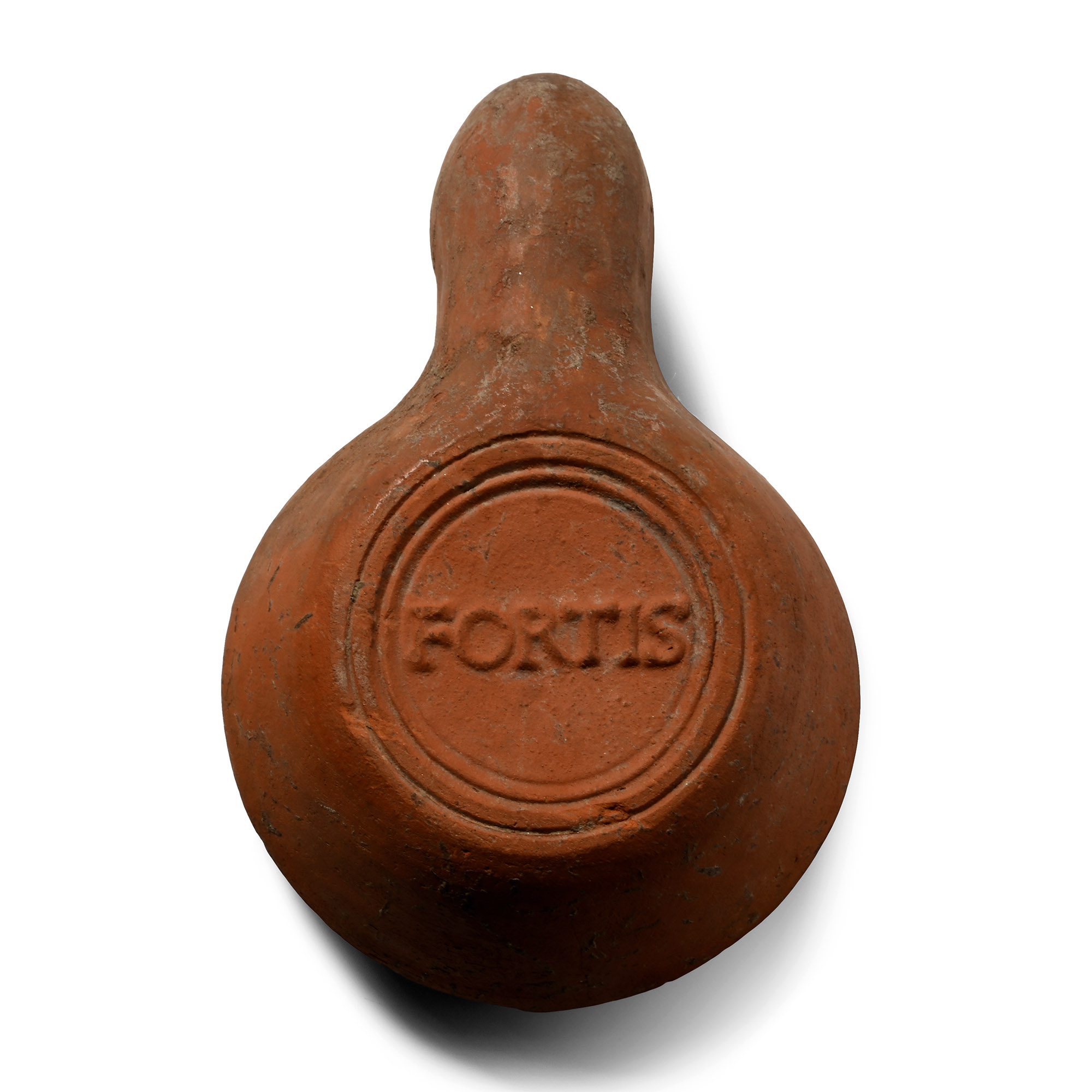
Roman Terracotta FORTIS Factory Oil Lamp
1ST CENTURY A.D.
4 5/8 in. (122 grams, 11.8 cm).
Rounded body with long nozzle, raised rim around the discus with central filling hole and three raised lugs on the shoulder; the base with concentric circles and maker's mark 'FORTIS'.
ProvenanceEx German art market, 2000s.
Acquired from an EU collector living in London.
From the collection of a Surrey, UK, gentleman.
TimeLine Auctions follows a vetting process to ensure the authenticity and legality of all items, reinforcing our commitment to integrity and responsible trading. Each antiquity, antique, and coin lot undergoes thorough examination by a vetting committee of at least ten external specialists, professional trade association members, scientists, and archaeologists: Our Vetting Process
AUCTIONS:
TimeLine is a leading auction house specialising in antiquities, ancient art, collectables, natural history, coins, medals, and books. Our auctions offer museums, collectors, historians, and enthusiasts the opportunity to acquire unique and historically significant pieces.
-
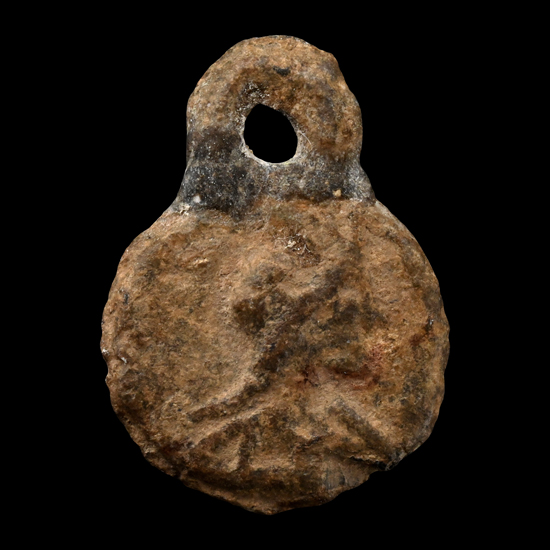
Roman Bifacial Lead Pendant with Busts
1st-4th century A.D.Sold for (Inc. bp): £33
Discoid in plan with integral suspension loop, obverse with right-facing profile bust wearing a solar crown, reverse with bearded profile bust with topknot. 4.42 grams, 21 mm
From the collection of a gentleman, acquired on the London art market in the 1990s. -
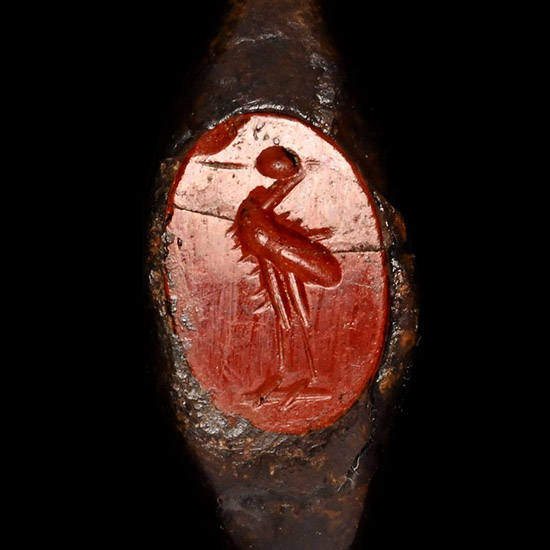
Roman Bronze Ring with Stork Gemstone
2nd-3rd century A.D.Sold for (Inc. bp): £98
Slender round-section hoop with red jasper intaglio engraved with a standing stork. 2.57 grams, 23.68 mm overall, 19.66 mm internal diameter (approximate size British O, USA 7, Europe 14.98, Japan 14)
Ex Prof. Dr Emil Vogt (1906-1974), the former Director of the Swiss National Museum, Zürich, in his collection before 1970. with Galerie Rhéa, Zurich, Switzerland. -
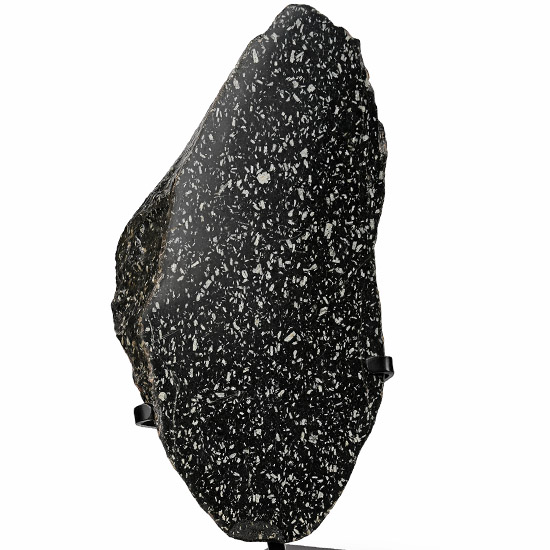
Historic Spartan Basalt Cut and Polished Green Porphyry Fragment
Sold for (Inc. bp): £2,210
Cut and polished section, mined in Greece, cut and polished on one side, probably recycled material mined in ancient Roman times; mounted on a custom-made metal display stand. 6.19 kg total, 33 cm including stand
Acquired on the UK art market since the 1990s. From the private collection of a Somerset gentleman.
Also known as Lapis Lacedaemonius and Porfido Verde Antico, a type of green porphyry quarried in Greece. Spartan basalt is a form of andesite or volcanic rock known today only from a single source in the village of Krokees on the Peloponnese in Greece. In addition, ancient sources mention a quarry of Lapis Lacedaemonius in Taygetus.
