Loading, please wait...

Use mousewheel to zoom in and out, click to enlarge

Details

LOT 0687

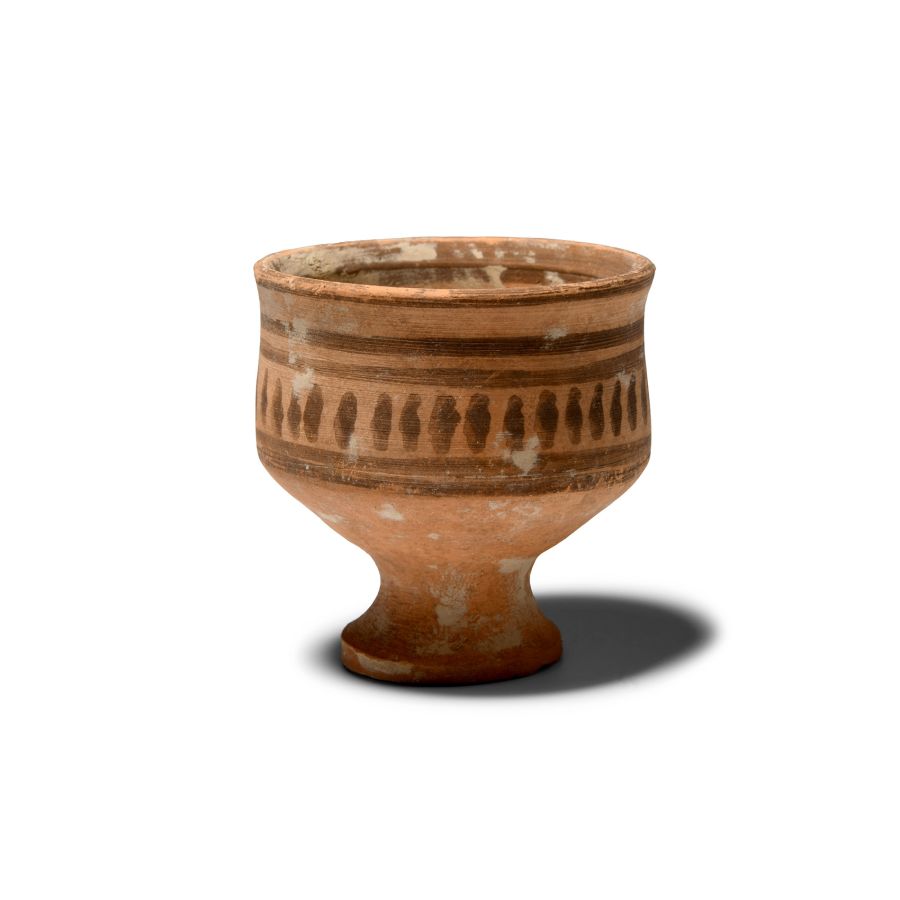
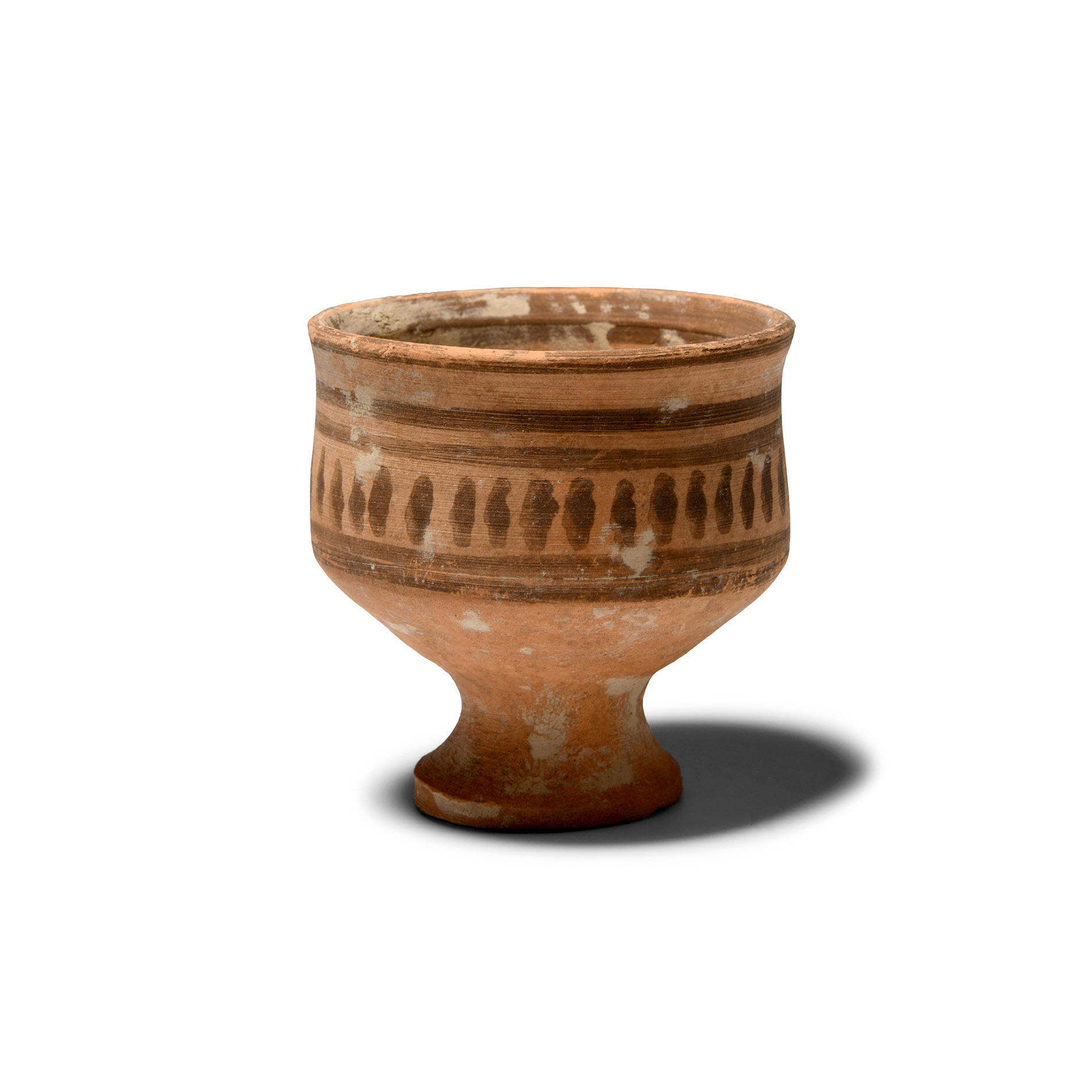
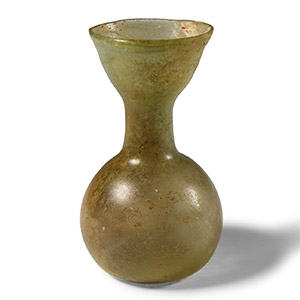
Roman Terracotta Footed Cup

2ND-4TH CENTURY A.D.

2 1/4 in. (58.5 grams, 56 mm high).

With a low foot, carinated bowl with everted rim, the body with painted circumferential lines enclosing a frieze dashes. [No Reserve]

Provenance

Acquired in the 1980s-1990s.
Property of a Nottinghamshire gentleman.

CONDITION

VETTING:

TimeLine Auctions follows a vetting process to ensure the authenticity and legality of all items, reinforcing our commitment to integrity and responsible trading. Each antiquity, antique, and coin lot undergoes thorough examination by a vetting committee of at least ten external specialists, professional trade association members, scientists, and archaeologists: Our Vetting Process


AUCTIONS:

TimeLine is a leading auction house specialising in antiquities, ancient art, collectables, natural history, coins, medals, and books. Our auctions offer museums, collectors, historians, and enthusiasts the opportunity to acquire unique and historically significant pieces.

LOT 0687

Roman Terracotta Footed Cup

Sold for (Inc. bp): £85

Print page

RELATED LOTS

  • Roman Severus Alexander Denarius Forgers Coin Die Pair and Crucible
    Roman Severus Alexander Denarius Forger's Coin Die Pair and Crucible
    Circa 222-235 A.D.

    Sold for (Inc. bp): £1,300

    A contemporary pair of clay coin dies used to manufacture coin forgeries, the working faces depicting a gold aureus or silver denarius of Emperor Severus Alexander, with incuse and reversed legends; each counterfeit die with inscribed numbering to verso [(((( LXIIII = 64]; accompanied by a clay crucible excavated at the same time with inked inscription to the underside: 'Arch.-Nr. / 6612-1975', another object that would have been required in the casting process of manufacturing of fake coins. 86.86 grams total, 44-58 mm

    1 - 1 1/4 in.

    In a private collection of Roman objects since 1975. Accompanied by a copy of a letter and schedule addressed to the Director of the Library Faculty of Kamp-Linfurt, a branch of Stadsparkasse Duisburg regarding the loan of the forger's die and crucible for exhibition, dated 13 December 1993.

    Towards the end of the 2nd century and the early 3rd century A.D. the quality of Roman coinage began to be altered. Probably from the beginning of the reign of Severus Alexander, forgers were tacitly allowed by the Roman government to issue counterfeit coins. There are many ancient coins of this emperor that appear to have been cast in moulds. Most of these moulds would have been employed by forgers, and the dies were normally destroyed quickly after use in an effort to dispose of the evidence.

    Lot Details

  • Eastern Roman Sandstone Frieze Fragment with Banquet Scene
    Eastern Roman Sandstone Frieze Fragment with Banquet Scene
    Circa 2nd-3rd century A.D.

    Sold for (Inc. bp): £2,470

    The rectangular stele modelled in the half-round representing a banqueting scene with elaborate couch and reclining character; the couch with banded and padded platform, rounded cushion with bands of ornament; the figure depicting a young noble wearing a male Palmyrene costume with band of scrolled foliage ornament, hair dressed into braided tresses and wound round the brow; left arm supporting the body on the cushion, right hand placed before the chest holding the handle of a footed kylix; rectangular border; mounted on a custom-made stand; head restored. 11.2 kg total, 46 cm including stand


    Ex P.A., Hertfordshire, UK, specialist collection of Greek art, 1980-1990s.

    The character shows a typical male in Palmyrene costume, with long sleeved tunic and large central band, decorated with interlaced vegetal embroidery. Its position is typical of the so-called 'banquet' reliefs. The belt is also decidedly masculine. The sculpture, originally headless, was probably reworked in the upper part, with the addition of a female head incompatible with the rest of the body.

    Lot Details

  • Roman Fresco Painted Wall Plaster Collection
    Roman Fresco Painted Wall Plaster Collection
    1st century A.D.

    Sold for (Inc. bp): £20

    Mixed group of fresco fragments with pigment and geometric layout lines in place; reverse with stepped profile where attached to the structure. 896 grams total, 6.2-11.7 cm


    Ex Swiss family collection, 1990s.

    Lot Details

Stay up-to-date with the latest from TimeLine Auctions by joining our mailing list