
Loading, please wait...
LOT 0114
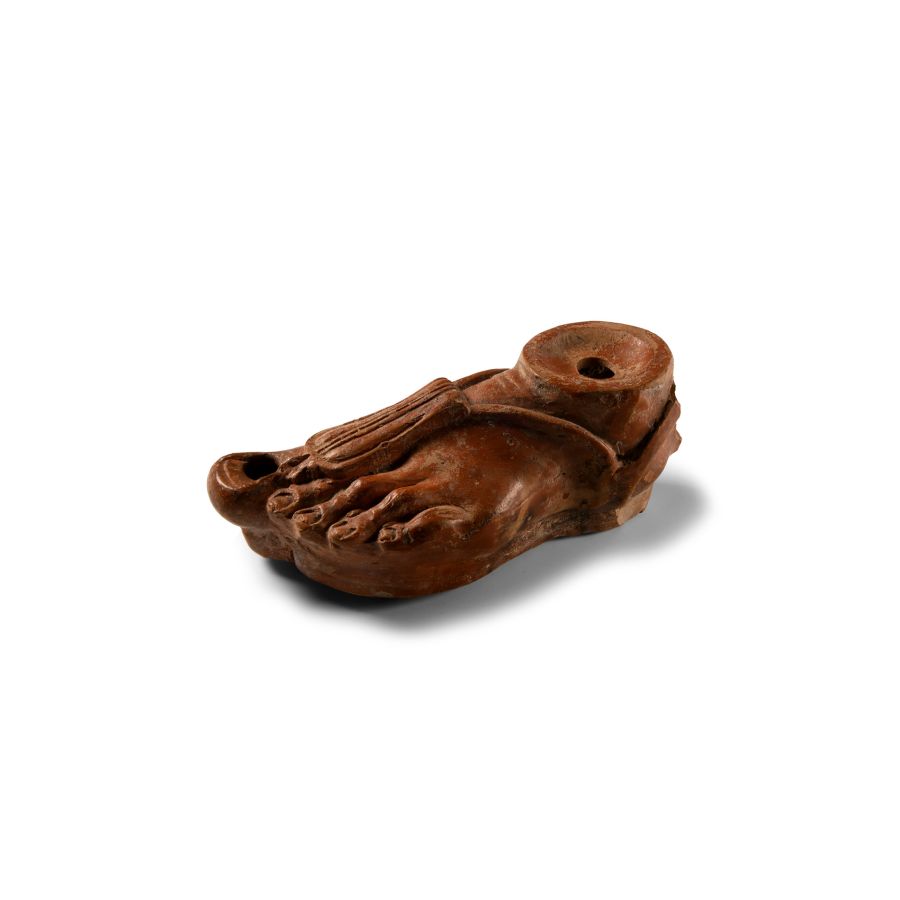
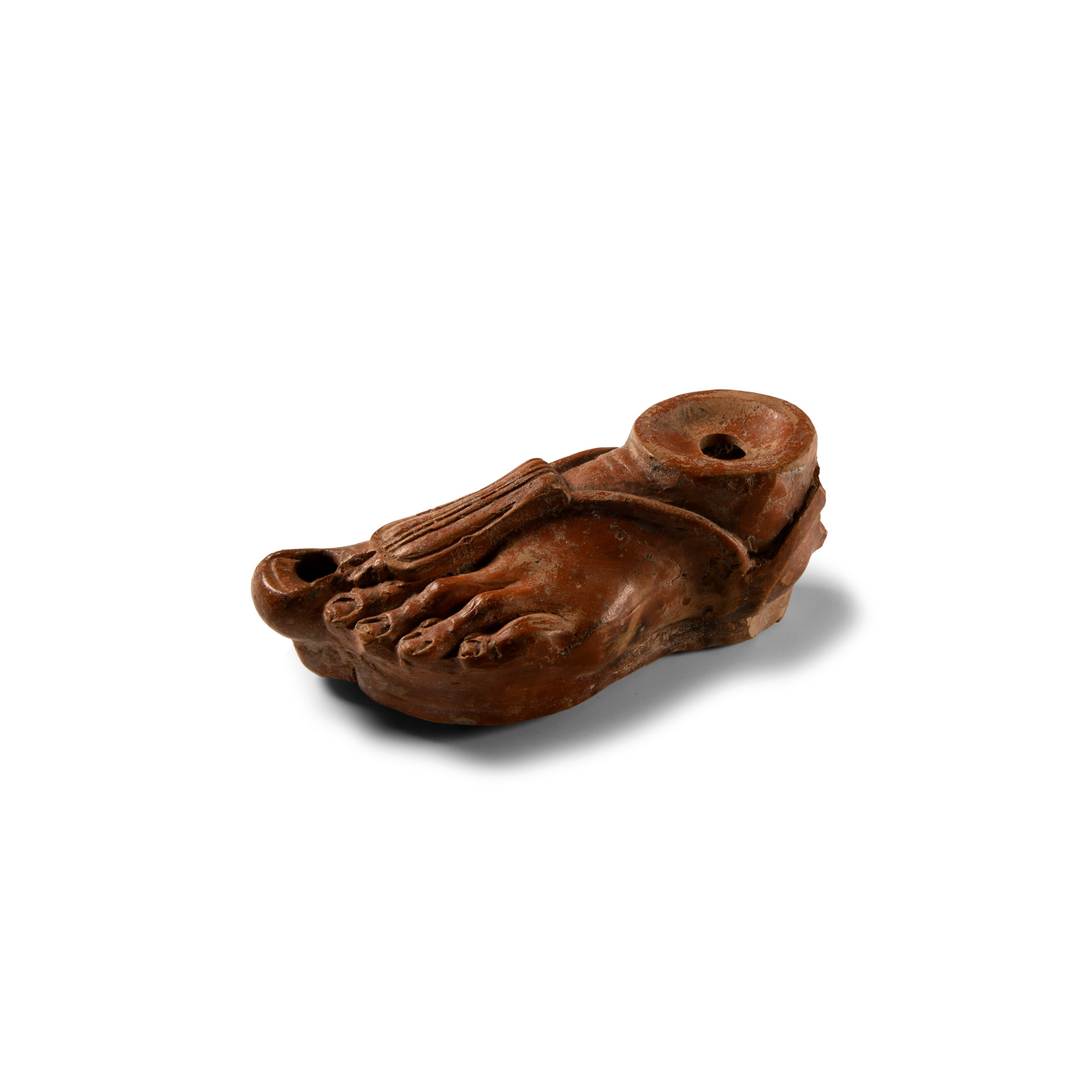
Roman Terracotta Foot Lamp
2ND CENTURY A.D.
4 3/4 in. (112 grams, 12.2 cm).
Mould-made and shaped as a sandaled left foot, filling-hole surrounded by a ridge in the ankle area, the sandal with two leather straps tied together near the ankle, wick-hole in the big toe; inscription 'ƩΑΛΣΙϹ' to the base, heel chipped.
ProvenanceWith Gorny & Mosch, Auction 194, 14 December 2010, lot 505.
This lot has been checked against the Interpol Database of stolen works of art and is accompanied by search certificate number no.11799-206830.
See Bussière, J., Lindros Wohl, B., Ancient Lamps in the J. Paul Getty Museum, Malibu, 2017, no.599, p.438.
FootnotesThis lamp belongs to a type of plastic lamp made in Anatolia and widespread throughout the Eastern Empire. The sandaled foot was part of the classification of plastic lamps dedicated to the representation of the human body. These lamps were the luxuries of the poor, being brought to temples as votive offerings, however some took their place in the domestic lararia, or were kept by children as playthings.
CONDITIONTimeLine Auctions follows a vetting process to ensure the authenticity and legality of all items, reinforcing our commitment to integrity and responsible trading. Each antiquity, antique, and coin lot undergoes thorough examination by a vetting committee of at least ten external specialists, professional trade association members, scientists, and archaeologists: Our Vetting Process
AUCTIONS:
TimeLine is a leading auction house specialising in antiquities, ancient art, collectables, natural history, coins, medals, and books. Our auctions offer museums, collectors, historians, and enthusiasts the opportunity to acquire unique and historically significant pieces.
-
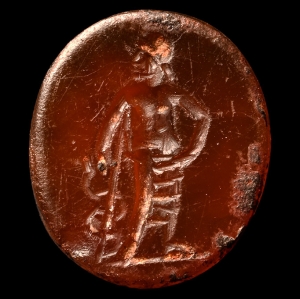
Roman Carnelian Gemstone with Asclepius
2nd-3rd century A.D.Estimate: £600 - 800 (+bp*)
Opening Bid: £333
The oval intaglio engraved with Asclepius standing with head turned to the right, naked upper body, himation draped around his lower body, holding a caduceus with his right hand. 0.69 grams, 12 mm
Acquired in the late 1980s-early 1990s. Important North West London collection.
Aesclepius (Latin Esculapius) was the god of the health and protector of doctors. The serpent‐wreathed rod is well detailed, a rendition which finds a direct parallel in a carnelian intaglio in Carnuntum, Austria. -
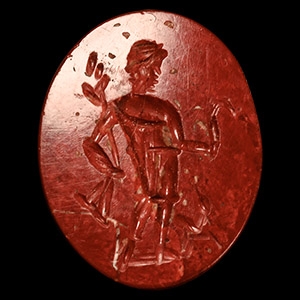
Roman Jasper Gemstone with Mercury
2nd-3rd century A.D.Estimate: £700 - 900 (+bp*)
Opening Bid: £389
The god depicted naked, standing, looking left, holding a caduceus and a purse. 0.79 grams, 15 mm
Acquired in the late 1980s-early 1990s. Important North West London collection.
After his identification with the Greek Hermes, the Roman artists who realised his images for the Roman magistrates used the specific Greek elements of his personality (the winged low cap petasos, the face of a shaved young man, the caduceus, the winged shoes of Phekasia type) but added the attribute of a purse, specific to Mercury. -
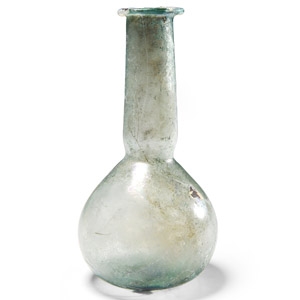
Roman Translucent Glass Flask
1st-2nd century A.D.Estimate: £100 - 140 (+bp*)
Opening Bid: £40
Bulbous body, cylindrical neck and everted rim. 39.3 grams, 12 cm high
Acquired 1980-2015. Ex Abelita family collection.
