
Loading, please wait...
LOT 0135
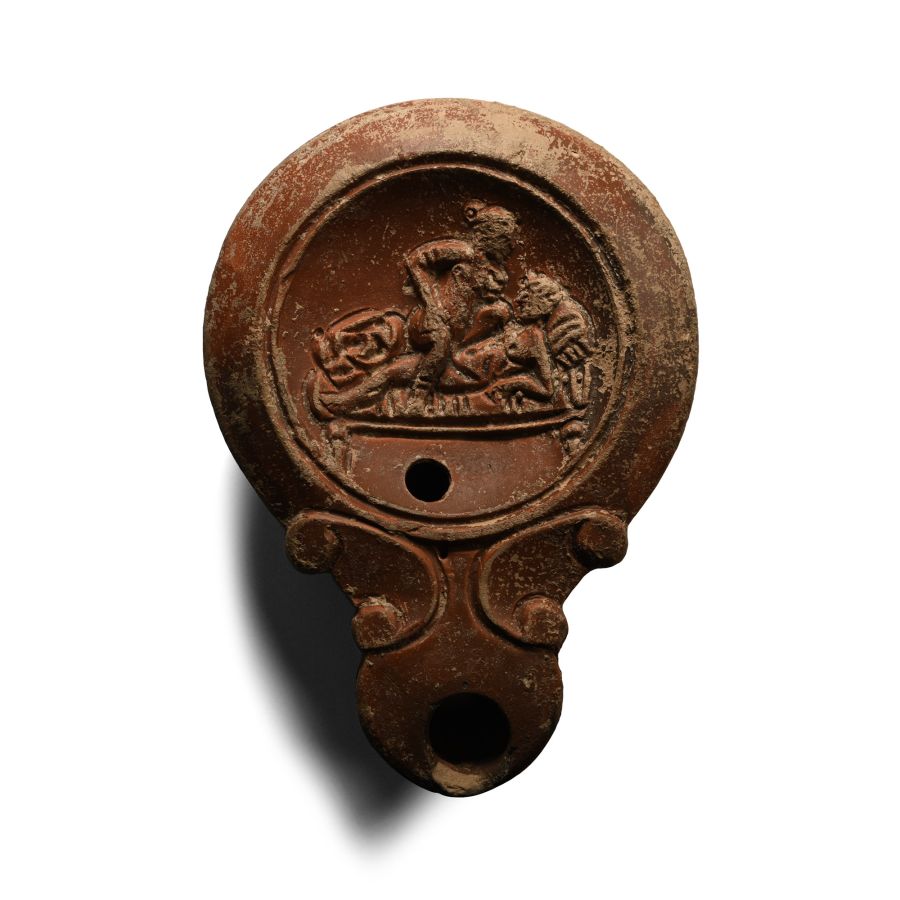
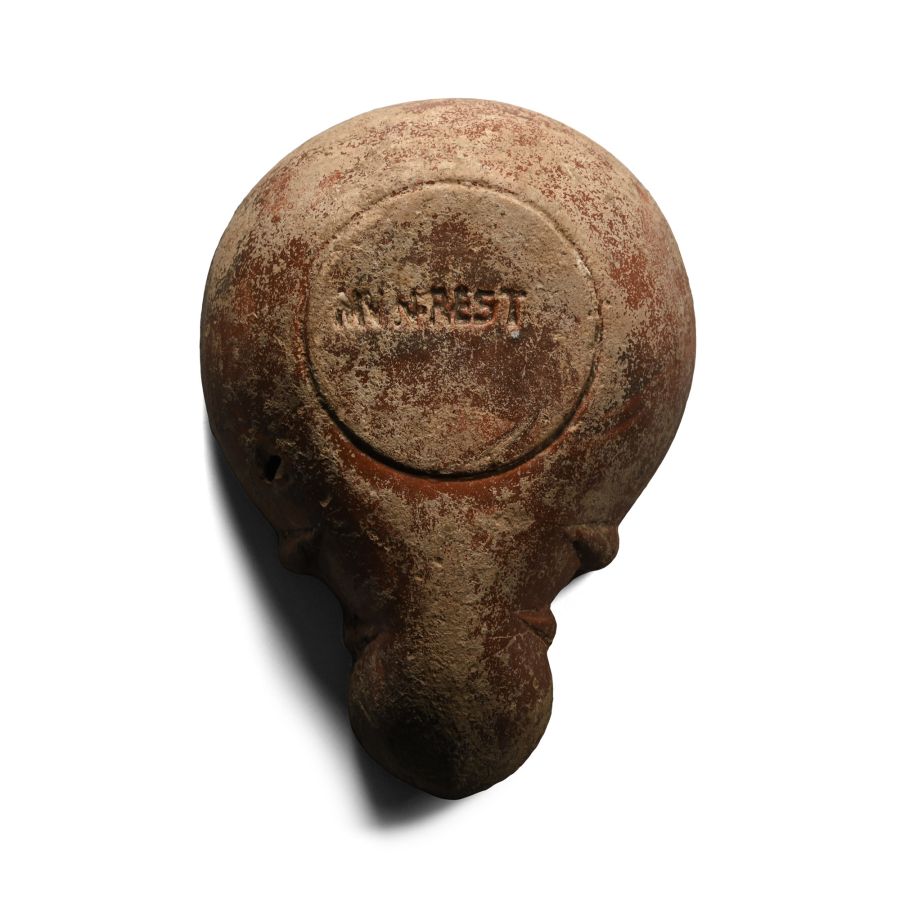
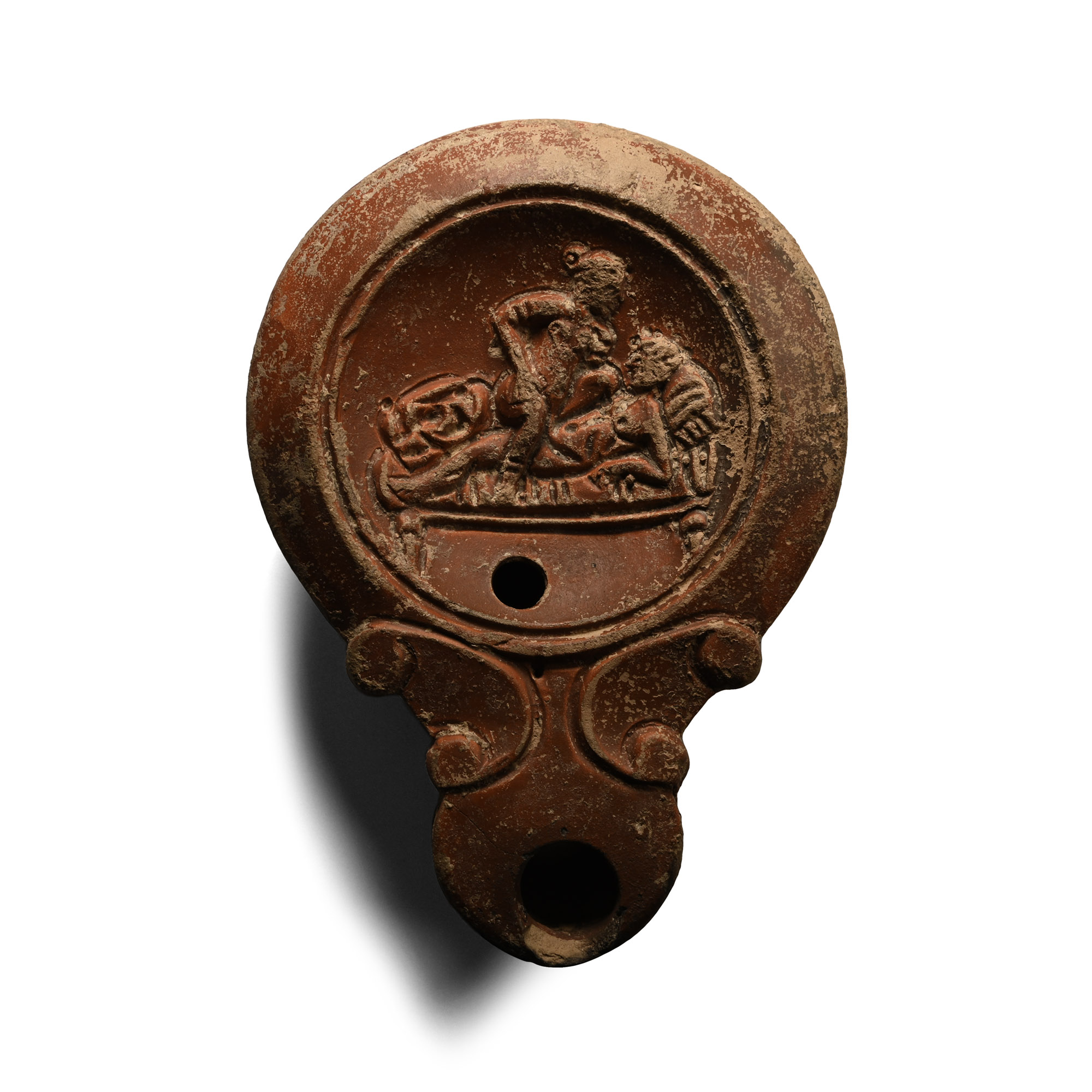
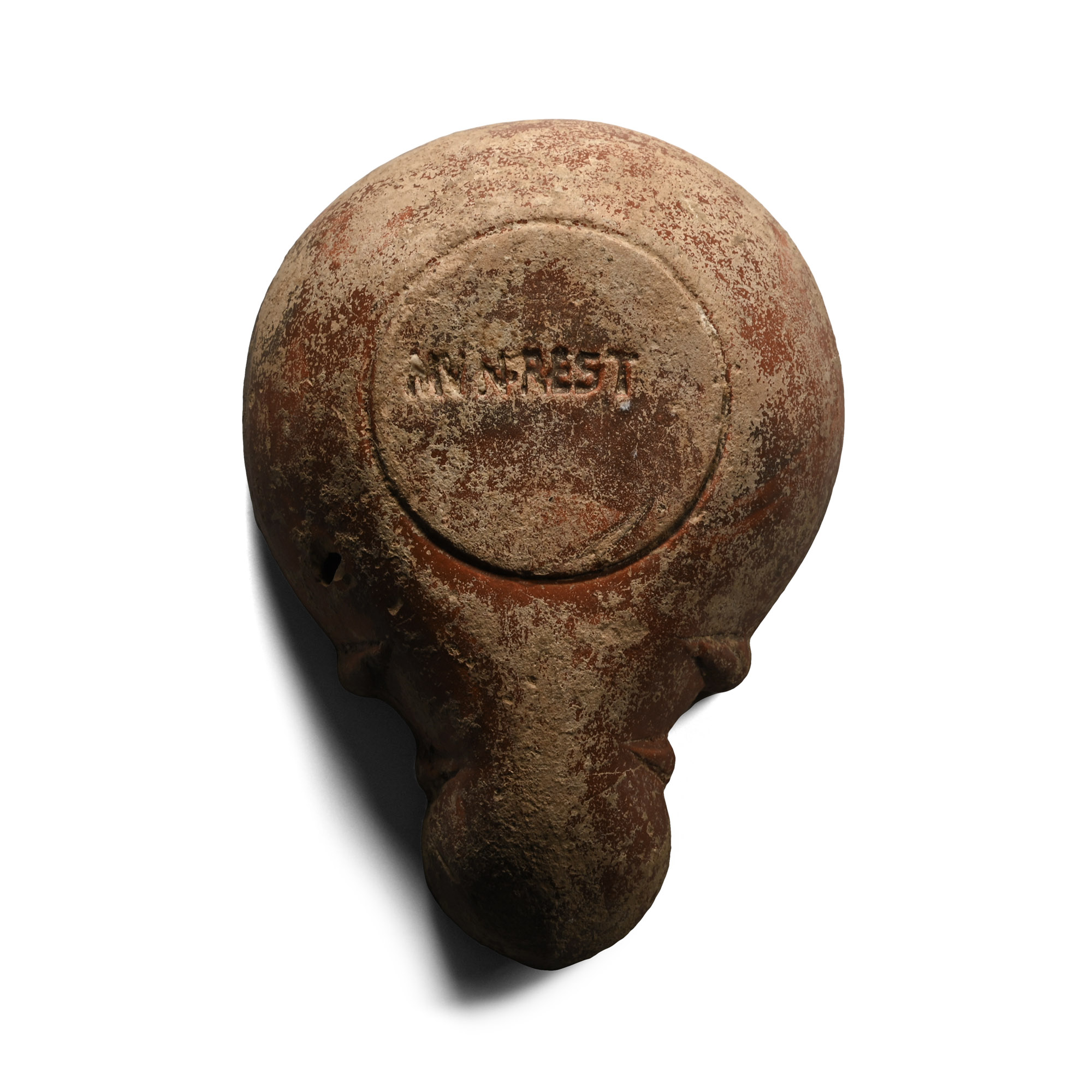
Roman Terracotta Erotic Oil Lamp
1ST-2ND CENTURY A.D.
4 3/8 in. (79.4 grams, 11.2 cm).
With broad shoulder and volute scrolls above the nozzle, discus with low-relief erotic scene.
ProvenanceEx Madame Suzanne Gozlan by descent.
Madame Suzanne Gozlan (1921-2022), Doctor in History and Archaeology, professor at the Ecole Normale d'Instituteurs de Chartres and lecturer at the University of Paris 4 Sorbonne.
This lot is accompanied by an illustrated lot declaration signed by the Head of the Antiquities Department, Dr Raffaele D’Amato.
TimeLine Auctions follows a vetting process to ensure the authenticity and legality of all items, reinforcing our commitment to integrity and responsible trading. Each antiquity, antique, and coin lot undergoes thorough examination by a vetting committee of at least ten external specialists, professional trade association members, scientists, and archaeologists: Our Vetting Process
AUCTIONS:
TimeLine is a leading auction house specialising in antiquities, ancient art, collectables, natural history, coins, medals, and books. Our auctions offer museums, collectors, historians, and enthusiasts the opportunity to acquire unique and historically significant pieces.
-
Roman Ceramic Mortarium Fragment with Maker's Stamp
4th century A.D.Sold for (Inc. bp): £7
Fragment of the curved rim of a mortarium with rectangular impressed stamp with legend 'E[.]S[.]'; old collector's legend to underside 'Mortarium / Oman / 4th century. 88'. 440 grams, 20 cm
From a London, UK, gentleman's collection of ancient pottery and artefacts, 1990s. This lot is accompanied by an illustrated lot declaration signed by the Head of the Antiquities Department, Dr Raffaele D’Amato. -
Romano-British 'Silchester' Bronze Figural Vessel Handle Pair
1st-2nd century A.D.Sold for (Inc. bp): £130
Matched pair of drop-handles for a situla or other large vessel, each an arched rod with curved and returned ends attached to a looped bar and leaf-shaped panel with an applied mask or gorgoneion below (one absent). 180 grams total, 9.5-10.3 cm wide
Found North Hampshire near the Roman town of Calleva (Silchester), the Iron Age Celtic capital of the Attrabates tribe. Recorded with Reading Museum, in the 1970s. From an old Hampshire, UK, collection. Ex Ancient & Gothic, UK. Accompanied by copies of two typed and hand illustrated previous information sheets including provenance. This lot is accompanied by an illustrated lot declaration signed by the Head of the Antiquities Department, Dr Raffaele D’Amato. -
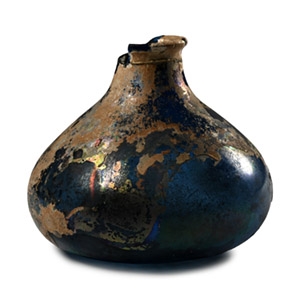
Roman Blue Glass Vessel with Iridescence
1st century A.D.Sold for (Inc. bp): £91
Miniature glass jar with bulbous body, dimple base, short neck and flaring rim. 30 grams, 63 mm
Ex Louis-Gabriel Bellon (c.1819-1899), France. Private collection, Europe. This lot is accompanied by an illustrated lot declaration signed by the Head of the Antiquities Department, Dr Raffaele D’Amato.
Globular jars such as this one have been found in many later 1st-early 2nd century contexts in Britain, central and Northern France, and the Netherlands. Louis-Gabriel Bellon was a prominent French collector of antiquities in the 19th century, renowned for his discerning taste and extensive knowledge of ancient art. His collection, which included Greek, Roman, and Egyptian artifacts, was widely regarded as one of the most significant of its time. Bellon's dedication to the study and preservation of antiquities contributed to the broader understanding of ancient cultures during his era. Pieces from his collection remain highly sought after, reflecting his exceptional eye for quality and historical significance.
