
Loading, please wait...
LOT 1028
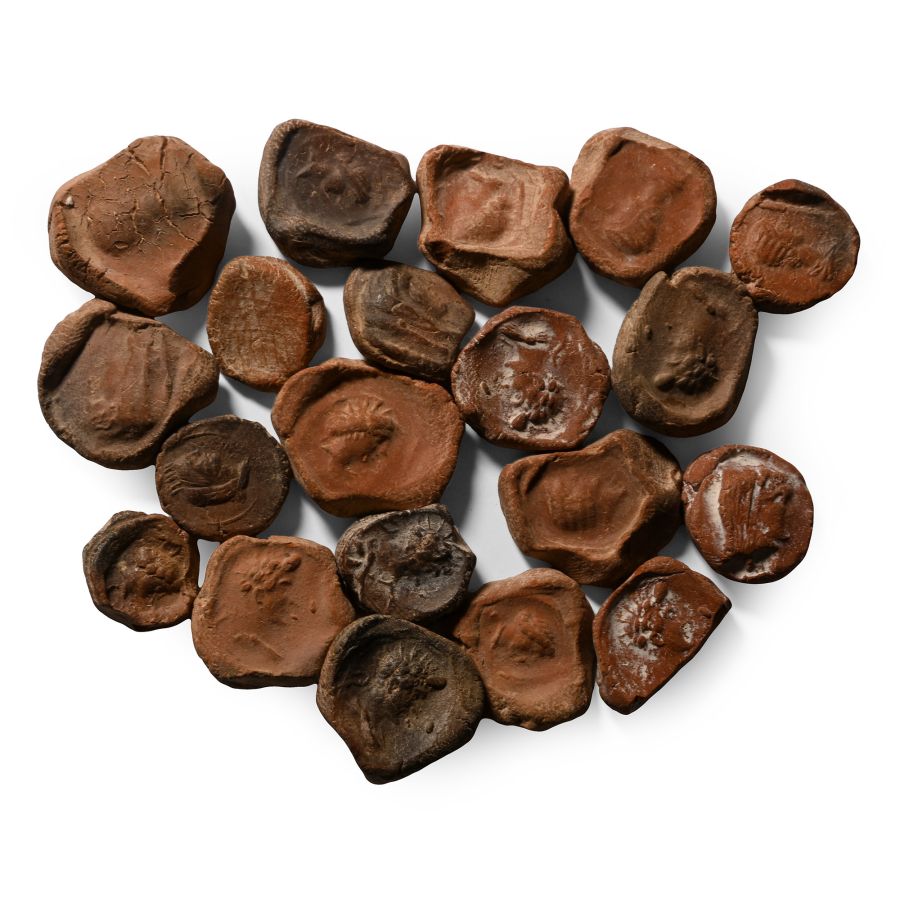
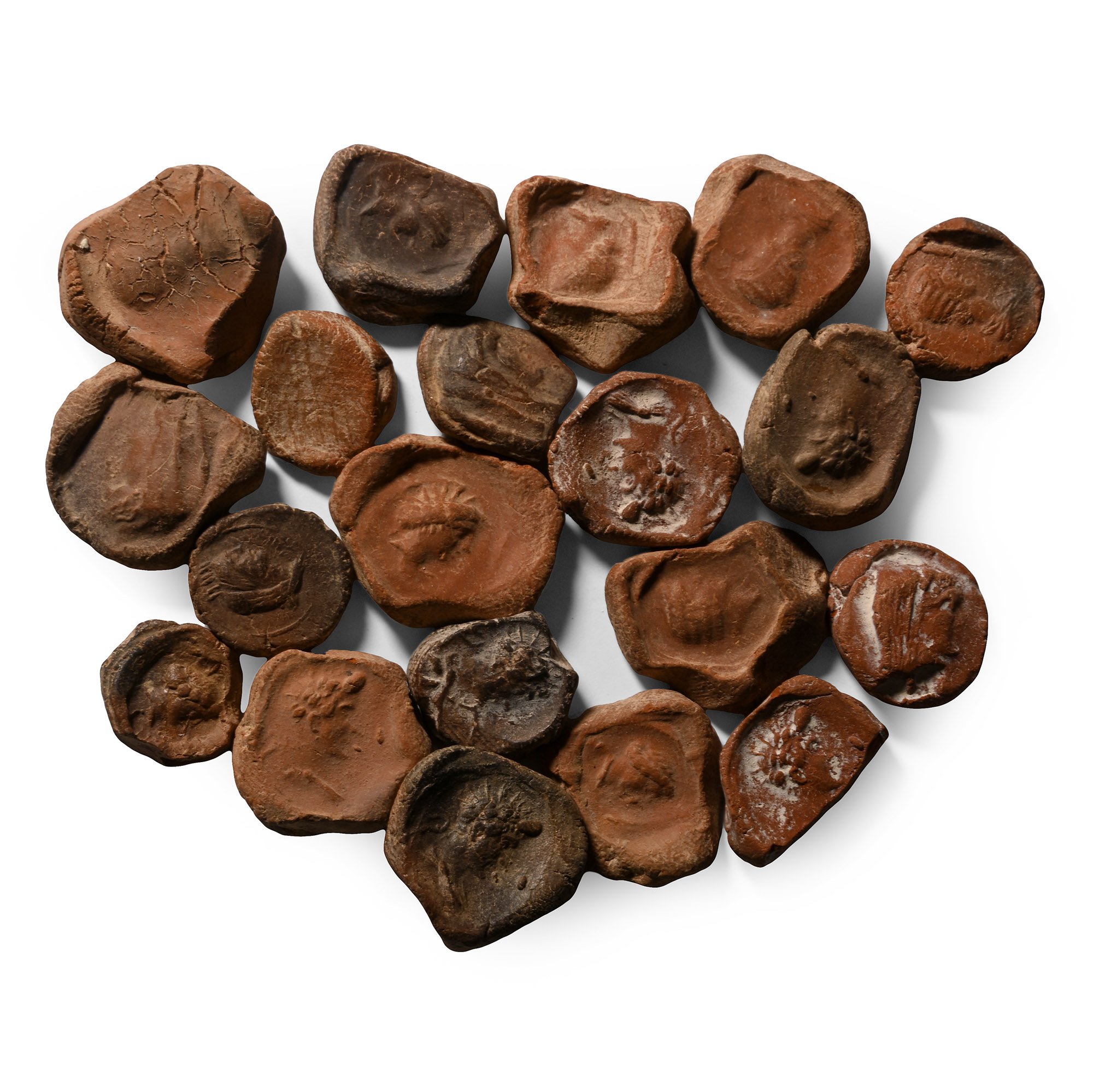
Roman Terracotta Bullae, Tesserae or Token Group
3RD CENTURY B.C.-1ST CENTURY A.D.
1/2 - 7/8 in. (35.6 grams total, 14-22 mm).
A mixed group of ceramic bullae, tesserae or theatre tokens bearing low-relief motifs, mainly consisting of profile busts of deities. [20, No Reserve]
ProvenanceFrom the private collection of a European gentleman (1942-2024), formed since the 1970s.
FootnotesThe term 'tessera' was used in Roman times to convey the Greek term σύμβολον (token). Small tiles are known as tokens, often shaped like coins, made of metal (copper, lead, iron), clay, bone, wood, or glass, stamped as well as engraved. The tokens, however, are not exclusively coin-shaped, as the Latin term 'tessera' refers to a four-sided shape. Tokens and tesserae seem to have been used both in Athens and Rome for the distribution of goods. According to written sources, the term ‘token’ is identified with credentials of the official authorities. They have also been interpreted as tokens of identity, as entrance tickets to theatre performances, tribunals or assemblies of citizens, archival material of seal engraving, as pawns in games, Charon’s obols and even as amulets.
CONDITIONTimeLine Auctions follows a vetting process to ensure the authenticity and legality of all items, reinforcing our commitment to integrity and responsible trading. Each antiquity, antique, and coin lot undergoes thorough examination by a vetting committee of at least ten external specialists, professional trade association members, scientists, and archaeologists: Our Vetting Process
AUCTIONS:
TimeLine is a leading auction house specialising in antiquities, ancient art, collectables, natural history, coins, medals, and books. Our auctions offer museums, collectors, historians, and enthusiasts the opportunity to acquire unique and historically significant pieces.
-
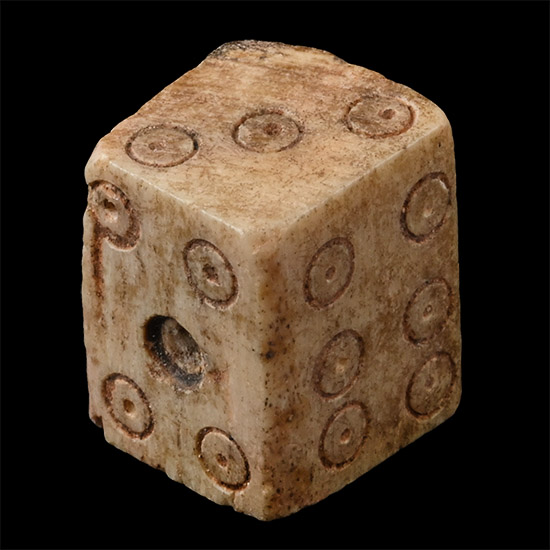
Roman Bone Gaming Die
Circa 1st-4th century A.D.Sold for (Inc. bp): £111
Polygonal with ring-and-dot markings arranged 1:6, 2:3, 4:5. 1.63 grams, 11 mm
Ex Cambridgeshire, UK, collection, 1990s. -
.jpg)
Roman Bronze Marriage Mirror with Facing Busts and Inscription
Circa 4th century A.D.Sold for (Inc. bp): £845
Discoid in plan with a beaded rim and concentric rings; at the centre, two draped busts, a male and a female, with faint remains of inscription surrounding; the other side polished and tinned. 130 grams, 91 mm
UK private collection before 2000. London collection, acquired on the UK art market.
The image on the back of the mirror depicts an imperial couple from the 4th century. The type of diadem worn by the male figure, clad in a paludamentum and cuirass, and the man's profile suggest a depiction of Constantine and Fausta, or of Constantine and his mother Helena. -
.jpg)
Roman Sapphire Gemstone with Crescent Moon and Star
Third quarter of 1st century B.C.Sold for (Inc. bp): £5,980
Cushion-shaped greenish-blue intaglio engraved with a large crescent moon and star. 1.05 grams, 10 mm
Formerly in a private collection of an European lady, 1970s-1980s. Private collection, UK. This lot has been checked against the Interpol Database of stolen works of art and is accompanied by search certificate number no.13305-257800.
Basaltic sapphires used by the Romans came from surface deposits in northern Ethiopia, which were already known and productive in ancient times. This hypothesis is supported by comments by Pliny the Elder (23–79 A.D.) and Solinus (early 3rd century A.D.), both of whom referred to gems from Ethiopia named ‘hyacintos’, which is generally accepted in archaeology to be the ancient name of sapphire. The moon and stars have been, since the 4th century BC, symbols of the city of Byzantium and were also linked with Spartan military culture.
