
Loading, please wait...
_900x900.jpg "Roman Terracotta Bowl Fragment with Boar")
_200x200.jpg "Roman Terracotta Bowl Fragment with Boar")
.jpg "Roman Terracotta Bowl Fragment with Boar")
LOT 0912
Roman Terracotta Bowl Fragment with Boar
3RD-4TH CENTURY A.D.
4 in. (125 grams, 10.1 cm).
Substantial ceramic fragment with high-relief image of a boar running amid foliage; symbol of Legio X Fretensis.
ProvenanceEx German art market, 2000s.
Acquired from an EU collector living in London.
From the collection of Surrey, UK, gentleman.
TimeLine Auctions follows a vetting process to ensure the authenticity and legality of all items, reinforcing our commitment to integrity and responsible trading. Each antiquity, antique, and coin lot undergoes thorough examination by a vetting committee of at least ten external specialists, professional trade association members, scientists, and archaeologists: Our Vetting Process
AUCTIONS:
TimeLine is a leading auction house specialising in antiquities, ancient art, collectables, natural history, coins, medals, and books. Our auctions offer museums, collectors, historians, and enthusiasts the opportunity to acquire unique and historically significant pieces.
-
.jpg)
Roman Limestone Head of a Woman
1st-4th century A.D. or laterEstimate: £300 - 400 (‡+bp*)
Opening Bid: £150
Carved in the round with collar-length flowing hair; part of a frieze or group. 345 grams, 80 mm
Acquired in the mid 1980s-1990s. From the family collection of Mr S.A., Switzerland, thence by descent. Private collection since the late 1990s. -
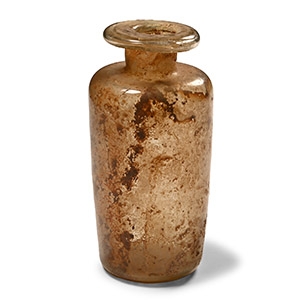
Roman Glass Bottle with Short Neck
3rd-4th century A.D.Sold for (Inc. bp): £104
Mould-blown bottle comprising a flat-based tubular body and bell-shaped neck with applied flange rim. 46 grams, 95 mm
From a family collection mostly formed in the 1940s-1950s, thence by descent. -
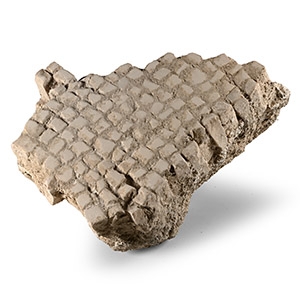
Roman Floor Mosaic Section
1st-4th century A.D.Sold for (Inc. bp): £124
An irregular panel of floor with opus caementicium substrate and white stone tesserae embedded in horizontal rows in the upper layer. 856 grams, 16.5 cm
From the collection of a late East Anglian teacher and antiquarian who retired to the Isle of Wight in Hampshire, UK. He amassed a large collection of objects between the 1960s-1980s.
