
Loading, please wait...
LOT 0552
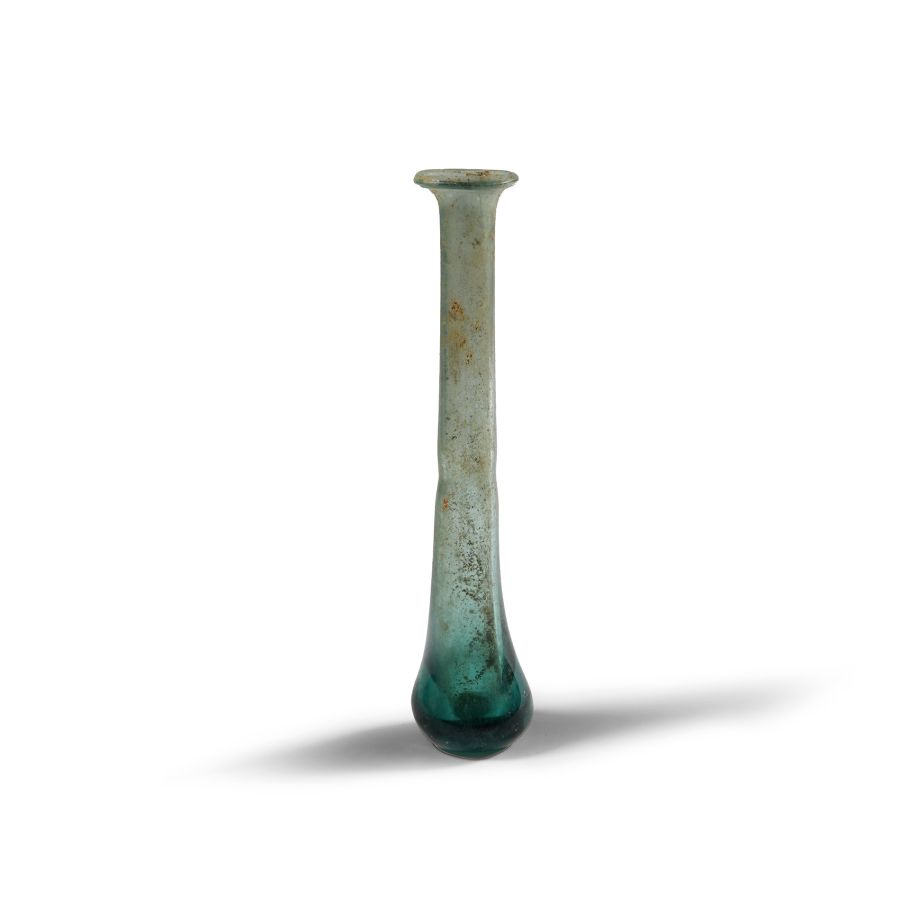
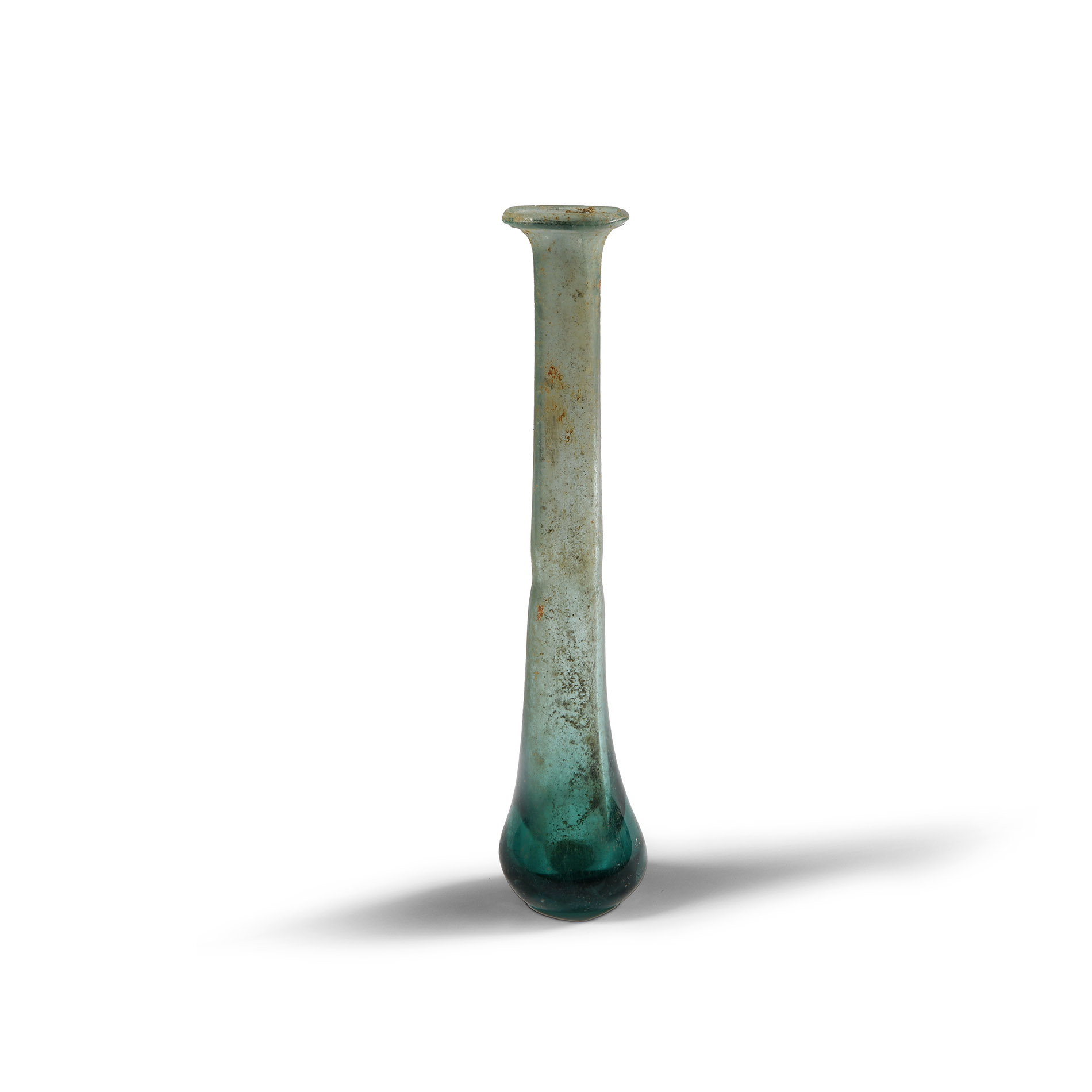
Roman Tall Green Glass Vial
LATE 3RD CENTURY A.D.
6 in. (60 grams, 15 cm high).
Slightly bulbous with flat base, tall narrow piriform neck, splayed rim with an in-folded lip.
ProvenanceAcquired 1980-2015.
Ex Abelita family collection.
Cf. Filarska, B., Szkla Starozytne (Ancient Glass) II vol., Warszawa, 1972, II, cat.229, pl.XLV,3, for similar vessel.
FootnotesDuring the early Roman period the glass-making techniques used by the Greeks were continued. Much of the glass was buried and as a result acquired an attractive lustrous patination. Roman glass became a medium for the promotion of the emperor and Imperial propaganda, as well as being used as container for various uses. Glass blowing, a new technique, meant that quantities of identical bottles could be produced.
CONDITIONTimeLine Auctions follows a vetting process to ensure the authenticity and legality of all items, reinforcing our commitment to integrity and responsible trading. Each antiquity, antique, and coin lot undergoes thorough examination by a vetting committee of at least ten external specialists, professional trade association members, scientists, and archaeologists: Our Vetting Process
AUCTIONS:
TimeLine is a leading auction house specialising in antiquities, ancient art, collectables, natural history, coins, medals, and books. Our auctions offer museums, collectors, historians, and enthusiasts the opportunity to acquire unique and historically significant pieces.
LOT 0552
Roman Tall Green Glass Vial
Estimate £100 - 140€120 - 160 (for guidance only)$140 - 190 (for guidance only)
-
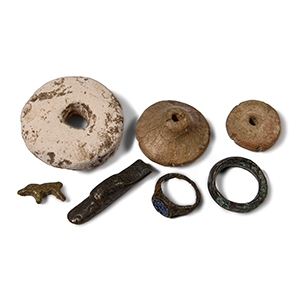
Roman and Other Artefact Collection
1st century A.D. and laterSold for (Inc. bp): £33
Comprising: a small bronze animal figure; three ceramic spindle whorls/weights; tinned ring with keeled hoop; a bronze swan-head finial; and a bronze ring with blue glass intaglio. 91 grams total, 20-45 mm
Property of a UK gentleman, acquired in the 1970s. Property of an East Sussex, UK, gentleman. -
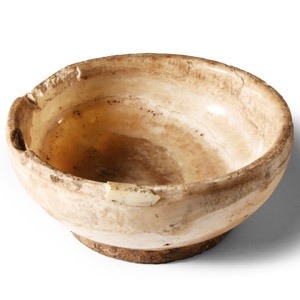
Roman Alabaster Bowl
1st-3rd century A.D.Estimate: £300 - 400 (‡+bp*)
Opening Bid: £150
With convex sidewall and copper-alloy facing to the foot; chipped. 263 grams, 98 mm
Acquired early 1990s. Ex private American collection; thence by descent. Private collection since 1998. -
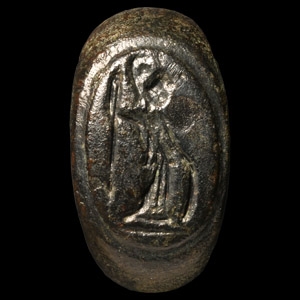
Roman Bronze Ring with Minerva
Circa 1st-3rd century A.D.Estimate: £100 - 140 (+bp*)
Opening Bid: £50
With a keeled hoop expanding at the shoulders, oval raised bezel with standing goddess Minerva holding a long spear and shield at her feet, wearing a crested helmet. 6.92 grams, 22.09 mm overall, 17.21 mm internal diameter (approximate size British J, USA 4 3/4, Europe 8.69, Japan 8)
From the collection of a High Wycombe, Buckinghamshire, UK, gentleman, circa 2000.
