
Loading, please wait...
LOT 0564
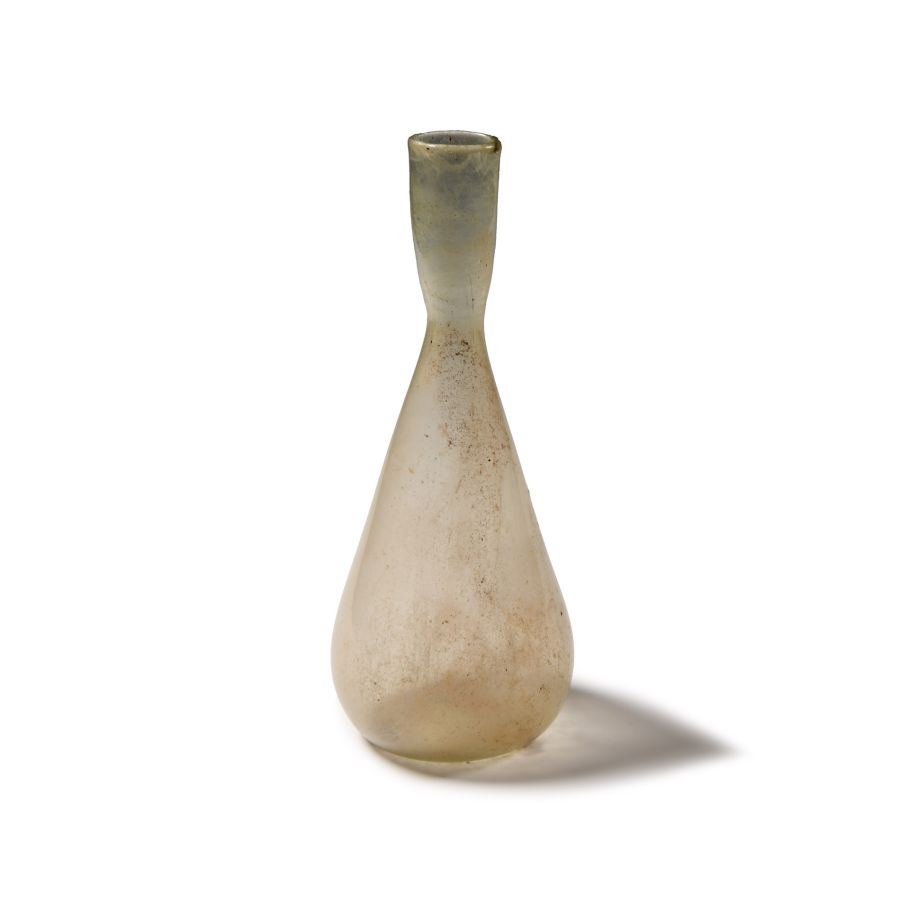
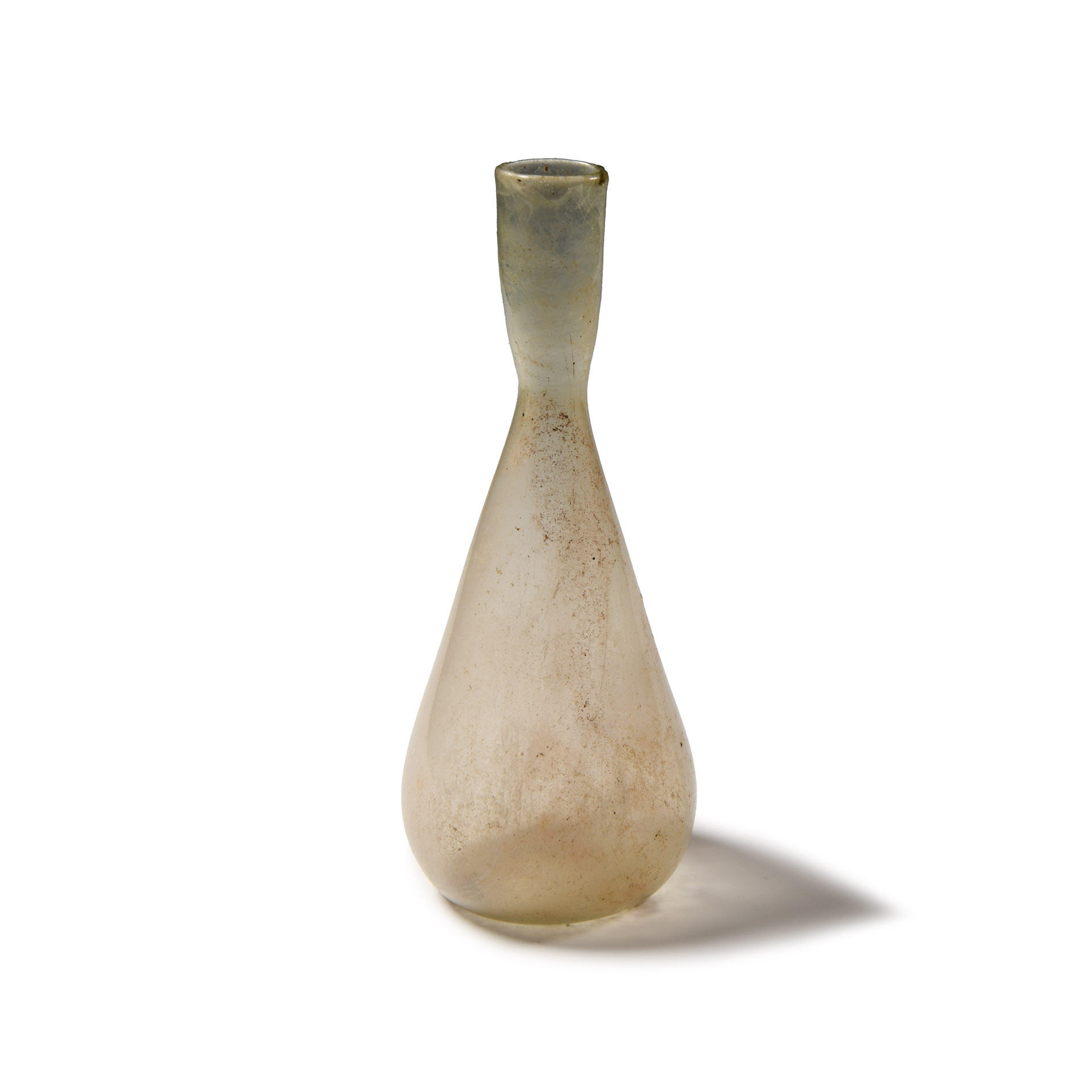
Roman Tall Glass Unguentarium
2ND-4TH CENTURY A.D.
6 1/8 in. (42.6 grams, 15.5 cm high).
With piriform body and dimpled base; slender tubular neck expanding slightly towards the rim; in pale green glass.
ProvenanceAcquired in the 1970s, thence by descent 2012.
Private UK collection, Cambridge, UK.
Property of an East Sussex, UK, gentleman.
TimeLine Auctions follows a vetting process to ensure the authenticity and legality of all items, reinforcing our commitment to integrity and responsible trading. Each antiquity, antique, and coin lot undergoes thorough examination by a vetting committee of at least ten external specialists, professional trade association members, scientists, and archaeologists: Our Vetting Process
AUCTIONS:
TimeLine is a leading auction house specialising in antiquities, ancient art, collectables, natural history, coins, medals, and books. Our auctions offer museums, collectors, historians, and enthusiasts the opportunity to acquire unique and historically significant pieces.
-
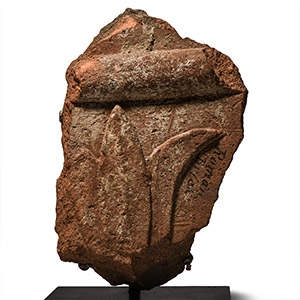
Roman Terracotta Architectural Element
1st century A.D.Sold for (Inc. bp): £546
Irregular terracotta fragment with horizontal rib and high-relief palmette motif to the obverse; old inked collector's inscription 'Roman Brick' to one side; remains of light-coloured pigment; vertical mounting rib to reverse; mounted on a custom-made display stand. 1.38 kg total, 21 cm high including stand
Private collection of Katherine Carson, Delaware, acquired in the 1930s and thence by descent to great-nephew before sale by Ms Carson. This artefact was part of a large collection of curios, a photo of which is in the Dover Post (8 October 1975, p.3) when in the ownership of Alan Hunn of Delaware. Previously offered at auction by Artemis Gallery, 14 February 2010, lot 30 (unsold lot with pre-sale estimate of 2,000 – 3,000 USD). Ex Sands of Time Ancient Art Gallery, Washington D.C. U.S.A., January 2012, item number RT903. -
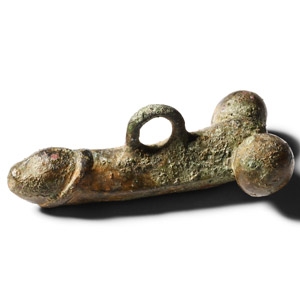
Roman Bronze Phallic Pendant
Circa 1st-4th century A.D.Sold for (Inc. bp): £364
With anatomical detailing and integral loop above. 17.1 grams, 38 mm
Acquired on the UK art market before 2000. Property of a Surrey, UK, collector. -
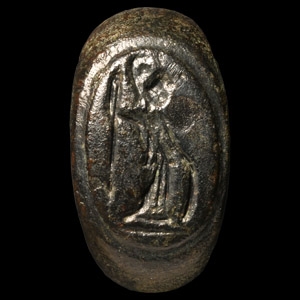
Roman Bronze Ring with Minerva
Circa 1st-3rd century A.D.Estimate: £100 - 140 (+bp*)
Opening Bid: £50
With a keeled hoop expanding at the shoulders, oval raised bezel with standing goddess Minerva holding a long spear and shield at her feet, wearing a crested helmet. 6.92 grams, 22.09 mm overall, 17.21 mm internal diameter (approximate size British J, USA 4 3/4, Europe 8.69, Japan 8)
From the collection of a High Wycombe, Buckinghamshire, UK, gentleman, circa 2000.
