
Loading, please wait...
LOT 0683
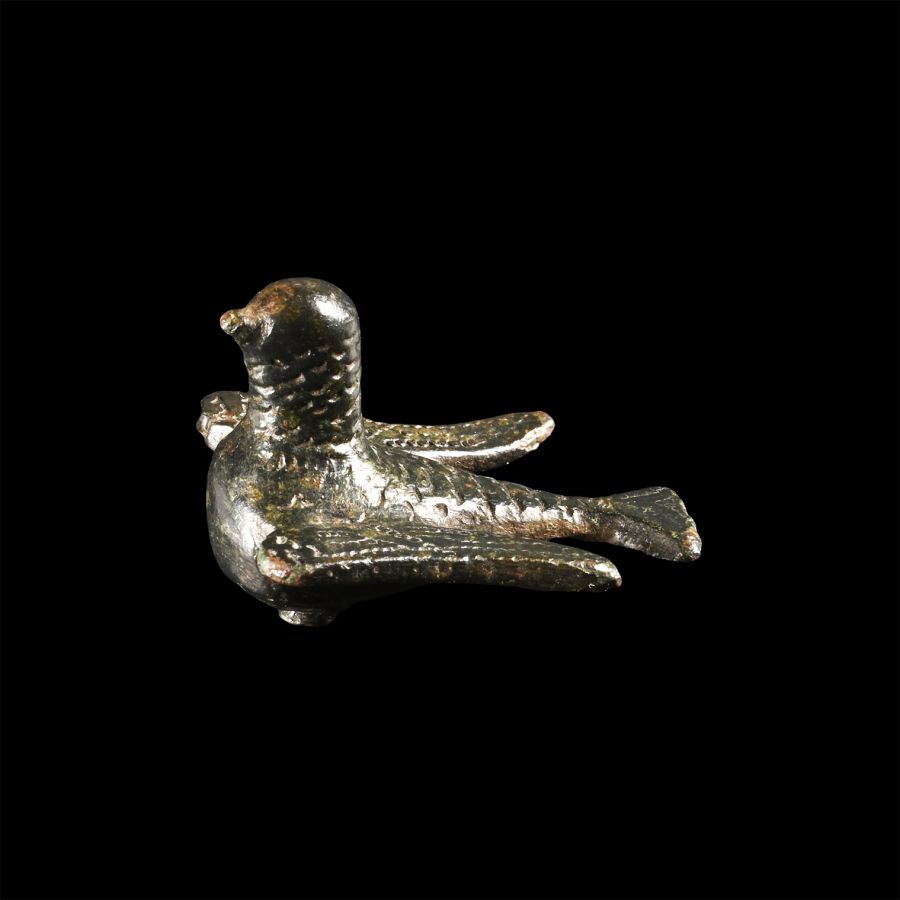
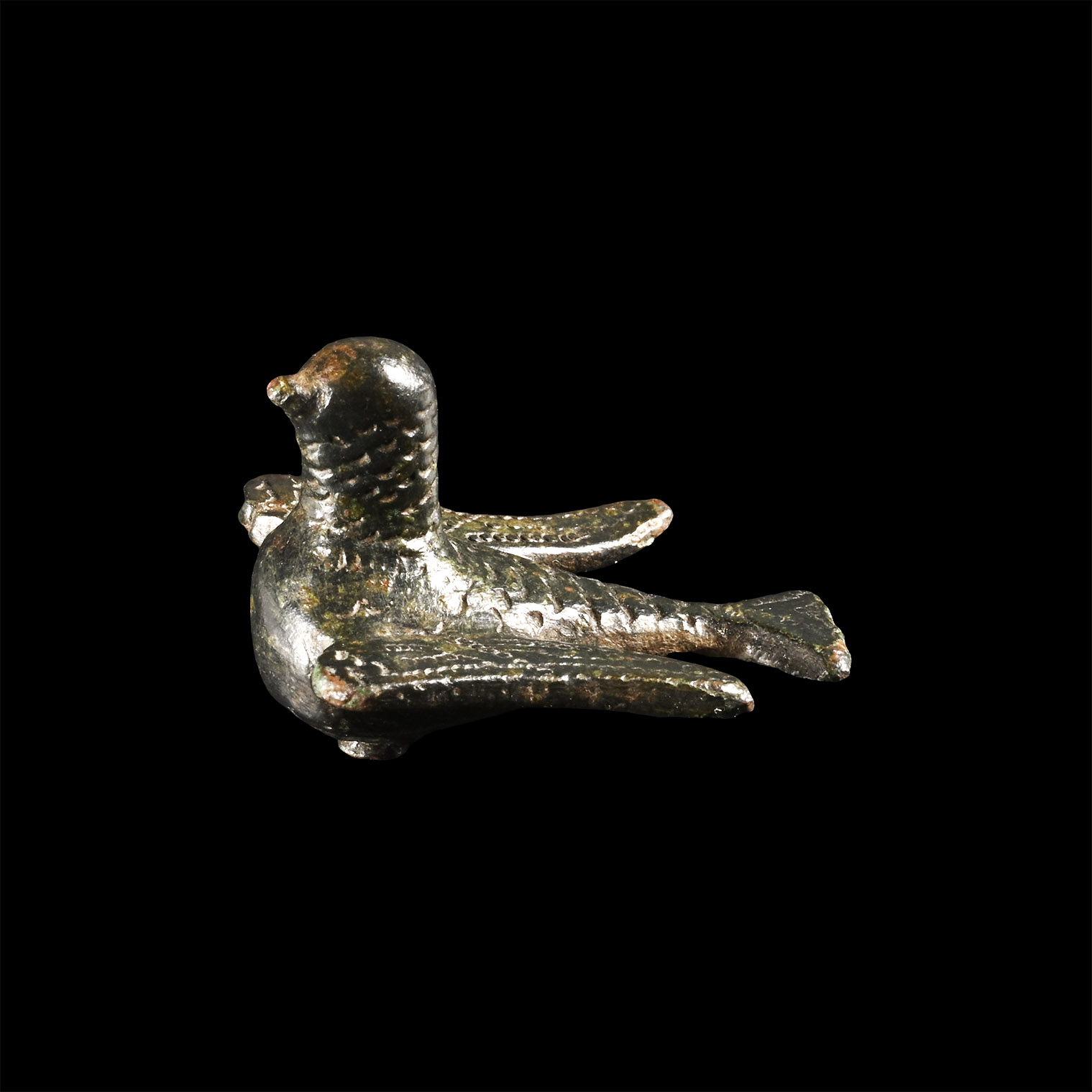
Roman 'Suffolk' Bronze Bird Mount
1ST-2ND CENTURY A.D.
1 in. (12.3 grams, 26 mm).
Modelled in the round with wings spread, lines of punched-point feather detailing to the wings and body; attachment lug to the underside. [No Reserve]
ProvenanceFound Suffolk, UK, 1980s.
Property of an Essex collector.
TimeLine Auctions follows a vetting process to ensure the authenticity and legality of all items, reinforcing our commitment to integrity and responsible trading. Each antiquity, antique, and coin lot undergoes thorough examination by a vetting committee of at least ten external specialists, professional trade association members, scientists, and archaeologists: Our Vetting Process
AUCTIONS:
TimeLine is a leading auction house specialising in antiquities, ancient art, collectables, natural history, coins, medals, and books. Our auctions offer museums, collectors, historians, and enthusiasts the opportunity to acquire unique and historically significant pieces.
-
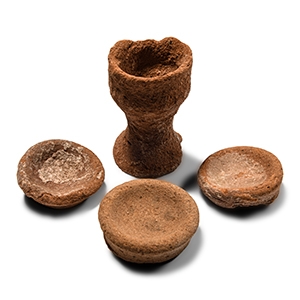
Roman Terracotta Vessel Collection
Circa 1st-4th century A.D.Sold for (Inc. bp): £52
Comprising a small chalice-shaped vessel with tall foot and three shallow miniature platters. 78 grams total, 34-54 mm
Property of a UK gentleman, acquired in the 1970s. Property of an East Sussex, UK, gentleman. -
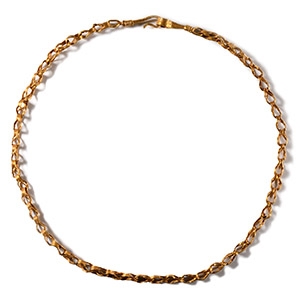
Roman Gold Linked Chain
1st-2nd century A.D.Estimate: £15,000 - 20,000 (+bp*)
Opening Bid: £7,500
Loop-in-loop chain, each link formed from two strands of thick gold wire; thick hook with the end coiled about the shank; eye with ribbed detailing and coiled end; housed in a custom-made display case. 28.15 grams, 46.5 cm long
Excellent condition
Acquired in the late 1980s-early 1990s. Important North West London collection. Accompanied by an academic report by Dr Raffaele D’Amato. This lot has been checked against the Interpol Database of stolen works of art and is accompanied by search certificate no.11937-210478.
Among the necklaces manufactured from gold mesh (hormoi or chains), there are two recognisable fundamental types: the first, shorter and with endings suitable for being fixed on fabric, was used to adorn clothes, hooked at shoulder height. The second type (like our specimen) was worn around the neck and was generally fitted with a simple hook-and-eyelet closure. -
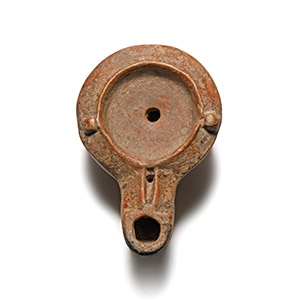
Roman FORTIS Terracotta Oil Lamp
Late 1st century A.D.Sold for (Inc. bp): £124
A factory lamp with flat-topped oval body, broad flat shoulder and small concave plain discus; flat bottom with Latin inscription 'FORTIS'. 77.7 grams, 96 mm
From the collection of a High Wycombe, Buckinghamshire, UK, gentleman, circa 2000.
At the end of the 1st century B.C., in the Po Valley, began the industrial production of Firmalampen, i.e. lamps signed on the bottom in relief noting the place of production or fabrica. The signature FORTIS, visible on this specimen, is one of the most documented and is attributable to the workshop of L. Aemilius Fortis, recently discovered to have been in Mutina (Modena).
