
Loading, please wait...
LOT 2171
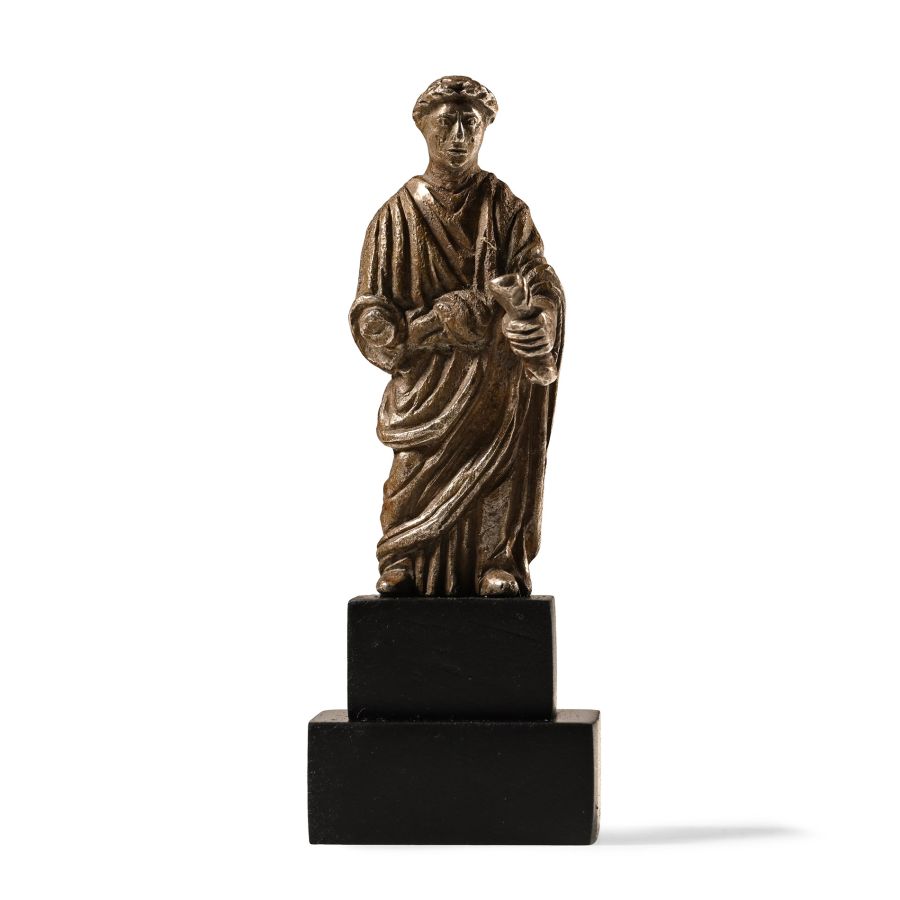
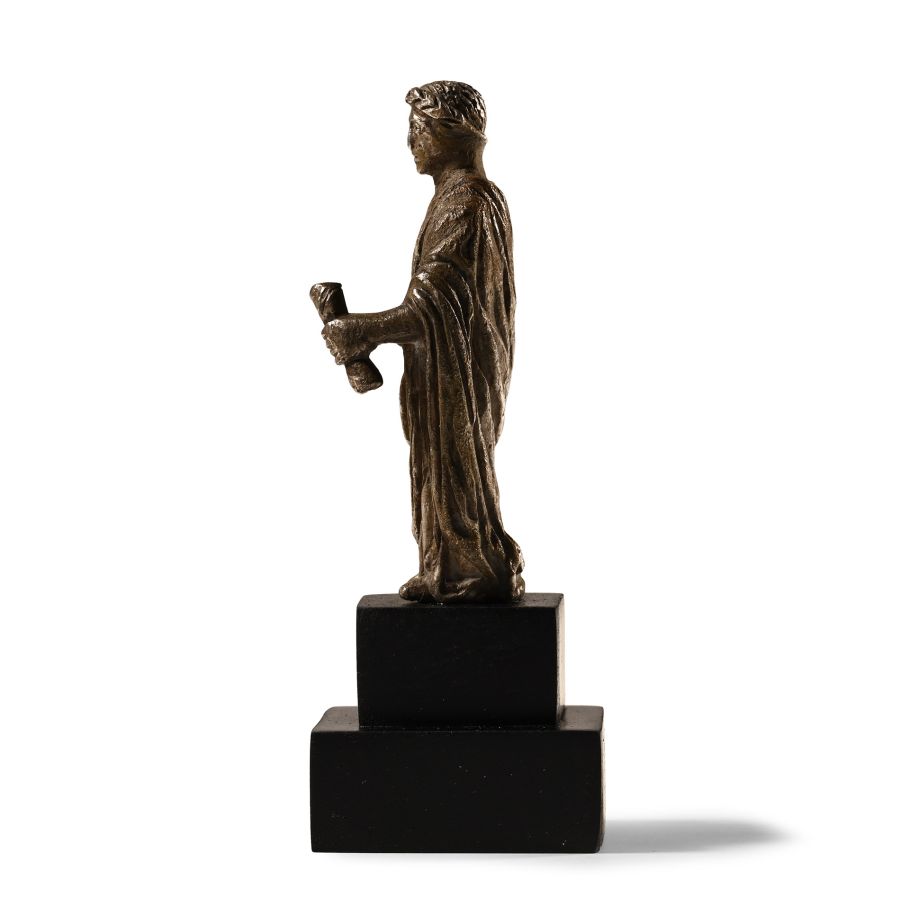
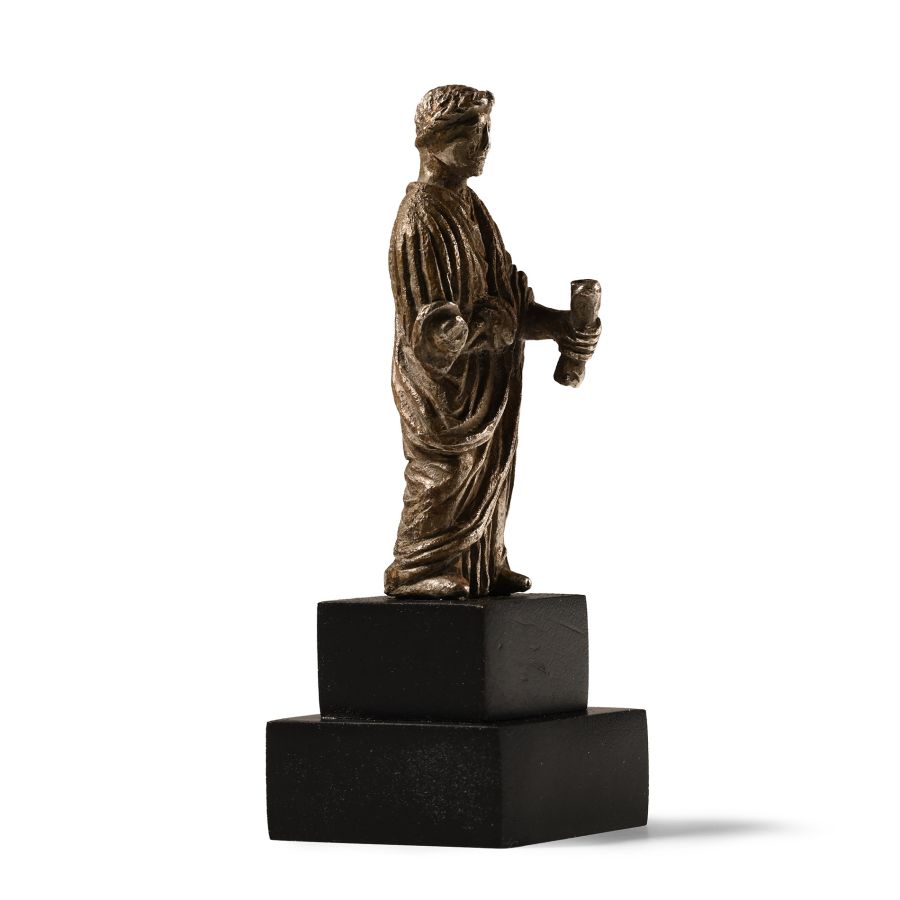
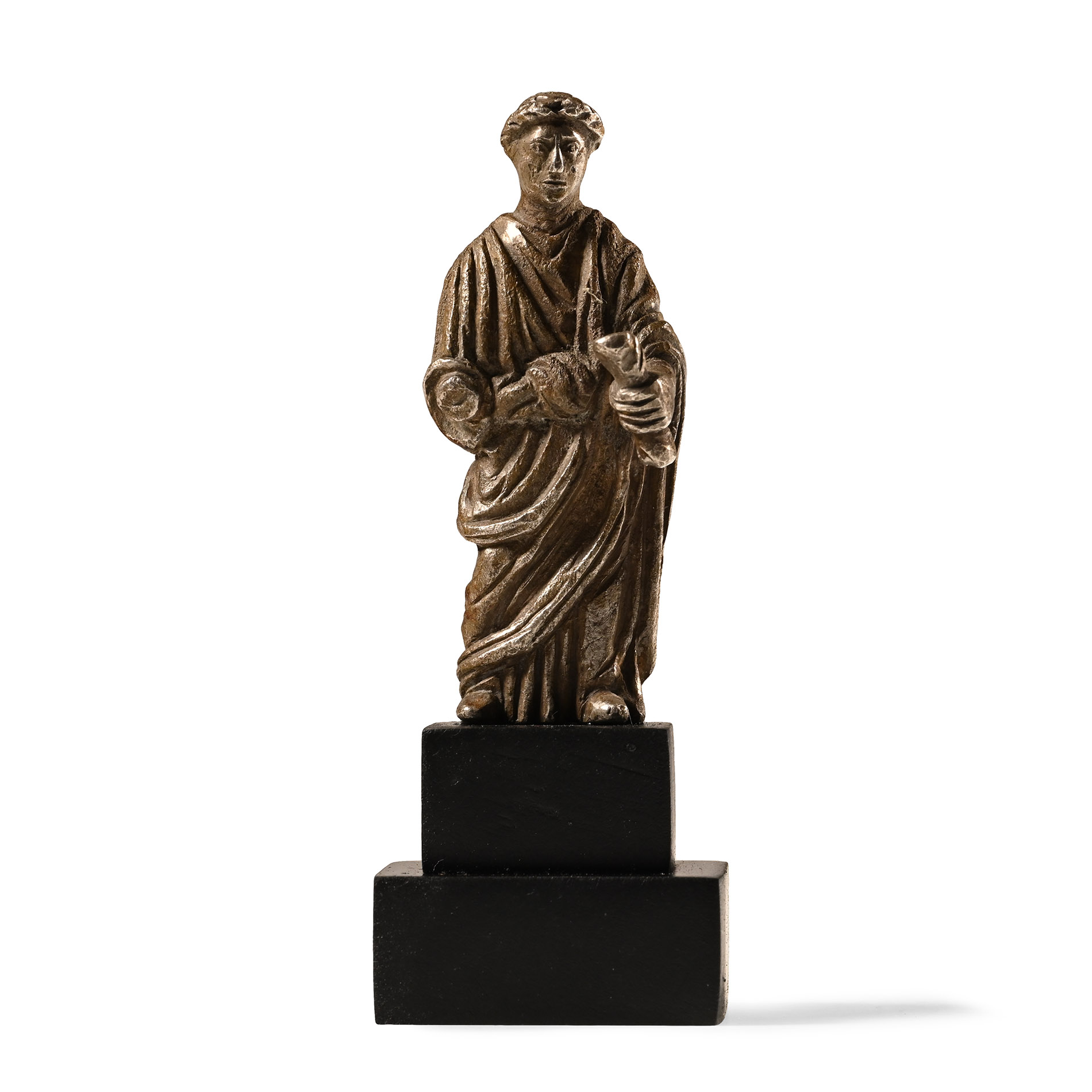
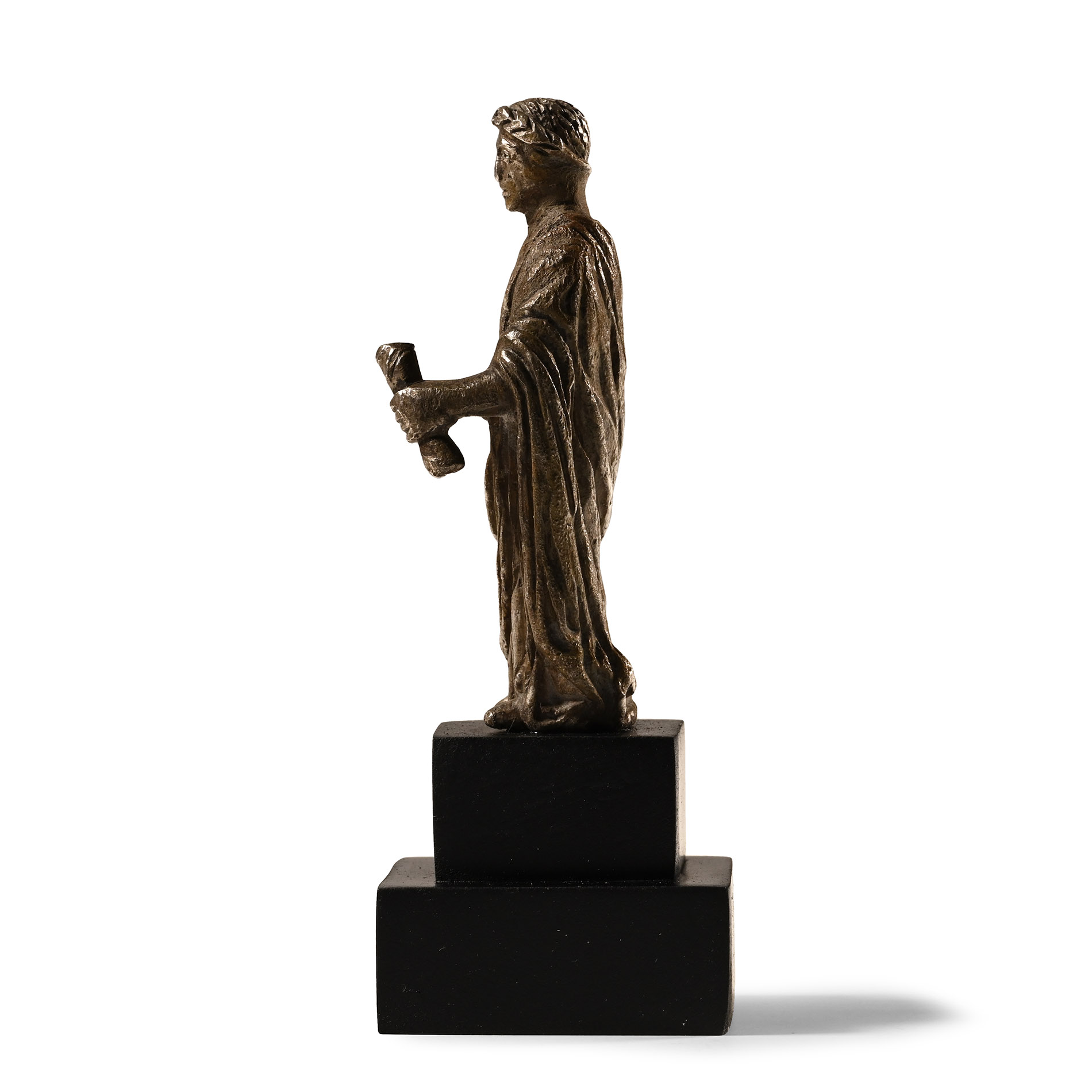
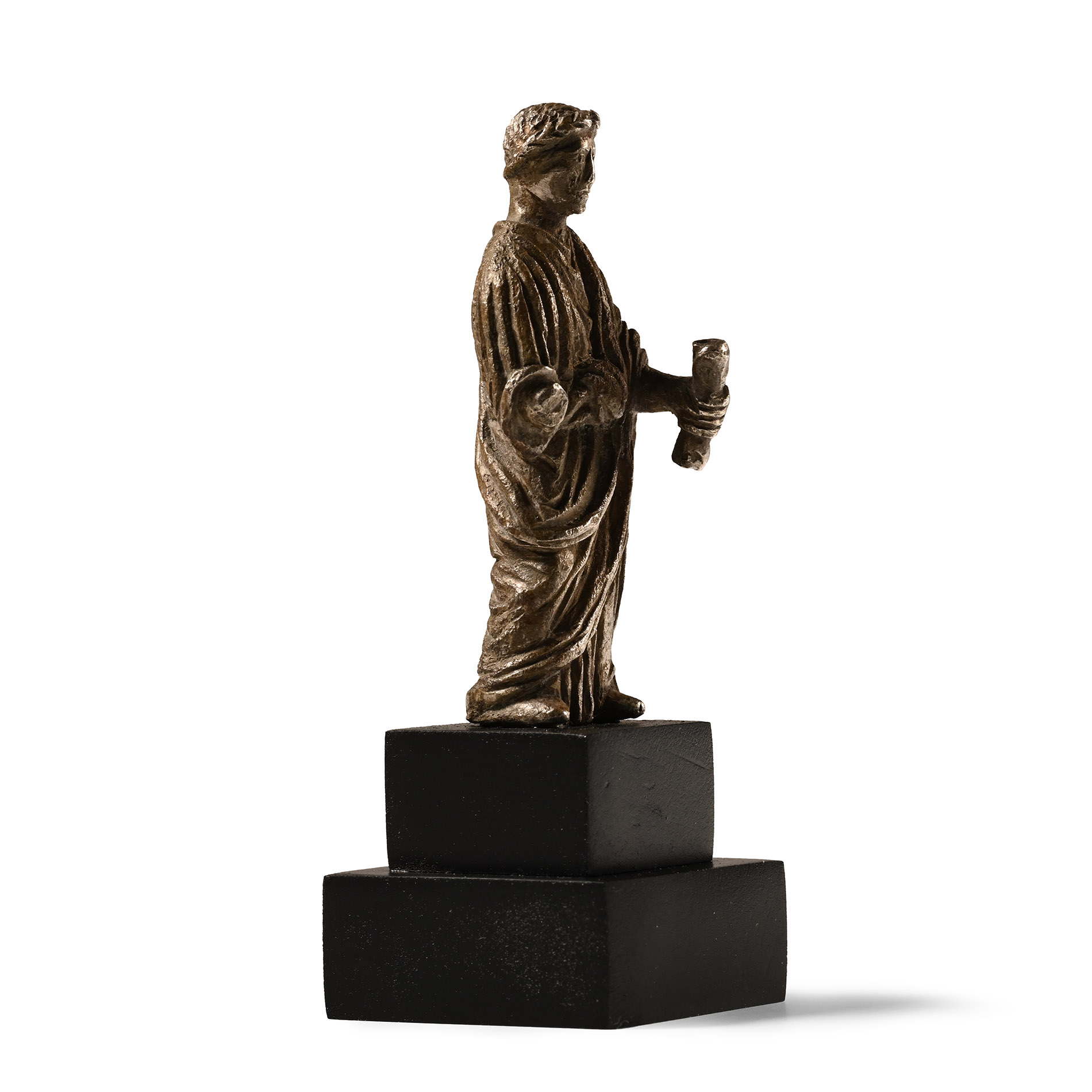
Roman Style Silver Statuette of a Magistrate
20TH CENTURY A.D. OR EARLIER
3 5/8 in. (98 grams total, 93 mm including stand).
Standing erect with left hand extended gripping a scroll; wearing a full toga fastened at the waist and draped over the body; the head with short hair in the Julian style and a laurel wreath to the brow; after the antique; mounted on a custom-made display stand. [No Reserve]
ProvenanceFrom a collection acquired on the UK art market from various auction houses and collections mostly before 2000.
From an important Cambridgeshire estate; thence by descent.
This lot is accompanied by an illustrated lot declaration signed by the Head of the Antiquities Department, Dr Raffaele D’Amato.
The statuette represents a city magistrate clad in a toga, the most famous 'official' civil dress of the Roman period between the first century B.C. and the first century A.D. The fully developed toga of Consular and Imperial Rome was shaped as a segment of a circle and about 18 and a half feet long by seven feet wide at its centre. It was decorated at times by a purple or red stripe along the straight edge. The type of garment of our statuette is similar to the one seen on the statue of Emperor Titus at the Vatican Museum.
CONDITIONTimeLine Auctions follows a vetting process to ensure the authenticity and legality of all items, reinforcing our commitment to integrity and responsible trading. Each antiquity, antique, and coin lot undergoes thorough examination by a vetting committee of at least ten external specialists, professional trade association members, scientists, and archaeologists: Our Vetting Process
AUCTIONS:
TimeLine is a leading auction house specialising in antiquities, ancient art, collectables, natural history, coins, medals, and books. Our auctions offer museums, collectors, historians, and enthusiasts the opportunity to acquire unique and historically significant pieces.
-
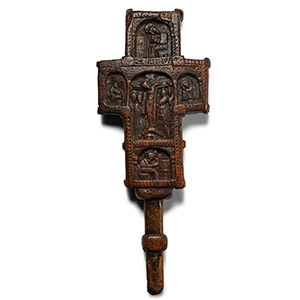
Mount Athos Wooden Cross with the Crucifixion and the Baptism
Circa 1669 A.D.Sold for (Inc. bp): £2,080
Showing the Evangelists and the Crucifixion with Saint Mary, Saint John and Saint Longinos on one side with Greek inscription 'STAVROSIS (Η ΣΤΑΥΡΟΣΙΣ = the Crucifixion)' above; the Baptism on the other side with Greek inscription 'VANGELISMOU (Η ΒΑΝΓΕΛΙΣΜΟΥ = the Apparition)' above, evangelists depicted above and below with the angels Gabriel and Michael to the sides. 93 grams, 19.5 cm
Acquired from Portobello Road, London, in the 1980s. Property of a London, UK, gentleman collector. This lot is accompanied by an illustrated lot declaration signed by the Head of the Antiquities Department, Dr Raffaele D’Amato.
The term ‘Dodekaorton cross’ is the most appropriate for this category of crosses and is used in other codices of the post-Byzantine period. These small crosses were used by the Hieromonks for blessings to the faithful and in various processions and liturgies, and were often mounted with frames made of precious materials. The carving of wooden crosses is regarded as an art traditionally practiced by Athonite monks. Ioannis Komninos in 1698 and the Jesuit priest Braconnier in 1706 both refer to the carved wooden pectorals and crosses made by the monks in order to provide themselves with a livelihood. -

Russian Wooden Icon with Christ Pantocrator
19th century A.D.Sold for (Inc. bp): £390
Showing Christ Pantocrator (Lord of the Universe) making a blessing gesture with the right hand, dressed in red chiton and blue chlamys, the left hand holding the gospel with Cyrillic inscription from Matthew 11:28 Прiиди́те ко мнѣ́ вси́ труждáющiися и обременéннiи, и áзъ упокóю вы́, translating 'Come unto me, all who labour and are heavy-laden, and I will give you rest'; inscriptions beside the Christ's head 'IC XC' for 'Jesus Christ' and Cyrillic inscription 'Господь Вседержитель'= 'Lord Almighty on both sides of His Body'. 1.08 kg, 36 x 27.5 cm
Property of a London, UK, gentleman collector. This lot is accompanied by an illustrated lot declaration signed by the Head of the Antiquities Department, Dr Raffaele D’Amato.
This fine Russian religious work depicts Christ Pantocrator, ‘Almighty’ or ‘All Powerful’. It is a compound word formed from the Greek words for ‘all’ and the noun ‘strength’ (kratos). -
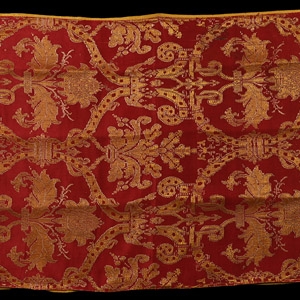
Tudor Period Embroidered Fragment
Late 16th century A.D.Sold for (Inc. bp): £247
Rectangular swatch of red and gold fabric with embroidered vegetal motifs. 188 grams, 55 x 132 cm
Private collection, Chateau de Frechou, France. Daguerre Societe de Ventes Volontaires, 21 March 2016, no.9 [Part]. This lot is accompanied by an illustrated lot declaration signed by the Head of the Antiquities Department, Dr Raffaele D’Amato.
