
Loading, please wait...
LOT 1473
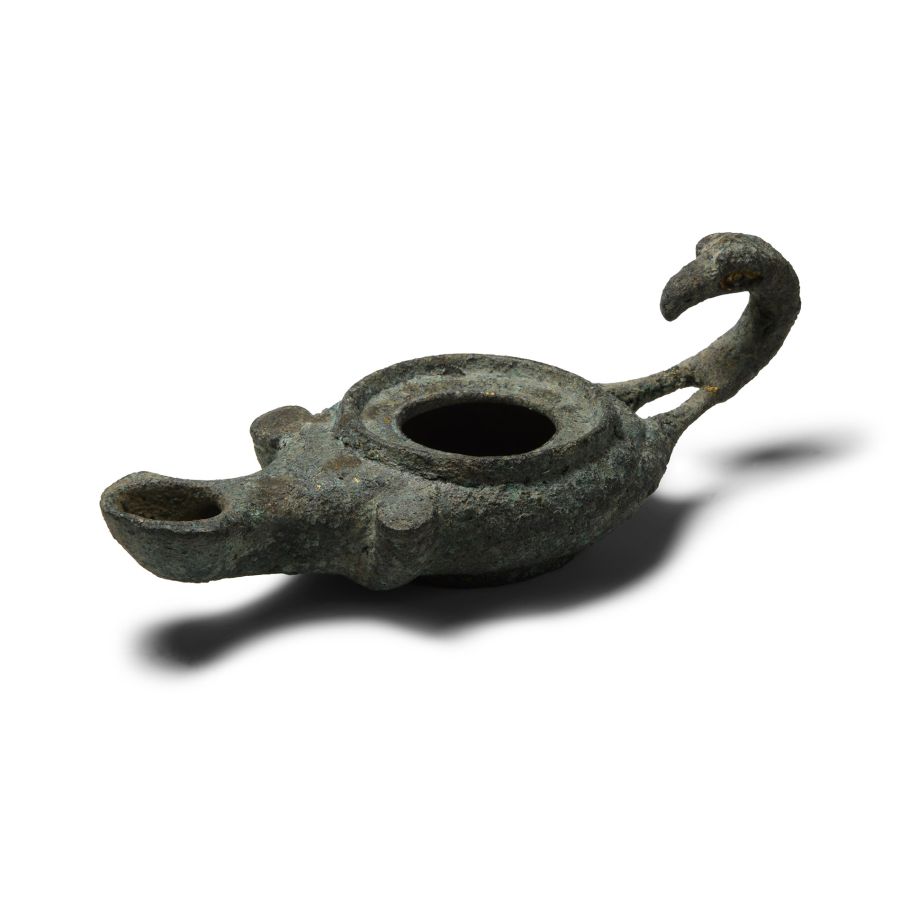
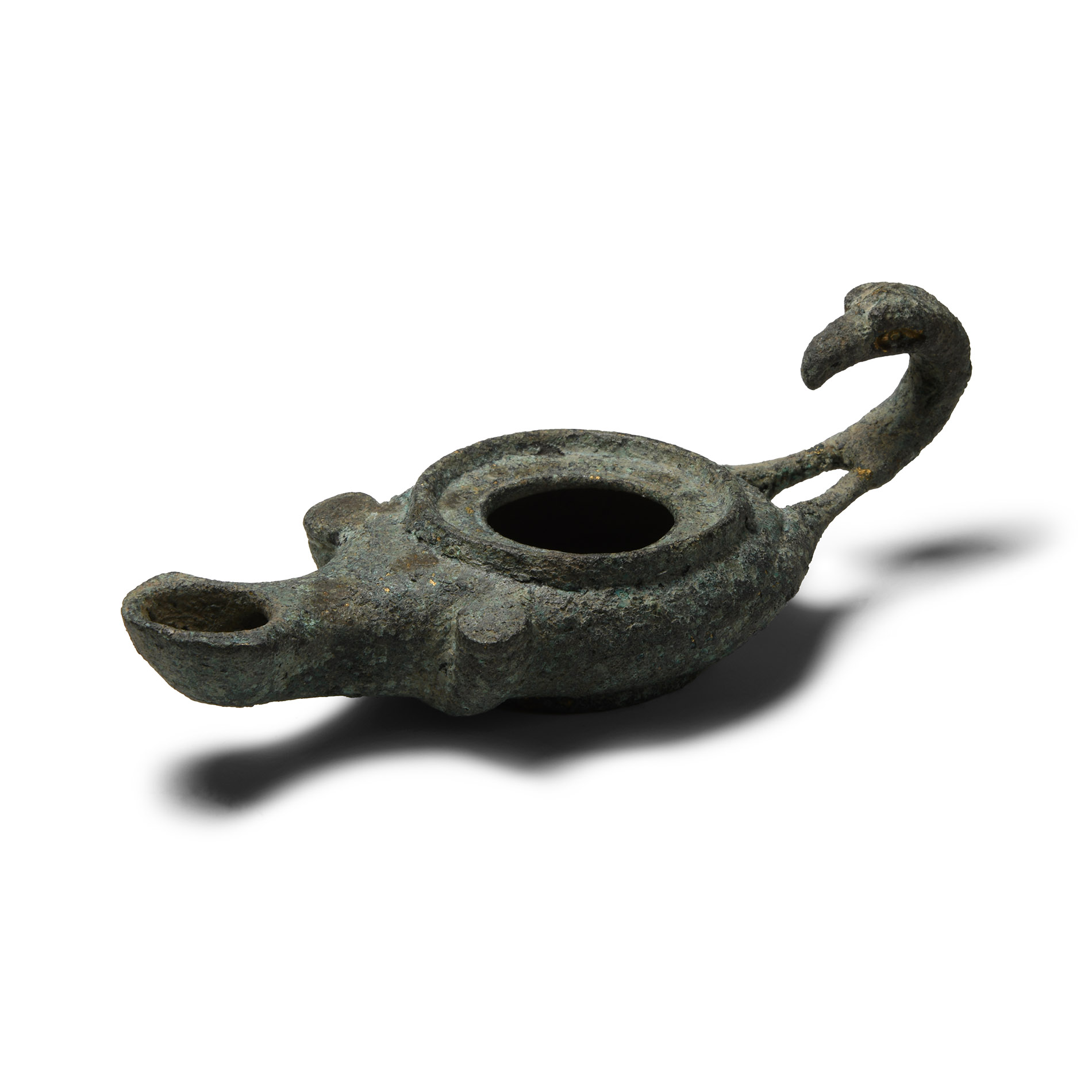
Roman Style Oil Lamp
20TH CENTURY A.D.
11 3/4 in. (140 grams, 12 cm).
A bronze lamp with broad discus and volute nozzle flanked by two horns; raised rim to the discus, concentric rings to the underside; long recurved handle with bifid connection to the body, developing to a eagle-head finial with curved beak and feather detailing. [No Reserve]
ProvenanceAcquired in Munich in the 1970s.
From an old European collection.
TimeLine Auctions follows a vetting process to ensure the authenticity and legality of all items, reinforcing our commitment to integrity and responsible trading. Each antiquity, antique, and coin lot undergoes thorough examination by a vetting committee of at least ten external specialists, professional trade association members, scientists, and archaeologists: Our Vetting Process
AUCTIONS:
TimeLine is a leading auction house specialising in antiquities, ancient art, collectables, natural history, coins, medals, and books. Our auctions offer museums, collectors, historians, and enthusiasts the opportunity to acquire unique and historically significant pieces.
-
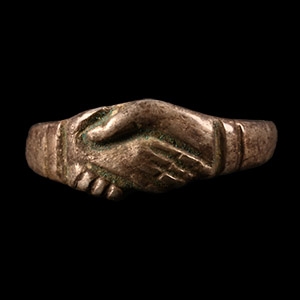
Post Medieval Silver Fede Ring with Clasped Hands
Circa 17th century A.D.Sold for (Inc. bp): £156
A silver mani in fede ring featuring an expanded bezel designed as crudely engraved clasped hands with collared sleeves. 2.84 grams, 21.63 mm overall, 18.93 mm internal diameter (approximate size British R, USA 8 1/2, Europe 18 3/4, Japan 18)
Acquired in the late 1990s-2000. Property of an East London gentleman.
The 'hands clasped in faith' imagery represents the hands of the couple joined in marriage in this and earlier periods. -
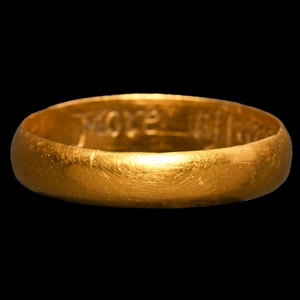
Post Medieval Gold 'More Assured then Professed' Posy Ring
Circa 18th century A.D.Sold for (Inc. bp): £1,040
A gold posy ring with D-section band, inscribed internally with 'More assured then professed' with long S's in lower case with small foliate scroll after. 2.42 grams, 18.46 mm overall, 16.65 mm internal diameter (approximate size British L, USA 5 3/4, Europe 11.24, Japan 10)
Acquired on the UK antiques market between 1974-1985. Albert Ward collection, Essex, UK. -
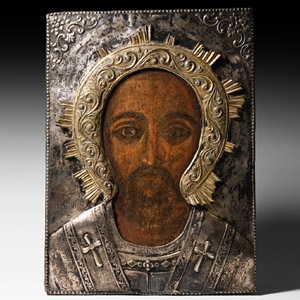
Greek Icon with Bust of Saint Eleutherios
18th century A.D.Sold for (Inc. bp): £702
A wooden painted icon of Saint Eleutherios with a repoussé silver oklad that covers all but the face, embossed in rich priestly robes, representing the priest's omophorion decorated with crosses, over an embroidered robe or sticharion, the nimbus gilded and embossed with foliage and rays over a silver background, Greek inscription 'O AΓΙΟΣ ΕΛΕΥΘΕΡΙΟΣ' (Saint Eleutherios) to the sides. 1.9 kg, 37.5 x 28.7 cm
Property of a London lady, part of her family's collection.
As bishop in Illyricum, Eleutherios promoted the cause of at a time when the persecutions not only made it difficult to win and hold converts, but also at a time when the gravest danger was in being a high-ranking prelate of the Church. Oblivious to this threat, he was acclaimed in the inner circle of Christianity as the brightest luminary of Christian Rome since the apostles. His immense popularity grew and thereby became more dangerous to the state. He was finally brought to the attention of Emperor Hadrian, who ordered his arrest, and then cast into prison, tortured, and put to death on December 15th.
