
Loading, please wait...
LOT 2055
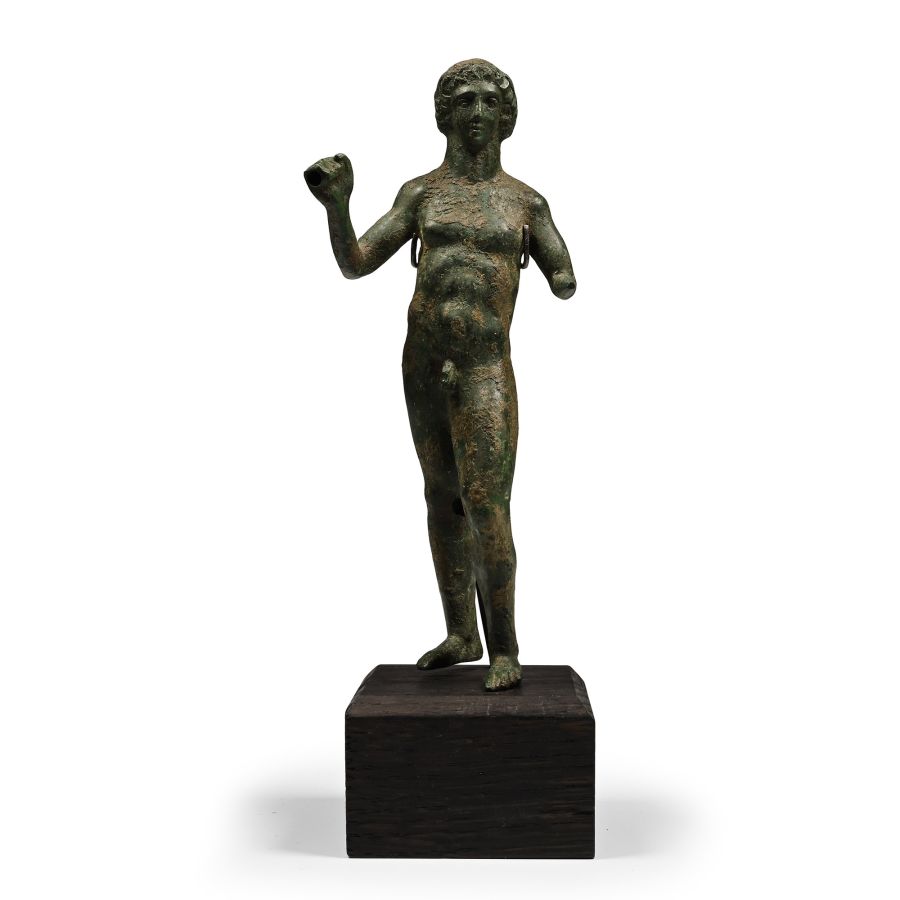
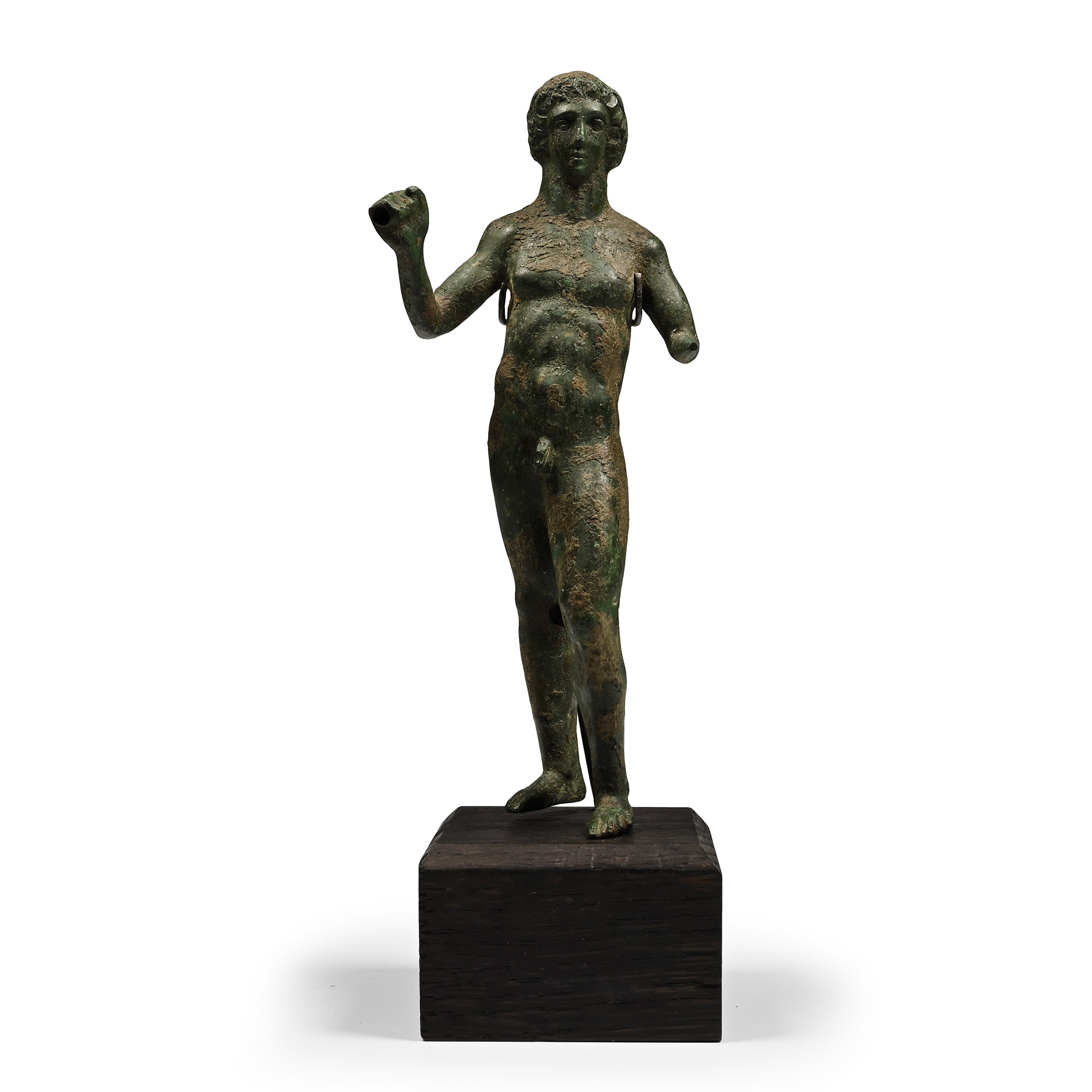
Roman Style Male Statuette
20TH CENTURY A.D.
6 3/8 in. (7 7/8 in.) (321 grams, 16.1 cm (418 grams total, 20 cm including stand)).
Hollow-formed and modelled in the round, nude male advancing with proper right arm bent and fist clenched, hollowed to accept the shaft of a spear; left arm tapered for attachment of a shield; contrapposto stance; after the antique; mounted on a custom-made stand.
ProvenanceEx London, UK, collection, 2000s.
This lot is accompanied by an illustrated lot declaration signed by the Head of the Antiquities Department, Dr Raffaele D’Amato.
TimeLine Auctions follows a vetting process to ensure the authenticity and legality of all items, reinforcing our commitment to integrity and responsible trading. Each antiquity, antique, and coin lot undergoes thorough examination by a vetting committee of at least ten external specialists, professional trade association members, scientists, and archaeologists: Our Vetting Process
AUCTIONS:
TimeLine is a leading auction house specialising in antiquities, ancient art, collectables, natural history, coins, medals, and books. Our auctions offer museums, collectors, historians, and enthusiasts the opportunity to acquire unique and historically significant pieces.
-
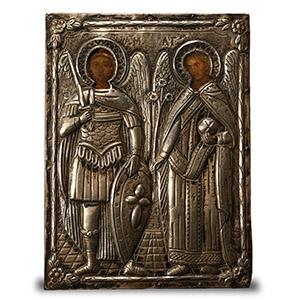
Greek Wooden Icon with Silver Cover Showing Saint Michael and Gabriel
Istanbul, circa 1860 A.D.Sold for (Inc. bp): £481
Showing the standing Taxiarches (commanders of the Heavenly Army) Michael (A[rchangel] M[ichael]) and Gabriel (A[rchangel] G[abriel]); Michael dressed in pseudo-Roman scale armour worn over a garment with hanging pteryges, partially covered by his military cloak, the raised right hand holding a sword and the left hand resting on a shield; Gabriel dressed in long mantion (a cloak fastened under the neck), long court dress with embroidery, holding the messenger’s flower in one hand and the Globe of the Divine Power over the world in the other; floral frame; fabric mark in Turkish and Greek (ω) near the right shoulder of Saint Michael. 285 grams, 16.2 x 12 cm
Property of a London, UK, gentleman collector. This lot is accompanied by an illustrated lot declaration signed by the Head of the Antiquities Department, Dr Raffaele D’Amato.
The icon is from a Constantinople workshop circa 1860 A.D. During the Turkokratia (the Turkish domination) the Orthodox inhabitants of Constantinople continued to entrust their protection to the powerful military commanders of the Heavenly Host, the Archangels. Following the Slavic style, the icons were often covered by embossed silver plates (riza), generally reproducing the same figures on the painted wood. -
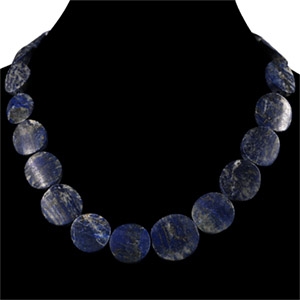
Bactrian Style Lapis Lazuli Large Bead Necklace
20th century A.D.Sold for (Inc. bp): £26
Comprising a graduated series of restrung lentoid-section discoid beads with modern fasteners. 117 grams, 43 cm long
UK gallery, early 2000s. This lot is accompanied by an illustrated lot declaration signed by the Head of the Antiquities Department, Dr Raffaele D’Amato. -

Tudor Period Lead 'Hornbook' Writing Aid
Circa 1500-1633 A.D.Sold for (Inc. bp): £520
A Tudor or Stuart period lead-alloy 'hornbook': incomplete rectangular plaque with small rectangular handle; bearing raised, moulded text on the obverse with hatched forms between four registers, which frame the letters of the alphabet 'ABCDE/FG[reversed]HIKL/MNOPq/RST[VW]XYZ'; low-relief octofoil in centre to the reverse. 51 grams, 75 mm
Found Yorkshire, UK. This lot is accompanied by an illustrated lot declaration signed by the Head of the Antiquities Department, Dr Raffaele D’Amato.
The letter 'U' has been omitted from the alphabet as is common with such objects, as has the letter 'J', suggesting that the book was produced prior to the publication of Charles Butler's English Grammar (1633) which first distinguished between I and J. The letter Z is reversed. Hornbooks were employed as learning aids and commonly made from paper mounted onto wood together with a transparent sheet of horn. Smaller, more portable lead-alloy examples such as this one are generally believed to have been mass produced, whilst still falling within the genre of 'hornbooks'. Interestingly, some scholars have argued that the mistakes and inconsistencies found on lead examples rendered them less effective learning tools, used as children's toys in families with low levels of literacy, or possibly serving as dolls' accessories.
