
Loading, please wait...
LOT 2070
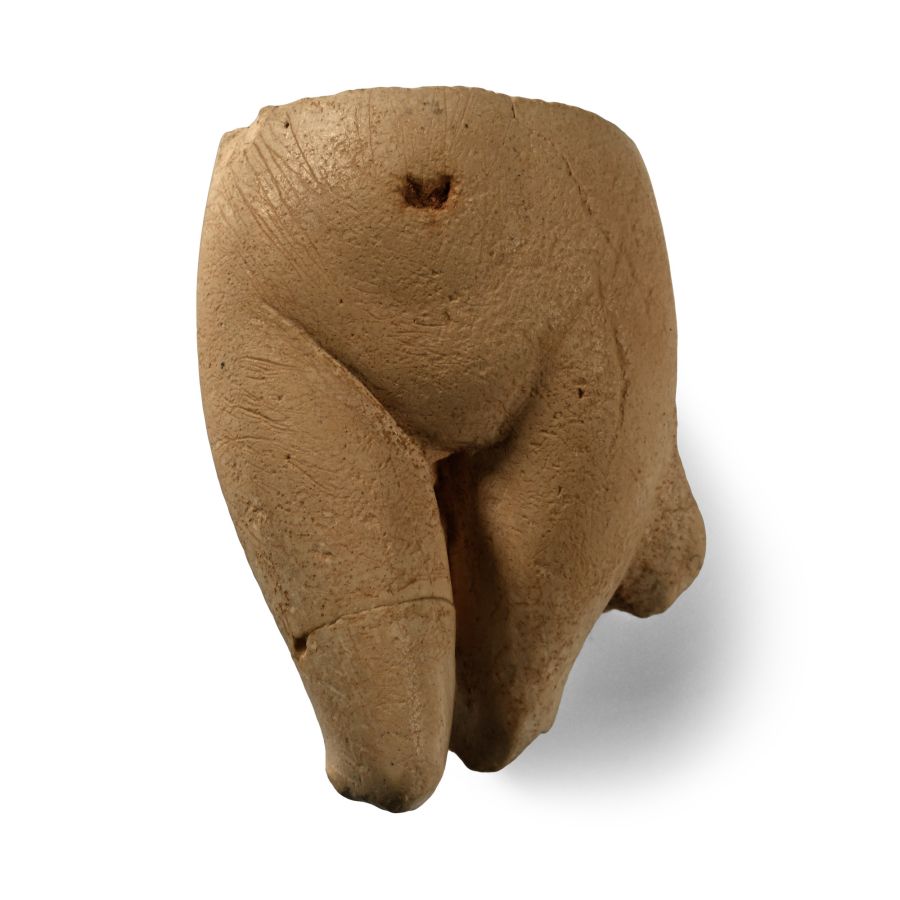
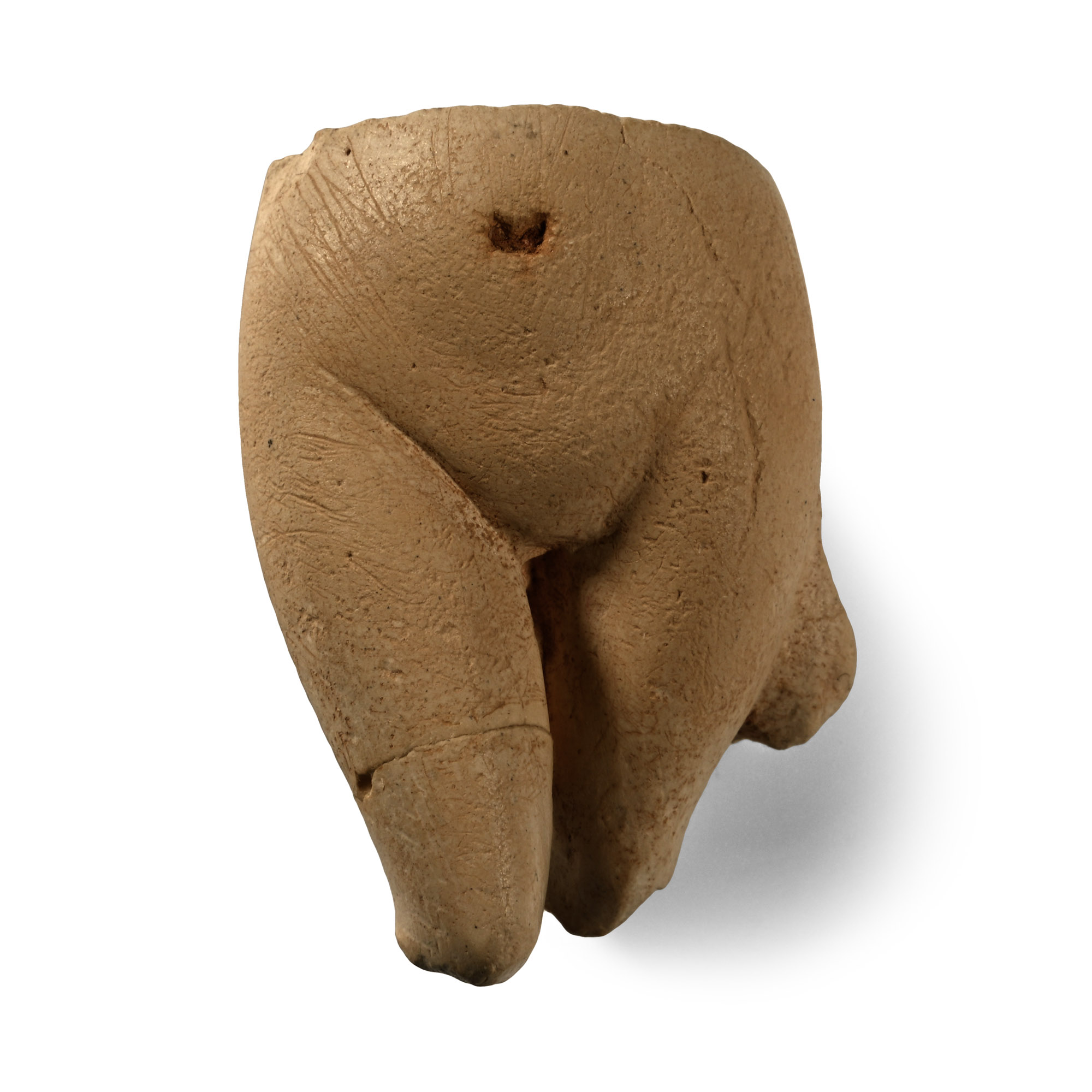
Roman Style Limestone Statuette Torso
20TH CENTURY A.D. OR EARLIER
2 3/8 in. (76 grams, 62 mm).
Carved in the round, hips and groin of a female with cloth to the rear. [No Reserve]
ProvenanceAcquired on the UK art market, before 2000.
This lot is accompanied by an illustrated lot declaration signed by the Head of the Antiquities Department, Dr Raffaele D’Amato.
TimeLine Auctions follows a vetting process to ensure the authenticity and legality of all items, reinforcing our commitment to integrity and responsible trading. Each antiquity, antique, and coin lot undergoes thorough examination by a vetting committee of at least ten external specialists, professional trade association members, scientists, and archaeologists: Our Vetting Process
AUCTIONS:
TimeLine is a leading auction house specialising in antiquities, ancient art, collectables, natural history, coins, medals, and books. Our auctions offer museums, collectors, historians, and enthusiasts the opportunity to acquire unique and historically significant pieces.
-
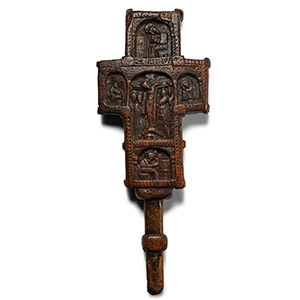
Mount Athos Wooden Cross with the Crucifixion and the Baptism
Circa 1669 A.D.Sold for (Inc. bp): £2,080
Showing the Evangelists and the Crucifixion with Saint Mary, Saint John and Saint Longinos on one side with Greek inscription 'STAVROSIS (Η ΣΤΑΥΡΟΣΙΣ = the Crucifixion)' above; the Baptism on the other side with Greek inscription 'VANGELISMOU (Η ΒΑΝΓΕΛΙΣΜΟΥ = the Apparition)' above, evangelists depicted above and below with the angels Gabriel and Michael to the sides. 93 grams, 19.5 cm
Acquired from Portobello Road, London, in the 1980s. Property of a London, UK, gentleman collector. This lot is accompanied by an illustrated lot declaration signed by the Head of the Antiquities Department, Dr Raffaele D’Amato.
The term ‘Dodekaorton cross’ is the most appropriate for this category of crosses and is used in other codices of the post-Byzantine period. These small crosses were used by the Hieromonks for blessings to the faithful and in various processions and liturgies, and were often mounted with frames made of precious materials. The carving of wooden crosses is regarded as an art traditionally practiced by Athonite monks. Ioannis Komninos in 1698 and the Jesuit priest Braconnier in 1706 both refer to the carved wooden pectorals and crosses made by the monks in order to provide themselves with a livelihood. -
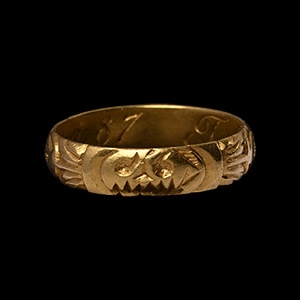
Charles II Engraved Gold Memento Mori Skull Ring
Dated 1687 A.D.Sold for (Inc. bp): £2,470
With stylised skull flanked by foliage to the outer face, engraved in copperplate to the inner face: 'T.D - obyt - 8.Octo=87'. 4.74 grams, 21.20 mm overall, 18.16 mm internal diameter (approximate size British Q, USA 8, Europe 17.49, Japan 16)
Acquired on the UK art market. Property of an East Sussex collector. This lot has been cleared against the Art Loss Register database, and is accompanied by an illustrated lot declaration signed by the Head of the Antiquities Department, Dr Raffaele D’Amato. -
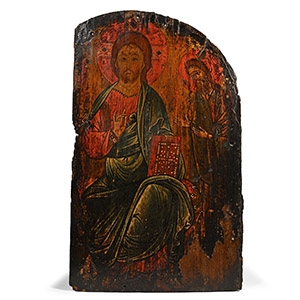
Large Cretan Wooden Icon Fragment of Deesis with Christ Pantocrator and Saint John the Prodromos
Circa 1670 A.D.Estimate: £1,200 - 1,700 (+bp*)
Opening Bid: £650
Depicting Christ Pantocrator and Saint John on his side, hand of Mary visible on the left; the Lord of the Universe represented seated upon a cushioned throne, the right hand in blessing gesture, the left hand holding a Gospel decorated with precious stones; wearing a blue chlamys and red sticharion; Saint John in proskynesis in front of Christ, dressed in a brown vestis talaris; the head of both surrounded by a red halo; later wire for hanging to the reverse with an information sheet in German. 1.8 kg, 57 cm
Ex Hargesheimen Auction House, Dusseldorf, Germany. Property of a London, UK, gentleman collector. This lot is accompanied by an illustrated lot declaration signed by the Head of the Antiquities Department, Dr Raffaele D’Amato.
The icon represents a middle section from a Deesis of a church iconostasis. Although preserved as a fragment, it is designed in the high style of the late 16th century.
