
Loading, please wait...
LOT 1466
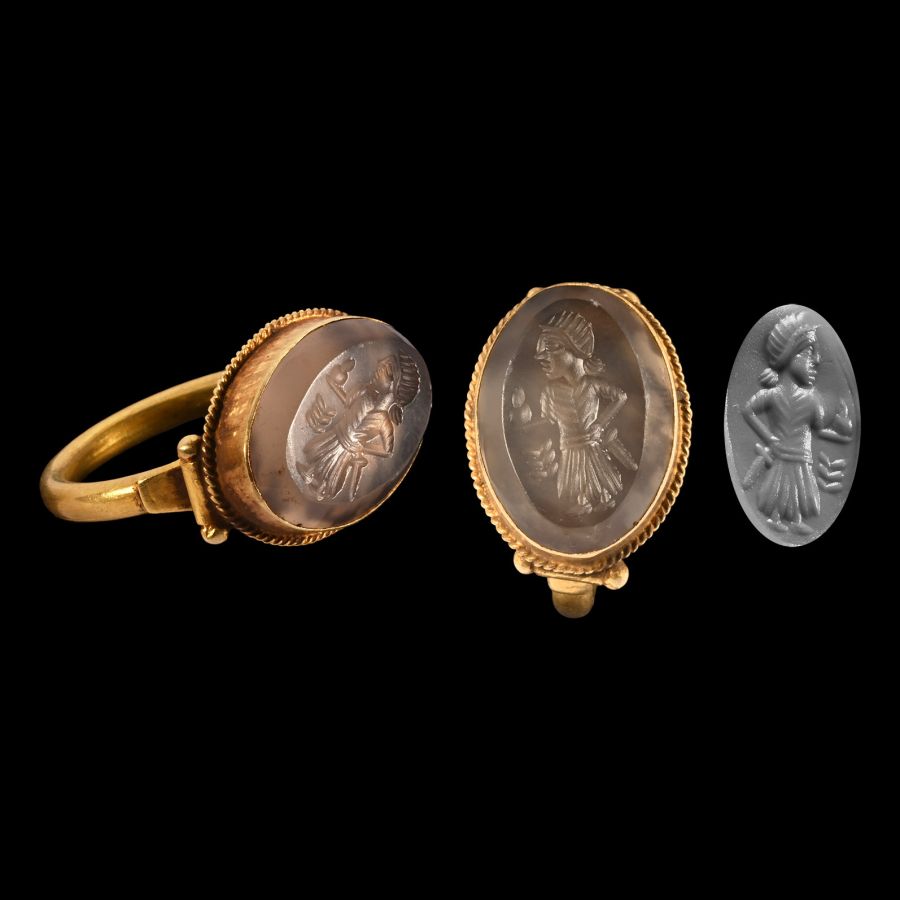
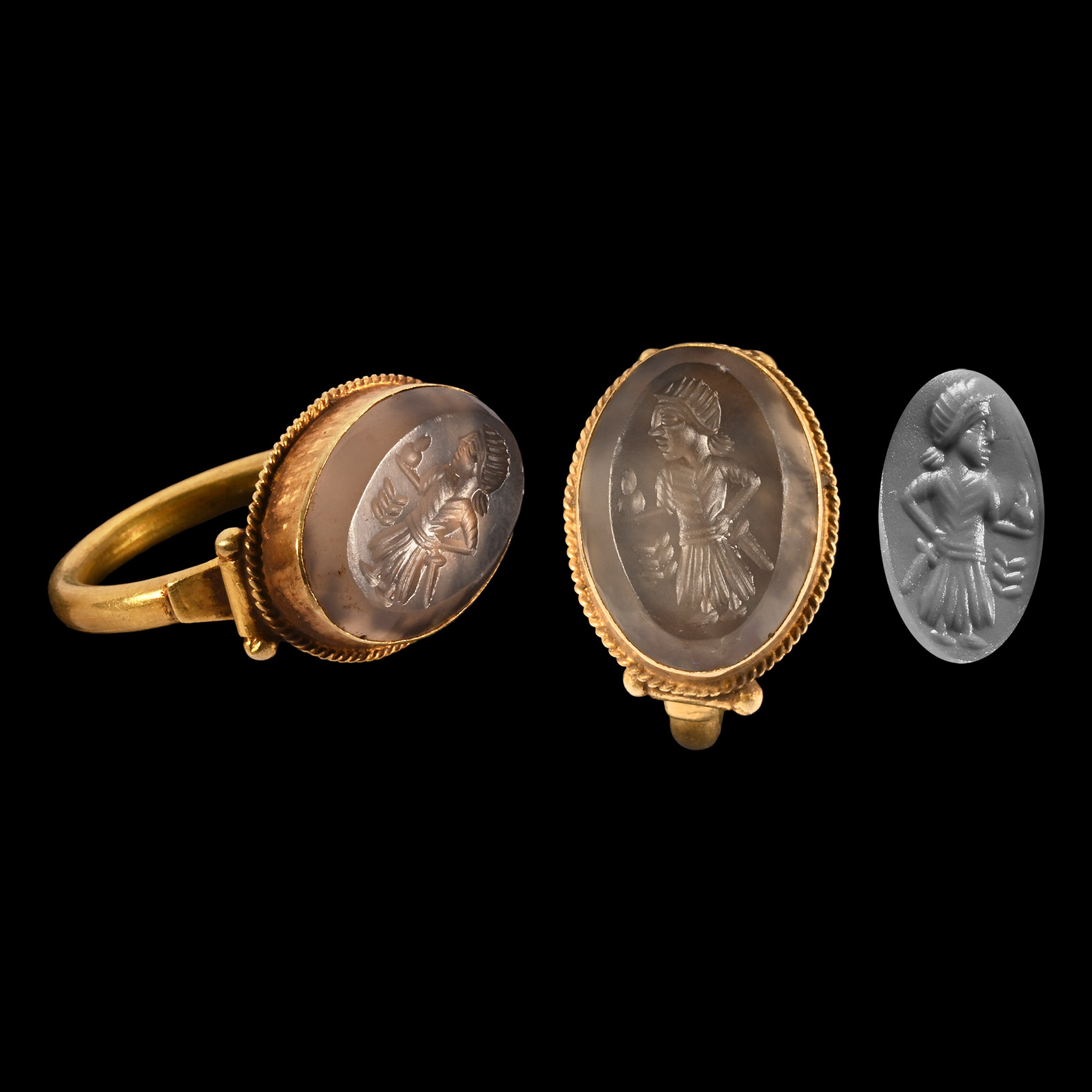
Roman Style Gold Ring with Portrait Gemstone
20TH CENTURY A.D.
1 1/8 in. (7.65 grams, 30.90 mm overall, 18.68 mm internal diameter (approximate size British R 1/2, USA 8 3/4, Europe 19.38, Japan 18)).
A hollow-formed gold finger ring with scrolled brackets to the shoulders. ellipsoid plaque with beaded wire rim, cell with inset chalcedony insert, intaglio image of a standing figure with a sword on his belt.
ProvenanceAcquired on the French art market.
Ex Swiss collection.
English private collection.
TimeLine Auctions follows a vetting process to ensure the authenticity and legality of all items, reinforcing our commitment to integrity and responsible trading. Each antiquity, antique, and coin lot undergoes thorough examination by a vetting committee of at least ten external specialists, professional trade association members, scientists, and archaeologists: Our Vetting Process
AUCTIONS:
TimeLine is a leading auction house specialising in antiquities, ancient art, collectables, natural history, coins, medals, and books. Our auctions offer museums, collectors, historians, and enthusiasts the opportunity to acquire unique and historically significant pieces.
LOT 1466
Roman Style Gold Ring with Portrait Gemstone
Estimate £600 - 800€700 - 930 (for guidance only)$810 - 1,080 (for guidance only)
-
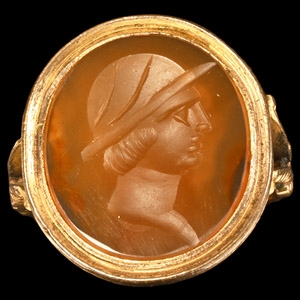
Post Medieval Gold Ring with Mercury Gemstone
17th-18th century A.D.Sold for (Inc. bp): £293
A gold finger ring with openwork hoop and split shoulders, ellipsoid bezel with carnelian intaglio of Mercury wearing a petasos. 3.36 grams, 21.24 mm overall, 18.50 mm internal diameter (approximate size British Q 1/2, USA 8 1/4, Europe 18.12, Japan 17)
English private collection. -
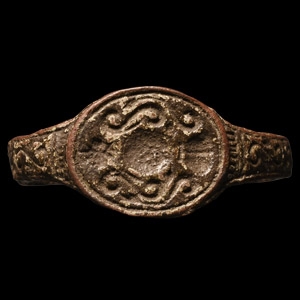
Post Medieval Armorial Ring
16th-17th century A.D.Sold for (Inc. bp): £59
A copper-alloy ring with armorial design to the oval bezel, the shoulders engraved with scrolls and other simple geometric forms; hoop repaired. 2.42 grams, 22.55 mm overall, 19.74 mm internal diameter (approximate size British R 1/2, USA 8 3/4, Europe 19.38, Japan 18)
Acquired circa 2010. From an old Essex, UK, collection. -
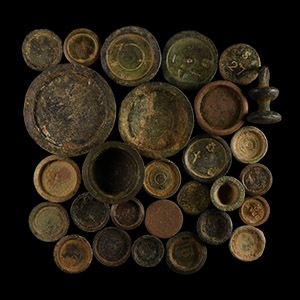
Post Medieval Weight Group
18th-20th century A.D.Sold for (Inc. bp): £39
A mixed group of bronze trade and chemists' weights, many with a stamped value, verification marks (e.g. sword for City of London), heater shield and others. 438 grams total, 15-44 mm
Found Suffolk.
