
Loading, please wait...
LOT 1463
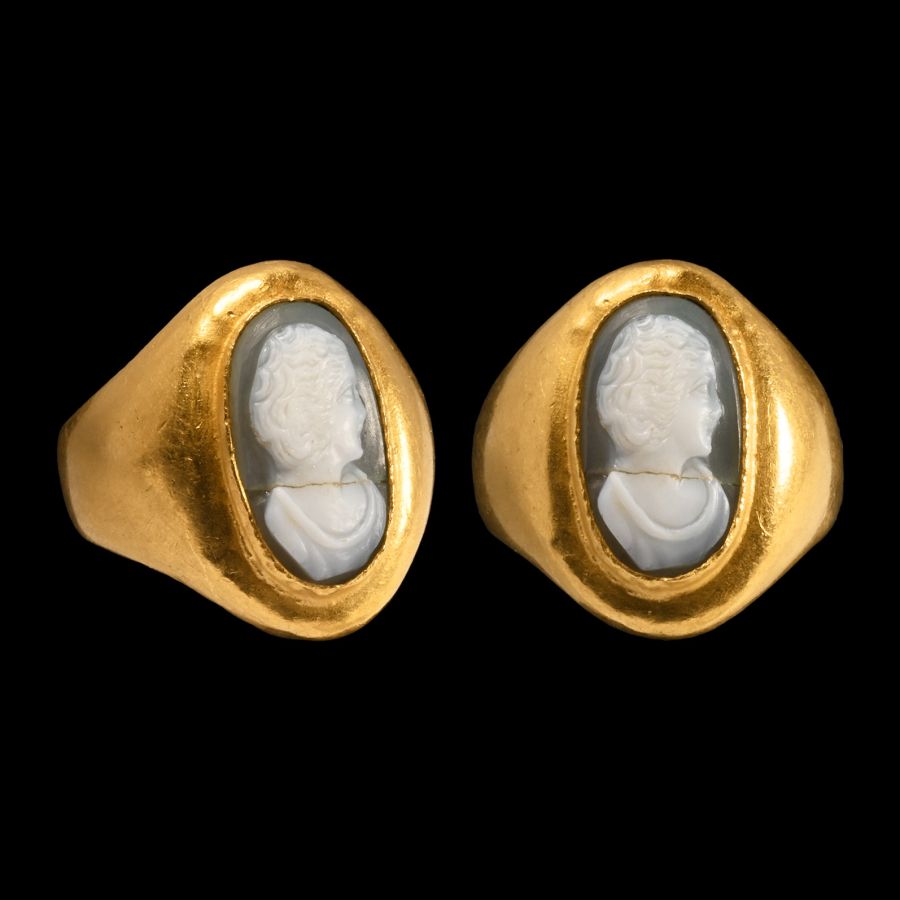
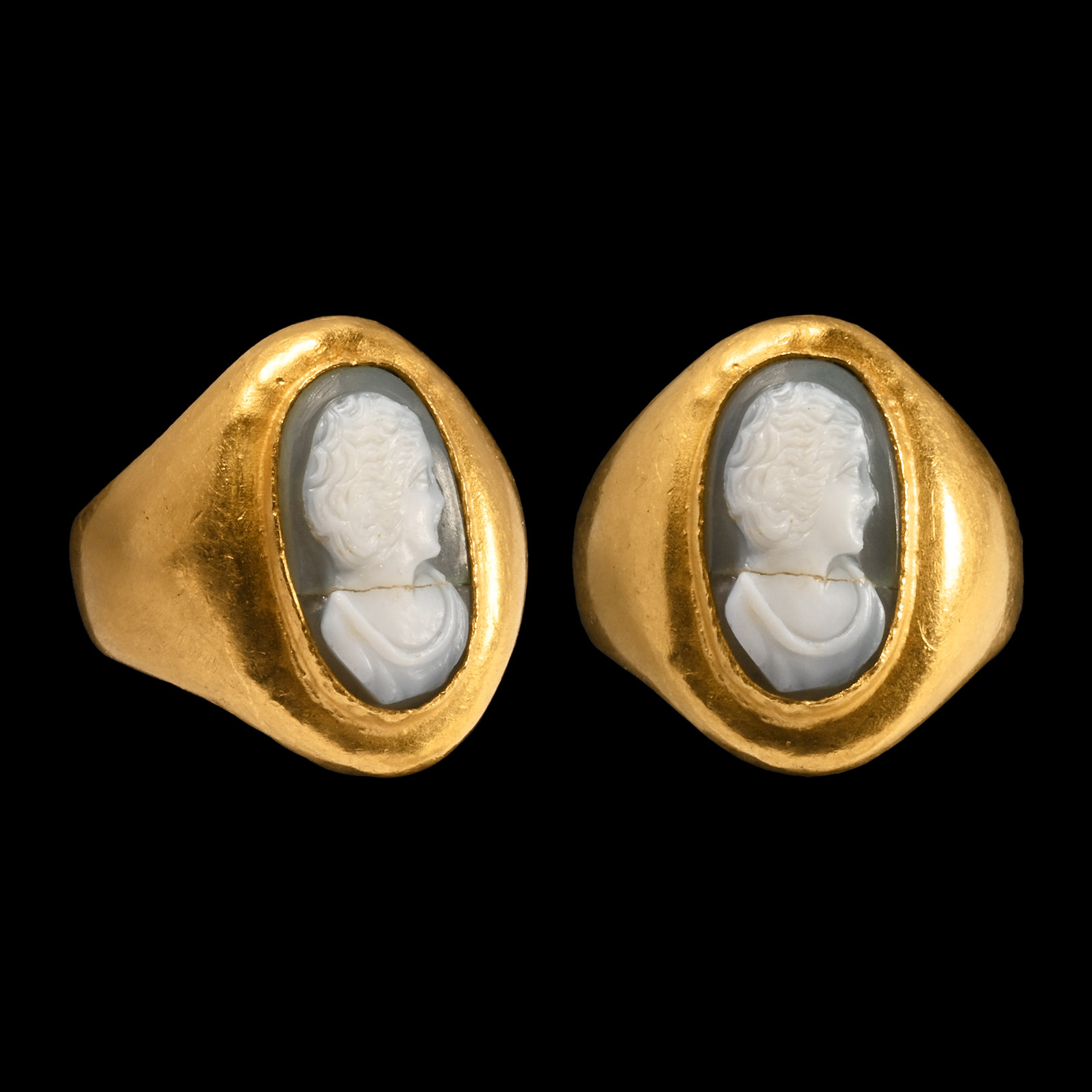
Roman Style Gold Ring with Portrait Cameo
20TH CENTURY A.D.
1 1/8 in. (17.96 grams, 28.10 mm overall, 22.33 mm internal diameter (approximate size British X, USA 11 1/2, Europe 26.29, Japan 25)).
A substantial gold finger ring with ellipsoid cell to the bezel, inset glass nicolo profile female bust.
ProvenanceEnglish private collection.
CONDITIONTimeLine Auctions follows a vetting process to ensure the authenticity and legality of all items, reinforcing our commitment to integrity and responsible trading. Each antiquity, antique, and coin lot undergoes thorough examination by a vetting committee of at least ten external specialists, professional trade association members, scientists, and archaeologists: Our Vetting Process
AUCTIONS:
TimeLine is a leading auction house specialising in antiquities, ancient art, collectables, natural history, coins, medals, and books. Our auctions offer museums, collectors, historians, and enthusiasts the opportunity to acquire unique and historically significant pieces.
-
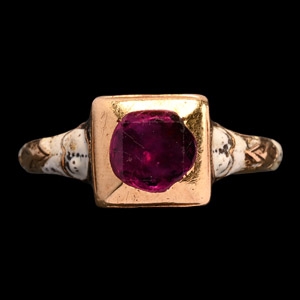
Baroque Gold, Ruby and Enamel Ring
Circa 1620-1640 A.D.Estimate: £20,000 - 30,000 (+bp*)
Opening Bid: £6,667
A gold ring composed of a slender hoop, expanding shoulders decorated with white enamelled foliage and black enamelled pea-pod ornament, repeated around the bezel, bezel with box setting holding a table-cut ruby, white and black enamelled floral design to the underside; minor loss of enamel; likely from France; accompanied by a 'Les Enluminures' hinged presentation box. 4.57 grams, 23.32 mm overall, 18.77 mm internal diameter (approximate size British O, USA 7, Europe 14.98, Japan 14)
Acquired from Les Enluminures Ltd, Illinois, USA, 2016. Property of an East Sussex collector. Accompanied by a Les Enluminures certificate of authenticity. Accompanied by a copy of the Les Enluminures invoice. This lot has been checked against the Interpol Database of stolen works of art and is accompanied by search certificate no.11671-197579.
Over the centuries, the ruby became a symbol of the amorous heart and a popular gemstone for betrothal or wedding rings in Western Europe. This gemstone was believed to symbolise the virtues of marriage and convey the desire for eternal matrimonial love. The ruby-red colour was often enhanced by setting the stone on top of a foil. The stones themselves were imported from as far afield as Thailand, Burma and Sri Lanka. Old inventories record them as 'balas rubies', which were sourced to decorate royal crowns. In the 17th century, the red colour was set-off by the pastel shades of satin which were fashionable in dress at the court of King Louis VIII, where the art of enamelling was also practiced. -
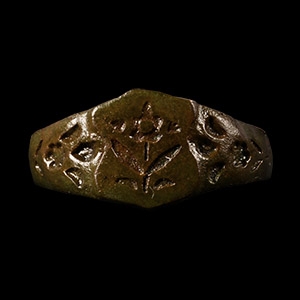
Post Medieval Ring with Flower on Shield
18th century A.D.Sold for (Inc. bp): £46
A copper-alloy ring composed of a slightly convex hoop, expanding shoulders and shield-shaped bezel, the shoulders and bezel engraved with flowering plants. 3.50 grams, 24.25 mm overall, 22.11 mm internal diameter (approximate size British W 1/2, USA 11 1/4, Europe 25.66, Japan 24)
Private collection formed since the 1940s. UK art market. Property of an Essex gentleman. -
.jpg)
Georgian Silver Memento Mori Ring with Skull and Snakes
18th century A.D.Sold for (Inc. bp): £312
A silver memento mori ring with D-section hoop expanding at the shoulders to a facetted bezel, openwork flower bud to each shoulder, incised hatched triangles to the scooped facets above, 'MORS' inscribed to the upper panel, 'SOIFI' to the lower; pale gold insert to central cell engraved with a skull amid entwined snakes. 10.11 grams, 26.62 mm overall, 18.12 mm internal diameter (approximate size British P, USA 7 1/2, Europe 16.23, Japan 15)
Fine condition. Resized.
Acquired since before 1970. Ex private collection of a West Sussex, UK, collector.
