
Loading, please wait...
LOT 0426
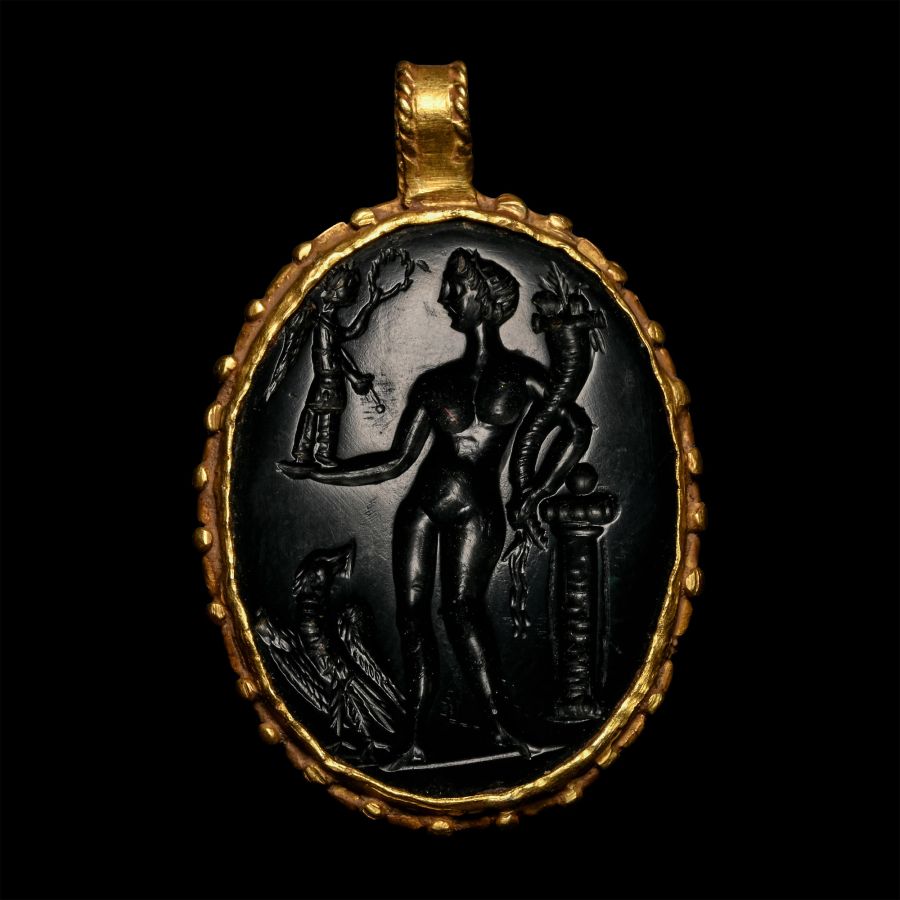
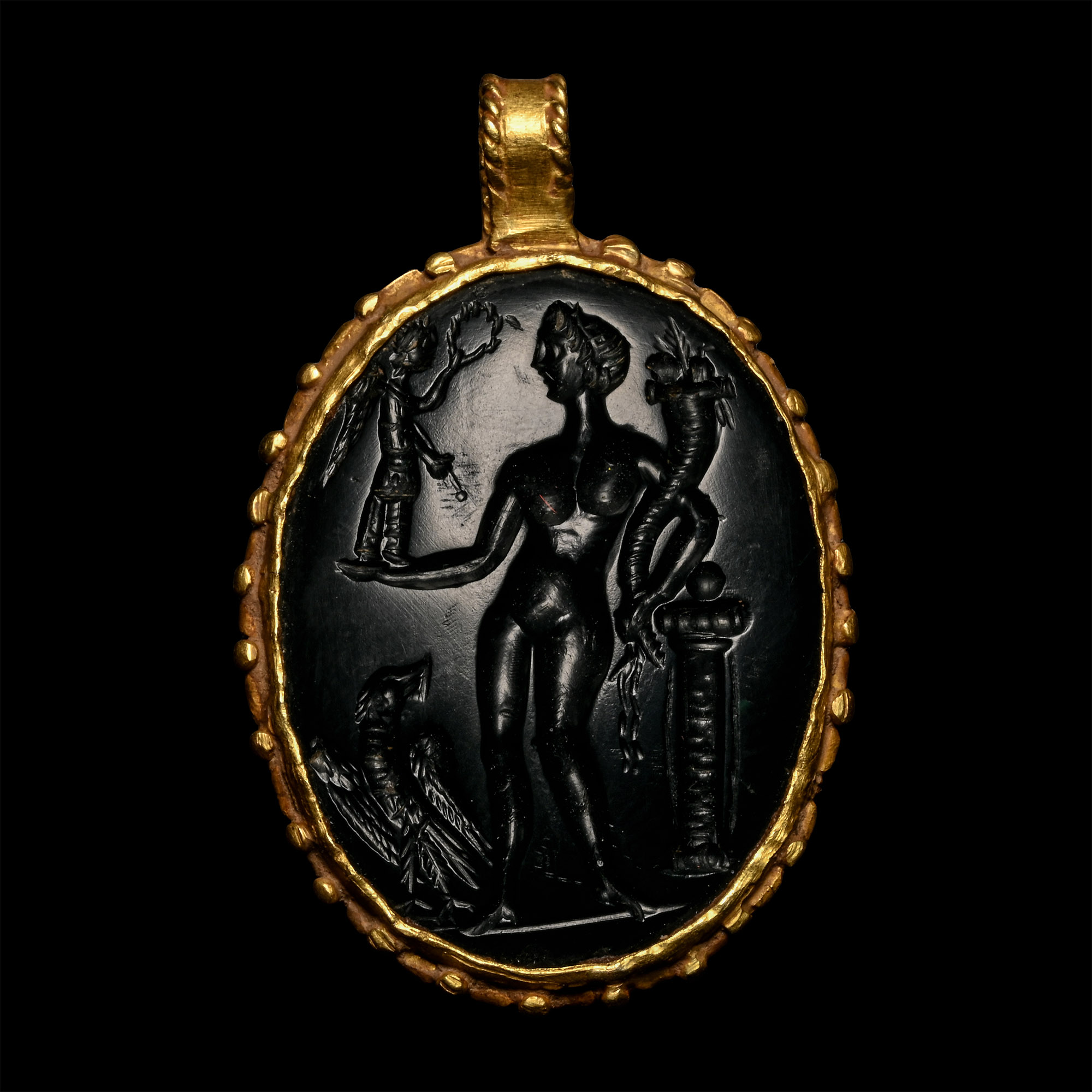
Roman Style Gold Pendant with Nude Female
19TH CENTURY A.D. OR EARLIER
1 5/8 in. (10.48 grams, 42 mm).
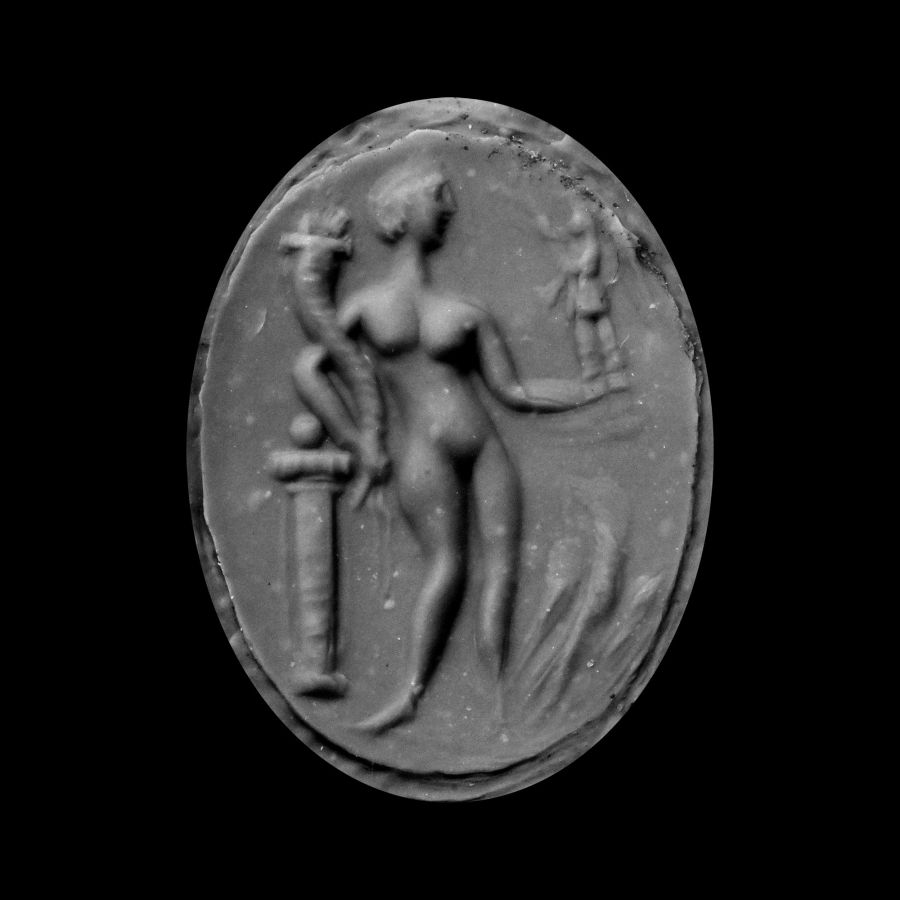
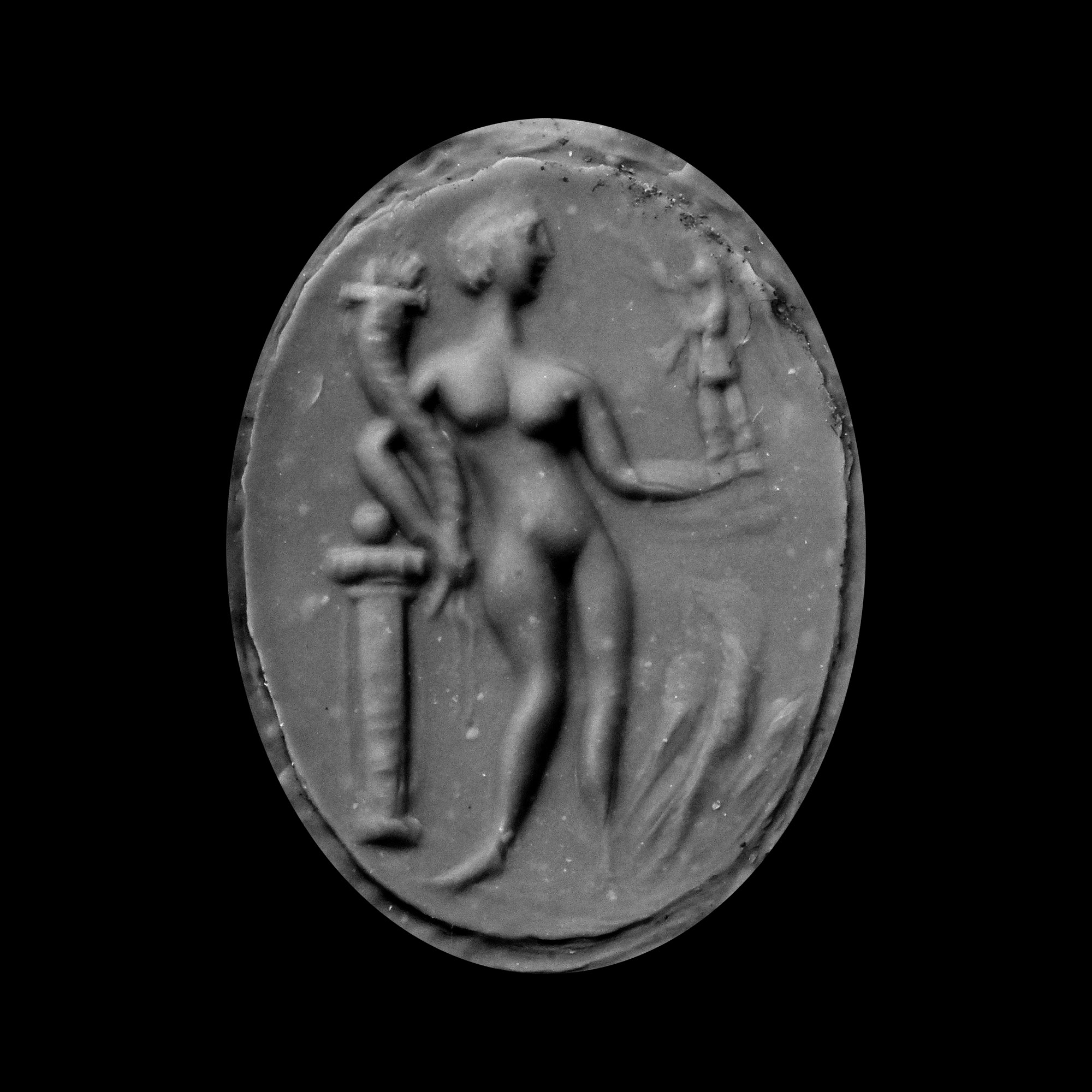
Ellipsoid plaque with incuse standing female supporting a cornucopia on one arm and a victoriola in the other hand; altar with knop finial behind her, perching eagle at her feet; supplied with a museum-quality impression.
ProvenancePrivate collection, Swiss.
with Geneve Encheres, 14 December 2017, no.1024.
Private collection, England.
This lot has been checked against the Interpol Database of stolen works of art and is accompanied by search certificate number no.13155-249557.
TimeLine Auctions follows a vetting process to ensure the authenticity and legality of all items, reinforcing our commitment to integrity and responsible trading. Each antiquity, antique, and coin lot undergoes thorough examination by a vetting committee of at least ten external specialists, professional trade association members, scientists, and archaeologists: Our Vetting Process
AUCTIONS:
TimeLine is a leading auction house specialising in antiquities, ancient art, collectables, natural history, coins, medals, and books. Our auctions offer museums, collectors, historians, and enthusiasts the opportunity to acquire unique and historically significant pieces.
LOT 0426
Roman Style Gold Pendant with Nude Female
Estimate £2,000 - 3,000€2,320 - 3,480 (for guidance only)$2,700 - 4,050 (for guidance only)
-
Banded Agate Bead and Amulet Collection
20th century A.D.Sold for (Inc. bp): £59
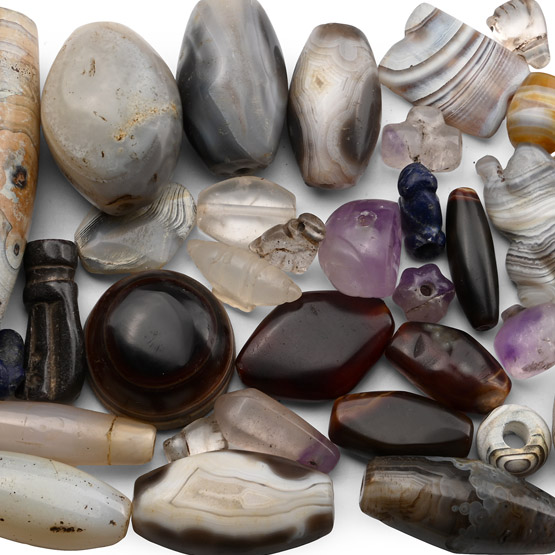
Comprising fusiform, tabular, barrel-shaped and other types with amethyst and other pendants. 293 grams total, 12-69 mm
Private collection, UK. -
Grand Tour Specimen Marble Panel
Late 19th-early 20th century A.D.Sold for (Inc. bp): £468
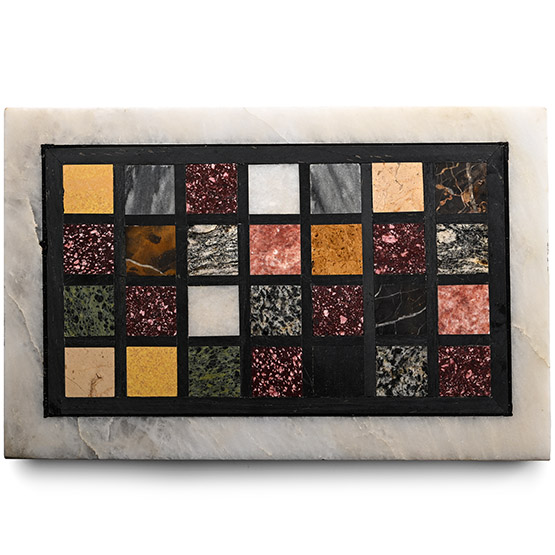
A rectangular plaque with four rows and seven columns of various marble and imperial porphyry specimens, from the Grand Tour Set. 2.86 kg, 27.5 x 18 cm
Acquired at Shepton Mallet Fair, Somerset, UK, in 2010. From the private collection of a Somerset gentleman. -
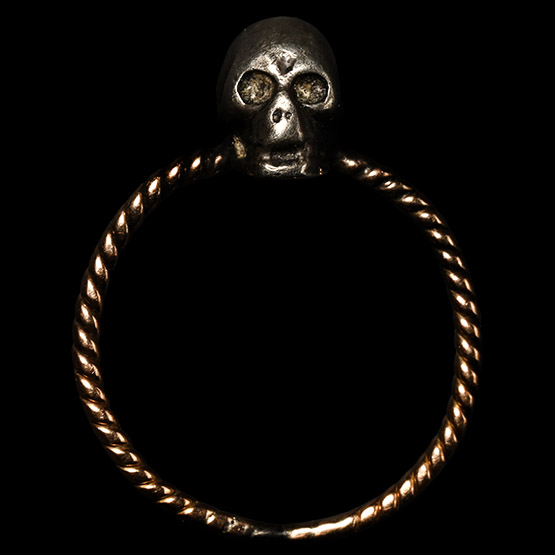
Georgian Gold Ring with Silver Skull
19th-20th century A.D.Estimate: £500 - 700 (+bp*)
Opening Bid: £250
Beaded wire hoop with applied silver skull motif; usage wear to inner face. 2.93 grams, 25.00 mm overall, 16.81 mm internal diameter (approximate size British M, USA 6, Europe 12.46, Japan 12)
Private collection, Europe. Acquired on the English art market.
