
Loading, please wait...
LOT 1397
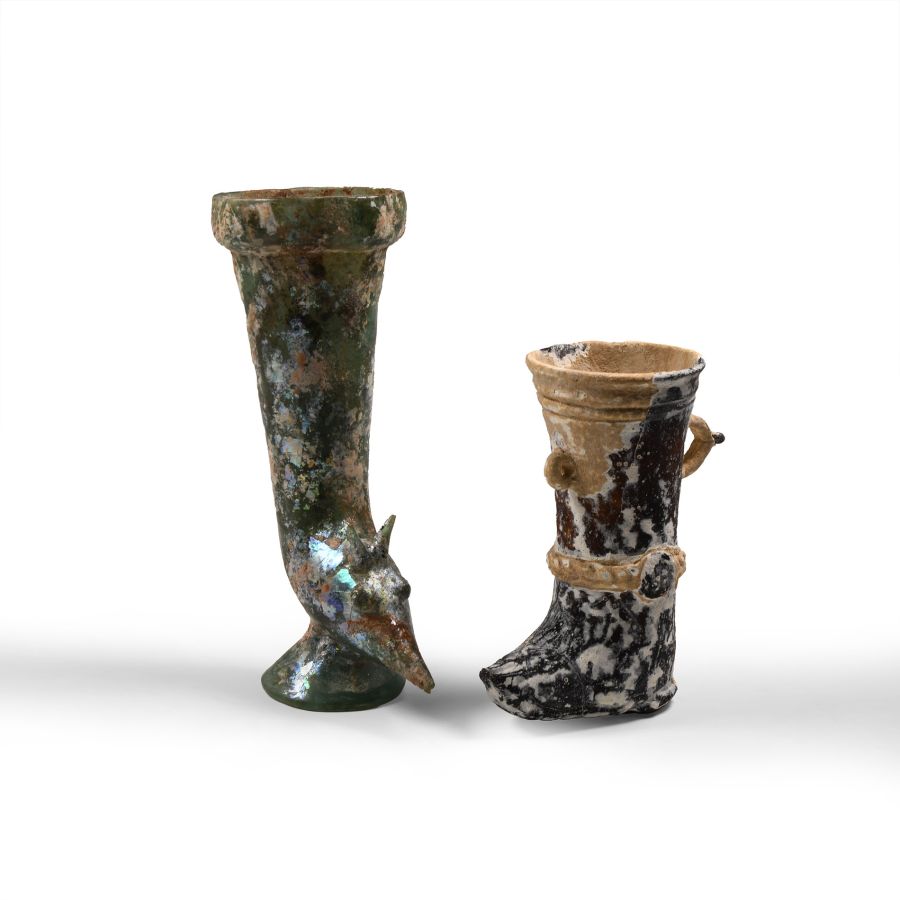
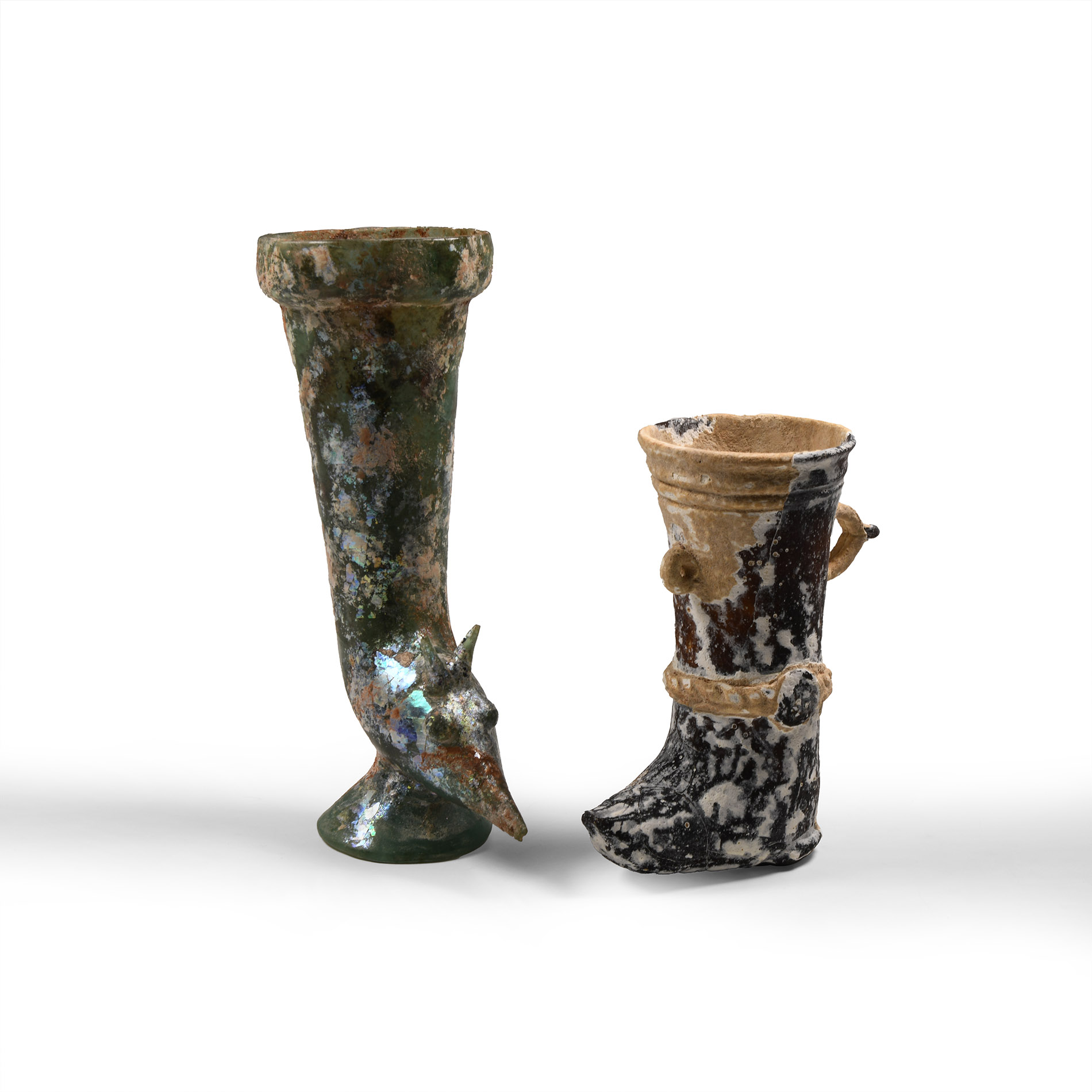
Roman Style Glass Vessel Group
20TH CENTURY A.D.
4 3/8 - 6 1/8 in. (206 grams total, 11.2-15.5 cm high).
A group of ancient Roman style glass vessels: a horn-shaped vessel with animal head base and conical foot, with iridescent surfaces; a boot-shaped vessel with anklet, flared neck and suspension loops. [2, No Reserve]
ProvenanceGerman collection formed before 2000.
Ex private European collection.
TimeLine Auctions follows a vetting process to ensure the authenticity and legality of all items, reinforcing our commitment to integrity and responsible trading. Each antiquity, antique, and coin lot undergoes thorough examination by a vetting committee of at least ten external specialists, professional trade association members, scientists, and archaeologists: Our Vetting Process
AUCTIONS:
TimeLine is a leading auction house specialising in antiquities, ancient art, collectables, natural history, coins, medals, and books. Our auctions offer museums, collectors, historians, and enthusiasts the opportunity to acquire unique and historically significant pieces.
-
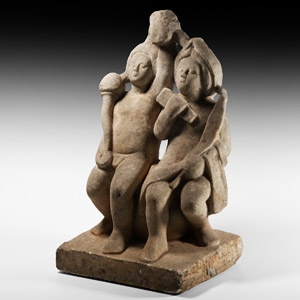
Roman Style Seated Putti
17th-19th century A.D. or earlierEstimate: £1,000 - 1,400 (+bp*)
Opening Bid: £500
A carved stone scene depicting a male and female putti pair seated on a globe, one figure holding a cornucopia; on a rectangular base. 17.6 kg, 40 cm high
English private collection. -
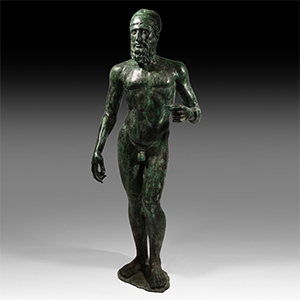
Bronze Statue of the Warrior of Riace
20th century A.D.Estimate: £2,500 - 3,500 (+bp*)
Opening Bid: £1,250
A bronze copy of the 'Warrior of Riace', found in Calabria, Italy, standing nude wearing a cap made from the face of the Nemean lion; bracer to the left forearm for attachment of a shield or lion skin cape. 40 kg, 1.42 m high
French collection, 1960s-early 2000s. From an important Paris gallery, France. This lot has been checked against the Interpol Database of stolen works of art and is accompanied by search certificate number no.11692-199339.
The 'Riace Bronzes' are two full-size Greek bronzes of bearded warriors, dating from about 450 B.C. that were found in the sea near Riace, Calabria, southern Italy in 1972. They are now in the Museo Nazionale della Magna Grecia in the city of Reggio Calabria. -
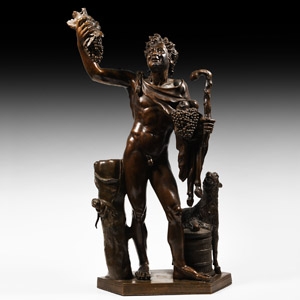
Bronze 'Fauno Rosso' Satyr
19th century A.D.Estimate: £1,500 - 2,000 (+bp*)
Opening Bid: £750
A bronze figure of a satyr standing on a hexagonal base wearing a goatskin mantle tied by the forelegs around his shoulders, with poppy seed-heads and bunches of grapes by the left arm; in his raised right hand, a bunch of grapes and in his left hand a cudgel; stump of a tree by his right leg and barrel beside his left, with a lamb to the rear placing its foreleg on top; modelled after the so-called Fauno Rosso from Hadrian's Villa, now in the Capitoline Museum. 18.5 kg, 67 cm high
From an important Paris gallery, France.
Half-man, half-beast, satyrs were believed to be the children of goats and mountain nymphs. Followers of the god Dionysus, they had a reputation for drunkenness and spent their days participating in orgiastic rituals. They represented the crude and boisterous facets of the stereotypical male persona, particularly of rural man.
