
Loading, please wait...
LOT 2100
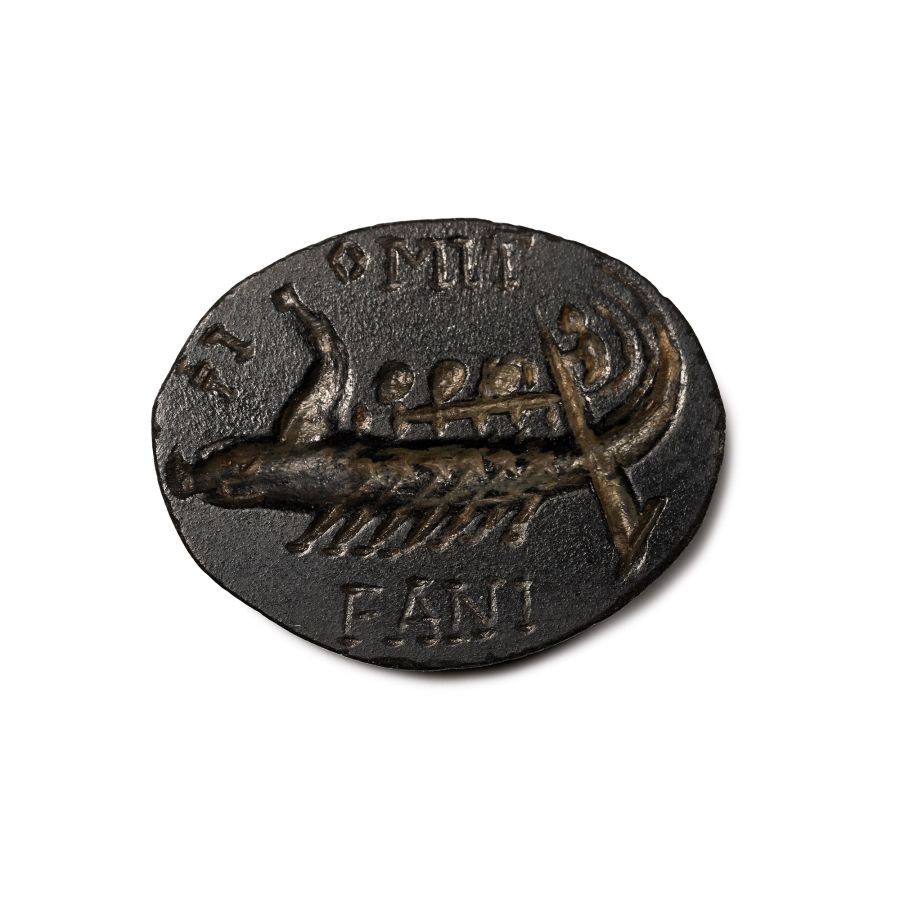
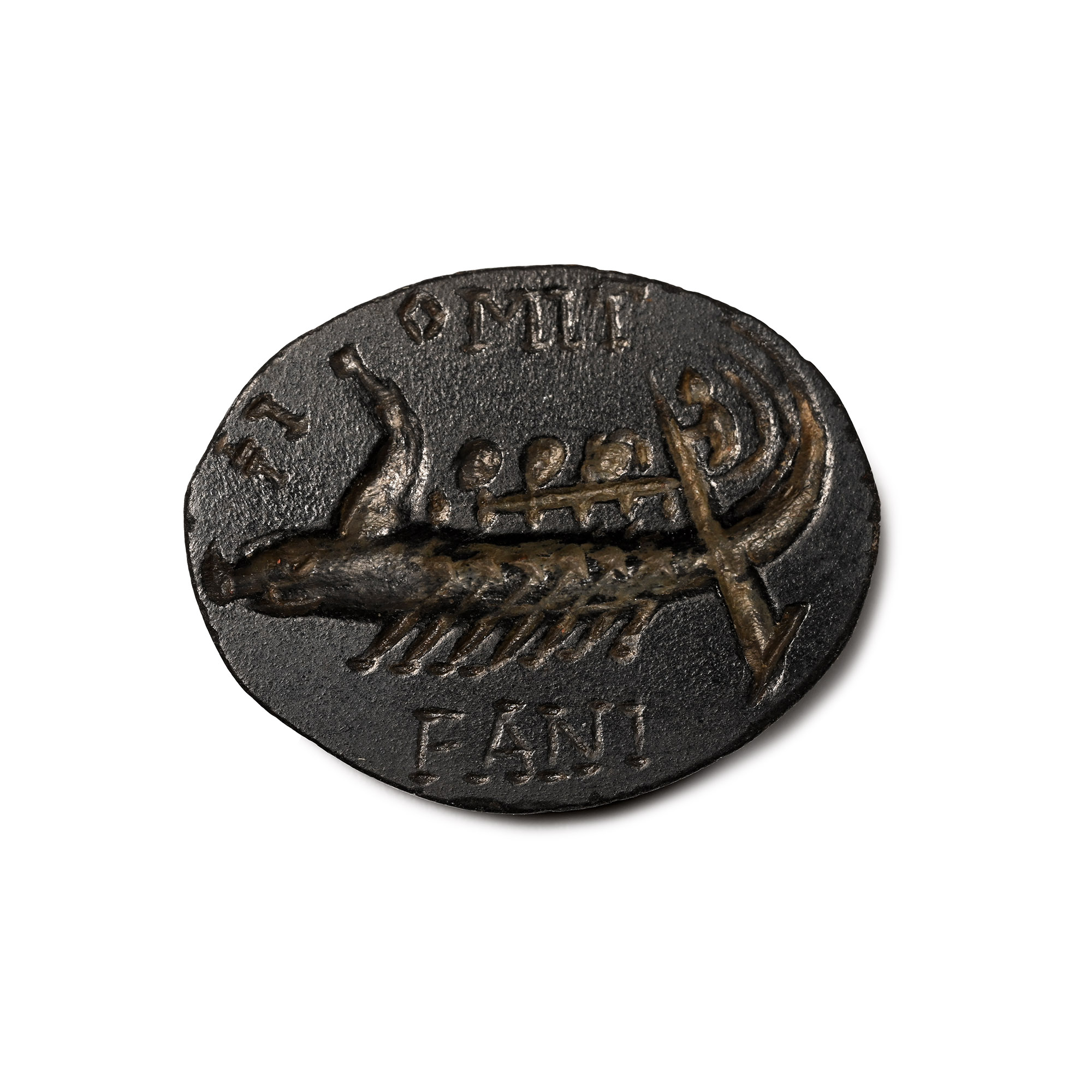
Roman Style Gemstone with Galley
19TH-20TH CENTURY A.D.
3/4 in. (1.84 grams, 21 mm).
Ellipsoid in plan with incuse galley and legend '[??] OMIT FANI'. [No Reserve]
ProvenanceFrom the collection of a London antiquarian, formed since the 1980s.
This lot is accompanied by an illustrated lot declaration signed by the Head of the Antiquities Department, Dr Raffaele D’Amato.
TimeLine Auctions follows a vetting process to ensure the authenticity and legality of all items, reinforcing our commitment to integrity and responsible trading. Each antiquity, antique, and coin lot undergoes thorough examination by a vetting committee of at least ten external specialists, professional trade association members, scientists, and archaeologists: Our Vetting Process
AUCTIONS:
TimeLine is a leading auction house specialising in antiquities, ancient art, collectables, natural history, coins, medals, and books. Our auctions offer museums, collectors, historians, and enthusiasts the opportunity to acquire unique and historically significant pieces.
-
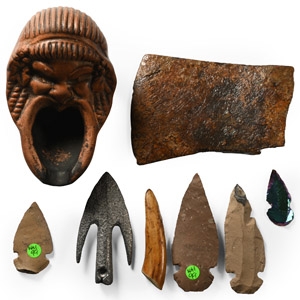
Reproduction Artefact Group
20th century A.D.Sold for (Inc. bp): £13
Including iron axehead, swallowtail arrowhead, Roman style oil lamp and other items. 440 grams total, 35-98 mm
From the private collection of Kenneth Machin (1936-2020), Buckinghamshire, UK; his collection of antiquities and natural history was formed since 1948; thence by descent. This lot is accompanied by an illustrated lot declaration signed by the Head of the Antiquities Department, Dr Raffaele D’Amato. -
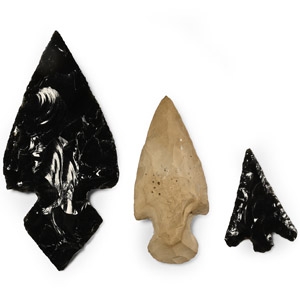
Reproduction Native American Knapped Arrowheads
20th century A.D.Sold for (Inc. bp): £13
Including obsidian and other types, barbed-and-tanged, two with broad tang. 267 grams total, 7-16.2 cm
From the private collection of Kenneth Machin (1936-2020), Buckinghamshire, UK; his collection of antiquities and natural history was formed since 1948; thence by descent. This lot is accompanied by an illustrated lot declaration signed by the Head of the Antiquities Department, Dr Raffaele D’Amato. -
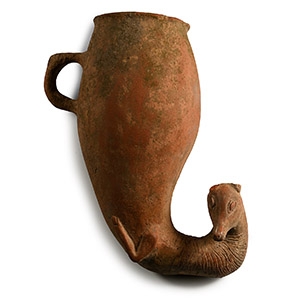
Amlash Style Terracotta Rhyton
20th century A.D.Sold for (Inc. bp): £143
Bulbous in form with everted rim and loop handle, developing to a an equine head turned to one side and with forelegs held flat against the flank; ears absent. 776 grams, 23 cm
From a West Country, UK, collection, 1990s. This lot is accompanied by an illustrated lot declaration signed by the Head of the Antiquities Department, Dr Raffaele D’Amato.
