
Loading, please wait...
LOT 2031
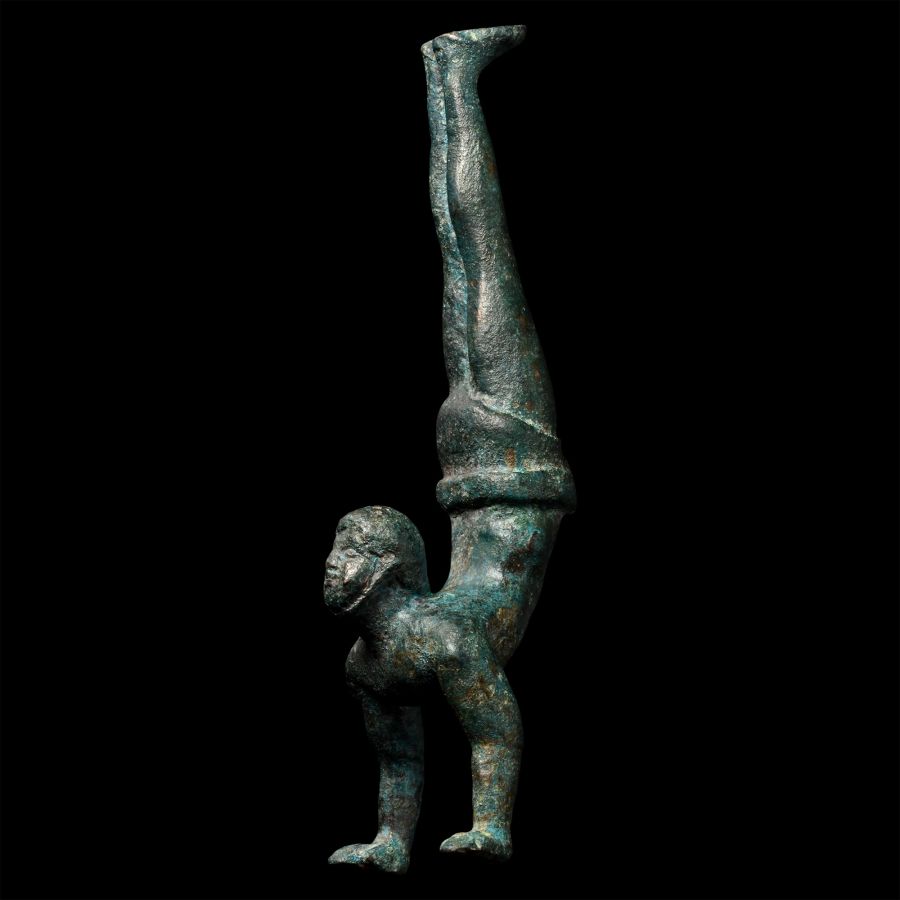
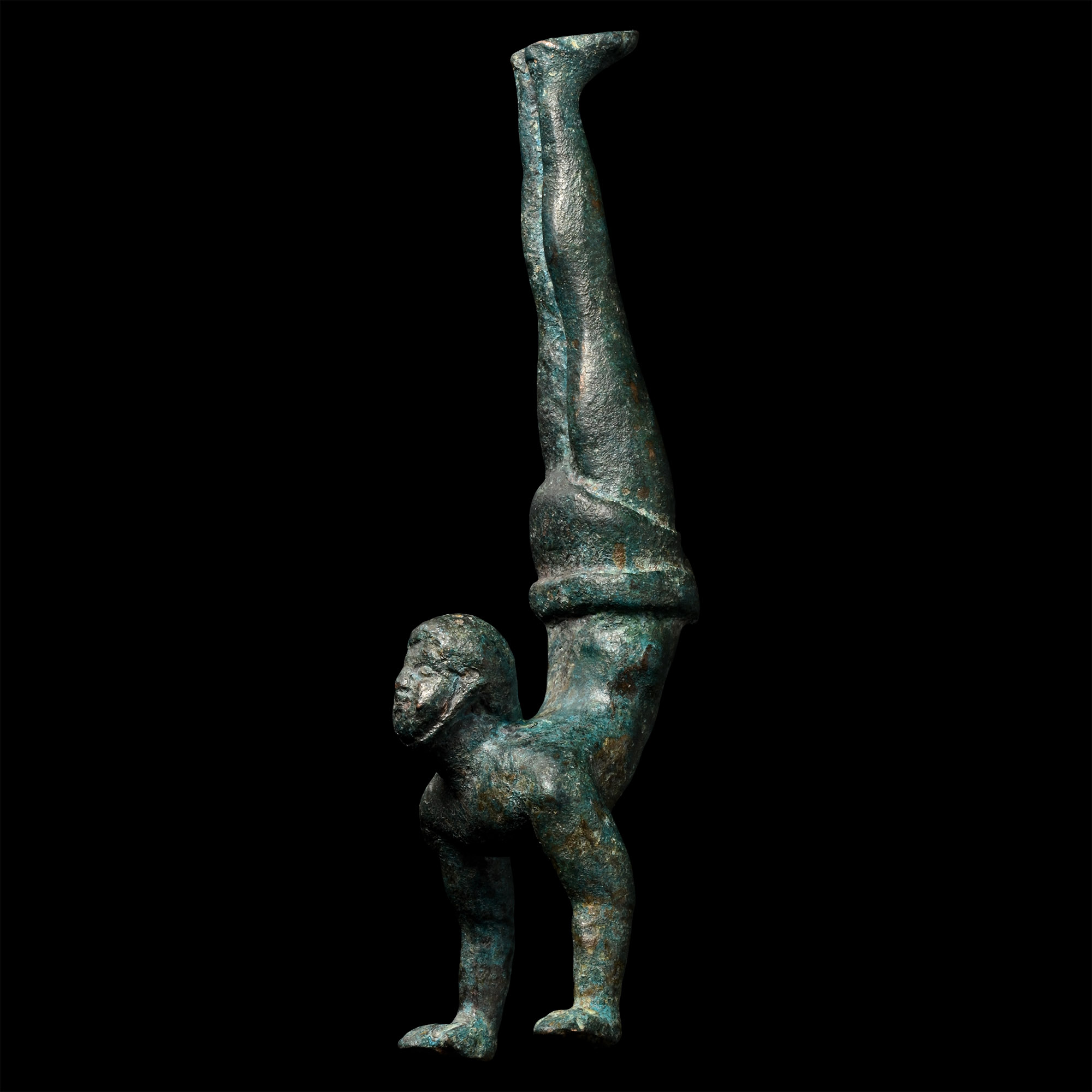
Roman Style Bronze Statuette of an Acrobat
20TH CENTURY A.D.
3 5/8 in. (71.1 grams, 92 mm).
Modelled in the round in delicately balanced pose resting on the hands; loincloth with waistband. [No Reserve]
ProvenancePreviously belonging to J Stewart, Mayfair, London, UK; acquired in the early 1980s.
Property of a Middlesex gentleman.
TimeLine Auctions follows a vetting process to ensure the authenticity and legality of all items, reinforcing our commitment to integrity and responsible trading. Each antiquity, antique, and coin lot undergoes thorough examination by a vetting committee of at least ten external specialists, professional trade association members, scientists, and archaeologists: Our Vetting Process
AUCTIONS:
TimeLine is a leading auction house specialising in antiquities, ancient art, collectables, natural history, coins, medals, and books. Our auctions offer museums, collectors, historians, and enthusiasts the opportunity to acquire unique and historically significant pieces.
-
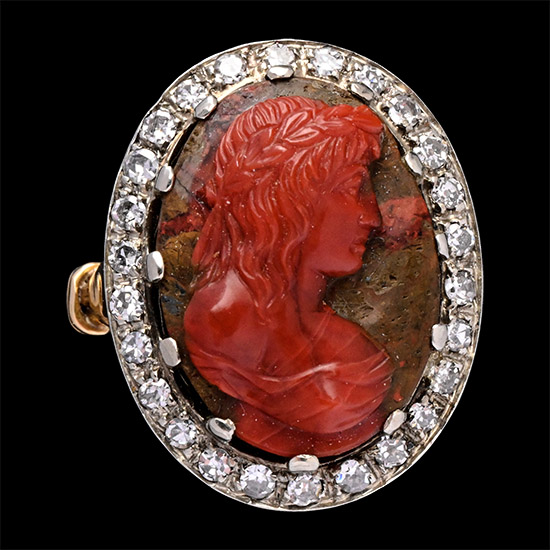
Hardstone Cameo of a Muse in Ring
Italy, 18th century A.D.Sold for (Inc. bp): £2,340
Carved in two-coloured red and brown agate, depicting a classical muse in right-facing profile with flowing hair, and drapery, the laurel wreath identifying her as an embodiment of poetic or artistic inspiration; the cameo set in a 19th-century mount with a border of single-cut diamonds set in platinum, a pierced, open-backed construction and bifurcated shoulders enriched with classical leaf motifs. 6.47 grams, 25.88 mm overall, 16.12 mm internal diameter (approximate size British J 1/2, USA 5, Europe 9.32, Japan 9)
Acquired on the European art market. This lot has been checked against the Interpol Database of stolen works of art and is accompanied by search certificate number no.13327-257906.
The union of an eighteenth-century Italian gem engraving with a later English mount reflects a broader nineteenth-century practice of integrating earlier engraved gems into newly conceived settings. -
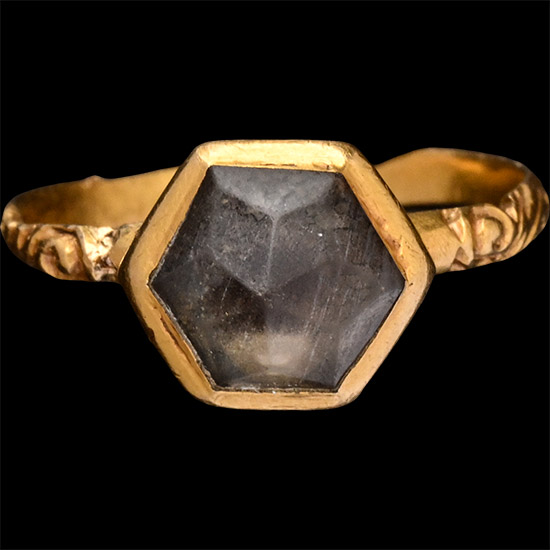
Renaissance Gold Ring with Gem
16th century A.D.Sold for (Inc. bp): £2,860
Comprising a slender hoop with scroll-decorated shoulders, a high hexagonal colette setting with a point-cut rock crystal with foil backing. 2.75 grams, 22.97 mm overall, 15.54 mm internal diameter (approximate size British I 1/2, USA 4 1/2, Europe 8.07, Japan 7)
Acquired on the European art market. -
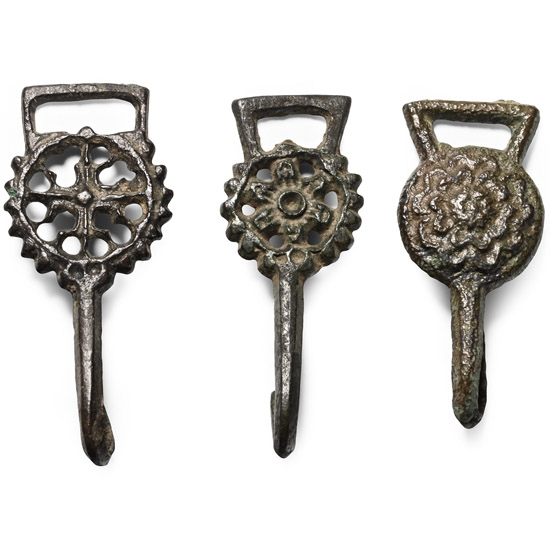
Tudor Period Bronze Hook Fastener Group
Circa 16th century A.D.Sold for (Inc. bp): £26
Comprising: an openwork fastener with a cross motif; a fastener with a Tudor rose; an openwork fastener with a six-petalled flower. 7.52 grams total, 34-39 mm
From the private collection of Graham Slater (1927-2024), Cambridge, UK; formed 1980s-1990s.
