
Loading, please wait...
LOT 2379
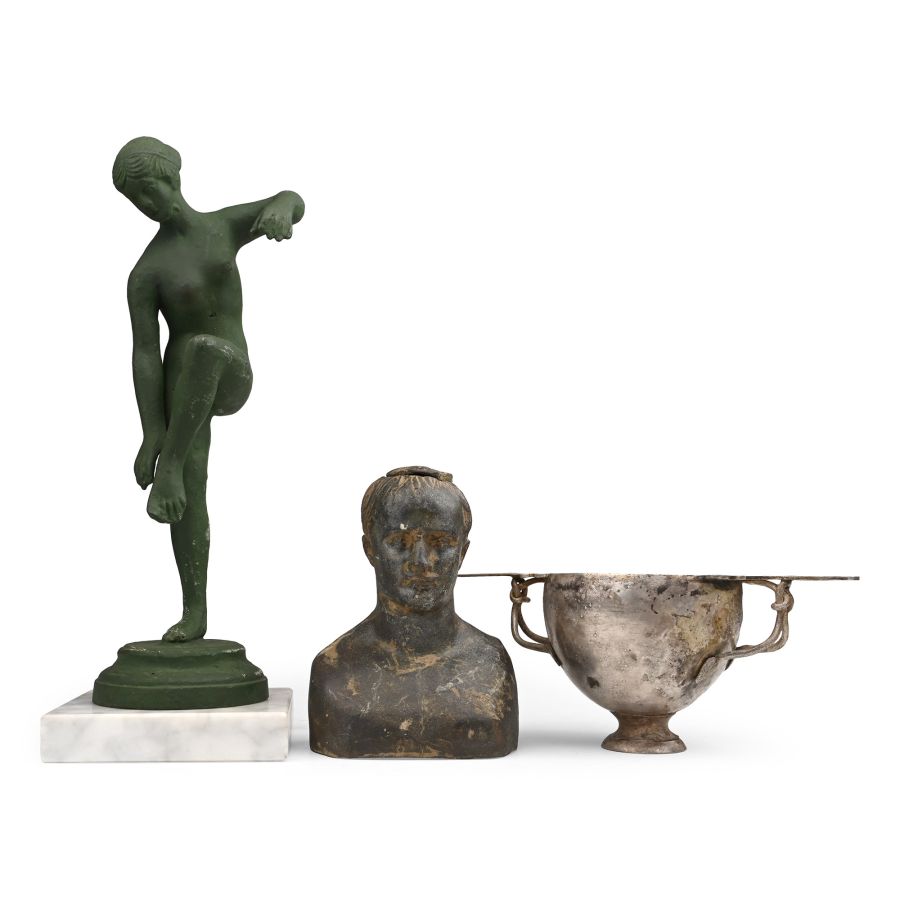
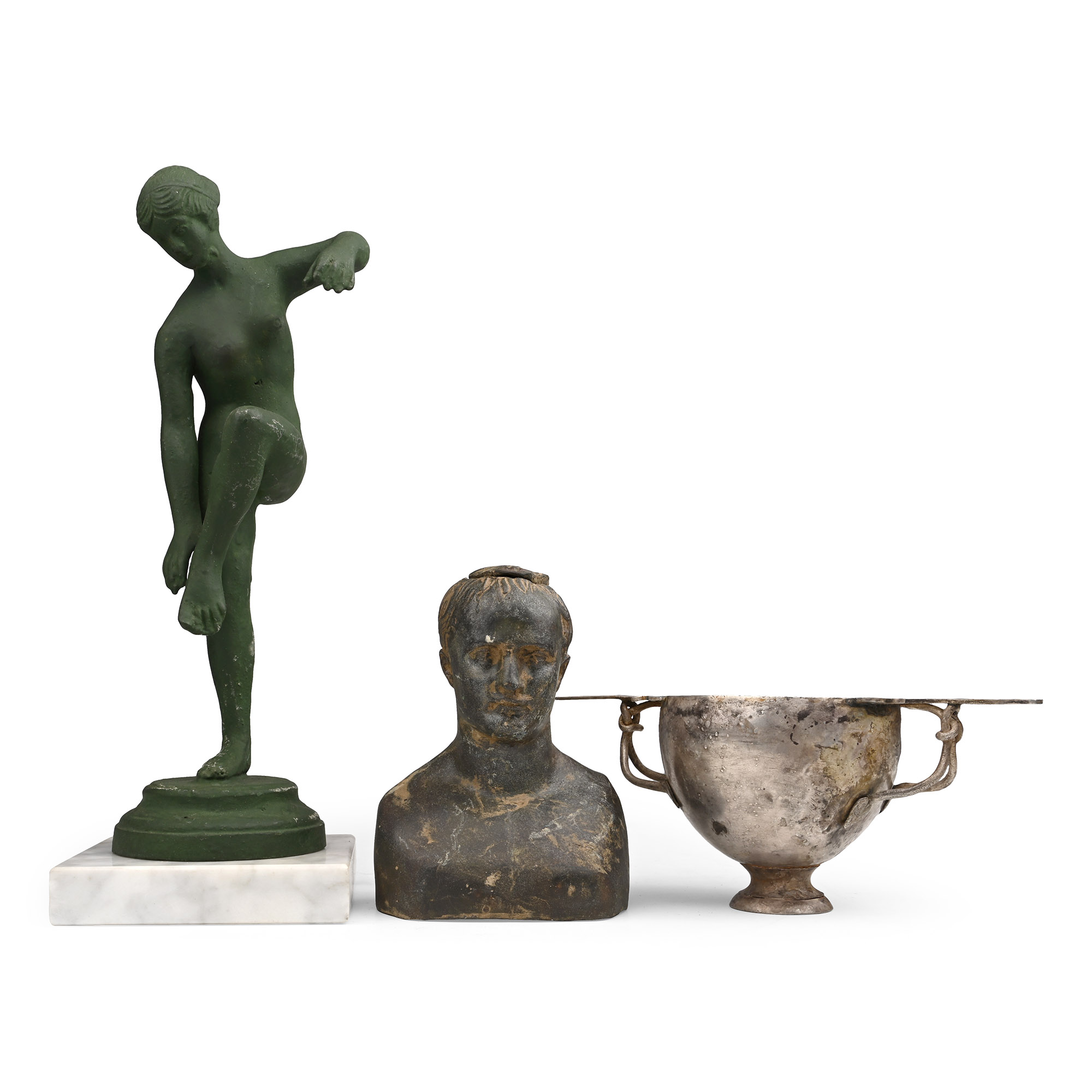
Roman Style Artefact Group
20TH CENTURY A.D.
5 - 10 5/8 in. (3.34 kg total, 12.7-27 cm).
Including: a figurine of Venus bending to fasten her shoe, a cup with looped bars beneath the handles, and a bust with a hinged lid to the crown. [3, No Reserve]
ProvenanceAcquired on the UK art market.
CONDITIONTimeLine Auctions follows a vetting process to ensure the authenticity and legality of all items, reinforcing our commitment to integrity and responsible trading. Each antiquity, antique, and coin lot undergoes thorough examination by a vetting committee of at least ten external specialists, professional trade association members, scientists, and archaeologists: Our Vetting Process
AUCTIONS:
TimeLine is a leading auction house specialising in antiquities, ancient art, collectables, natural history, coins, medals, and books. Our auctions offer museums, collectors, historians, and enthusiasts the opportunity to acquire unique and historically significant pieces.
-
Gemstone Collection
19th-20th century A.D.Estimate: £100 - 140 (+bp*)
Opening Bid: £50
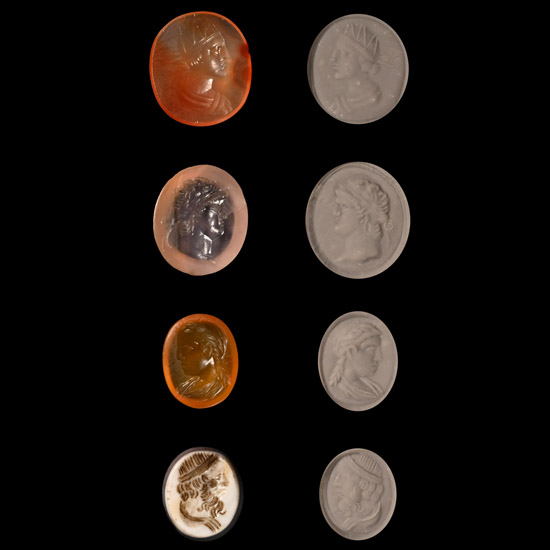
Comprising: profile male and female busts in carnelian and other stones; each supplied with a museum-quality impression. 4.66 grams total, 14-18 mm
Private collection, England. -
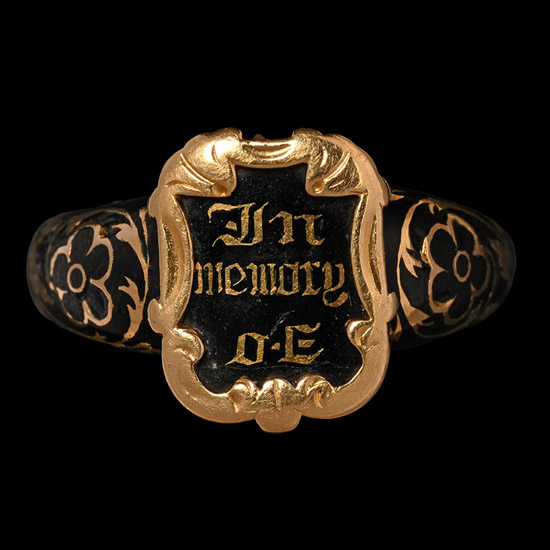
Memento Mori Ring for Sarah Hems
1852 A.D.Sold for (Inc. bp): £572
With D-section tapering hoop, black enamel finish with reserved rosettes and tendrils, the bezel an ornate heater shield with reserved text 'In memory OE' and copperplate engraving to the inner face '1852 / obt.63', 'Mrs.Sarah Hems, obt.26 May' and stamped assay marks: crown, '18', leopard's head, gothic 'k' in octagonal panel (dated to 1845); plaited hair under rectangular glass panel to back of bezel. 4.14 grams, 22.74 mm overall, 17.43 mm internal diameter (approximate size British O, USA 7, Europe 14.98, Japan 14)
Acquired on the UK art market. Property of an East Sussex collector. -
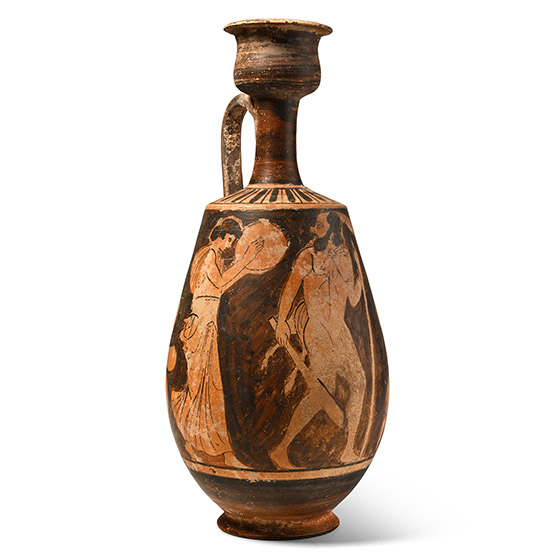
Grand Tour Greek Red Figure Lekythos
20th century A.D.Estimate: £100 - 140 (+bp*)
Opening Bid: £50
Rounded body with narrow neck and flared mouth, strap handle to the rear, the body showing a lively Dionysian procession with a satyr holding a long staff at the centre and a cymbal player behind him. 501 grams, 28 cm
Acquired in the early 2000s. From an important collection of a North London, UK, gentleman.
