
Loading, please wait...
LOT 0756
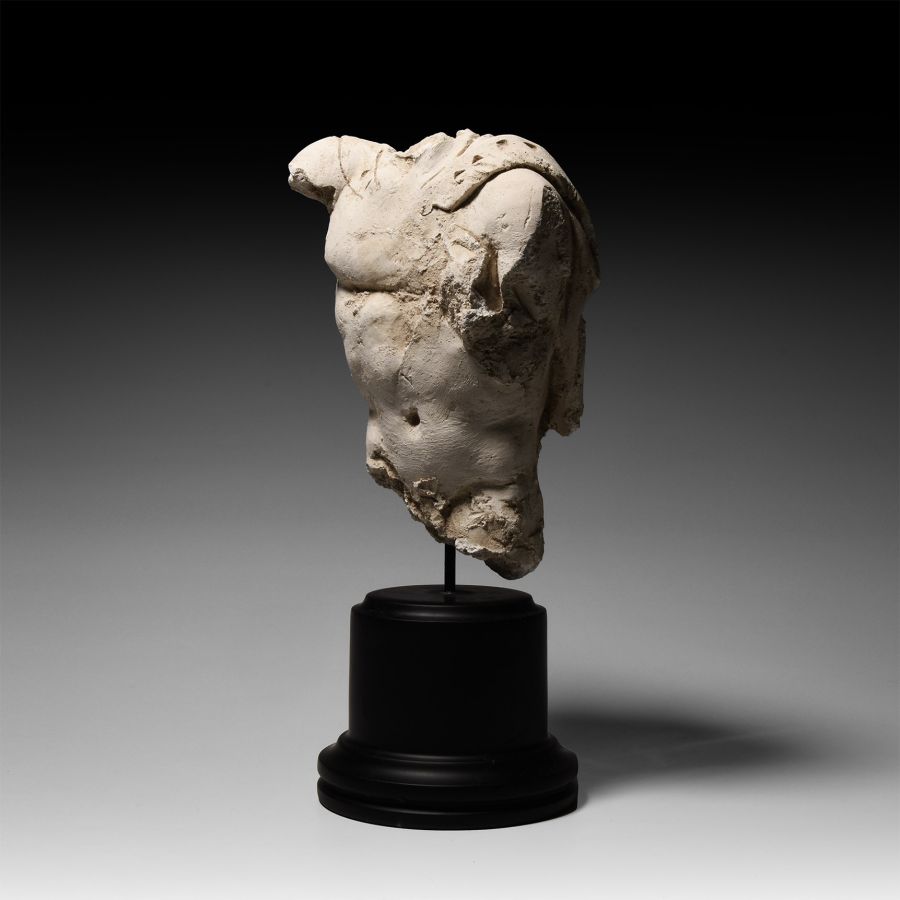
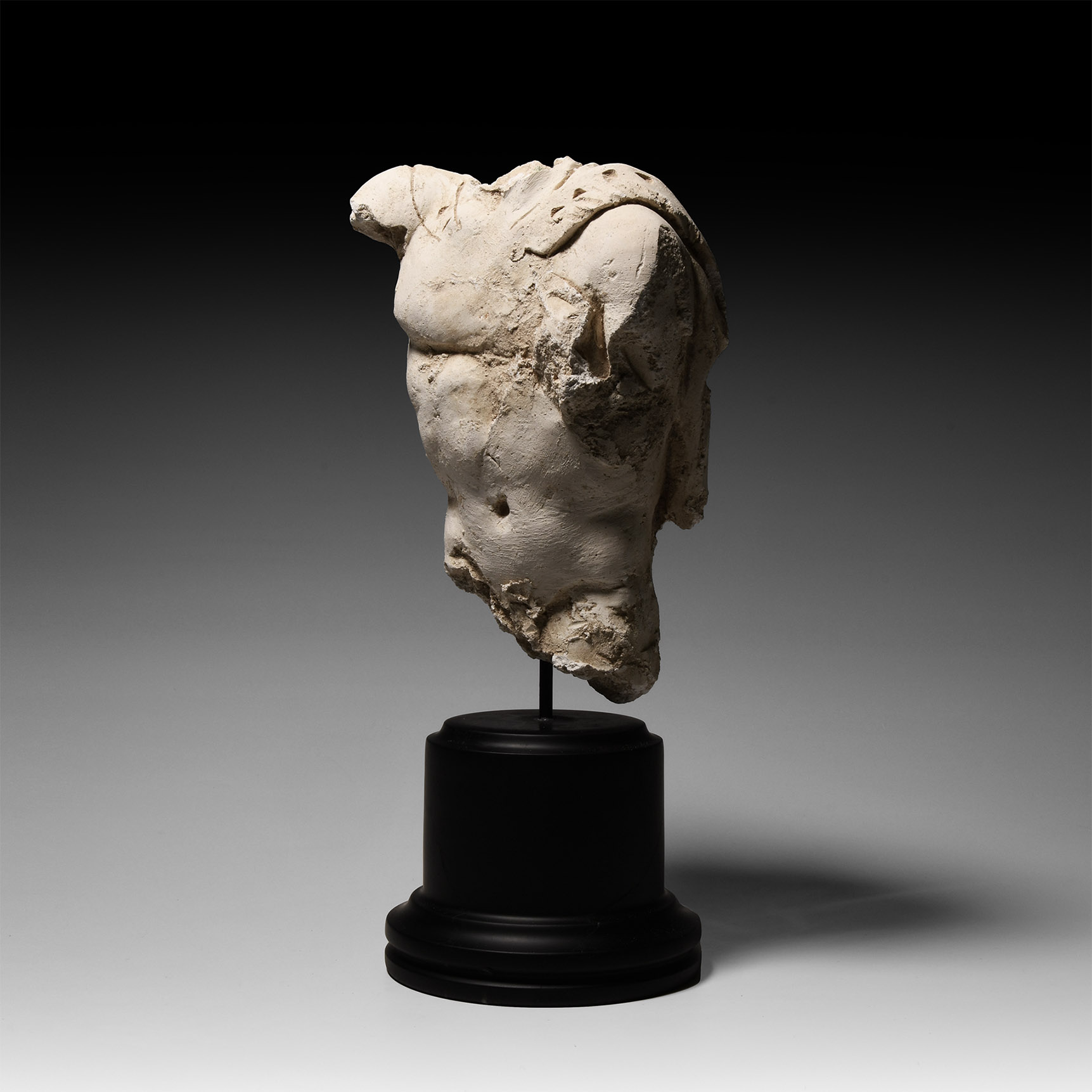
Roman Stucco Torso of an Athlete
PROVINCIAL, 2ND CENTURY A.D.
8 3/8 in. (12 1/4 in.) (3.05 kg total, 21.2 cm high (31 cm including stand)).
A stucco muscular torso from a cornice modelled in the half-round; mounted on a custom-made display stand. [No Reserve]
ProvenanceAcquired 1970s-1996.
Property of a North American collector.
London collection, 2016.
TimeLine Auctions follows a vetting process to ensure the authenticity and legality of all items, reinforcing our commitment to integrity and responsible trading. Each antiquity, antique, and coin lot undergoes thorough examination by a vetting committee of at least ten external specialists, professional trade association members, scientists, and archaeologists: Our Vetting Process
AUCTIONS:
TimeLine is a leading auction house specialising in antiquities, ancient art, collectables, natural history, coins, medals, and books. Our auctions offer museums, collectors, historians, and enthusiasts the opportunity to acquire unique and historically significant pieces.
-
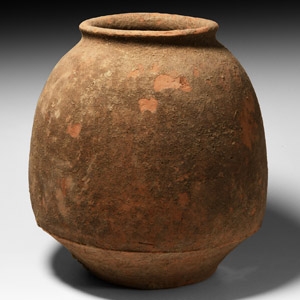
Roman Pottery Jar
4th-5th century A.D.Sold for (Inc. bp): £221
A ceramic jar with a carinated body and rolled rim. 2.07 kg, 22.5 cm high
Acquired 1980-2015. Ex Abelita family collection. -
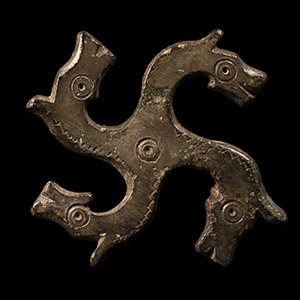
Roman Horse Head Whorl Brooch
3rd-4th century A.D.Sold for (Inc. bp): £598
A bronze swastika-shaped fibula with horse-head decoration, each head with punched ring-and-dot eye, a similar motif to the centre. 16.7 grams, 45 mm
Acquired before 2000. From the collection of a European gentleman living in the UK.
In the 3rd century A.D., several examples of fibulae in the shape of four horses’ heads forming a swastika (type Almgren 232) seem to be related to the creation of the Illyrian cavalry corps in Roman army. Many examples of these military fibulae were found in ancient Roman Dacia (Romania), in Roman Illyricum and Moesia. -
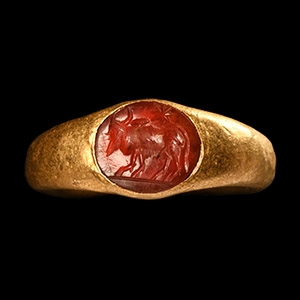
Roman Gold Ring with Cult of Jupiter Dolichenus Bull Gemstone
2nd century A.D.Sold for (Inc. bp): £1,105
A solid, smooth gold ring with D-shaped hoop, oval carnelian intaglio with a bull surmounted by a star; repaired. 4.41 grams, 26.31 mm overall, 18.49 mm internal diameter (approximate size British Q 1/2, USA 8 1/4, Europe 18.12, Japan 17)
repaired
Acquired 1970-2000s. Ex Abelita family collection.
The bull, symbol of thunder and fertility, was an important component of the cult of Jupiter Dolichenus, to which this ring is probably connected. The god is usually represented as standing on a bull holding an axe in his upraised right hand and a bolt of lightning in the left. This bull perpetuated the connection with storms, a frequent and rather obvious identification of power and ferocity. This was a Hittite concept inherited from the Anatolians and then by the Romans.
