
Loading, please wait...
LOT 0702
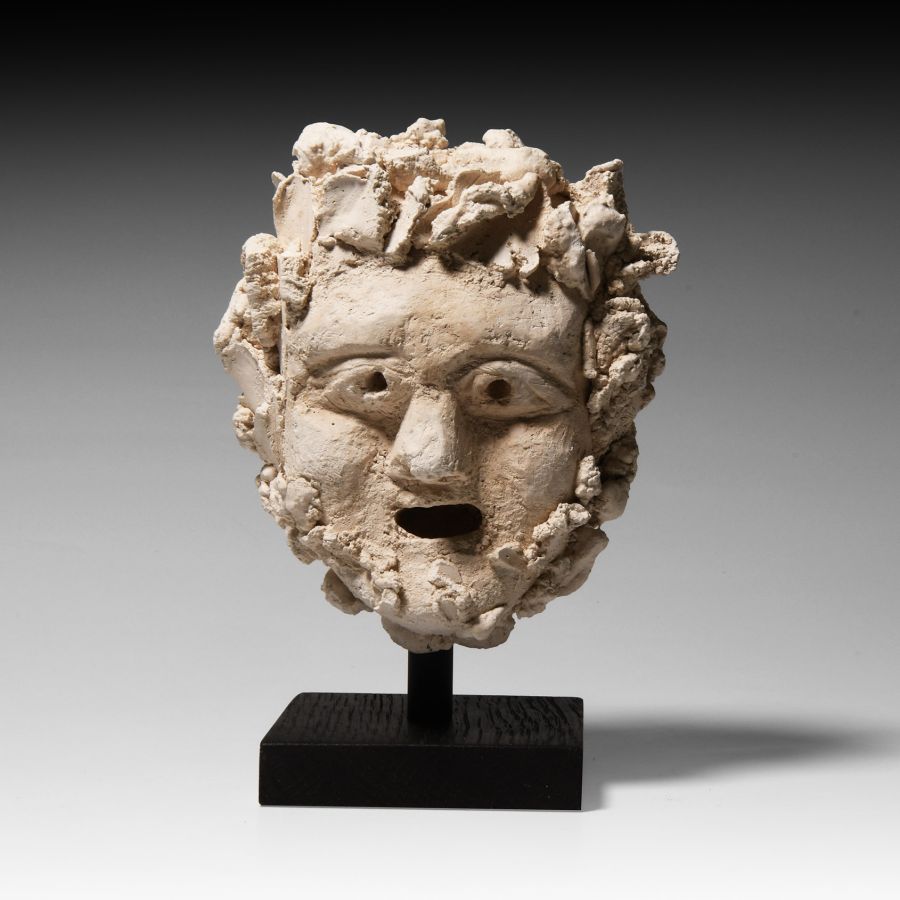
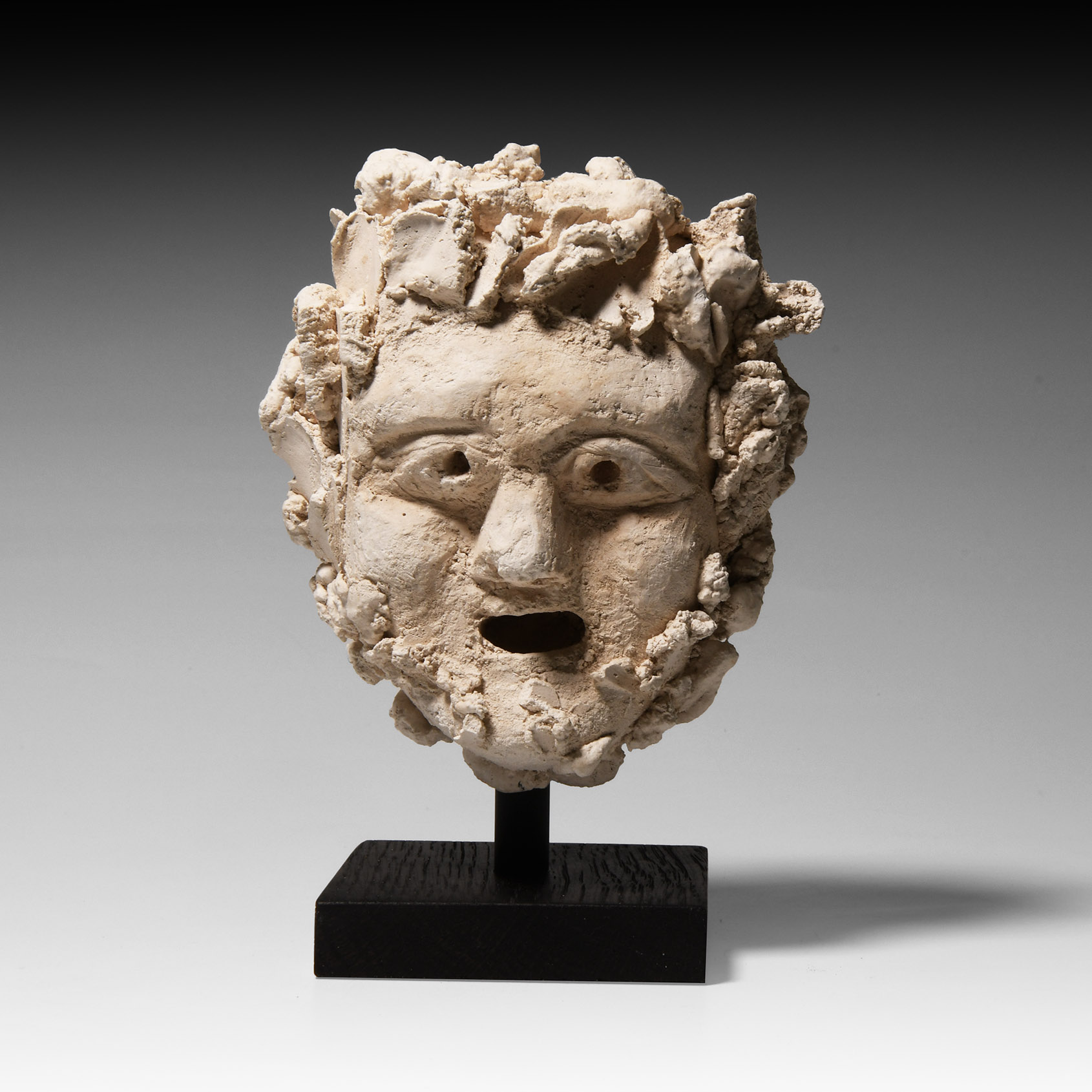
Roman Stucco Head of a Bearded Man
PROVINCIAL, 2ND-3RD CENTURY A.D.
5 in. (6 1/2 in.) (623 grams total, 12.8 cm (16.5 cm high including stand)).
A stucco head from a cornice modelled in the half-round as a mature male with full beard and short, tufted head of hair; mounted on a custom-made display stand. [No Reserve]
ProvenanceAcquired 1970s-1996.
Property of a North American collector.
London collection, 2016.
TimeLine Auctions follows a vetting process to ensure the authenticity and legality of all items, reinforcing our commitment to integrity and responsible trading. Each antiquity, antique, and coin lot undergoes thorough examination by a vetting committee of at least ten external specialists, professional trade association members, scientists, and archaeologists: Our Vetting Process
AUCTIONS:
TimeLine is a leading auction house specialising in antiquities, ancient art, collectables, natural history, coins, medals, and books. Our auctions offer museums, collectors, historians, and enthusiasts the opportunity to acquire unique and historically significant pieces.
-
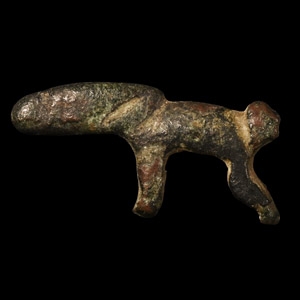
Roman Phallic Pendant
1st-4th century A.D.Sold for (Inc. bp): £72
A bronze pendant or other item, formed as a four-legged animal with a phallic head. 2.29 grams, 22.3 mm
Acquired in the 1990s. UK private collection. Property of a Sussex, UK, teacher. -
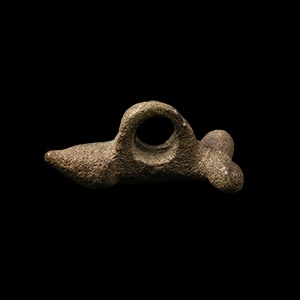
Roman Phallic Pendant
2nd-4th century A.D.Sold for (Inc. bp): £72
A bronze phallic pendant with stylised anatomical detailing and integral suspension loop. 8.28 grams, 30 mm
Acquired before 2000. From the collection of a European gentleman living in the UK. -
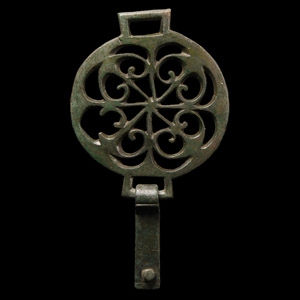
Roman Military Horse Harness Phalera
1st-4th century A.D.Sold for (Inc. bp): £117
A bronze military horse harness phalera featuring an oval plaque decorated with openwork whorls and volutes, two integral rectangular attachment lugs, free-moving attachment arm with rivet. 63 grams, 12 cm
Acquired before 2000. From the collection of a European gentleman living in the UK.
