
Loading, please wait...
LOT 0639
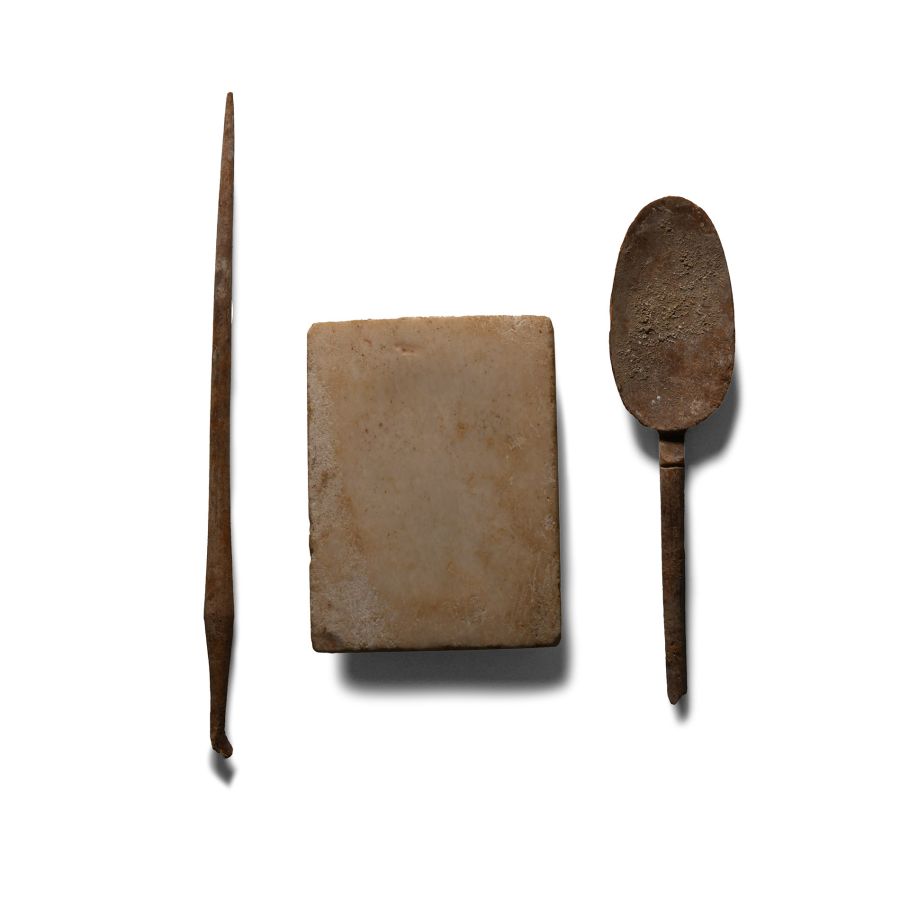
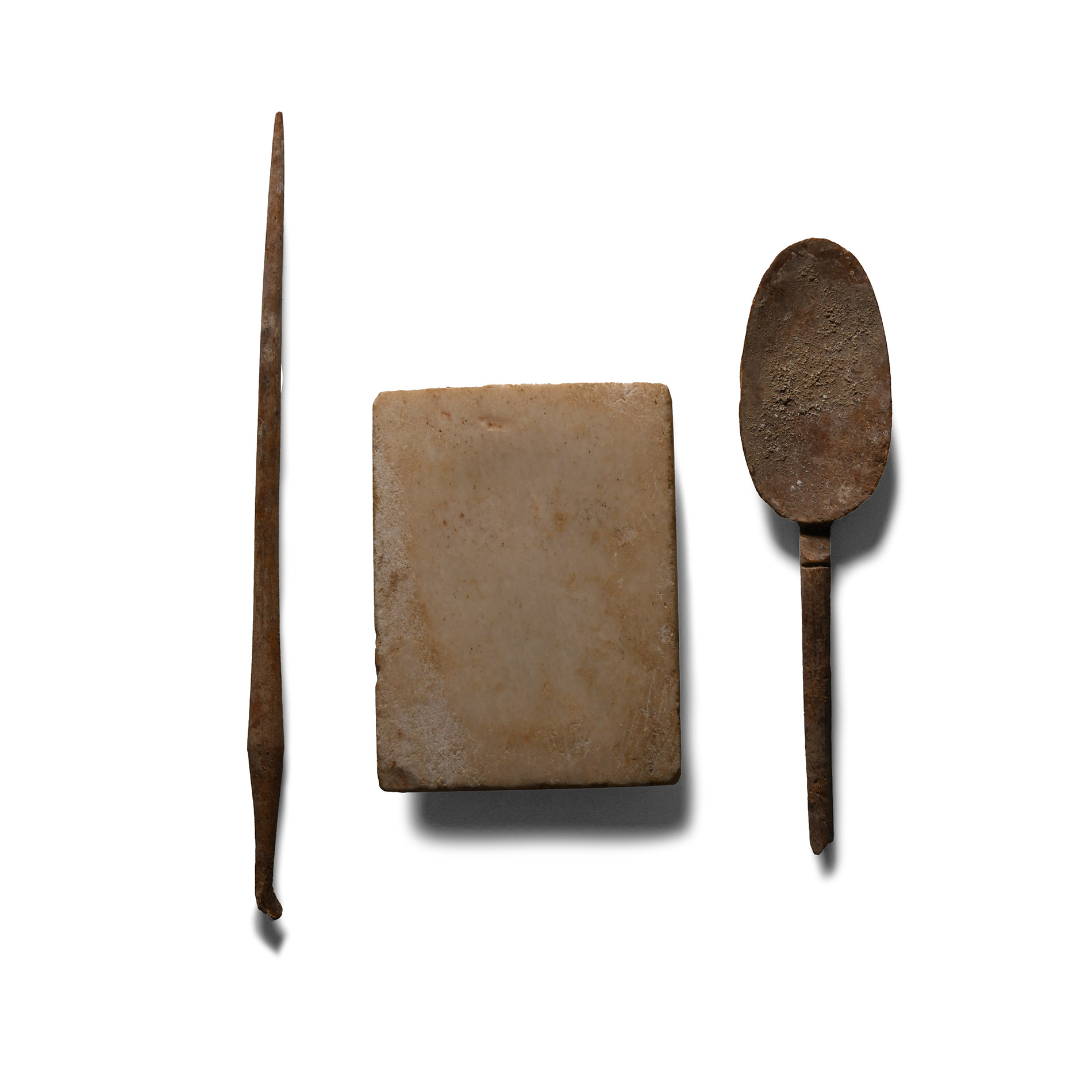
Roman Stone Palette and Bone Implement Group
1ST-4TH CENTURY A.D.
3 - 6 1/8 in. (152 grams total, 7.5-15.5 cm).
The rectangular palette with bevelled edges, accompanied by a bone spoon and probe implement. [3]
ProvenanceAcquired early 1990s.
Ex private American collection; thence by descent.
Private collection since 1998.
TimeLine Auctions follows a vetting process to ensure the authenticity and legality of all items, reinforcing our commitment to integrity and responsible trading. Each antiquity, antique, and coin lot undergoes thorough examination by a vetting committee of at least ten external specialists, professional trade association members, scientists, and archaeologists: Our Vetting Process
AUCTIONS:
TimeLine is a leading auction house specialising in antiquities, ancient art, collectables, natural history, coins, medals, and books. Our auctions offer museums, collectors, historians, and enthusiasts the opportunity to acquire unique and historically significant pieces.
LOT 0639
Roman Stone Palette and Bone Implement Group
Estimate £200 - 300€230 - 350 (for guidance only)$270 - 410 (for guidance only)
-
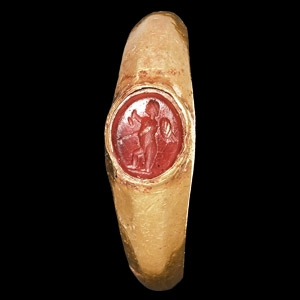
Roman Gold Ring with Winged Eros Gemstone
1st-2nd century A.D.Sold for (Inc. bp): £1,300
Hollow-formed with facetted shoulders, inset cabochon intaglio of Eros (Cupid) in flight. 3.22 grams, 24.20 mm overall, 16.84 mm internal diameter (approximate size British J 1/2, USA 5, Europe 9.32, Japan 9)
Acquired early 1990s. Ex private American collection; thence by descent. Private Swiss collection since 1998. -
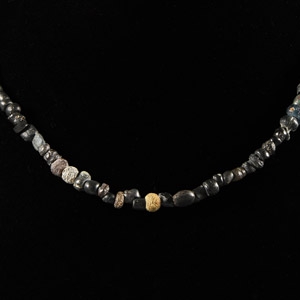
Roman Black Glass and Other Bead Necklace String
1st century A.D. and laterSold for (Inc. bp): £104
Comprising variously shaped beads; restrung. 12 grams, 40 cm long
UK gallery, early 2000s. -
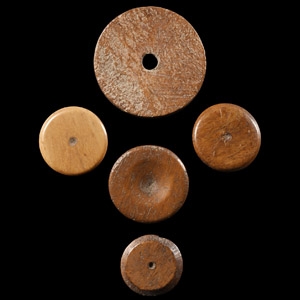
Roman 'Thames' Bone Gaming Counter Group
1st-4th century A.D.Sold for (Inc. bp): £208
Mixed group of discoid counters, two pierced. 8.15 grams total, 15-27 mm
Found Billingsgate spoil from the Thames foreshore, London, UK, circa 1984. Property of an Essex collector.
