
Loading, please wait...
LOT 0126
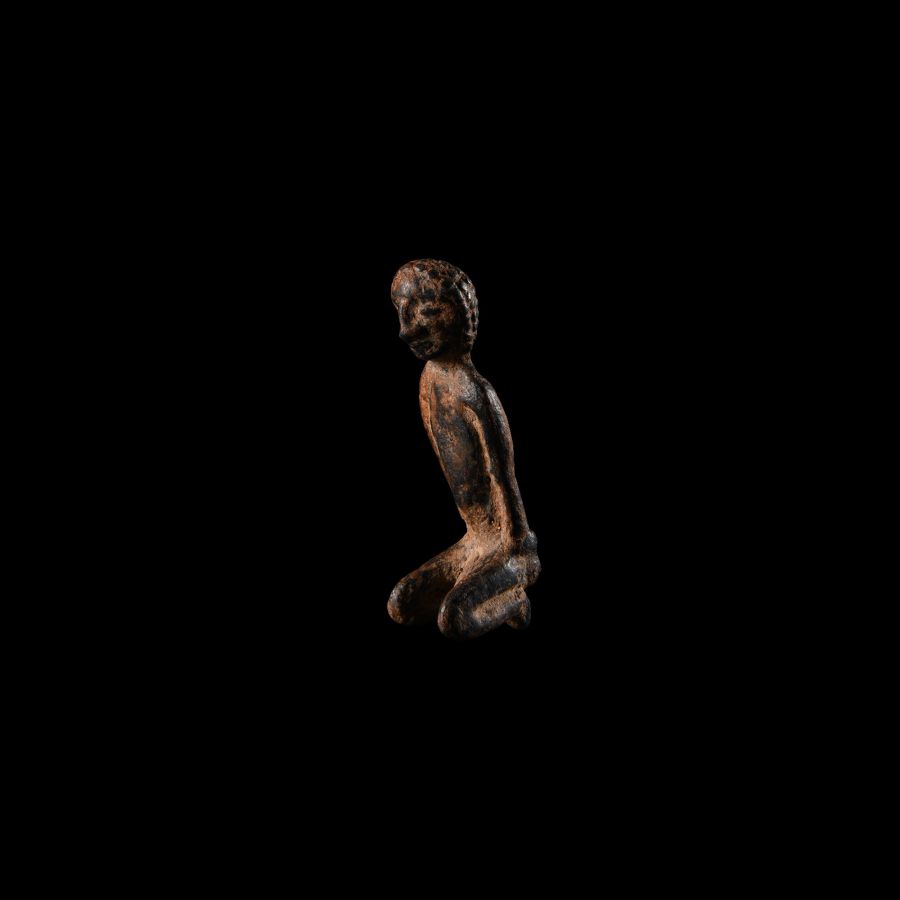
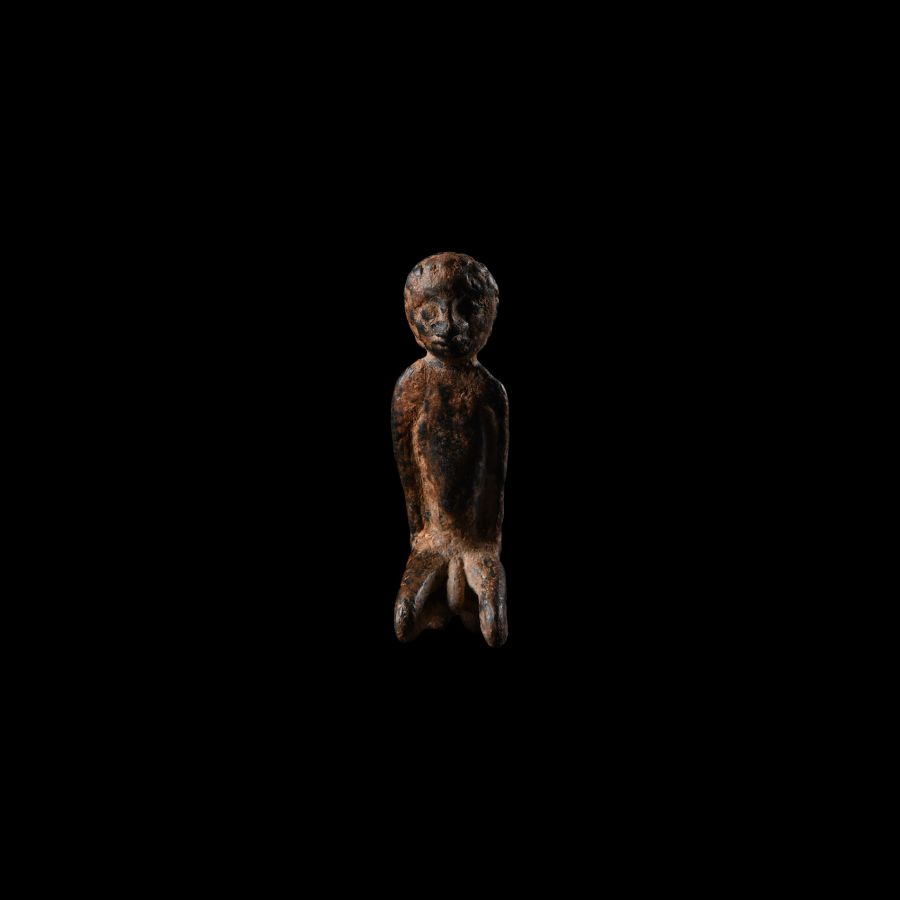
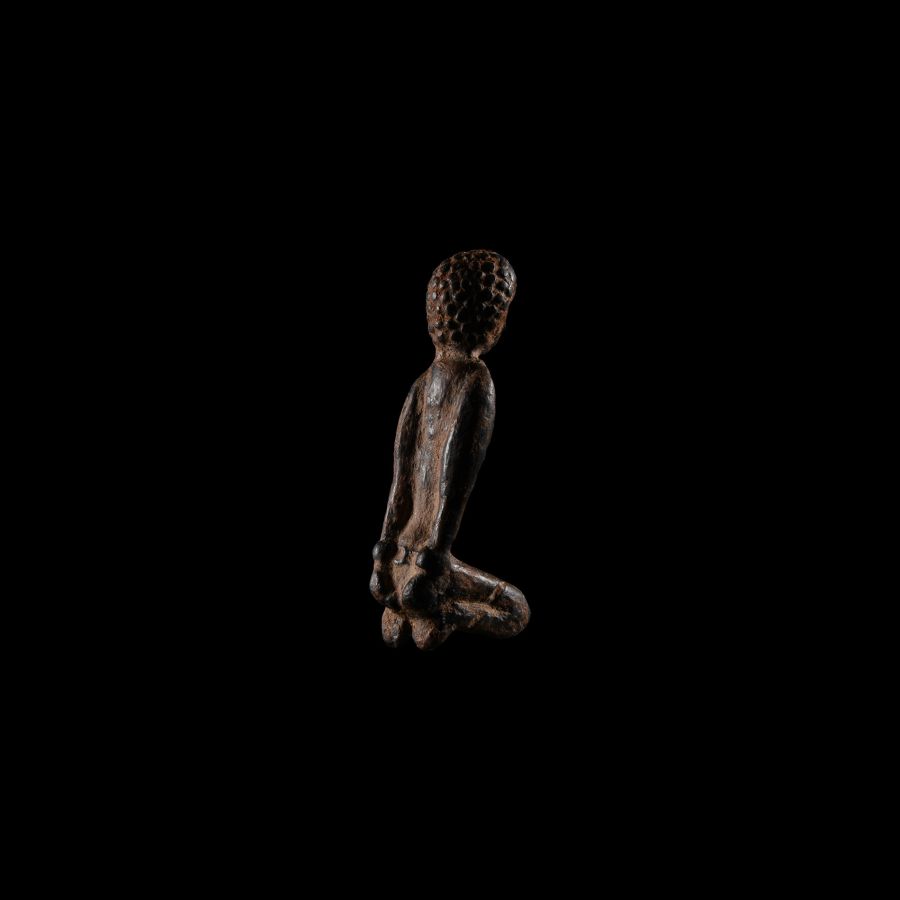
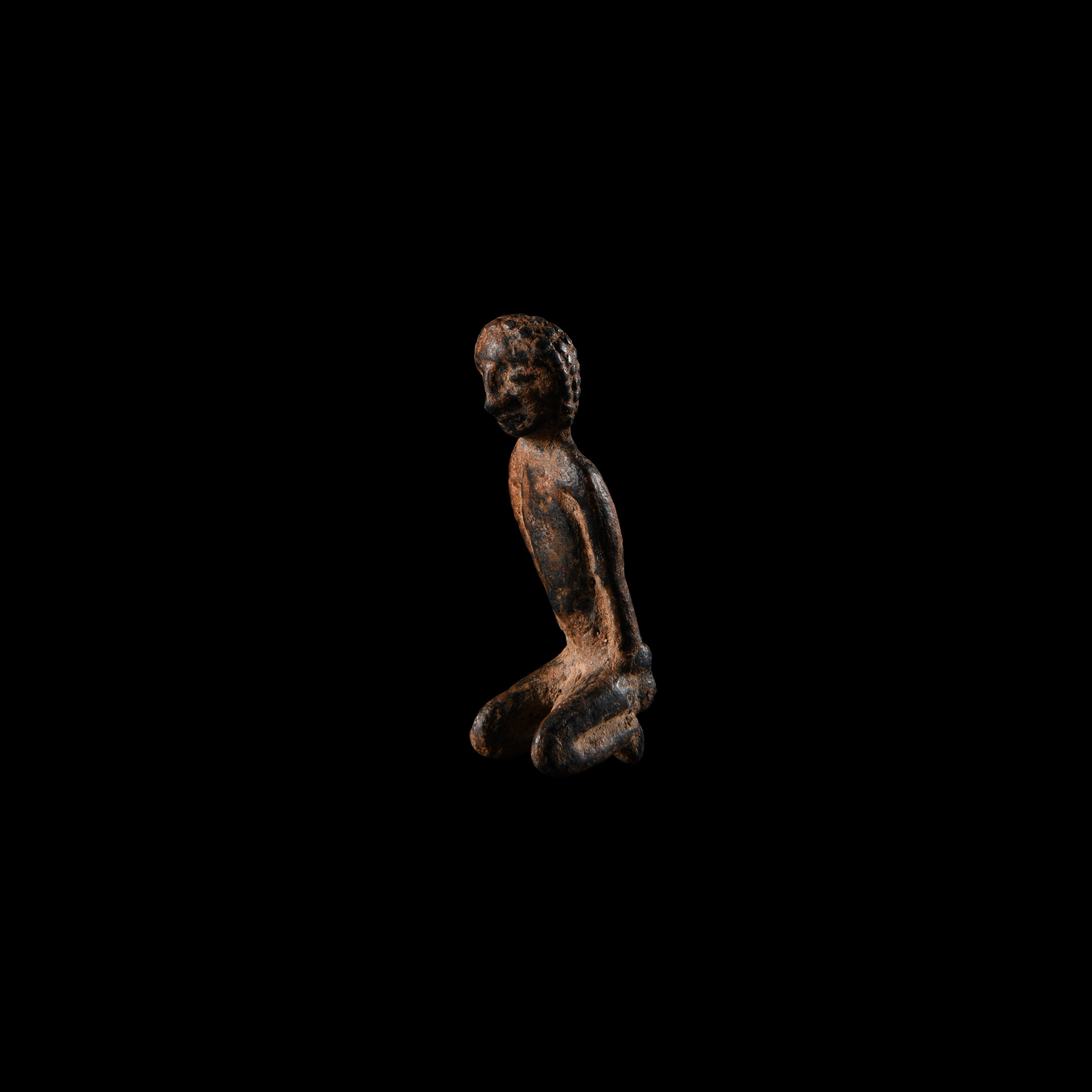
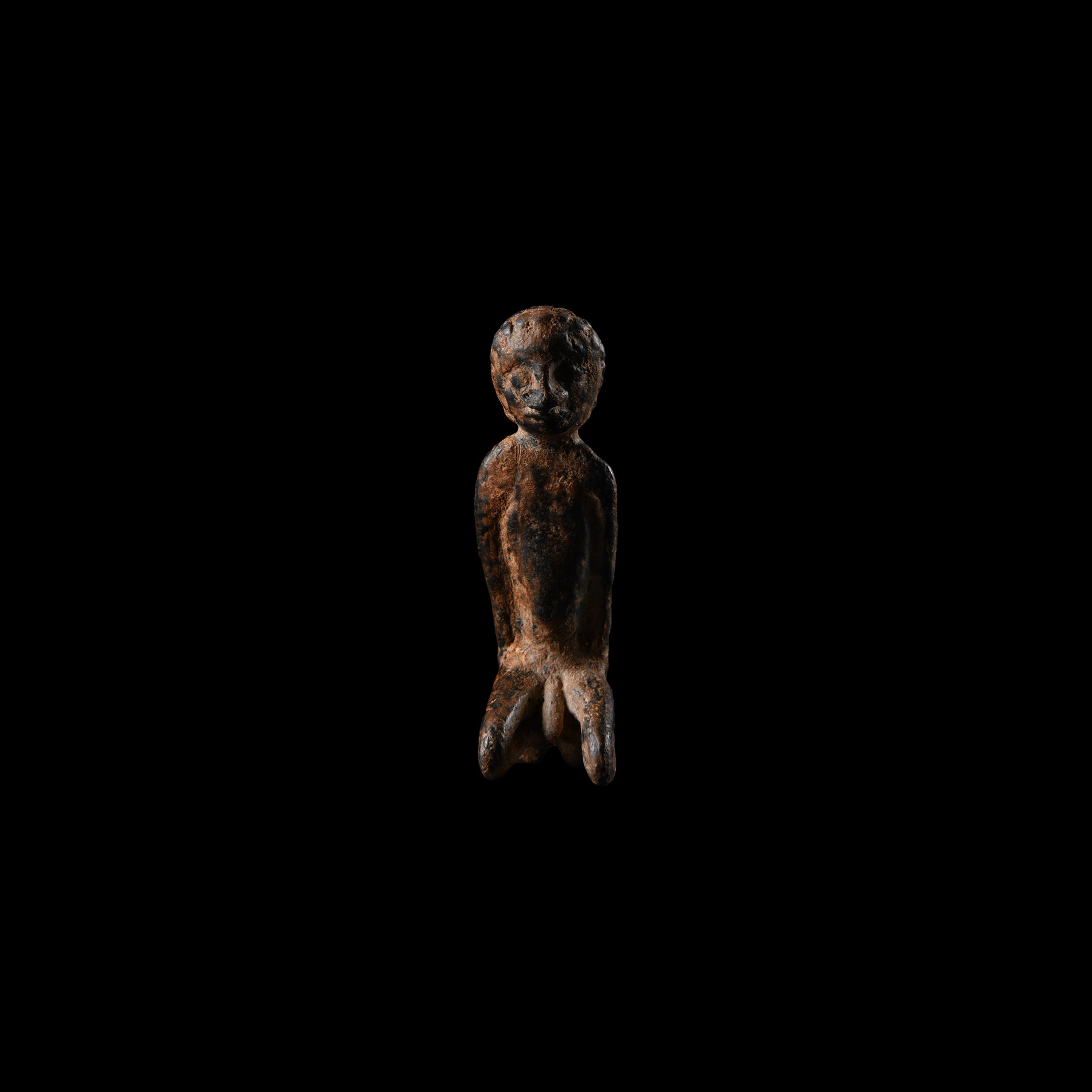
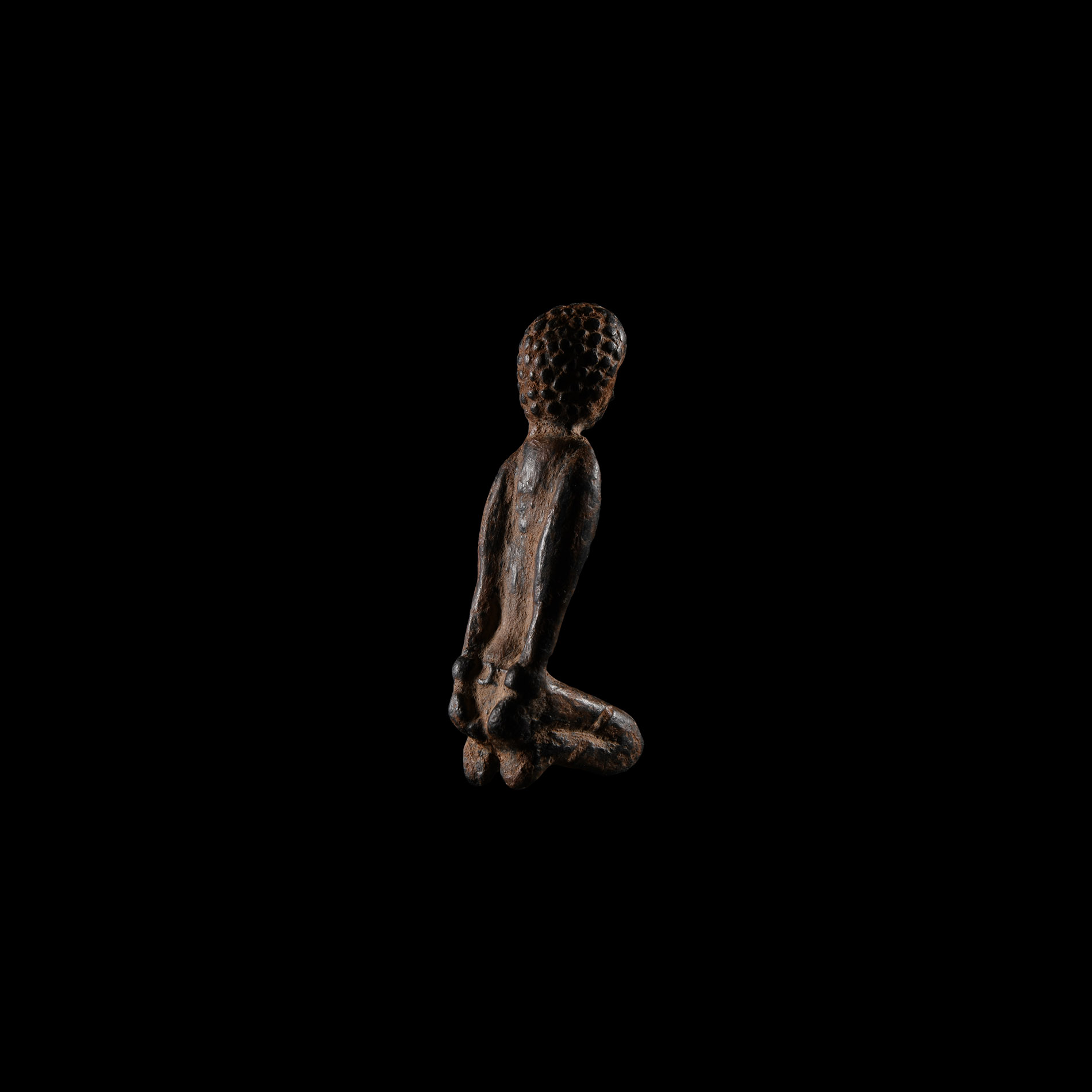
Roman Statuette of a Bound Barbarian Captive
2ND-4TH CENTURY A.D.
2 3/8 in. (40 grams, 60 mm high).
A bronze statuette of a bound Mauritanian prisoner with his hands tied behind his back, naked body with exposed genitals, hair arranged in tight curls.
ProvenanceAcquire in the 1990s.
Ex Cambridgeshire, UK, collection.
Cf. Beutler, F. et al., Der Adler Roms. Carnuntum und der Armee der Cäsaren, Bad-Deutsch Altenberg, 2017, items 1003-1010, especially 1005, for type.
FootnotesThe face of this bound barbarian, who is forced into a squatting position by the way he is bound, is framed by rich locks betraying his Moorish origin. Numerous statuettes of bound barbarians have been found at the Empire’s outer boundaries. Many have vertical and horizontal bores, which have led to the interpretation that they were ornaments for horse bridles or snaffle fittings.
CONDITIONTimeLine Auctions follows a vetting process to ensure the authenticity and legality of all items, reinforcing our commitment to integrity and responsible trading. Each antiquity, antique, and coin lot undergoes thorough examination by a vetting committee of at least ten external specialists, professional trade association members, scientists, and archaeologists: Our Vetting Process
AUCTIONS:
TimeLine is a leading auction house specialising in antiquities, ancient art, collectables, natural history, coins, medals, and books. Our auctions offer museums, collectors, historians, and enthusiasts the opportunity to acquire unique and historically significant pieces.
-
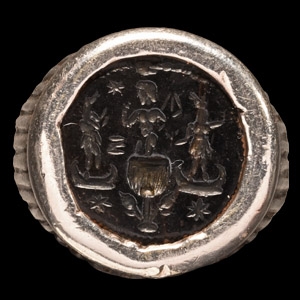
Roman Magical Gnostic Gemstone in Silver Ring
2nd-3rd century A.D. and laterEstimate: £1,000 - 1,400 (+bp*)
Opening Bid: £550
A glass intaglio with Gnostic symbolism including a figure emerging from a poppy-head, asterisks and other symbols; set in an early 20th century silver finger ring; supplied with a museum-quality impression. 12.32 grams, 25.86 mm overall, 19.79 mm internal diameter (approximate size British T 1/2, USA 9 3/4, Europe 21.89, Japan 21)
Acquired in the late 1980s-early 1990s. Important North West London collection. -
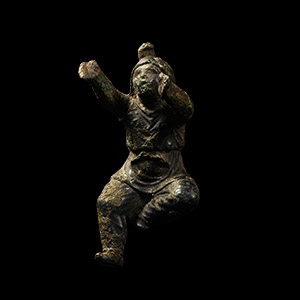
Roman Figure of a Boy in Oriental Dress
1st-2nd century A.D.Estimate: £1,000 - 1,400 (‡+bp*)
Opening Bid: £500
A bronze figure of a child sitting with one leg extended and the other bent beneath the body, arms raised in supplication; loose fitting trousers and knee-length tunic gathered at the waist, boots on the feet and a separate pointed hood on the head; Scythian or similar costume. 14.6 grams, 61 mm
Private Swiss collection, acquired 2001. -
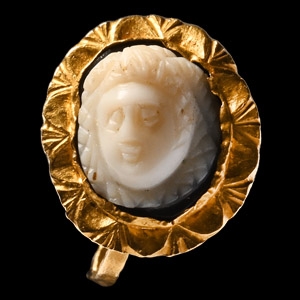
Roman Gold Ring with Medusa Cameo
2nd-3rd century A.D.Sold for (Inc. bp): £1,690
A gold finger ring with large cell forming the bezel, foliage detailing to the flared rim, inset cameo female mask in three-quarter view, hoop split. 2.15 grams, 20.20 mm overall, 12.55 mm internal diameter
UK private collection. with Bertolami Fine Art, London, 22 April 2022, lot 197. English private collection.
