
Loading, please wait...
LOT 0733
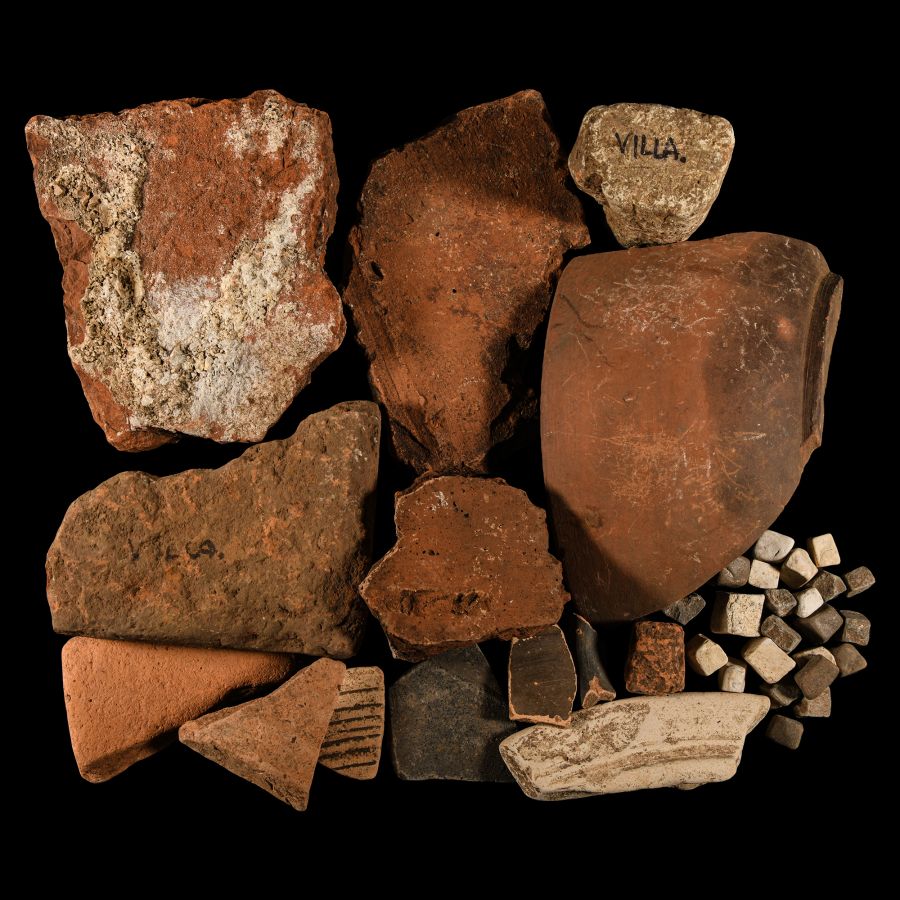
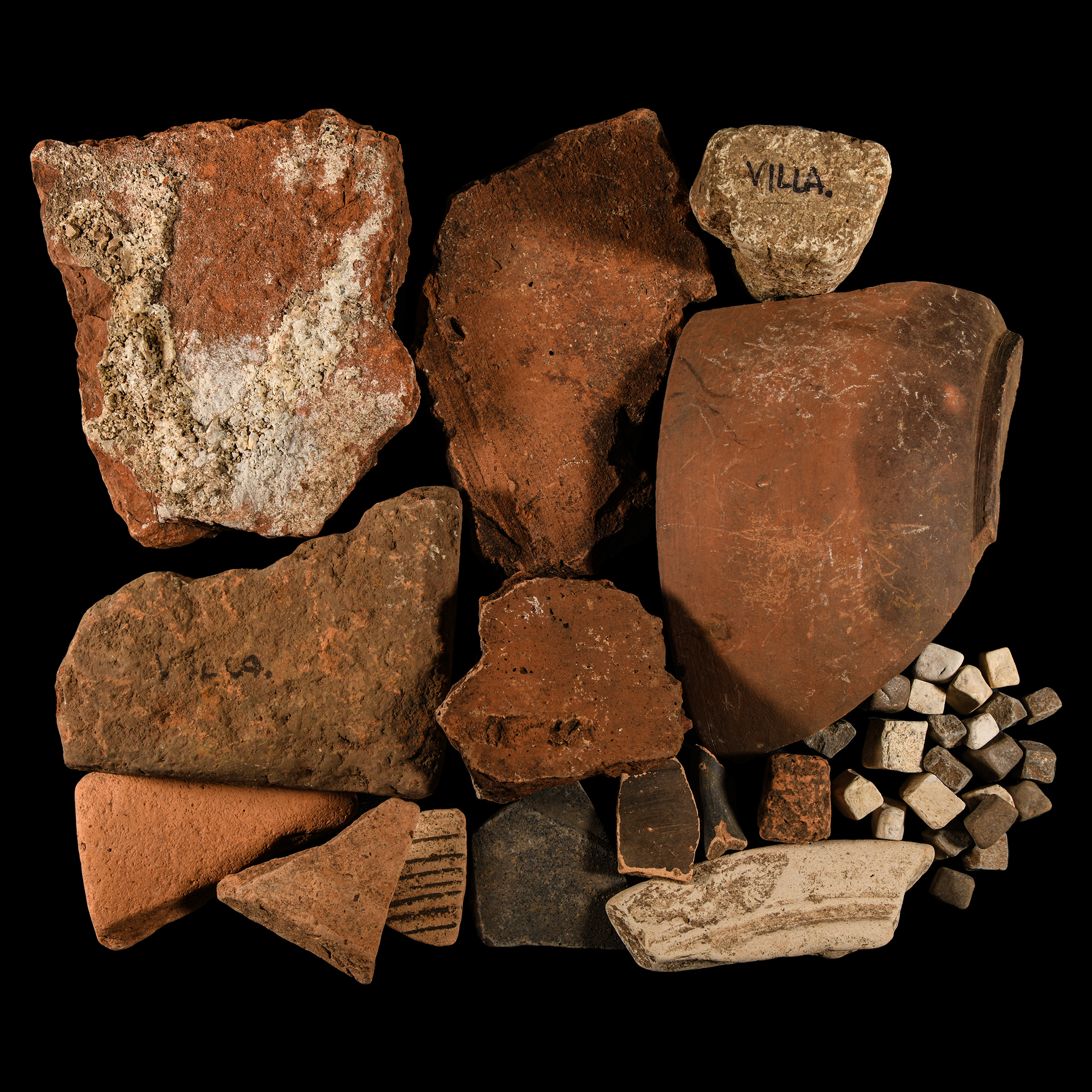
Roman 'St Albans' Pottery Sherd and Mosaic Tesserae Group
1ST-4TH CENTURY A.D.
3/8 - 6 3/4 in. (2.3 kg total, 1-17 cm).
Comprising large tile and vessel fragments, some with inked notes; and a group of white and grey tesserae, including one large redware tessera. [37, No Reserve]
ProvenanceFound St Albans, Hertfordshire, UK.
Acquired from the finder in 2008.
Property of a Nottinghamshire gentleman.
See Ilid, A., Verulamium, St. Albans, 1978, plate II, for similar.
FootnotesThe great monuments of Verulamium were efficiently destroyed by the medieval builders of Saxon and Norman abbeys. They sought Roman bricks and, above all, limestone which could be burnt for mortar. Most of the ancient Roman town stone monuments were broken up and thrown into lime kilns. These surviving fragments give a hint of what was once there. For the monuments and buildings Romans used Northamptonshire limestone, but the more delicate, finely carved inscriptions were realised in Purbeck marble from Dorset.
CONDITIONTimeLine Auctions follows a vetting process to ensure the authenticity and legality of all items, reinforcing our commitment to integrity and responsible trading. Each antiquity, antique, and coin lot undergoes thorough examination by a vetting committee of at least ten external specialists, professional trade association members, scientists, and archaeologists: Our Vetting Process
AUCTIONS:
TimeLine is a leading auction house specialising in antiquities, ancient art, collectables, natural history, coins, medals, and books. Our auctions offer museums, collectors, historians, and enthusiasts the opportunity to acquire unique and historically significant pieces.
LOT 0733
Roman 'St Albans' Pottery Sherd and Mosaic Tesserae Group
Sold for (Inc. bp): £26
-
.jpg)
Roman Clear Cut-Glass Beaker
Circa 4th century A.D.Estimate: £700 - 900 (+bp*)
Opening Bid: £350
Translucent glass with wheel-cut bands creating registers of ellipses and circles. 189 grams, 11 cm wide
Fine condition, repaired.
Acquired on the French art market, 1990s-early 2000s. From an important Paris gallery, France. Ex private Parisian collection. -
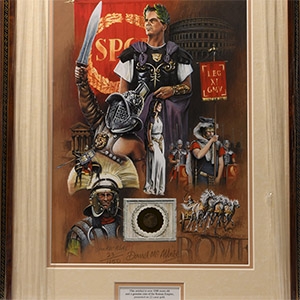
Roman Coin and Limited Edition Framed Print
3rd century A.D. and laterSold for (Inc. bp): £26
The coin mounted on 22 carat gold foil, framed with an art print signed by the artist David McAllister, depicting scenes of Roman military activity; limited edition number 23/1150. 1.3 kg total, 48.5 x 36.5 cm
UK gallery, early 2000s. Accompanied by an old certificate of authenticity.
David McAllister's exciting design is a 'one of a kind' work that portrays the might and riches of the Roman civilisation. This limited edition print is a celebration of the award winning artist's lifetime dedication to historical paintings of the ancient world. To enhance appreciation of this rare and historic work, each individual print is signed and numbered by the artist. -
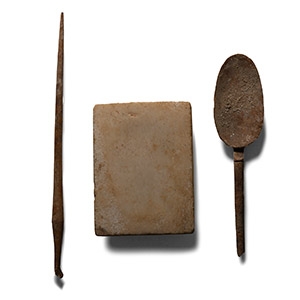
Roman Stone Palette and Bone Implement Group
1st-4th century A.D.Estimate: £200 - 300 (‡+bp*)
Opening Bid: £100
The rectangular palette with bevelled edges, accompanied by a bone spoon and probe implement. 152 grams total, 7.5-15.5 cm
Acquired early 1990s. Ex private American collection; thence by descent. Private collection since 1998.
