
Loading, please wait...
LOT 0669
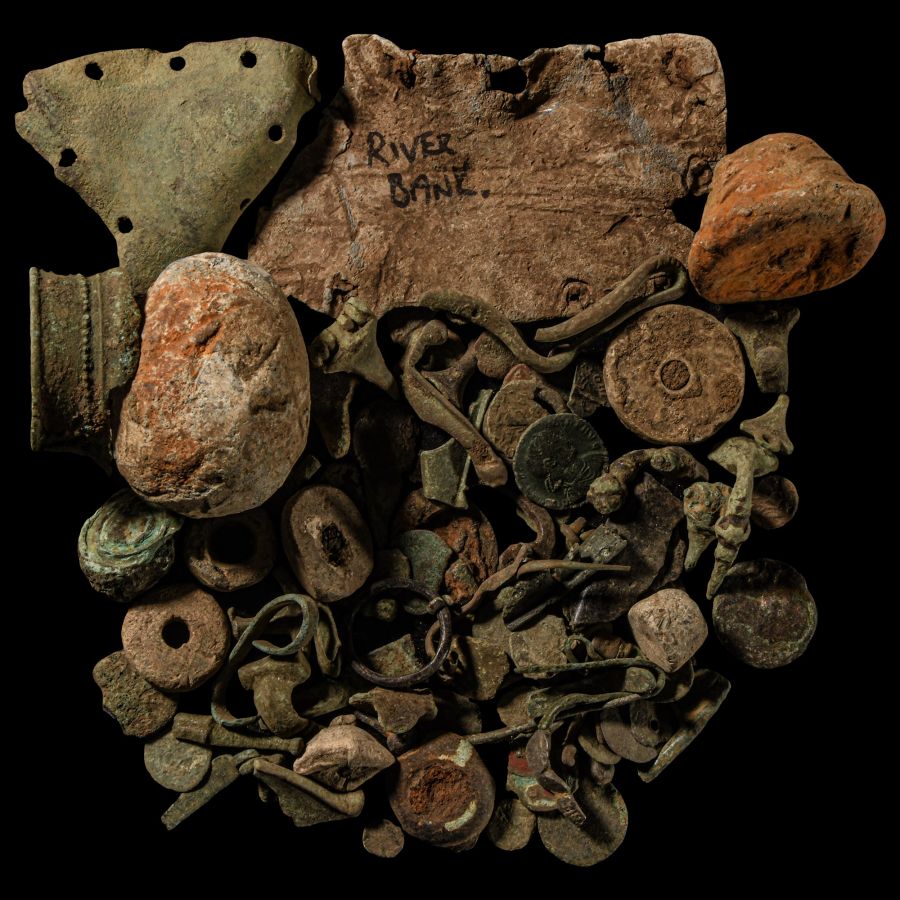
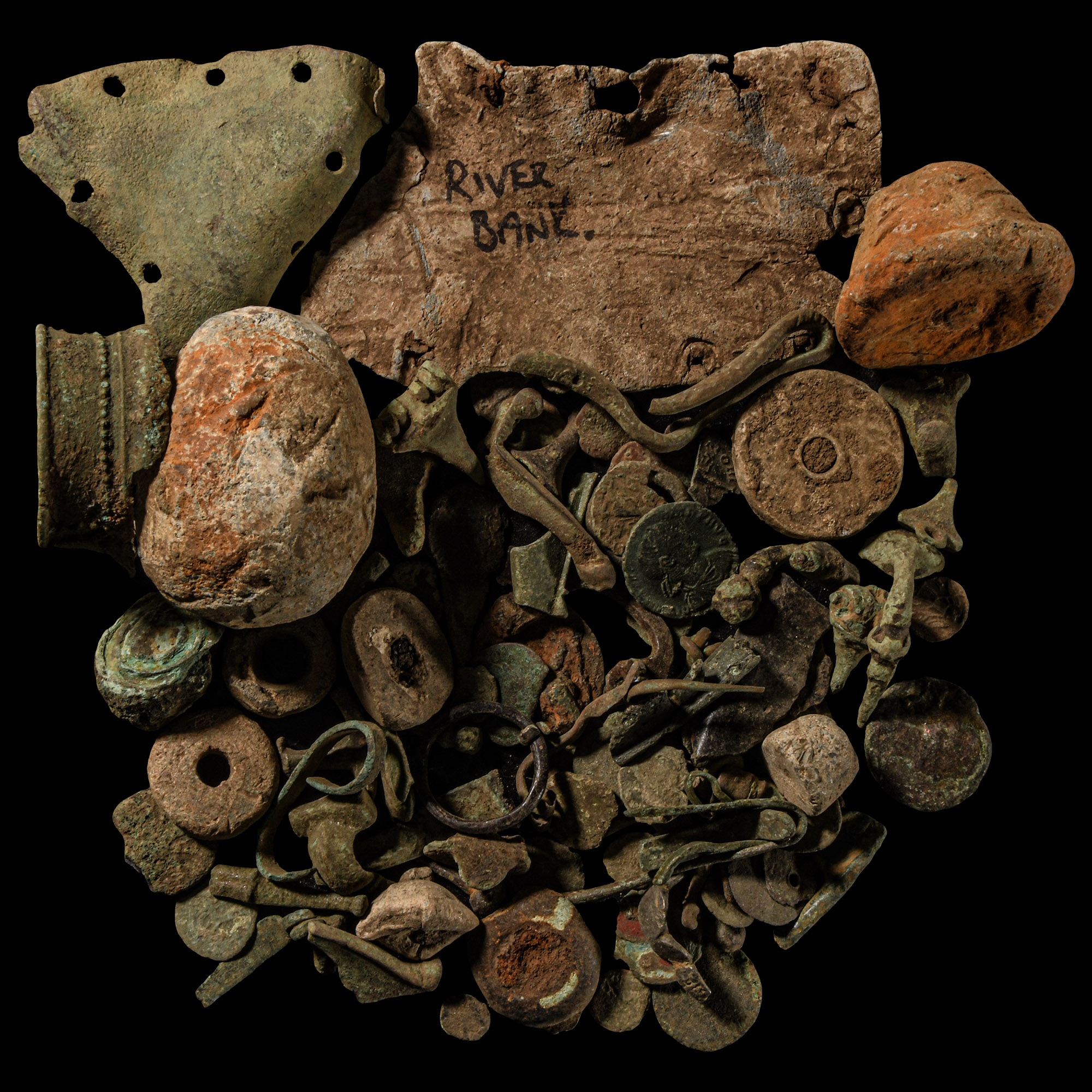
Roman 'St Albans' Bronze and Other Artefact Group
1ST-4TH CENTURY A.D.
3/8 - 4 1/8 in. (1.3 kg total, 1-10.6 cm).
Comprising a variety of items including lead weights, lead plaque inked with 'River Bank'; bronze brooches, coins, rings, mounts and other items, most fragmentary. [106, No Reserve]
ProvenanceFound St Albans, Hertfordshire, UK.
Acquired from the finder in 2008.
Property of a Nottinghamshire gentleman.
TimeLine Auctions follows a vetting process to ensure the authenticity and legality of all items, reinforcing our commitment to integrity and responsible trading. Each antiquity, antique, and coin lot undergoes thorough examination by a vetting committee of at least ten external specialists, professional trade association members, scientists, and archaeologists: Our Vetting Process
AUCTIONS:
TimeLine is a leading auction house specialising in antiquities, ancient art, collectables, natural history, coins, medals, and books. Our auctions offer museums, collectors, historians, and enthusiasts the opportunity to acquire unique and historically significant pieces.
-
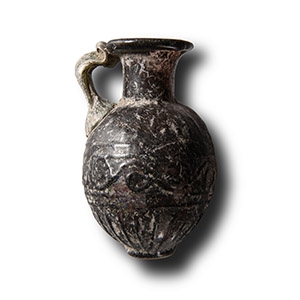
Roman Aubergine Mould Blown Amphoriskos
1st century A.D.Sold for (Inc. bp): £390
Miniature egg-shaped juglet with applied handle and integral foot, mould-blown decoration formed as a medial frieze of scrolling motifs and lines radiating upwards from the base; iridescent surfaces; chipped rim. 17.3 grams, 66 mm high
Acquired early 1990s. Ex private American collection; thence by descent. Private collection since 1998. -
.jpg)
Roman Carnelian Victory Gemstone
Circa 2nd-3rd century A.D.Sold for (Inc. bp): £234
With intaglio image of winged Victory and a perching eagle; supplied with a museum-quality impression. 0.38 grams, 11 mm
From the collection of a Swiss gentleman formed in Europe from 1970-1980s; thence by descent from the family in London. -
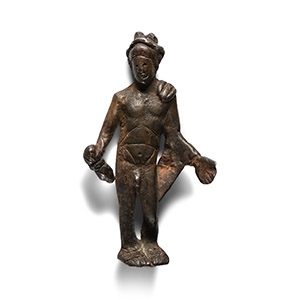
Roman Bronze Statuette of Mercury
1st century B.C.-1st century A.D.Estimate: £400 - 600 (+bp*)
Opening Bid: £200
Standing nude with winged petasos and draped mantle to the left arm and shoulder; marsupium in the right hand. 34.6 grams, 59 mm
From a private collection formed in the 1990s. Ex London, UK, gallery.
