
Loading, please wait...
LOT 0170
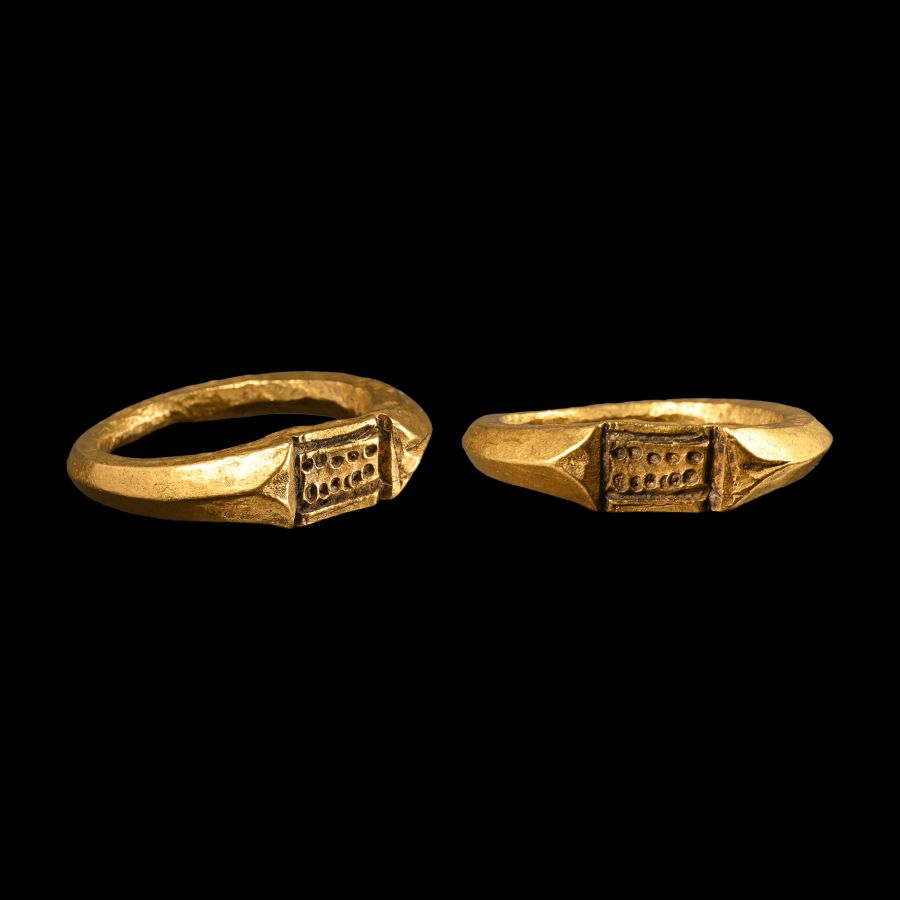
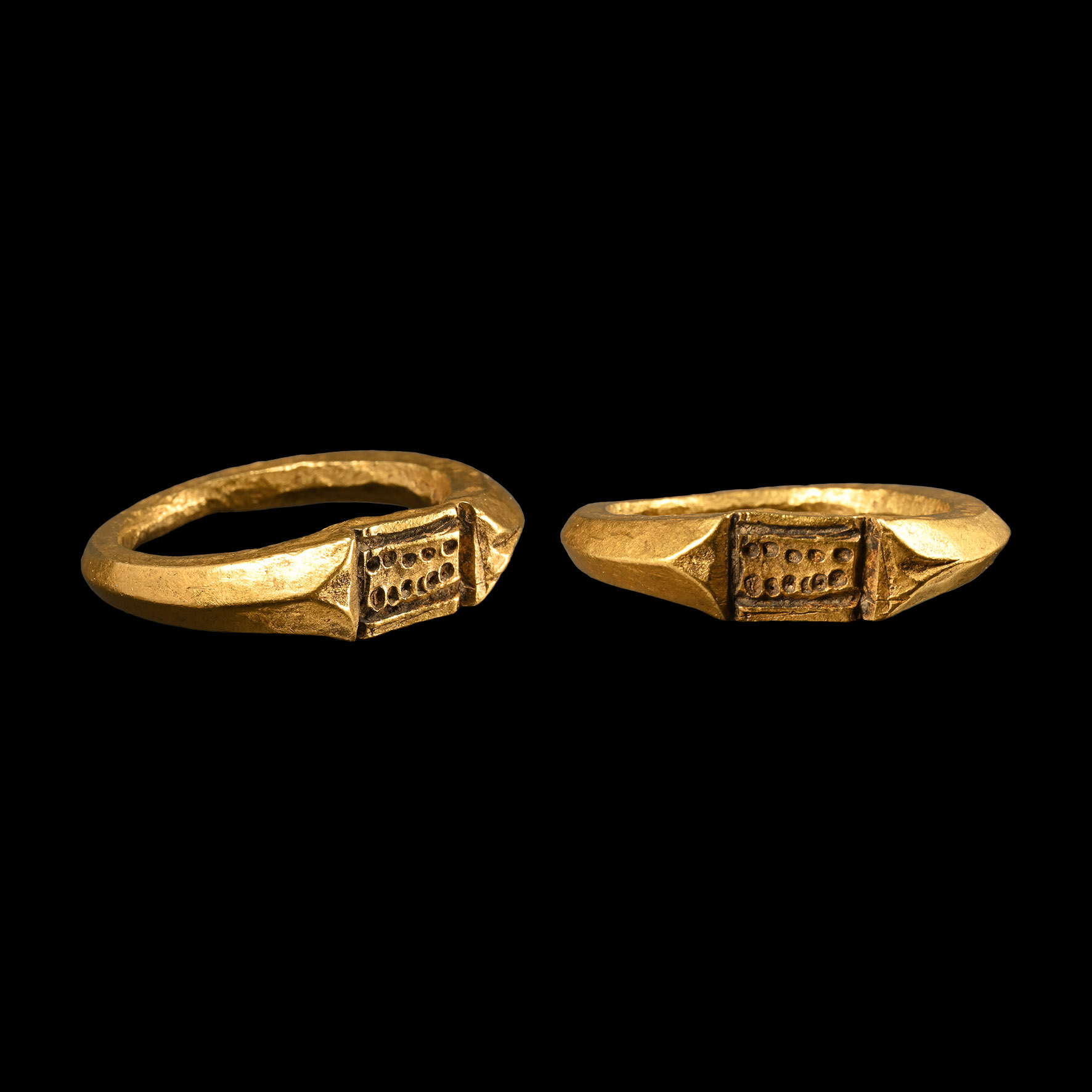
Roman Solid Gold Ring with Dotted Bezel
3RD CENTURY A.D.
1 in. (5.97 grams, 23.03 mm overall, 16.64 mm internal diameter (approximate size British G, USA 3 1/4, Europe 4.92, Japan 4)).
With facetted shank and fluted shoulders, rectangular bezel with outer bands and central plaque bearing two lines of impressed points.
ProvenanceFrom a late Japanese specialist collector, 1970-2000s.
LiteratureCf. Ruseva-Slokoska, L., Roman Jewellery, Sofia, 1991, item 180; Chadour, A.B., Rings. The Alice and Louis Koch Collection, volume I, Leeds, 1994, item 272, for type.
CONDITIONTimeLine Auctions follows a vetting process to ensure the authenticity and legality of all items, reinforcing our commitment to integrity and responsible trading. Each antiquity, antique, and coin lot undergoes thorough examination by a vetting committee of at least ten external specialists, professional trade association members, scientists, and archaeologists: Our Vetting Process
AUCTIONS:
TimeLine is a leading auction house specialising in antiquities, ancient art, collectables, natural history, coins, medals, and books. Our auctions offer museums, collectors, historians, and enthusiasts the opportunity to acquire unique and historically significant pieces.
-
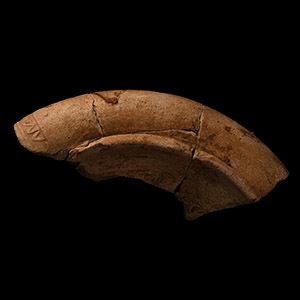
Roman Colchester Inscribed CAMV Mortarium Fragment
1st-2nd century A.D.Sold for (Inc. bp): £156
Comprising a section of the rim and inner wall of a mortarium vessel; stamped 'CAMV' within a rectangular panel to the upper face of the rim; repaired. 263 grams, 19 cm
Found Bedfordhire, 1980s. Property of a Kempston, UK gentleman.
The abbreviation of CAMV for the ancient town of Camulodunum (modern Colchester, Essex) is well attested and commonly seen on the coins of the Celtic king Cunobelin. -
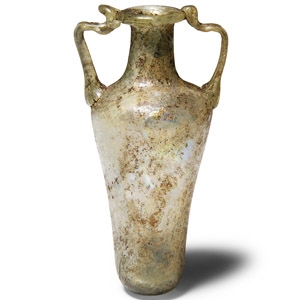
Roman Glass Amphora
1st-3rd century A.D.Sold for (Inc. bp): £390
Pale green colour with broad rounded shoulder tapering to a rounded base, cylindrical neck and everted rim, applied scrolling handles; iridescent surfaces. 31 grams, 97 mm high
Acquired 1980-2015. Ex Abelita family collection. -
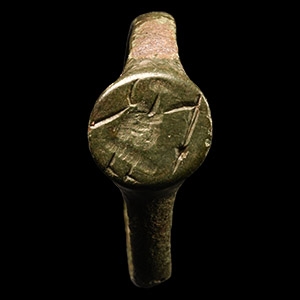
Roman Bronze Ring with Armed Warrior
4th-5th century A.D.Sold for (Inc. bp): £104
The hoop expanded slightly at the shoulders, circular bezel engraved with what is possibly a stylised warrior figure wielding a spear. 2.25 grams, 22.55 mm overall, 19.38 mm internal diameter (approximate size British P, USA 7 1/2, Europe 16/23, Japan 15)
Private collection formed since the 1940s. UK art market. Property of an Essex gentleman.
