
Loading, please wait...


LOT 0764
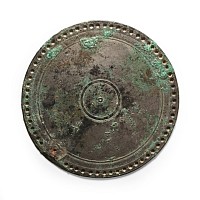
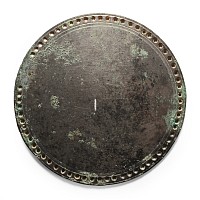
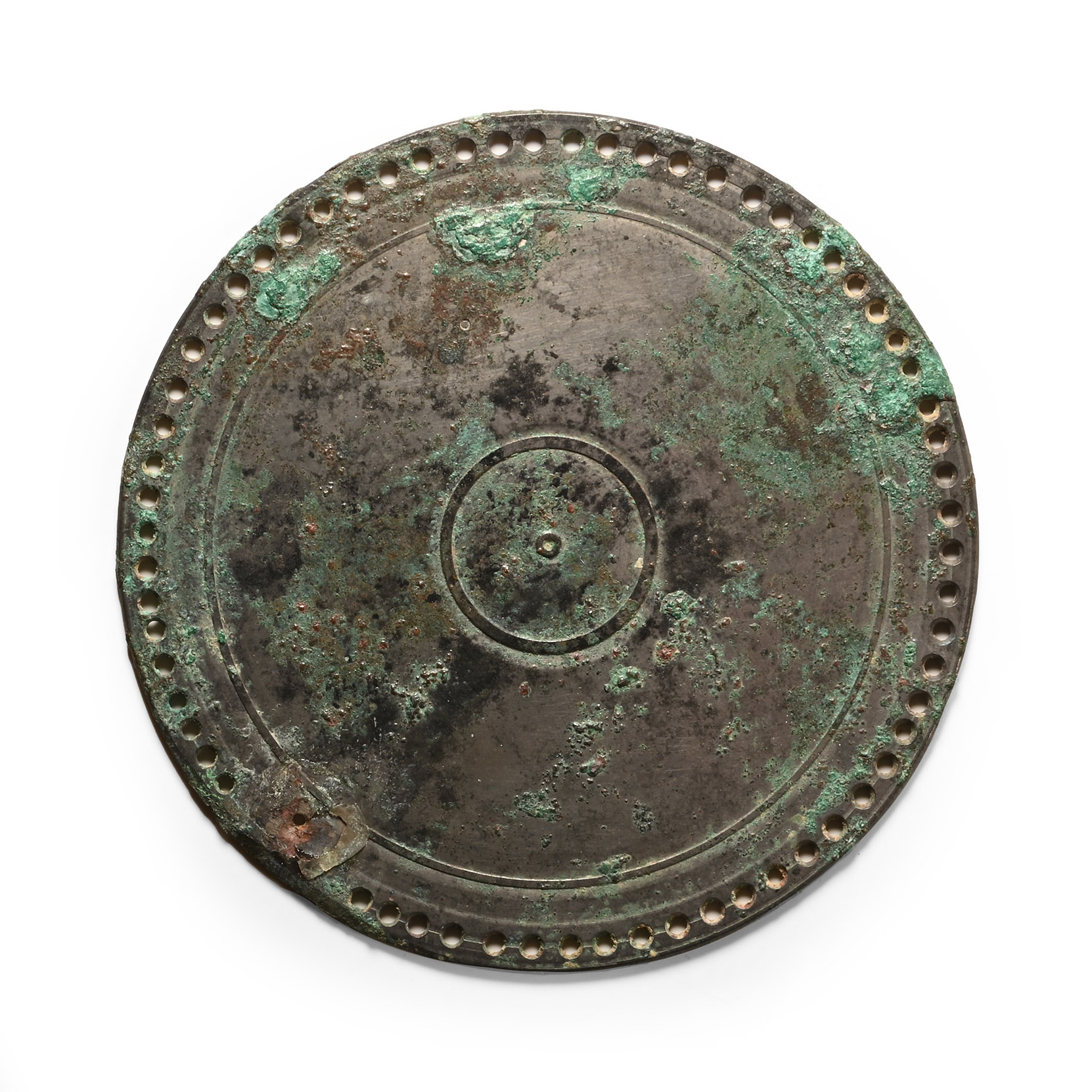
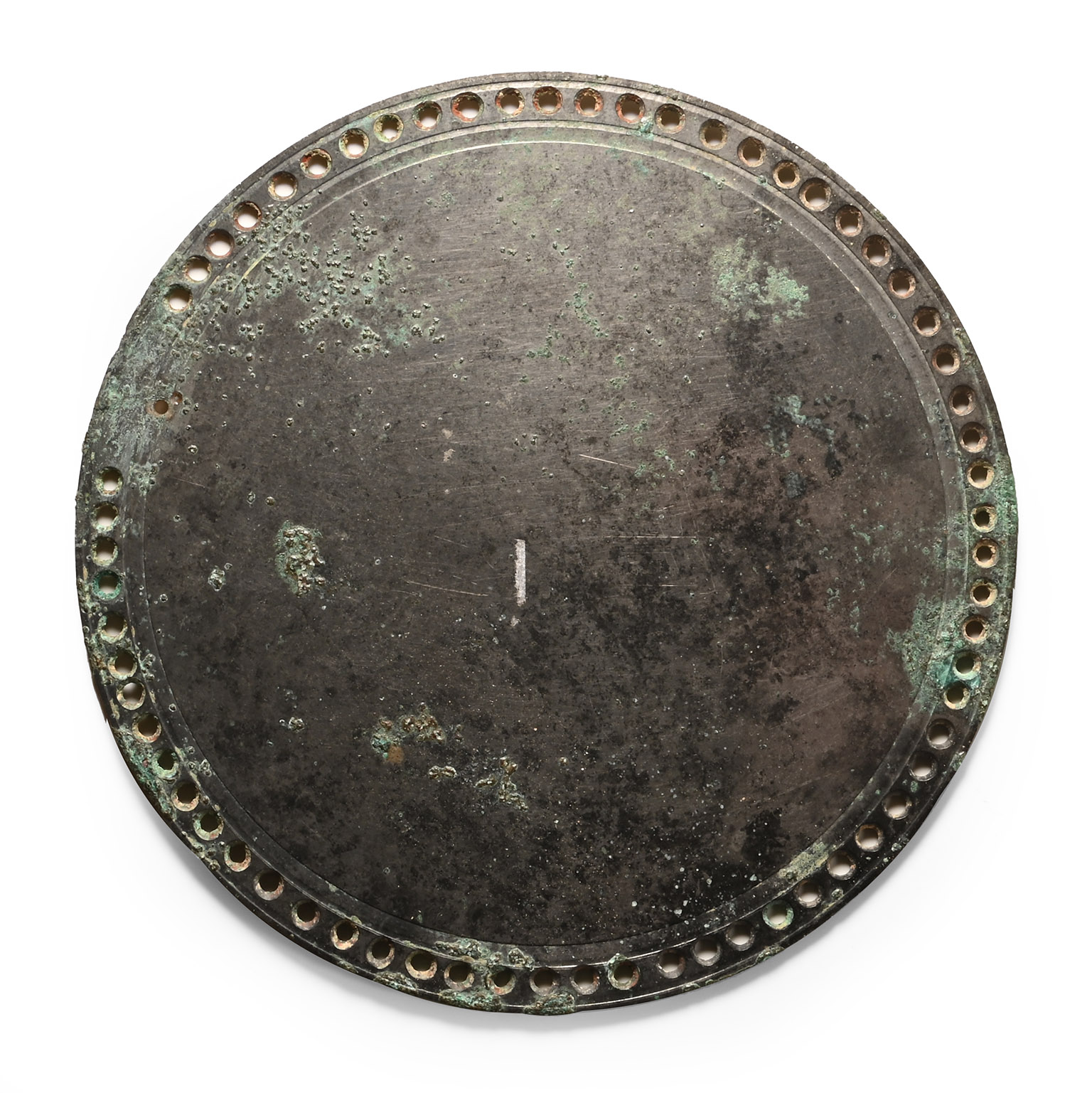
Roman Silvered Bronze Mirror
1ST-3RD CENTURY A.D.
3 3/4 in. (97 grams, 94 mm).
Discoid with circumferential band of pierced circles, one face featuring a series of concentric circles; the other plain with remains of tinning.
ProvenanceAcquired in the mid 1980s-1990s.
Private collection, Switzerland, thence by descent.
Private collection, since the late 1990s.
Cf. The British Museum, museum number 1854,0425.4, for a similar Romano-British example.
CONDITIONTimeLine Auctions follows a vetting process to ensure the authenticity and legality of all items, reinforcing our commitment to integrity and responsible trading. Each antiquity, antique, and coin lot undergoes thorough examination by a vetting committee of at least ten external specialists, professional trade association members, scientists, and archaeologists: Our Vetting Process
AUCTIONS:
TimeLine is a leading auction house specialising in antiquities, ancient art, collectables, natural history, coins, medals, and books. Our auctions offer museums, collectors, historians, and enthusiasts the opportunity to acquire unique and historically significant pieces.
-
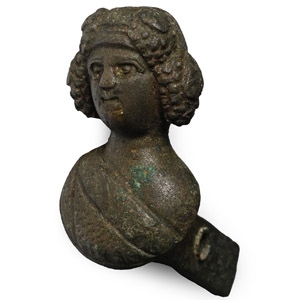
Roman Bronze Bust of Child Dionysus
2nd-3rd century A.D.Sold for (Inc. bp): £156
Modelled in the round with rounded childlike features, band of curly hair framing the flat face with sunken eyes garland and leaves in the hair, pounced detail to the clothing; attachment bar to the reverse. 53 grams, 52 mm
Acquired in the mid 1980s-1990s. Private collection, Switzerland, thence by descent. Private collection, since the late 1990s. -
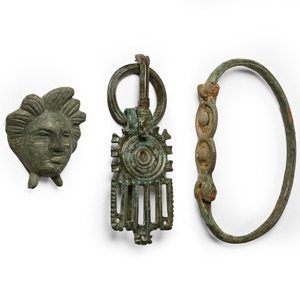
Roman Bronze Artefact Group
1st-2nd century A.D.Sold for (Inc. bp): £195
Including a hinged bracelet, belt buckle and plate, and other items. 132 grams total, 45-95 mm
From the private collection of Mr K.A., acquired in the 1990s-early 2000s. -
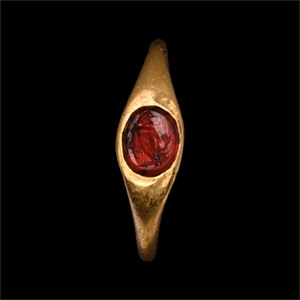
Roman Gold Ring with Warrior Holding Shield Gemstone
2nd-3rd century A.D.Sold for (Inc. bp): £650
Carnelian cloison with intaglio figure with helmet and shield; supplied with a museum-quality impression. 3.35 grams, 21.83 mm overall, 18.44 mm internal diameter (approximate size British N, USA 6 1/2, Europe 13.72, Japan 13)
Ex German art market, 2000s. Acquired from an EU collector living in London. From the collection of Surrey, UK, gentleman.
