
Loading, please wait...
LOT 0601
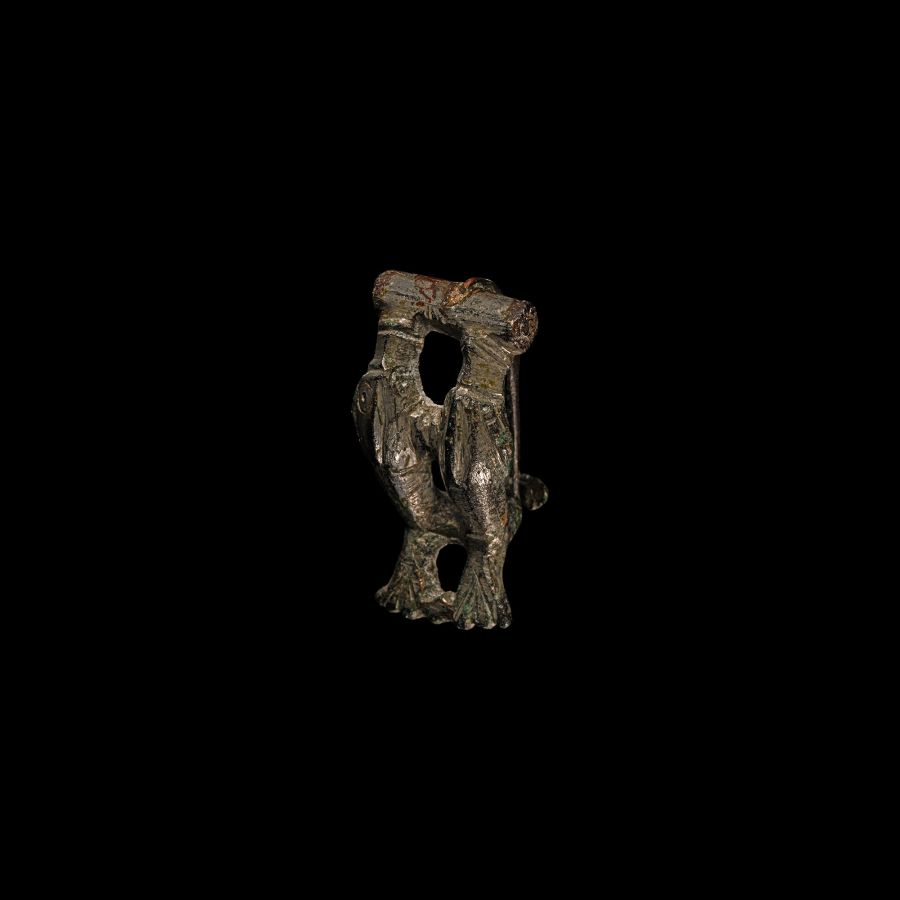
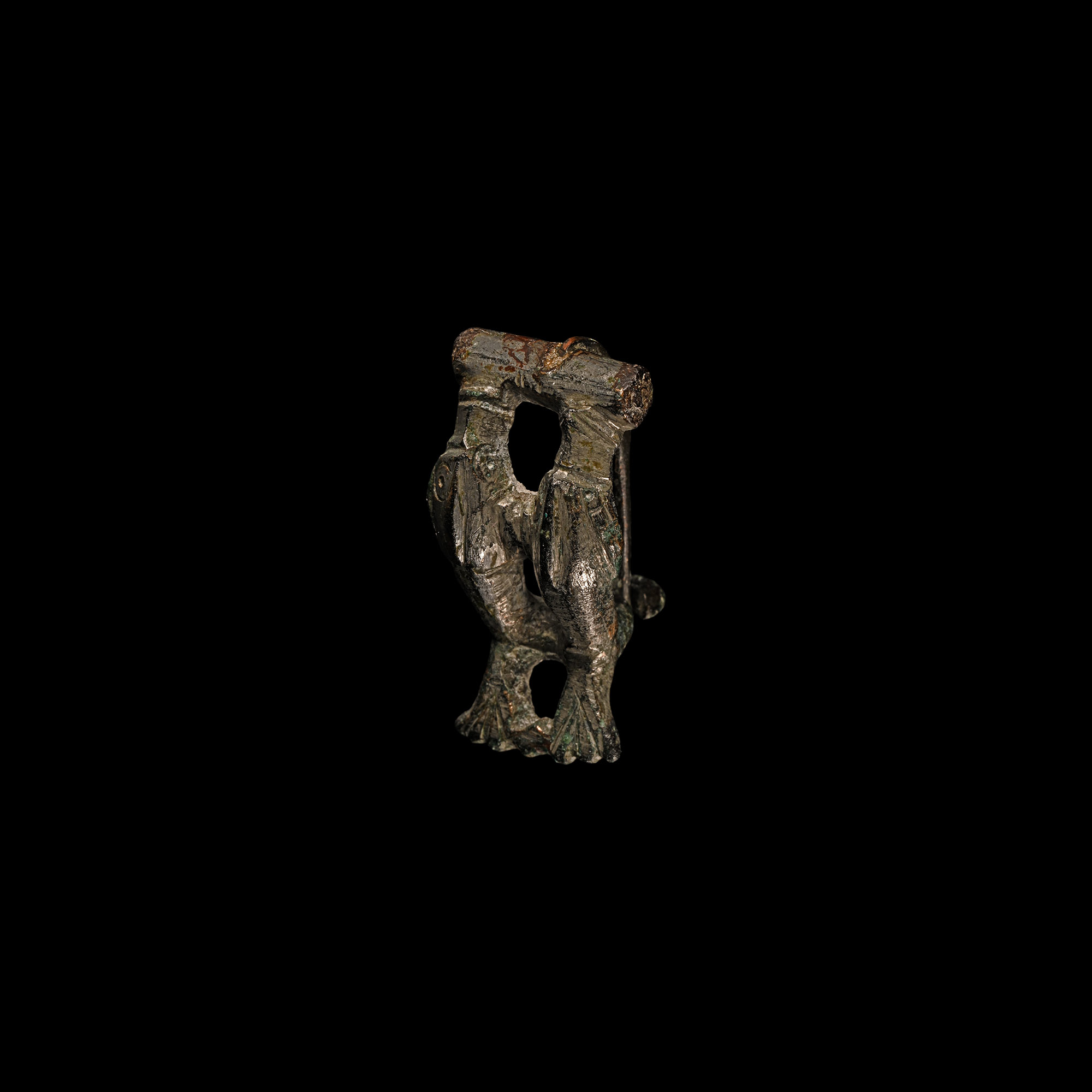
Roman Silvered Bronze Double Dolphin Brooch
CIRCA 2ND CENTURY A.D.
1 1/4 in. (13.3 grams, 32 mm).
With openwork body formed as two dolphins leaping in tandem, with simple detailing to the fins; on the reverse pin lug and catchplate. [No Reserve]
ProvenanceAcquired on the UK art market.
Property of a Ruislip, UK, gentleman, by inheritance.
Cf. Hattatt, R., Ancient Brooches and Other Artefacts, Oxford, 1989, item 1641.
FootnotesTwin dolphin brooches were found in Wiltshire, but they are more typical of the Roman territory of Pannonia, The hinge was usually placed below the bodies towards the tails, so that when worn win the pin point uppermost the dolphins faced upwards instead of downwards.
CONDITIONTimeLine Auctions follows a vetting process to ensure the authenticity and legality of all items, reinforcing our commitment to integrity and responsible trading. Each antiquity, antique, and coin lot undergoes thorough examination by a vetting committee of at least ten external specialists, professional trade association members, scientists, and archaeologists: Our Vetting Process
AUCTIONS:
TimeLine is a leading auction house specialising in antiquities, ancient art, collectables, natural history, coins, medals, and books. Our auctions offer museums, collectors, historians, and enthusiasts the opportunity to acquire unique and historically significant pieces.
-
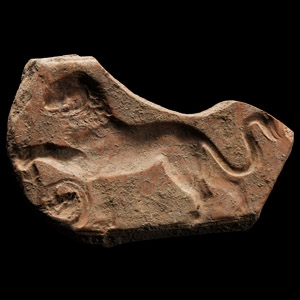
Roman Terracotta Lion Mould
1st-4th century A.D.Sold for (Inc. bp): £338
The amorphous fragment with a mould in the form of a lion advancing left to one face, one front paw raised. 107 grams, 10.4 cm
Acquired 1980-2015. Ex Abelita family collection. -
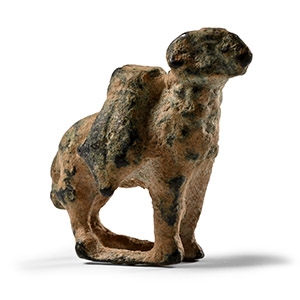
Roman Bronze Ram Statuette
1st-4th century A.D.Sold for (Inc. bp): £91
Modelled standing in the round with naturalistic detailing, with curled horns and wearing a saddle bag. 11.6 grams, 24 mm
‘The Ancient Menagerie Collection’ formerly the property of a Cambridgeshire lady, collected since the 1990s and acquired from auctions and dealers throughout Europe and the USA, now ex London collection. -
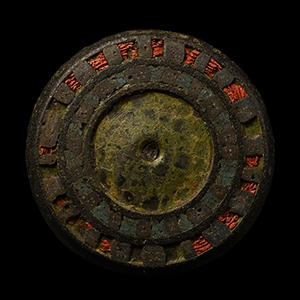
Large Roman Bronze Millefiori Mount
Circa 2nd century A.D.Sold for (Inc. bp): £260
Discoid in form with chamfered side edge and mounting lug to reverse centre, decorated with concentric circles populated with red and blue enamelled square cells. 12.9 grams, 42 mm
Found near Great Walsingham, Norfolk, UK, circa 2005.
