
Loading, please wait...
LOT 0107
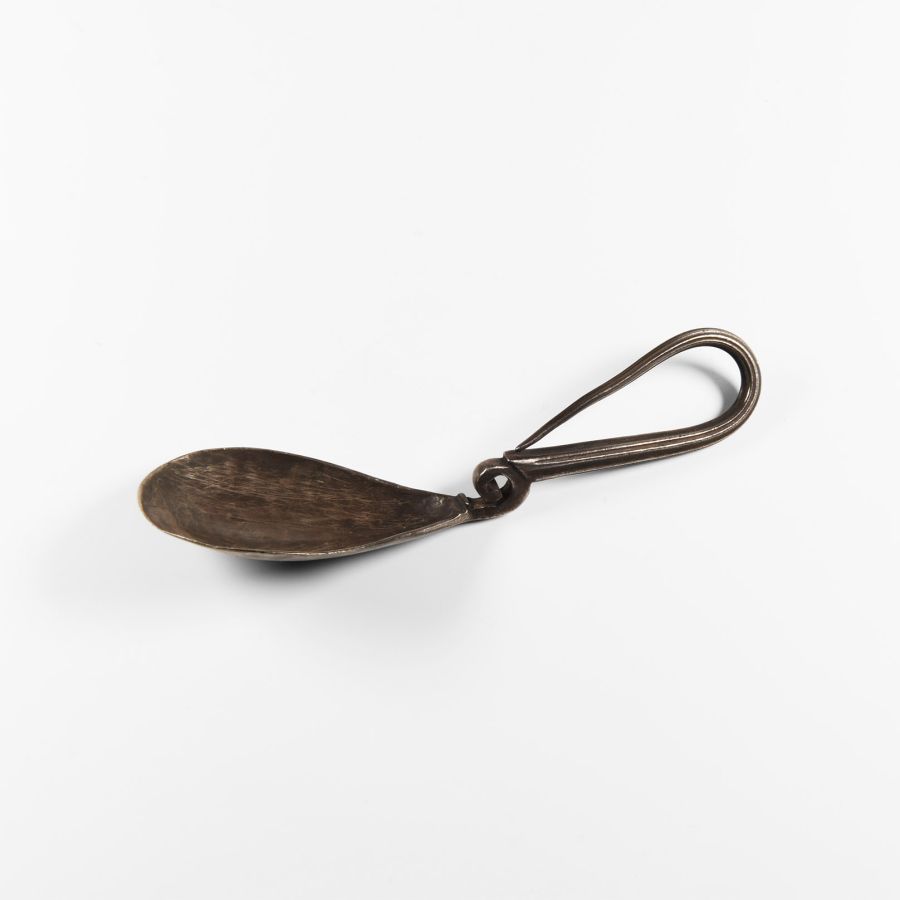
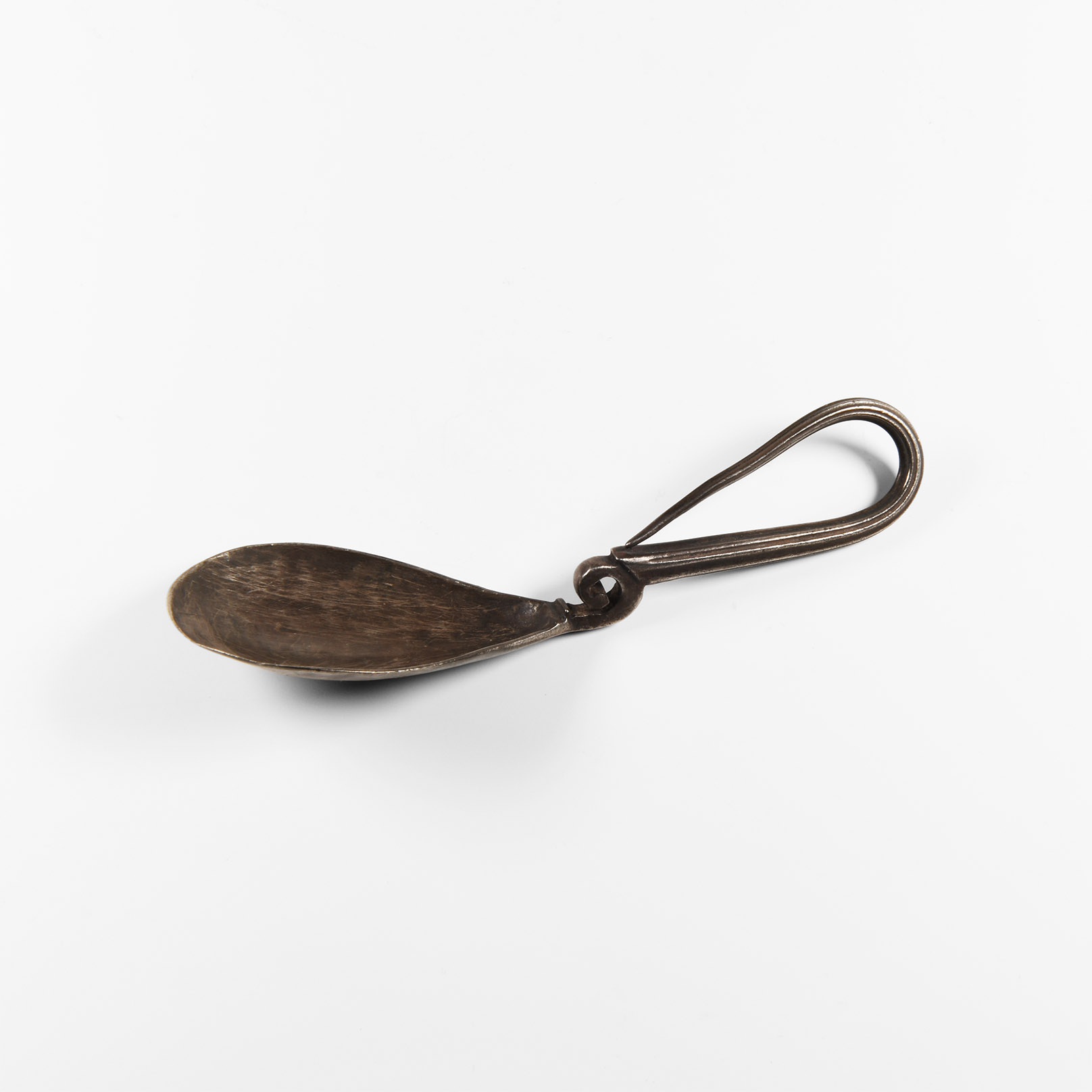
Roman Silver Swan-Neck Spoon
4TH CENTURY A.D.
4 1/4 in. (22.1 grams, 10.9 cm).
A silver cochlea spoon with scroll and swan-neck junction of bowl with stem; the flat-section stem narrowing to a point and returned to meet the shank.
ProvenanceAcquired early 1990s.
Ex private American collection; thence by descent.
Private Swiss collection since 1998.
Cf. Riha, E. & Stern, W.B., Die Römischen Löffel aus Augst und Kaiseraugst, Forschungen in Augst 5, Augst, 1982, fig.10(5,6).
CONDITIONTimeLine Auctions follows a vetting process to ensure the authenticity and legality of all items, reinforcing our commitment to integrity and responsible trading. Each antiquity, antique, and coin lot undergoes thorough examination by a vetting committee of at least ten external specialists, professional trade association members, scientists, and archaeologists: Our Vetting Process
AUCTIONS:
TimeLine is a leading auction house specialising in antiquities, ancient art, collectables, natural history, coins, medals, and books. Our auctions offer museums, collectors, historians, and enthusiasts the opportunity to acquire unique and historically significant pieces.
LOT 0107
Roman Silver Swan-Neck Spoon
Estimate £1,000 - 1,400€1,160 - 1,620 (for guidance only)$1,350 - 1,890 (for guidance only)
-
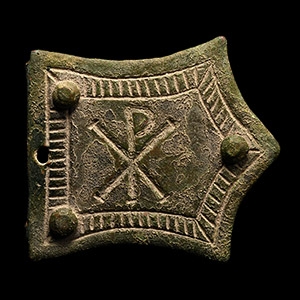
Roman Belt Mount with Chi Rho
Circa 3rd-4th century A.D.Sold for (Inc. bp): £156
A bronze pentagonal mount with scooped edges, four piercings to accept fixing rivets, hatched band enclosing an incuse Chi Rho christogram. 25.9 grams, 55 mm
Acquired in the late 1990s-2000. Property of an East London gentleman. -
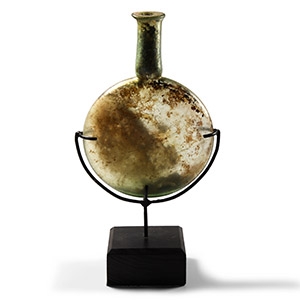
Roman Glass Pilgrim's Flask
Circa 4th century A.D.Estimate: £1,500 - 2,000 (+bp*)
Opening Bid: £750
A pale green lentoid glass flask with tubular neck and everted rim; mounted on a custom-made display stand. 252 grams, 22 cm high (481 grams total, 31.5 cm high including stand)
French collection, 1960s-early 2000s. From an important Paris gallery, France. -
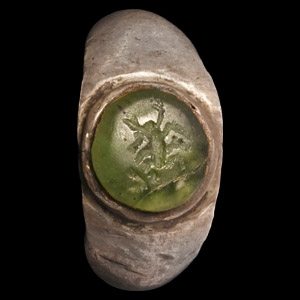
Roman Silver Ring with Glass Insect Intaglio
2nd-3rd century A.D.Sold for (Inc. bp): £364
A silver finger ring with inset glass cabochon, intaglio scorpion motif. 7.43grams, 24.82 mm overall, 18.67 mm internal diameter (approximate size British N, USA 6 1/2, Europe 13.72, Japan 13)
English private collection.
