
Loading, please wait...


LOT 0803
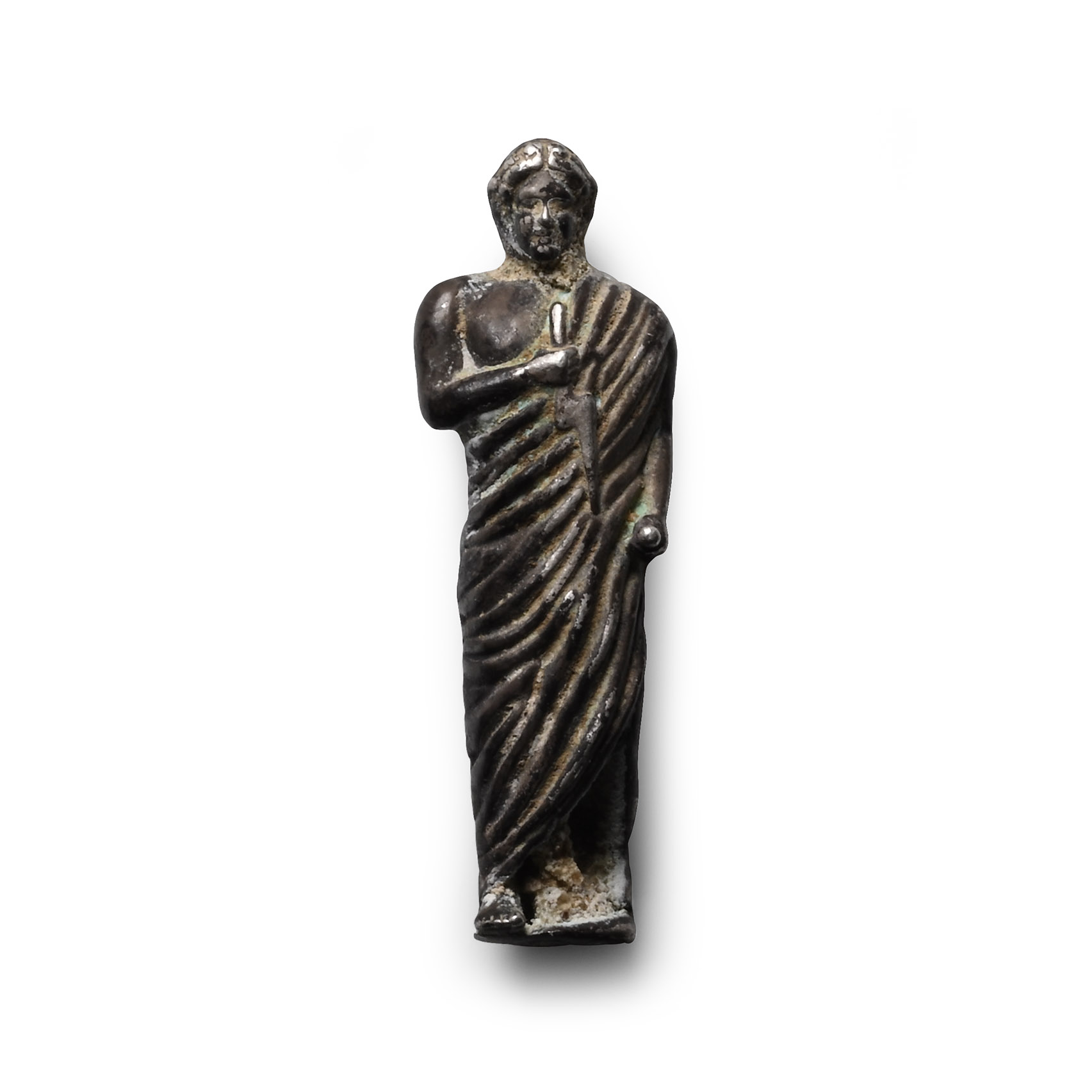
Roman Silver Statuette of a Togate Male
1ST-4TH CENTURY A.D.
1 1/8 in. (3.85 grams, 30 mm).
Modelled in the round standing with toga drawn around his body, scroll clasped in his right hand.
ProvenanceFrom the collection of a gentleman, acquired on the London art market in the 1990s.
CONDITIONTimeLine Auctions follows a vetting process to ensure the authenticity and legality of all items, reinforcing our commitment to integrity and responsible trading. Each antiquity, antique, and coin lot undergoes thorough examination by a vetting committee of at least ten external specialists, professional trade association members, scientists, and archaeologists: Our Vetting Process
AUCTIONS:
TimeLine is a leading auction house specialising in antiquities, ancient art, collectables, natural history, coins, medals, and books. Our auctions offer museums, collectors, historians, and enthusiasts the opportunity to acquire unique and historically significant pieces.
-
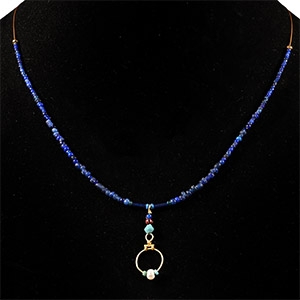
Roman Blue Glass Bead Necklace with Gold and Bead Pendant
1st-3rd century A.D. and laterSold for (Inc. bp): £169
Restrung necklace of tubular and oblate seed beads, centrepiece a dangle with biconvex and other beads supporting a hoop with applied beads. 4.70 grams, 45.5 cm total length
Ex property of a late Japanese collector, 1970s-2000s. -
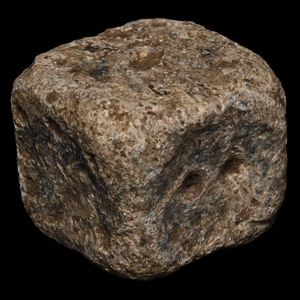
Large Roman Lead Gaming Dice
1st-4th century A.D.Sold for (Inc. bp): £72
Cuboid with impressed spots to each face, disposed 1:3, 2:4; 5:6. 56 grams, 19 mm
Acquired on the European art market since the early 2000s. From the private Northern Ireland collection of R.M. -
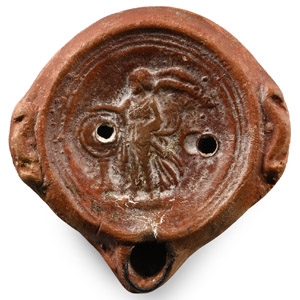
Roman Terracotta Oil Lamp with Victory
1st-4th century A.D.Sold for (Inc. bp): £98
Very flat lamp with lateral scrolled lugs, short nozzle, discus with low-relief figure of Victory with a wreath. 76 grams, 78 mm
From the collection of a gentleman, acquired on the London art market in the 1990s.
