
Loading, please wait...
LOT 0718
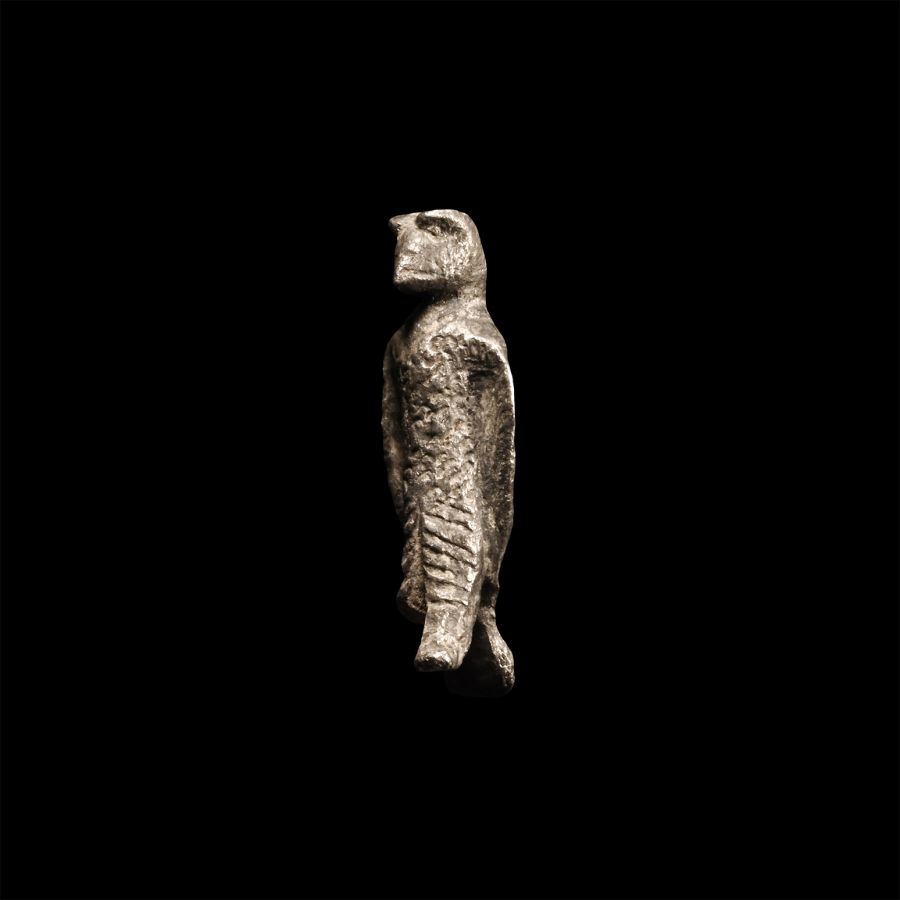
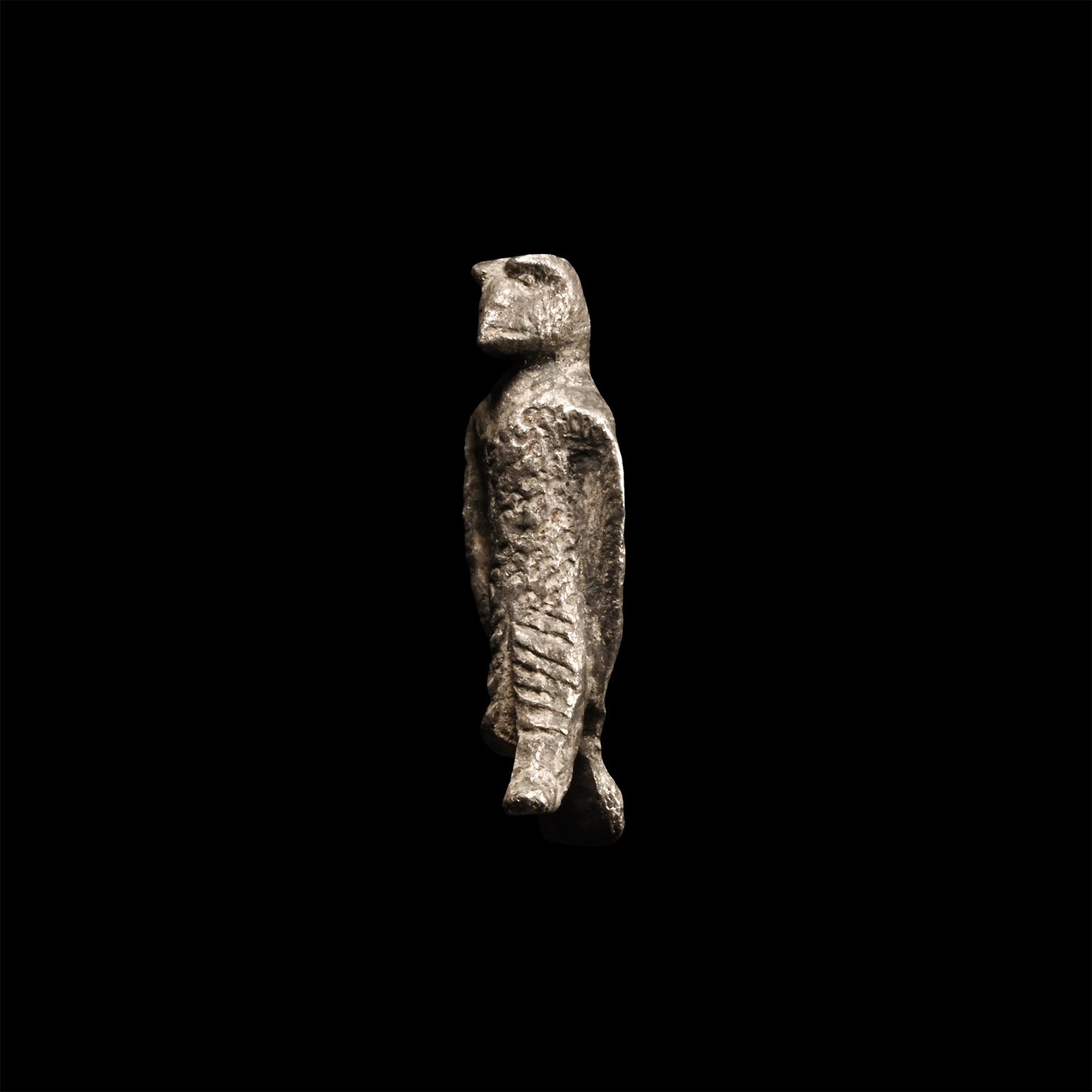
Roman Silver Standing Eagle Statuette
1ST-4TH CENTURY A.D.
1 3/8 in. (10.9 grams, 34 mm).
Modelled in the round with naturalistic detailing, wings held slightly open.
Provenance‘The Ancient Menagerie Collection’ formerly the property of a Cambridgeshire lady, collected since the 1990s and acquired from auctions and dealers throughout Europe and the USA, now ex London collection.
CONDITIONTimeLine Auctions follows a vetting process to ensure the authenticity and legality of all items, reinforcing our commitment to integrity and responsible trading. Each antiquity, antique, and coin lot undergoes thorough examination by a vetting committee of at least ten external specialists, professional trade association members, scientists, and archaeologists: Our Vetting Process
AUCTIONS:
TimeLine is a leading auction house specialising in antiquities, ancient art, collectables, natural history, coins, medals, and books. Our auctions offer museums, collectors, historians, and enthusiasts the opportunity to acquire unique and historically significant pieces.
-
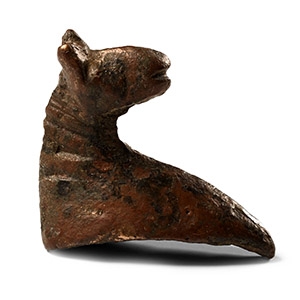
Roman Bronze Horse Head Protome
1st-4th century A.D.Estimate: £70 - 90 (+bp*)
Opening Bid: £39
Modelled with naturalistic detailing with signs of attachment. 13.7 grams, 26 mm high
‘The Ancient Menagerie Collection’ formerly the property of a Cambridgeshire lady, collected since the 1990s and acquired from auctions and dealers throughout Europe and the USA, now ex London collection. -
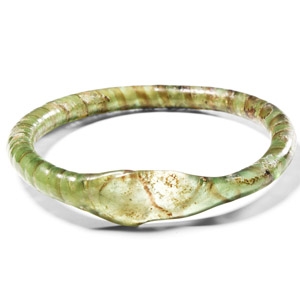
Roman Glass Bracelet
1st-4th century A.D.Sold for (Inc. bp): £208
Twisted in dark green colour with a black spiral band within, flattened plaque. 23.8 grams, 78 mm wide
Acquired 1980-2015. Ex Abelita family collection. -
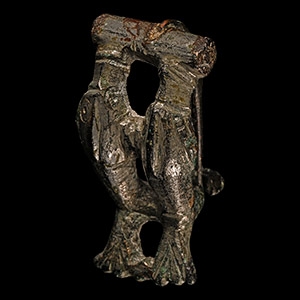
Roman Silvered Bronze Double Dolphin Brooch
Circa 2nd century A.D.Sold for (Inc. bp): £78
With openwork body formed as two dolphins leaping in tandem, with simple detailing to the fins; on the reverse pin lug and catchplate. 13.3 grams, 32 mm
Acquired on the UK art market. Property of a Ruislip, UK, gentleman, by inheritance.
Twin dolphin brooches were found in Wiltshire, but they are more typical of the Roman territory of Pannonia, The hinge was usually placed below the bodies towards the tails, so that when worn win the pin point uppermost the dolphins faced upwards instead of downwards.
