
Loading, please wait...
LOT 0650
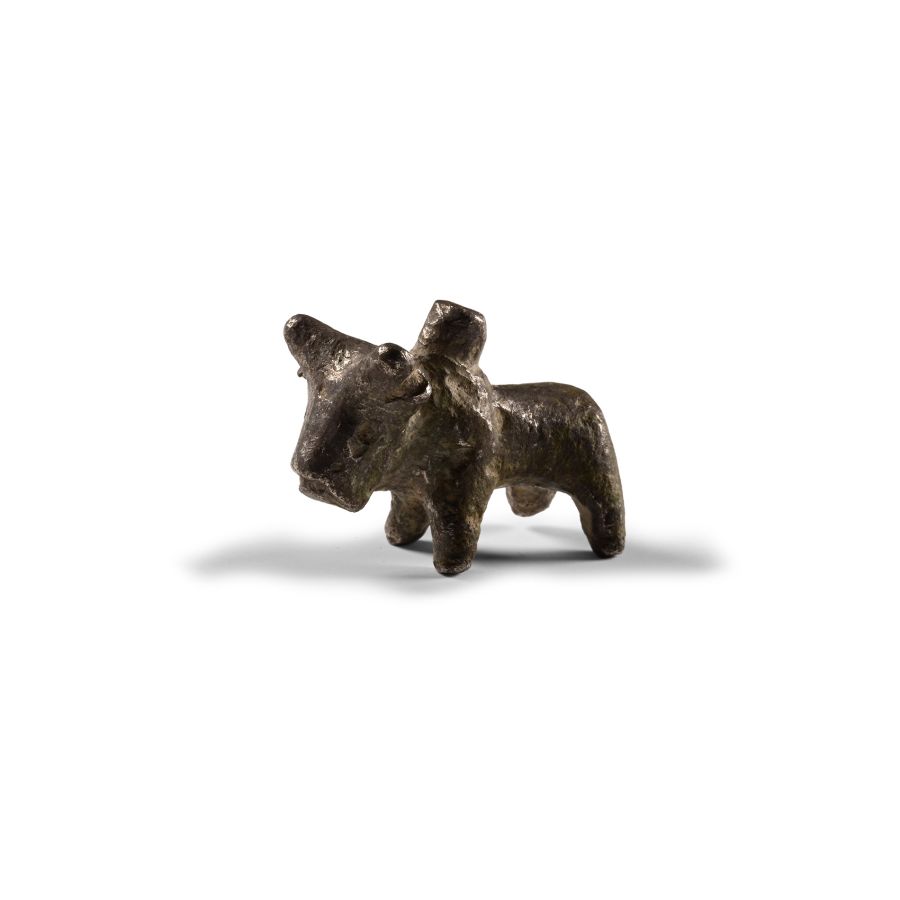
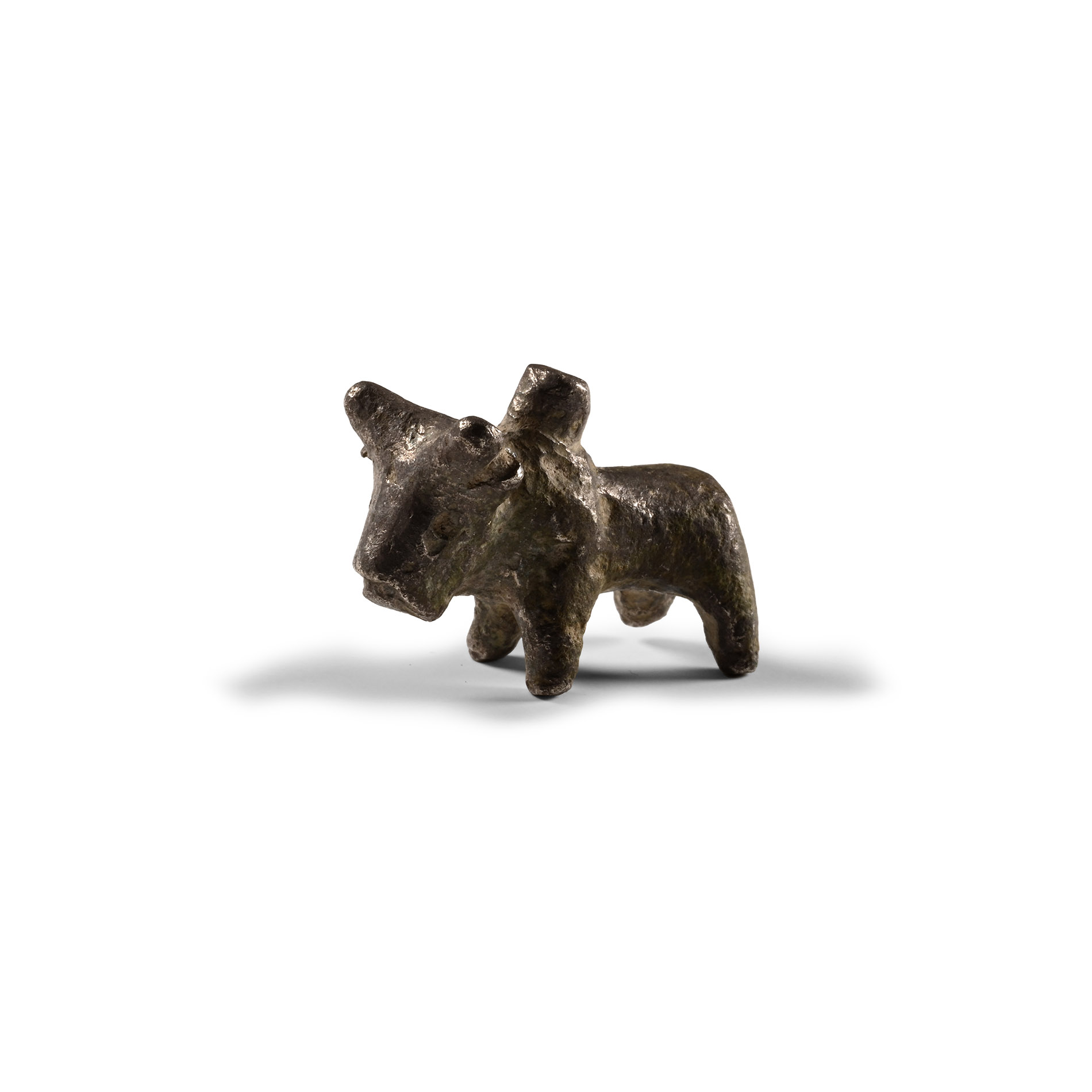
Roman Silver Standing Bull Statuette
1ST-4TH CENTURY A.D.
1 in. (13 grams, 25 mm).
Modelled in the round standing facing, displaying anatomical detailing.
Provenance‘The Ancient Menagerie Collection’ formerly the property of a Cambridgeshire lady, collected since the 1990s and acquired from auctions and dealers throughout Europe and the USA, now ex London collection.
CONDITIONTimeLine Auctions follows a vetting process to ensure the authenticity and legality of all items, reinforcing our commitment to integrity and responsible trading. Each antiquity, antique, and coin lot undergoes thorough examination by a vetting committee of at least ten external specialists, professional trade association members, scientists, and archaeologists: Our Vetting Process
AUCTIONS:
TimeLine is a leading auction house specialising in antiquities, ancient art, collectables, natural history, coins, medals, and books. Our auctions offer museums, collectors, historians, and enthusiasts the opportunity to acquire unique and historically significant pieces.
LOT 0650
Roman Silver Standing Bull Statuette
Estimate £150 - 200€170 - 230 (for guidance only)$200 - 270 (for guidance only)
-
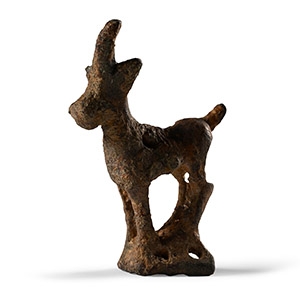
Roman Iron Standing Antelope Statuette
1st-4th century A.D.Sold for (Inc. bp): £91
Modelled in the round with naturalistic detailing, held held straight, standing on a rectangular base. 13.7 grams, 39 mm high
‘The Ancient Menagerie Collection’ formerly the property of a Cambridgeshire lady, collected since the 1990s and acquired from auctions and dealers throughout Europe and the USA, now ex London collection. -
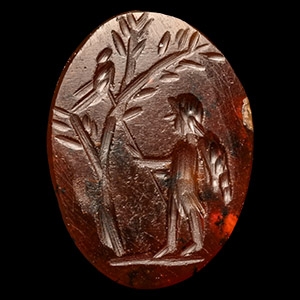
Roman Carnelian Gemstone with Eros Harassing a Bird in a Tree
1st-3rd century A.D.Estimate: £600 - 800 (+bp*)
Opening Bid: £333
The oval intaglio engraved with nude Eros, holding a fowling-rod, approaching a tree with a bird, a line marking the ground. 0.56 grams, 14 mm
Acquired in the late 1980s-early 1990s. Important North West London collection.
Doves are a typical attribute of Aphrodite, and real birds were often given to women as love-tokens; this bezel was possibly destined to a ring used for this purpose. At the same time, the presence of Eros was presumably intended to enhance the wearer’s personal allure. -
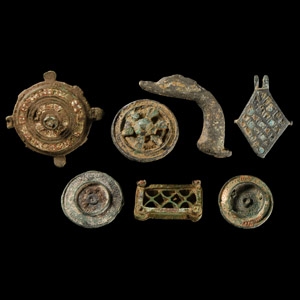
Roman Bronze Brooch and Other Artefact Collection
2nd-4th century A.D.Sold for (Inc. bp): £143
The group comprising: brooches, a seal box lid and zoomorphic mount; including examples with trace remains of gilding, polychrome and millefiori enamelling and other decorative techniques; four accompanied by PAS record ids. 62 grams total, 21-45 mm
Found Berkshire, UK.
