
Loading, please wait...
LOT 0124
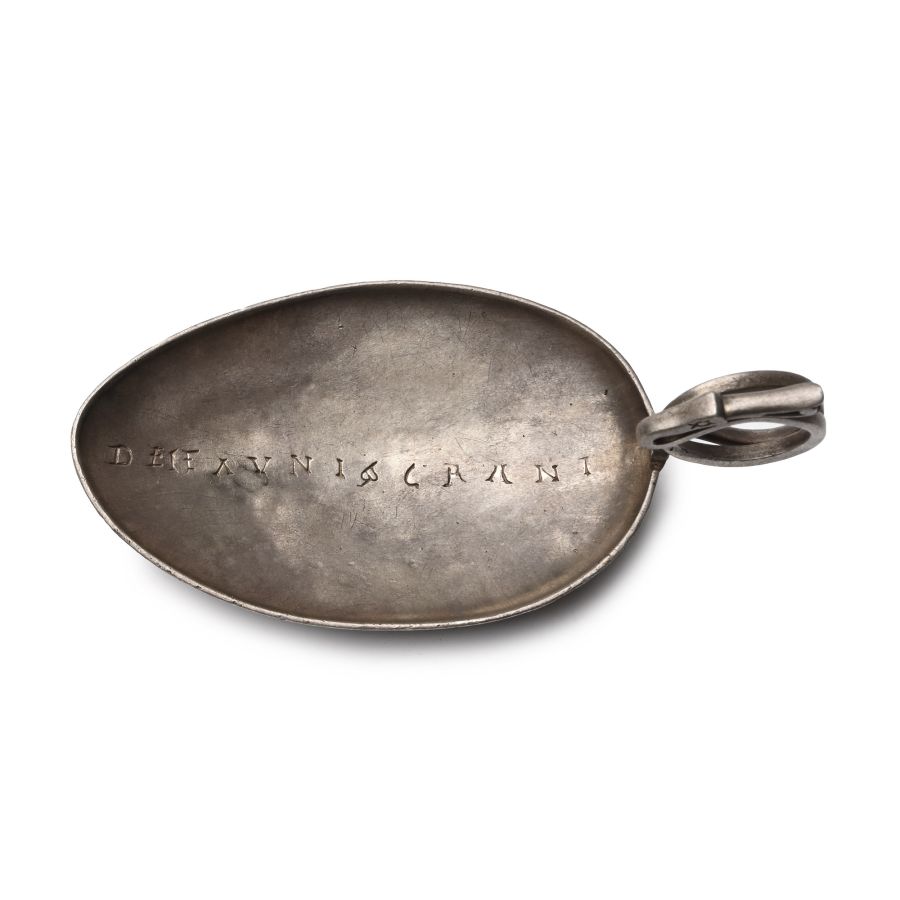
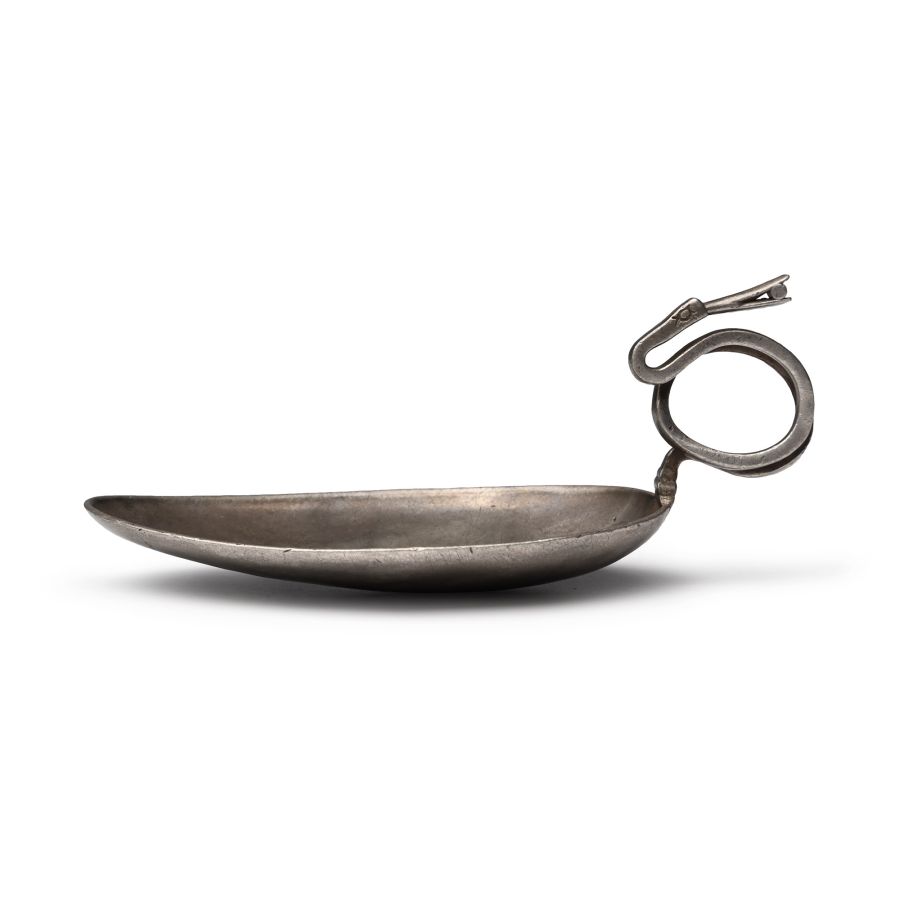
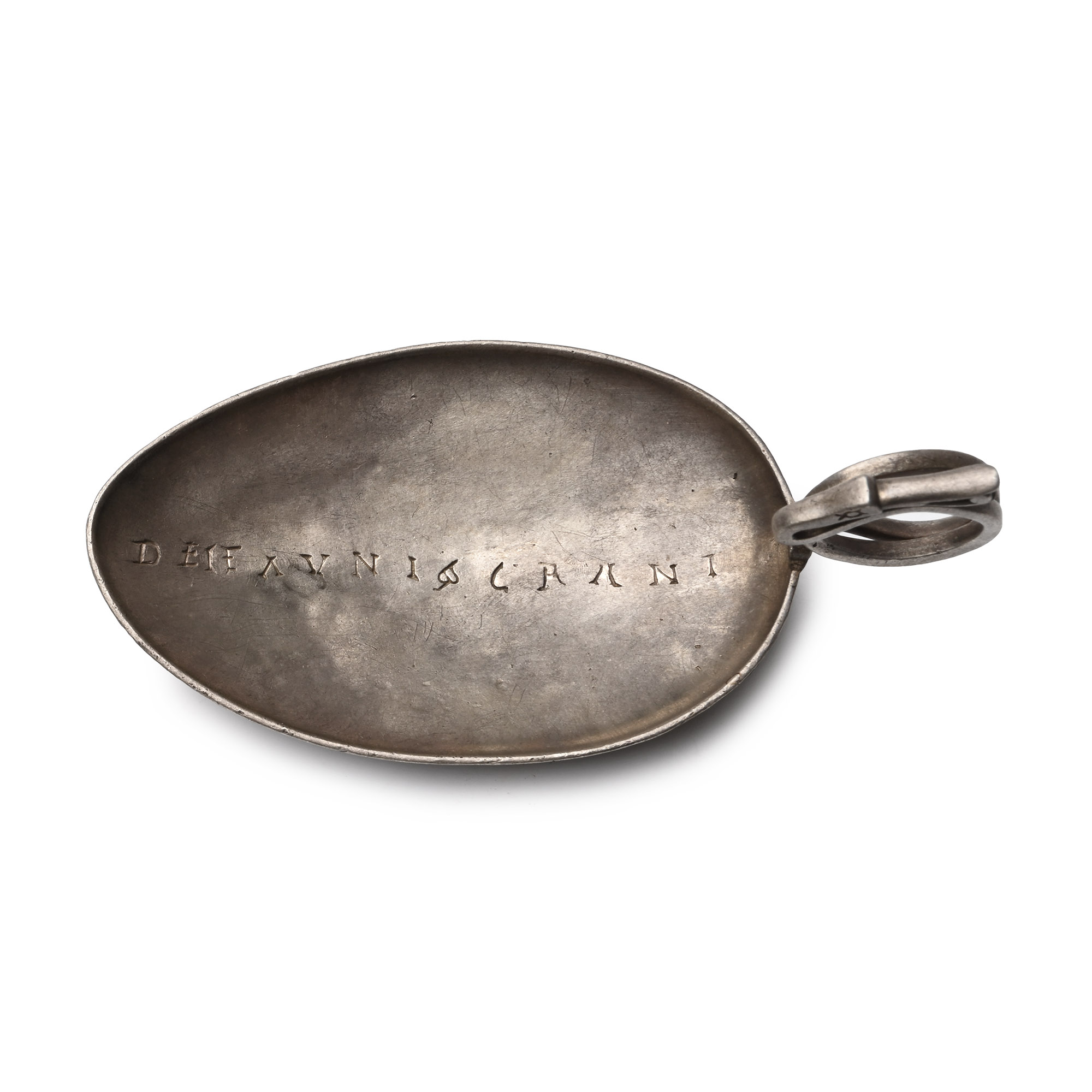
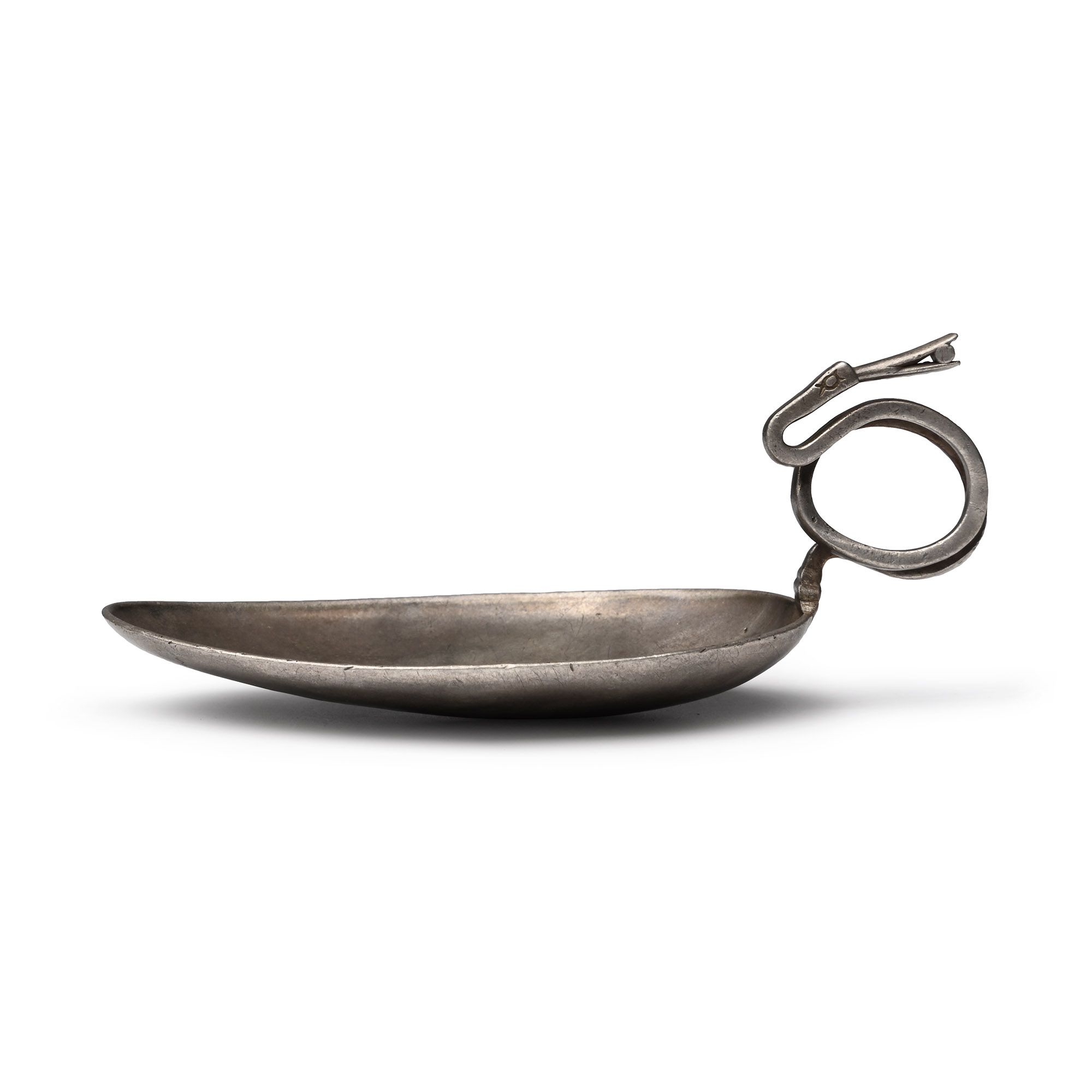
Roman Silver Spoon Property of the God Faunus Cranus
4TH CENTURY A.D.
3 1/2 in. (32 grams, 91 mm).
Shallow oval bowl with a coiled handle and a duck or swan head facing outwards, Latin inscription 'DEIFAVNI CRANI', '(Property) of the god Faunus Cranus’.
ProvenanceUK private collection, 1990s.
with Artemission, London, UK.
Private collection, London, UK.
This lot is accompanied by an illustrated lot declaration signed by the Head of the Antiquities Department, Dr Raffaele D'Amato.
Cf. The British Museum, 1981,0201.54 and 1981,0201.58; for inscription 1981,0201.74.
FootnotesProfessor Dr phil. Peter Rothenhöfer writes: 'In RIB the inscription is categorized as 'religious dedication'; this must be rejected as we would expect the Dative case: deo Fauno ... - for the god Faunus ... But we read the genitive case: dei Fauni Crani: (property of) the God Faunus Cranus. This indicates that all these spoons were used (or intended to be used) during religious ceremonies (connected with meals) probably in a sanctuary of Faunus Cranus. The use of deus (= god) and the Celtic epitheton Cranus indicates a provincial cult with strong indigenous elements.'
CONDITIONTimeLine Auctions follows a vetting process to ensure the authenticity and legality of all items, reinforcing our commitment to integrity and responsible trading. Each antiquity, antique, and coin lot undergoes thorough examination by a vetting committee of at least ten external specialists, professional trade association members, scientists, and archaeologists: Our Vetting Process
AUCTIONS:
TimeLine is a leading auction house specialising in antiquities, ancient art, collectables, natural history, coins, medals, and books. Our auctions offer museums, collectors, historians, and enthusiasts the opportunity to acquire unique and historically significant pieces.
-
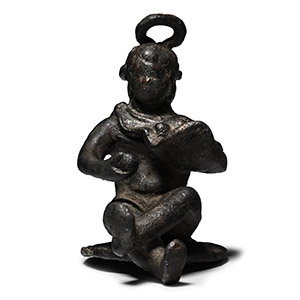
Roman Vessel Lid with Male Youth Wearing a Chlamys
1st-3rd century A.D.Sold for (Inc. bp): £520
Discoid base supporting a seated youth with legs crossed, wearing a chlamys, his left hand supporting fruit in the folds of the cloth and right hand holding one; base pierced; transverse wire to sides of the head, ring above. 366 grams, 80 mm
From the collection of a gentleman, acquired on the London art market in the 1990s. This lot is accompanied by an illustrated lot declaration signed by the Head of the Antiquities Department, Dr Raffaele D'Amato. -
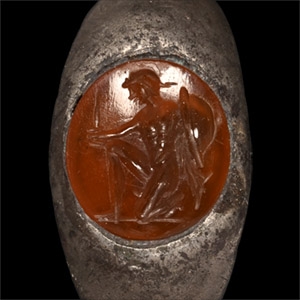
Roman Silver Ring with Warrior Gemstone
2nd-3rd century A.D.Sold for (Inc. bp): £936
With ellipsoid plaque and inset carnelian cloison with intaglio kneeling warrior with Pseudo-Attic helmet pushed back from the face, domed shield on one arm and sword held upright in the other hand supported by the knee. 8.11 grams, 27.11 mm overall, 20.96 mm internal diameter (approximate size British N 1/2, USA 6 3/4, Europe 14.35, Japan 13)
Acquired on the European art market in the 1990s. UK collection of a European gentleman. This lot is accompanied by an illustrated lot declaration signed by the Head of the Antiquities Department, Dr Raffaele D'Amato.
The motif of a nude kneeling warrior with weapons is certainly visible in the repertory of the Greek gemstones since the Archaic and classical age. The scene possibly alludes to the incident in the Trojan Cycle where Achilles is wounded by an arrow in his heel, the only part of his body which was not impervious to injury. -
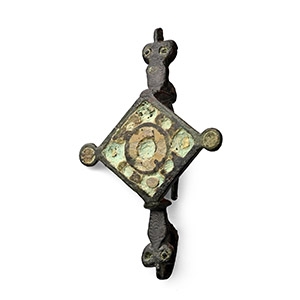
Roman Enamelled Bronze Brooch
2nd-3rd century A.D.Sold for (Inc. bp): £156
Comprising a lozengiform plate with enamelled design and lateral lobes, bow formed by vertical extensions, enamelled rings; hinged pin to reverse. 9.8 grams, 60 mm
Ex German art market, 2000s. Acquired from an EU collector living in London. From the collection of a Surrey, UK, gentleman. This lot is accompanied by an illustrated lot declaration signed by the Head of the Antiquities Department, Dr Raffaele D'Amato.
