
Loading, please wait...
LOT 0968
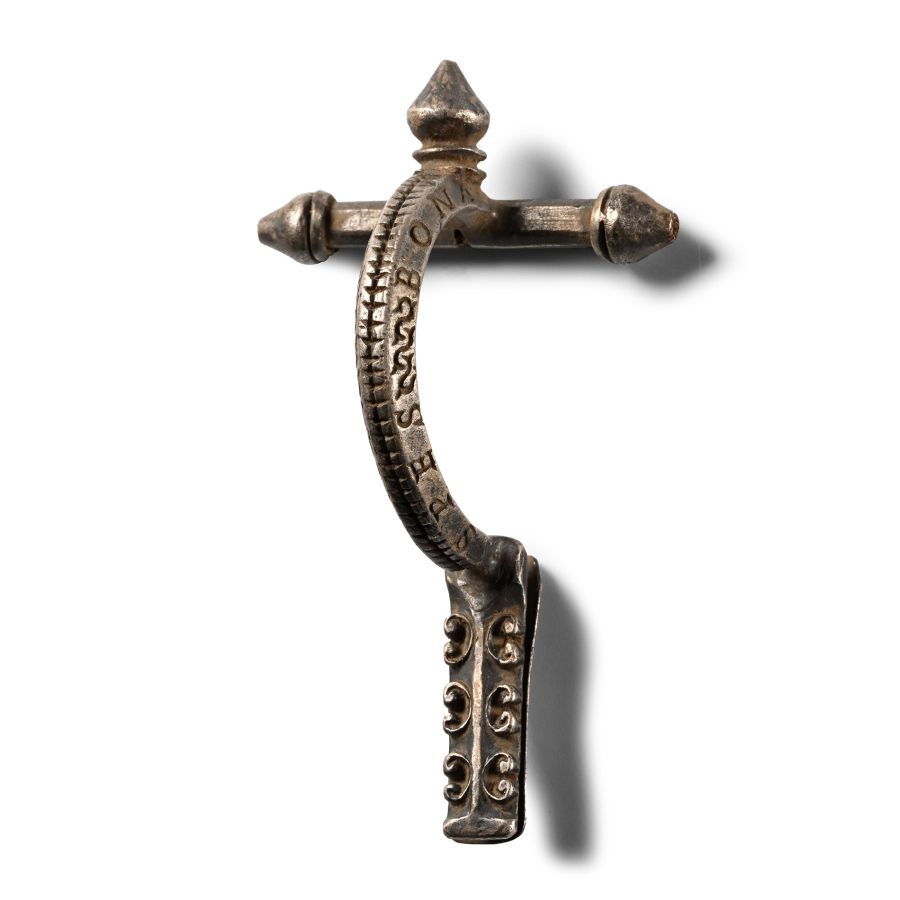
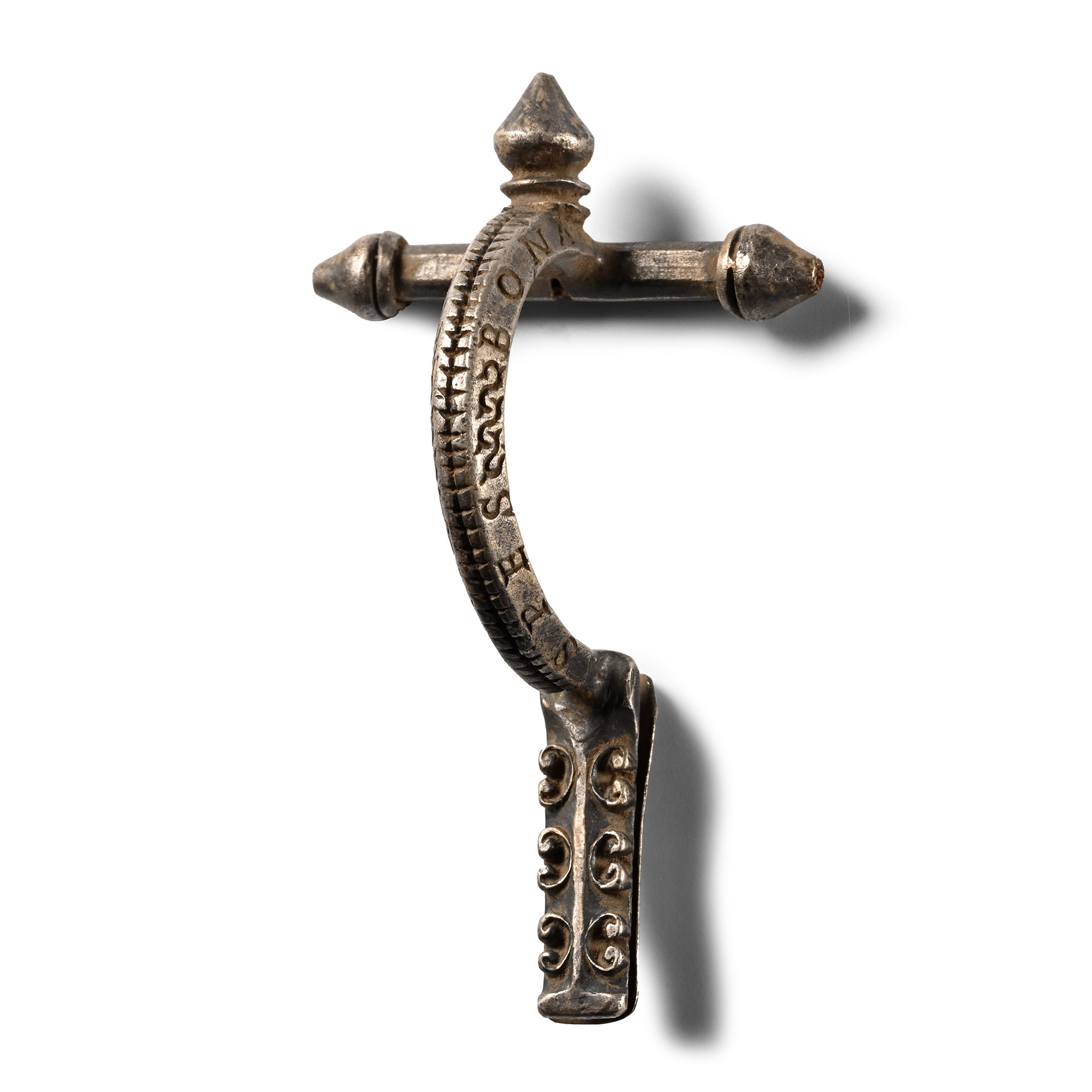
Roman Silver 'SPES BONA' Crossbow Brooch
3RD-4TH CENTURY A.D.
2 3/8 in. (14.4 grams, 60.6 mm).
Collared onion knop finials, deep keeled bow inscribed to the side 'SPES BONΛ' for good hope, the words separated with foliate scrolls, similar motifs to the other side, a band of linear decoration to the top of the bow; short foot with volute scrolls.
ProvenanceEx German art market, 2000s.
Acquired from an EU collector living in London.
From the collection of Surrey, UK, gentleman.
This lot is accompanied by an illustrated lot declaration signed by the Head of the Antiquities Department, Dr Raffaele D’Amato.
TimeLine Auctions follows a vetting process to ensure the authenticity and legality of all items, reinforcing our commitment to integrity and responsible trading. Each antiquity, antique, and coin lot undergoes thorough examination by a vetting committee of at least ten external specialists, professional trade association members, scientists, and archaeologists: Our Vetting Process
AUCTIONS:
TimeLine is a leading auction house specialising in antiquities, ancient art, collectables, natural history, coins, medals, and books. Our auctions offer museums, collectors, historians, and enthusiasts the opportunity to acquire unique and historically significant pieces.
-
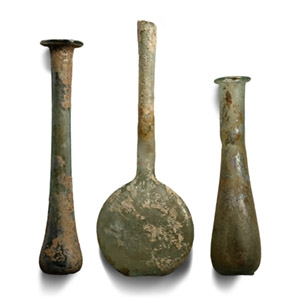
Roman Glass Vessel Group
1st-4th century A.D.Sold for (Inc. bp): £130
Comprising two small unguentaria with everted rim, a flask with discoid body. 43 grams total, 9.3-12.1 cm
Acquired from Ancient & Oriental, 1980s-1990s. Ian Wilkinson collection, Nottinghamshire, UK, formed since 1985. This lot is accompanied by an illustrated lot declaration signed by the Head of the Antiquities Department, Dr Raffaele D’Amato. -
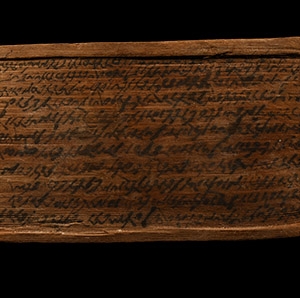
Roman Inked Reused Wooden Wax Tablet For a Contract Between Crescentius and Lanuarius Negotiated and Decided at the Goretiano Estate
Early 4th century A.D.Sold for (Inc. bp): £11,050
Well preserved rectangular tablet with a recessed panel inscribed with eleven lines of Roman cursive script, no writing on the reverse, the last tablet of a legal contract probably regarding questions of land ownership between a Crescentius and a Lanuarius into which also local elders, seniores, were involved; the text consists of highly developed legal formula, e.g. testati sunt …, and ends with the note: Actum Goretiano, which may be understood as ‘negotiated and decided at the Goretiano estate’; the fundus Goretianos is also mentioned in various other know legal documents. 27.4 grams, 14.4 cm
Acquired by Albert Sfez in the early 1950s. Formerly the property of Monsieur Alain Sfez, a Belgian collector; acquired by gift from his father Albert Sfez, in 1965. Acquired by a London dealer in 1973. From an important London collection since 1975; thence by descent. This lot is accompanied by an illustrated lot declaration signed by the Head of the Antiquities Department, Dr Raffaele D’Amato. -
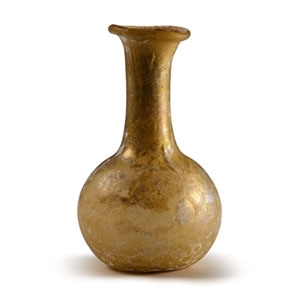
Roman Yellow Glass Bottle with Iridescence
2nd-3rd century A.D.Sold for (Inc. bp): £104
Bulbous body with dimpled underside, tubular neck with rolled and folded rim, iridescent surface. 10.1 grams, 65 mm
with H.A.C., Basel, prior 1999. This lot is accompanied by an illustrated lot declaration signed by the Head of the Antiquities Department, Dr Raffaele D’Amato.
