
Loading, please wait...
LOT 0693
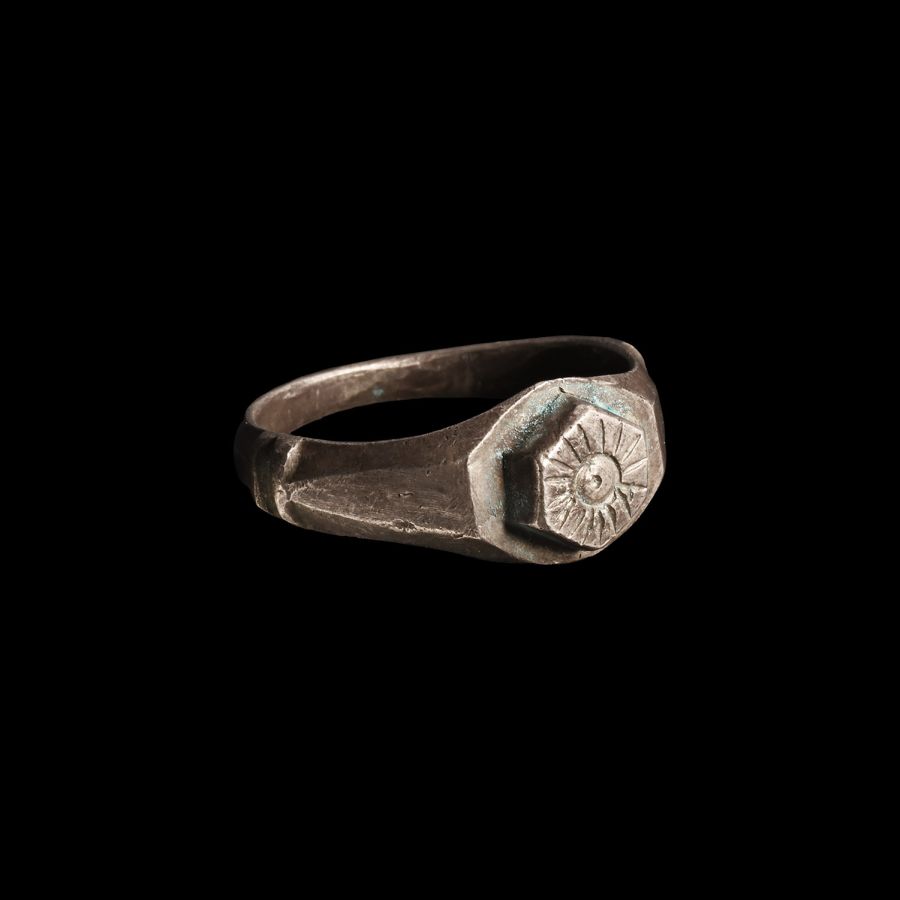
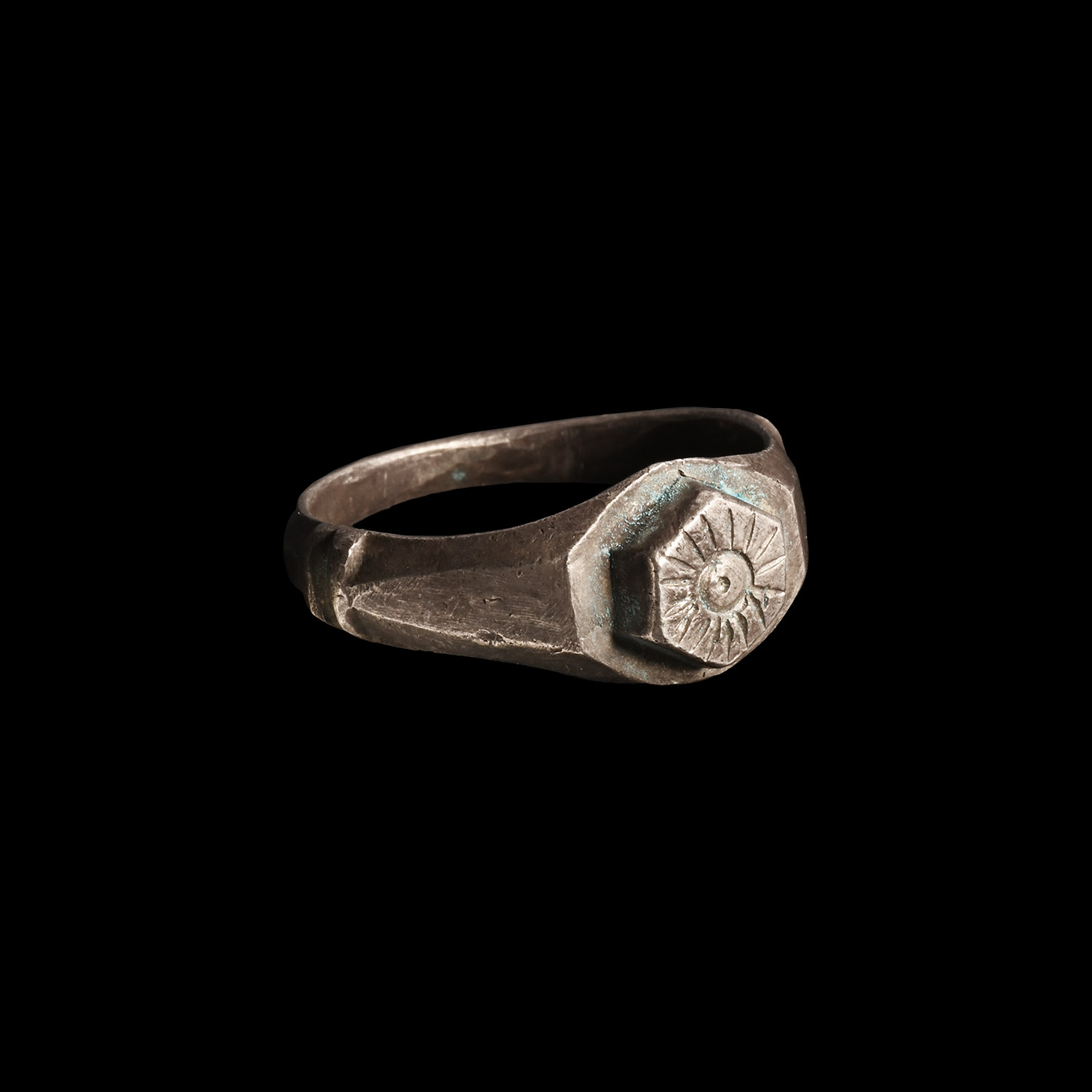
Roman Silver Ring with Radiating Sun
MID 3RD CENTURY A.D.
7/8 in. (4.61 grams, 23.30 mm overall, 18.60 mm internal diameter (approximate size British Q 1/2, USA 8 1/4, Europe 18.12, Japan 17)).
A silver finger ring with gusseted panels to the equator, facetted shoulders, stepped hexagonal bezel with incuse sunburst motif. [No Reserve]
ProvenanceAcquired in the 1980s. Ex North West London collection. English private collection.
LiteratureCf. Chadour, A.B., Rings. The Alice and Louis Koch Collection, volume I, Leeds, 1994, item 344, for type.
CONDITIONTimeLine Auctions follows a vetting process to ensure the authenticity and legality of all items, reinforcing our commitment to integrity and responsible trading. Each antiquity, antique, and coin lot undergoes thorough examination by a vetting committee of at least ten external specialists, professional trade association members, scientists, and archaeologists: Our Vetting Process
AUCTIONS:
TimeLine is a leading auction house specialising in antiquities, ancient art, collectables, natural history, coins, medals, and books. Our auctions offer museums, collectors, historians, and enthusiasts the opportunity to acquire unique and historically significant pieces.
-
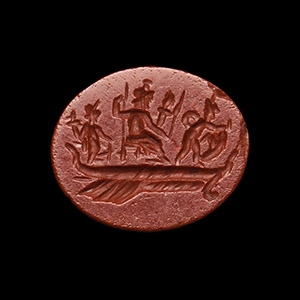
Roman Gemstone with Zeus Serapis and Isis
2nd-3rd century A.D. or laterSold for (Inc. bp): £442
A gem with a representation of Zeus Serapis enthroned, modius on his head, sceptre and eagle by his side, Isis Gubernatrix to his right and Isis sail-bearer to his left, all three figures riding a galley or cargo ship. 0.28 grams, 10 mm
Acquired before 1988. Ex family collection, by descent, Geneva.
This triad formed by Serapis and the two aspects of Isis (Gubernatrix and sail-bearer) aboard a ship, appears in several examples of Alexandrian coinage and gemstones. This imagery is linked to the image of Isis, goddess of the sea, and Serapis, god of vegetation and protector of the sailors. -
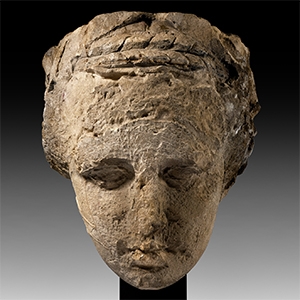
Colossal Roman Head of Diana
1st-2nd century A.D.Estimate: £15,000 - 20,000 (+bp*)
Opening Bid: £7,500
A colossal architectural limestone head of the goddess Diana (Greek Artemis) with elegant features, sensual lips and deep eyes; detailed treatment of the hairstyle in transverse braids across the brow, laurel wreath with two rows of leaves resting above the forehead; mounted on a custom-made display stand. 72 cm high including stand
Ex private Belgian collection. with Madame Andree Mace collection. English private collection. Accompanied by an academic report by Prof. Neritan Ceka. This lot has been checked against the Interpol Database of stolen works of art and is accompanied by search certificate no.11625-199748.
The upper part of the head, cut horizontally, creates a semi-circular surface, on which the rest of the hair, or an architectonic capital, may have been mounted. A T-shaped indentation on that surface served to secure that attachment. The back of the head, cut perpendicularly, proves that the head was made to repose on an architectural surface. The fragmentary preservation of the neck does not allow a clear determination, whether we are dealing with the head of a caryatid, i.e. the head of a sculpture in the function of a pilaster, or whether the colossal head was an architectural stone corbel, i.e. an architectural element that was placed for the support of the sima of a building of great size. -
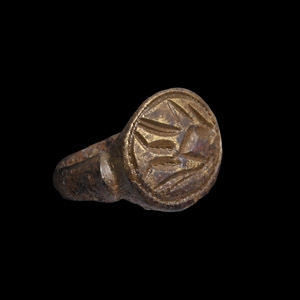
Late Roman Ring with Man Catching Fish
3rd century A.D.Sold for (Inc. bp): £70
A silvered bronze finger ring with stepped shoulders, large ellipsoid bezel with incuse ropework border and stylised figure raising a fish. 6.43 grams, 24.13 mm overall, 17.48 mm internal diameter (approximate size British O, USA 7, Europe 14.98, Japan 14)
Fine condition.
with M. Labarbe, Toulouse, France, 27 November 2011, lot 228. Property of a London gentleman
