
Loading, please wait...
LOT 0654
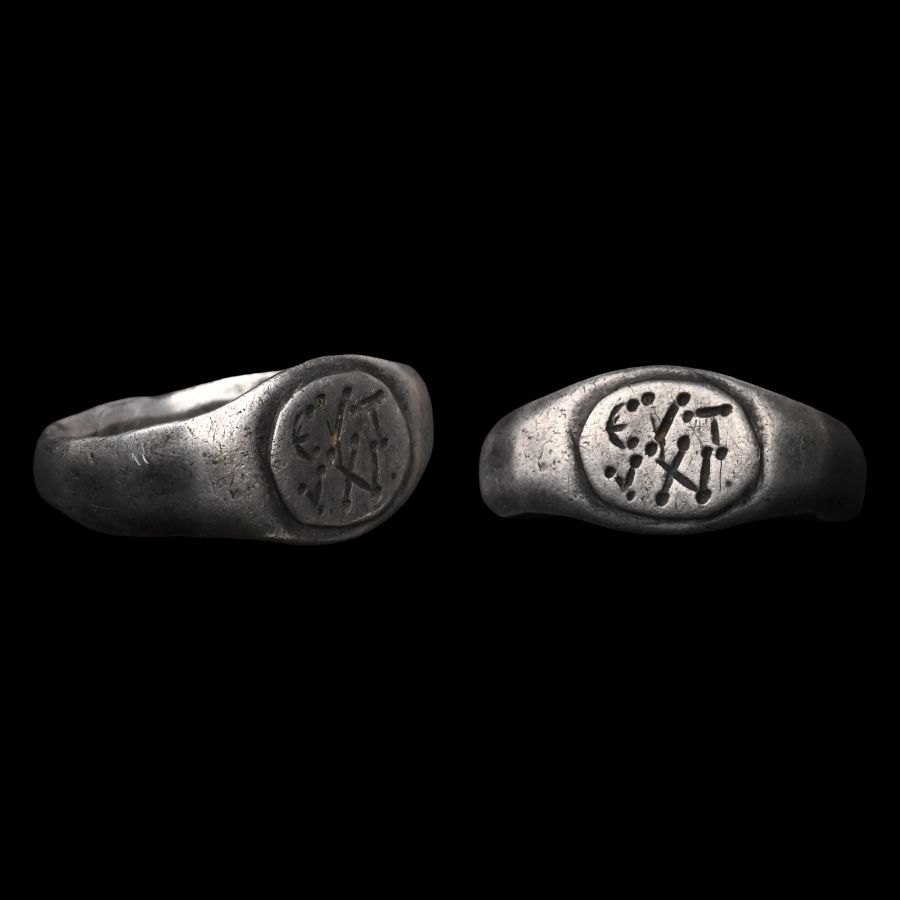
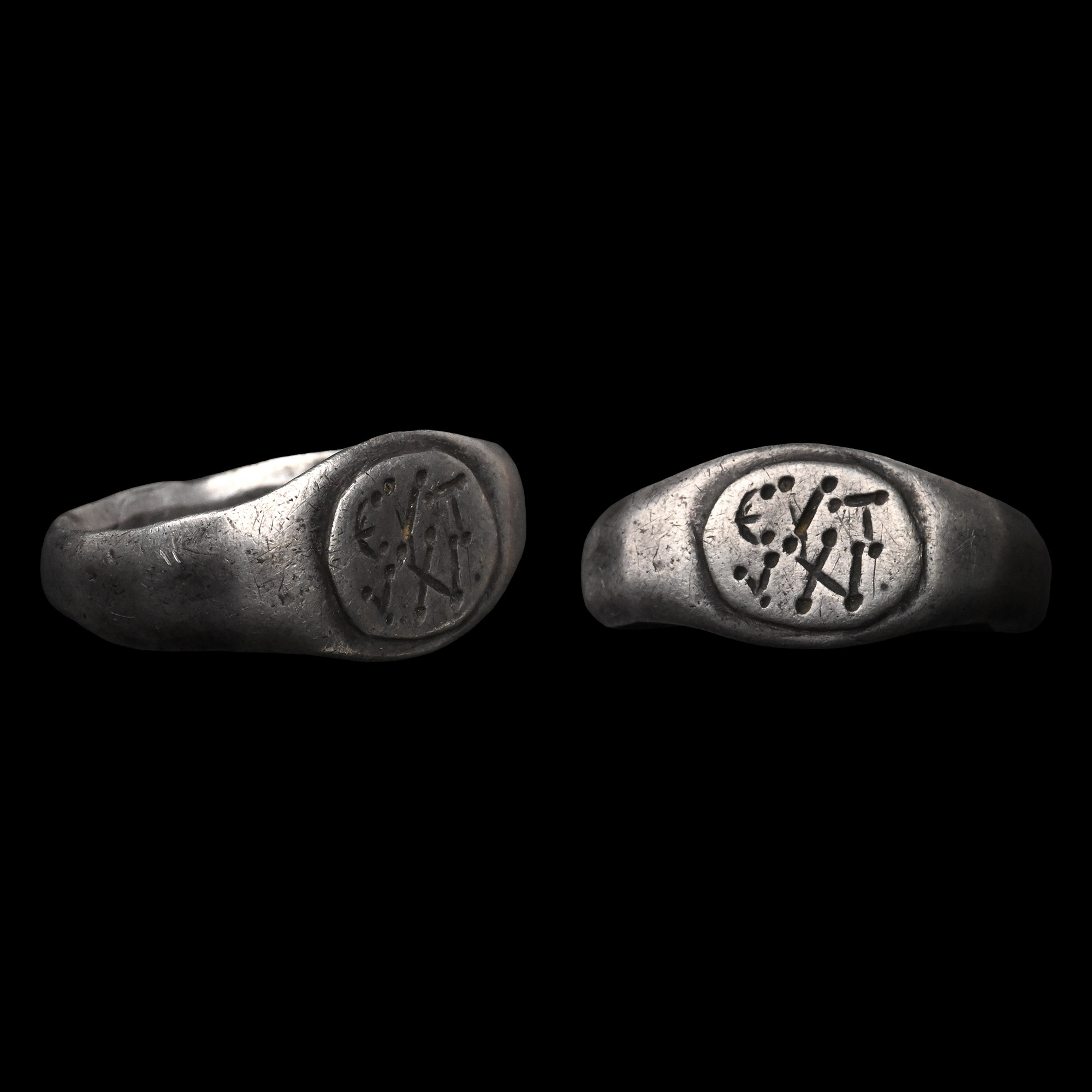
Roman Silver Ring with Inscription
1ST CENTURY A.D.
3/4 in. (2.63 grams, 18.62 mm overall, 15.21 mm internal diameter (approximate size British F, USA 2 3/4, Europe 3.67, Japan 3)).
With broad plaque, incised border to the raised bezel, incised legend 'EVTVN', each line ending with an impressed point; small size suitable for a child. [No Reserve]
ProvenanceFrom the collection of a gentleman, acquired on the London art market in the 1990s.
LiteratureCf. Chadour, A.B., Rings. The Alice and Louis Koch Collection, volume I, Leeds, 1994, item 232, for type.
CONDITIONTimeLine Auctions follows a vetting process to ensure the authenticity and legality of all items, reinforcing our commitment to integrity and responsible trading. Each antiquity, antique, and coin lot undergoes thorough examination by a vetting committee of at least ten external specialists, professional trade association members, scientists, and archaeologists: Our Vetting Process
AUCTIONS:
TimeLine is a leading auction house specialising in antiquities, ancient art, collectables, natural history, coins, medals, and books. Our auctions offer museums, collectors, historians, and enthusiasts the opportunity to acquire unique and historically significant pieces.
-
.jpg)
Roman Carnelian Gemstone with Panther in Gold Ring
1st-2nd century A.D. and laterSold for (Inc. bp): £4,160
Ellipsoid cabochon with intaglio scene of a panther resting with forepaws extended beside a rocky outcrop with a frond extending above, thyrsus behind the shoulders; mounted in a later gold ring; supplied with a museum-quality impression. 13.72 grams, 33.34 mm overall, 16.97 mm internal diameter (approximate size British M 1/2, USA 6 1/4, Europe 13.09, Japan 12)
From the private collection of a European gentleman (1942-2024), formed since the 1970s. -
.jpg)
Roman Jasper Gemstone with Advancing Figure
2nd-3rd century A.D.Sold for (Inc. bp): £78
With intaglio advancing figure with bow, arrow loosed; supplied with a museum-quality impression. 0.28 grams, 10.24 mm
From the private collection of a European gentleman (1942-2024), formed since the 1970s. -
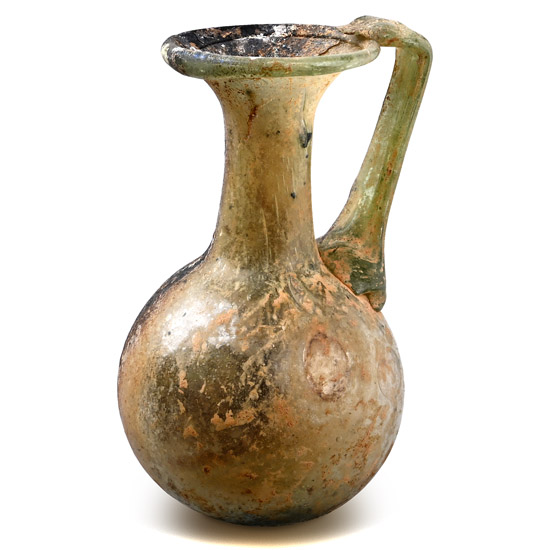
Roman Blown Glass Jug
2nd-4th century A.D.Estimate: £250 - 350 (‡+bp*)
Opening Bid: £125
Bulbous body and rounded underside, long neck, trumpet-shaped mouth with applied rim, applied strap handle with ribbing. 40 grams, 96 mm
Acquired in the 1992. Private collection, Switzerland, thence by descent. Private collection, since the late 1990s.
Roman glass from the 2nd to 4th century A.D. gives a fascinating insight into everyday life in the Roman Empire. By this time, glassmaking had become highly skilled, and glass vessels were being produced on a much larger scale than before. Thanks to the development of glassblowing, makers were able to create practical as well as attractive objects such as bottles, flasks, jars, and drinking vessels. Much of the glass from this period has a soft blue-green tint, caused by natural elements in the raw materials. Although some pieces were finely decorated, many were made for ordinary daily use, showing how glass had become far more common and accessible across Roman society.
