
Loading, please wait...
_900x900.jpg "Roman Silver Ring with Horse Gemstone")
_200x200.jpg "Roman Silver Ring with Horse Gemstone")
.jpg "Roman Silver Ring with Horse Gemstone")
LOT 0914
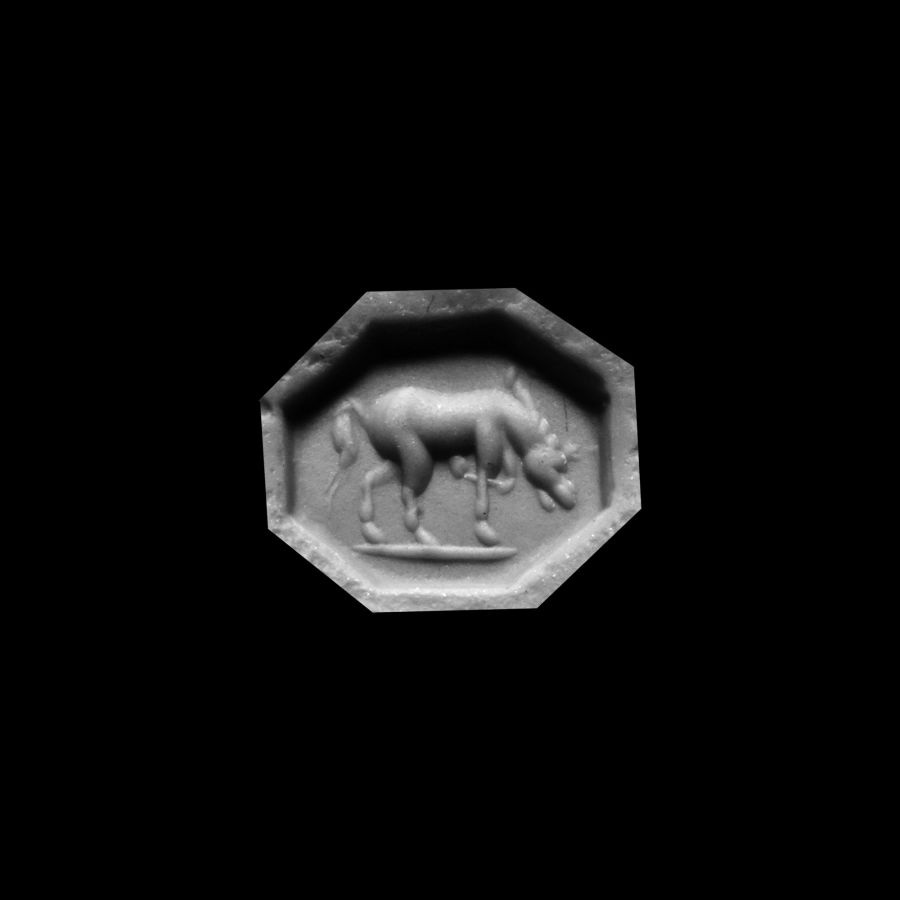
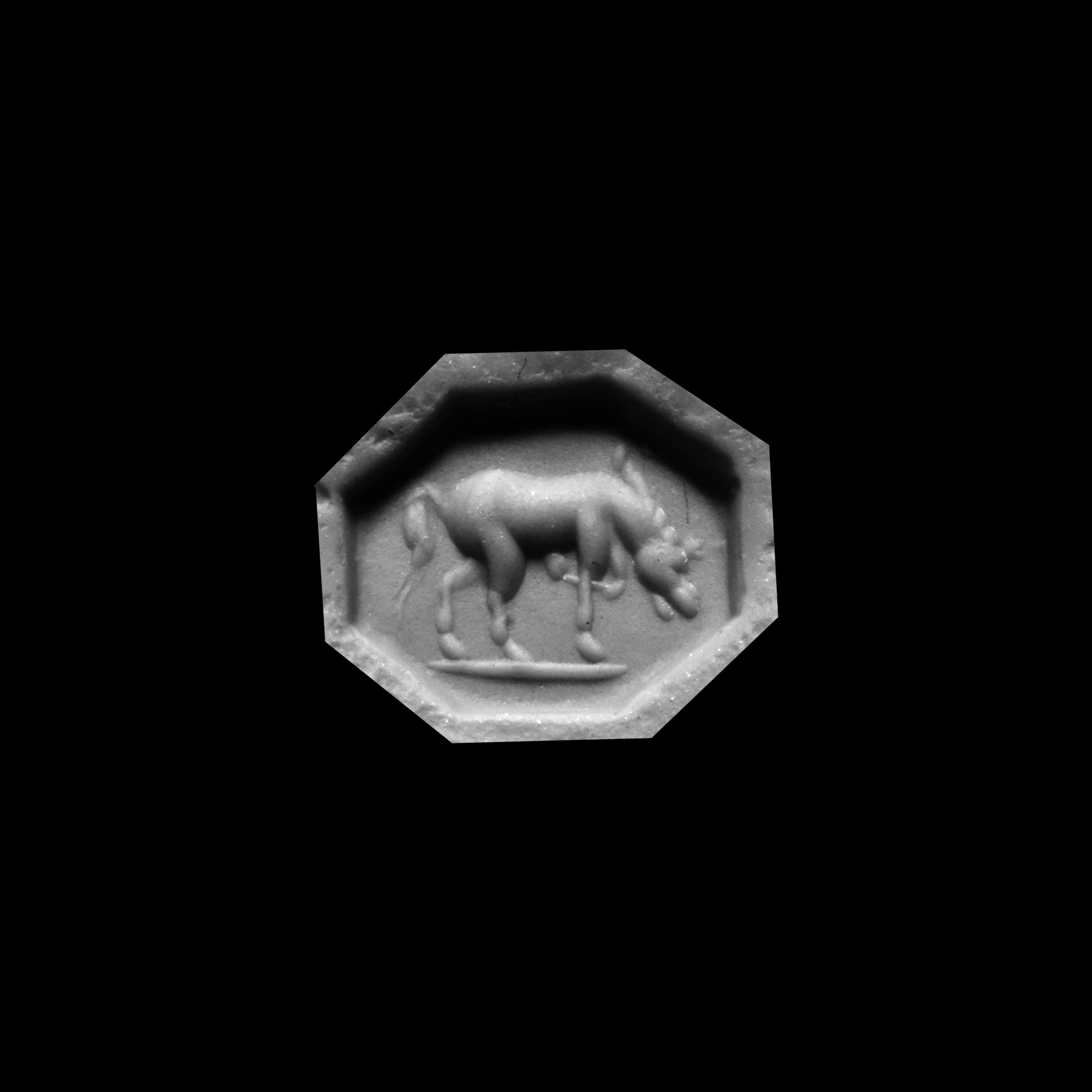
Roman Silver Ring with Horse Gemstone
CIRCA 2ND-3RD CENTURY A.D.
1 in. (8.55 grams, 23.94 mm overall, 15.43 mm internal diameter (approximate size British E 1/2, USA 2 1/2, Europe 3, Japan 3)).
Hoop with rounded shoulders set with jasper intaglio of a horse advancing on a baseline; supplied with a museum-quality impression.
ProvenanceUK private collection since 1956.
Formed in the 1950s by Mr and Mrs S. Broukal, thence by descent.
Private collection, England.
Cf. Chadour, A.B., Rings. The Alice and Louis Koch Collection, volume I, Leeds, 1994, item 268, for type.
CONDITIONTimeLine Auctions follows a vetting process to ensure the authenticity and legality of all items, reinforcing our commitment to integrity and responsible trading. Each antiquity, antique, and coin lot undergoes thorough examination by a vetting committee of at least ten external specialists, professional trade association members, scientists, and archaeologists: Our Vetting Process
AUCTIONS:
TimeLine is a leading auction house specialising in antiquities, ancient art, collectables, natural history, coins, medals, and books. Our auctions offer museums, collectors, historians, and enthusiasts the opportunity to acquire unique and historically significant pieces.
-
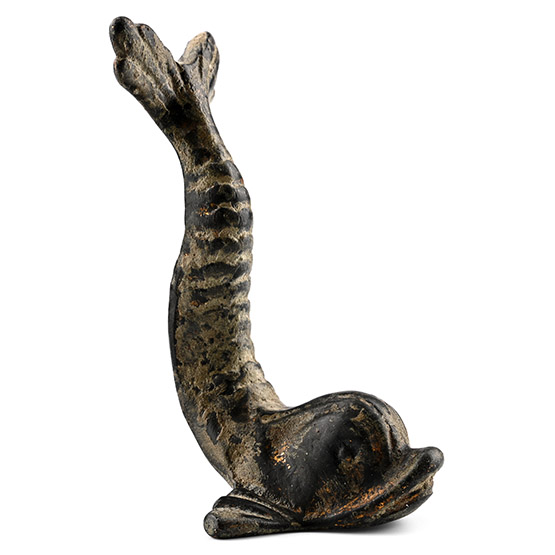
Large Roman Bronze Dolphin Mount
1st-4th century A.D.Sold for (Inc. bp): £494
Hollow to the reverse, formed as a dolphin with body and tail raised, lateral fins flared. 101 grams, 90 mm
Ex German art market, 2000s. Acquired from an EU collector living in London. From the collection of a Surrey, UK, gentleman. -
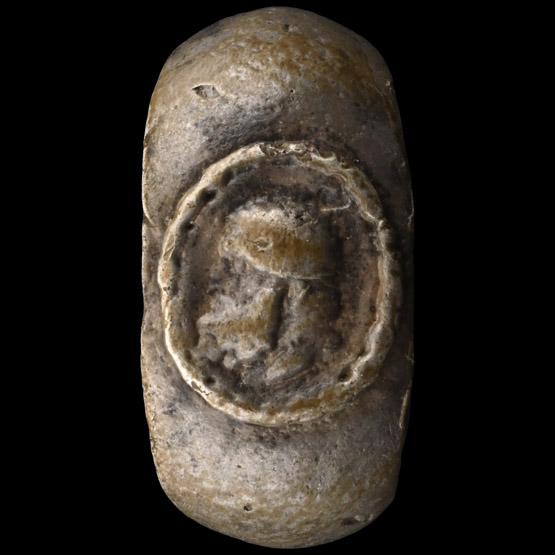
Roman Silver Ring with Hercules
2nd-3rd century A.D.Sold for (Inc. bp): £130
With broad shoulders, raised ellipsoid bezel with low-relief profile bust. 8.61 grams, 25.95 mm overall, 20.73 mm internal diameter (approximate size British J 1/2, USA 5, Europe 9.32, Japan 9)
Ex German art market, 2000s. Acquired from an EU collector living in London. From the collection of a Surrey, UK, gentleman. -
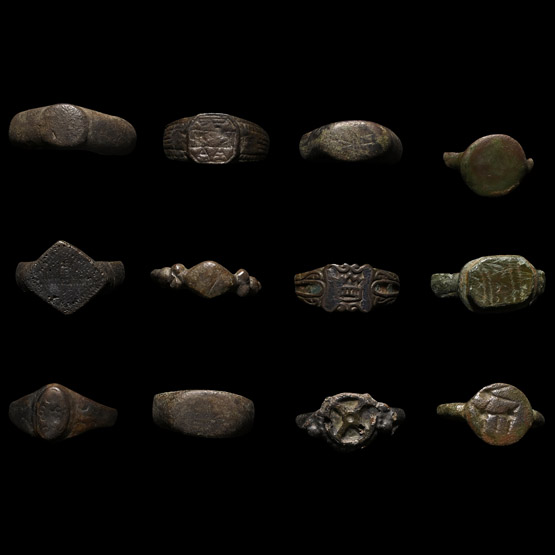
Roman to Post Medieval Bronze Ring Collection
1st-18th century A.D.Sold for (Inc. bp): £312
Including lozenge bezel with tremolier design, disc bezel with reserved wheel-cross and other types. 60 grams total, 21-28 mm
Ex German art market, 2000s. Acquired from an EU collector living in London. From the collection of a Surrey, UK, gentleman.
