
Loading, please wait...
LOT 0770
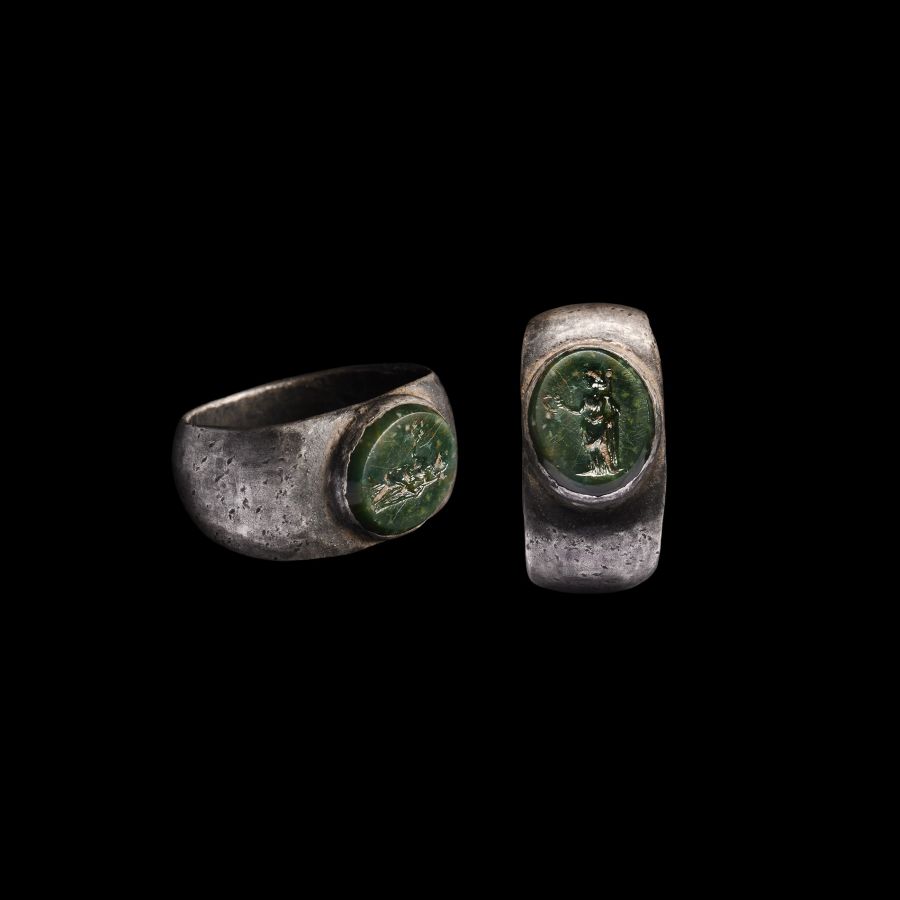
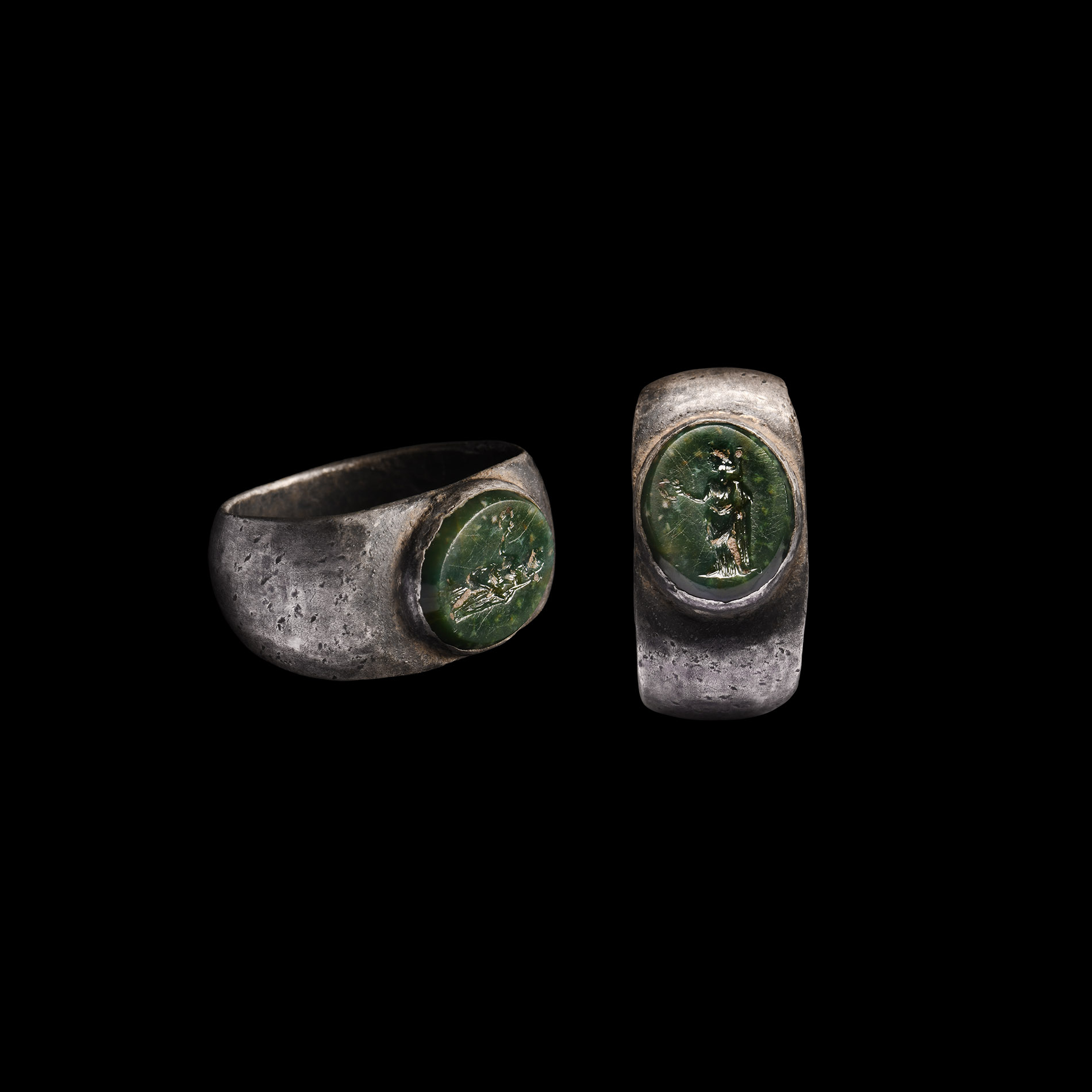
Roman Silver Ring with Goddess Gemstone
2ND-3RD CENTURY A.D. OR LATER
1 in. (8.43 grams, 23.53 mm overall, 19.80 mm internal diameter (approximate size British M 1/2, USA 6 1/4, Europe 13.09, Japan 12)).
A silver ring composed of a convex ellipsoid hoop, expanding at the shoulders to a raised oval bezel with collar, set with a green jasper intaglio gemstone engraved with the image of a goddess, carrying a staff and a laurel crown.
ProvenanceAcquired in the late 1990s-2000.
Property of an East London gentleman.
Cf. Ruseva-Slokoska, L., Roman Jewellery, Sofia, 1991, items 243-244, for type.
FootnotesThe ring presents similarities with the type II, variant 1 of the Ruseva-Slokoska classification. Many rings with images of divinities were found by the archaeologists as votive offerings to the divinities engraved on the bezel. It is difficult to interpret which divinity is represented in this ring, but the sceptre and the laurel crown could hint at it being Hera or Juno.
CONDITIONTimeLine Auctions follows a vetting process to ensure the authenticity and legality of all items, reinforcing our commitment to integrity and responsible trading. Each antiquity, antique, and coin lot undergoes thorough examination by a vetting committee of at least ten external specialists, professional trade association members, scientists, and archaeologists: Our Vetting Process
AUCTIONS:
TimeLine is a leading auction house specialising in antiquities, ancient art, collectables, natural history, coins, medals, and books. Our auctions offer museums, collectors, historians, and enthusiasts the opportunity to acquire unique and historically significant pieces.
-
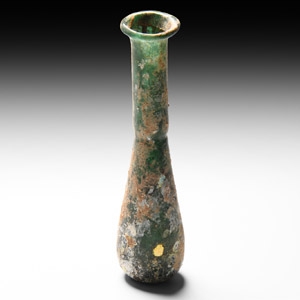
Roman Emerald Green Glass Unguentarium
2nd century A.D.Sold for (Inc. bp): £124
An emerald green glass unguentarium with a slender piriform body and tubular neck with rolled rim; iridescent surfaces. 21.3 grams, 10.1 cm
Acquired 1980-2015. Ex Abelita family collection. -
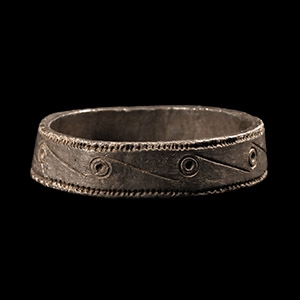
Roman Silver Ring with Wave Design
1st century B.C.-1st century A.D.Sold for (Inc. bp): £104
A silver annular band decorated with dot-in-ring motifs alternating with diagonal dashes. 6.55 grams, 27.50 mm overall, 24.10 mm internal diameter (approximate size British Z+4, USA 14 1/4, Europe 33.83, Japan 32)
Acquired before 2000. From the collection of a European gentleman living in the UK. -
.jpg)
Roman Bronze Figurine of Silenus
1st-2nd century A.D.Estimate: £3,500 - 4,500 (‡+bp*)
Opening Bid: £1,750
A bronze figure of Silenus standing nude with vine-leaf wreath on the brow, muscular physique, dressed beard and stern facial expression, holding a bunch of grapes in the left hand; accompanied by a custom-made display stand. 104 grams, 65 mm high (127 grams total, 71 mm high including stand)
Private Swiss collection, acquired 2001. This lot has been checked against the Interpol Database of stolen works of art and is accompanied by search certificate no.11621-199008.
Silenus was closely associated with the Dionysian cult. He was a deity associated with the forest, wine, drunkenness, the treading-dance of the wine press an orgiastic ritual. Whilst intoxicated, Silenus was belied to possess the power of prophecy. He helped raise the god Dionysus, son of Zeus, after he was entrusted to him by Hermes. Once, whilst travelling with Dionysus through Phrygia, Silenus was captured by king Midas who treated his captive hospitably. As a reward, Dionysus granted the king his famous 'golden touch'. The sacred animal of Silenus is the donkey, the mode of transport he often used according to Greek mythology.
