
Loading, please wait...
LOT 0206
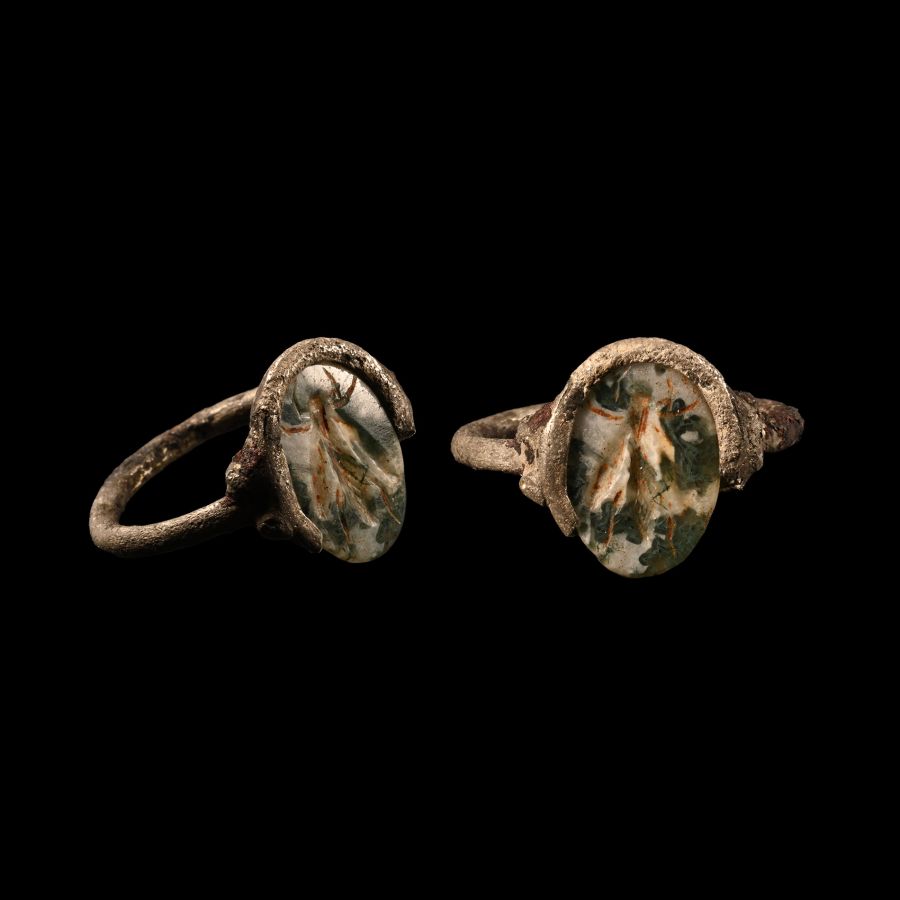
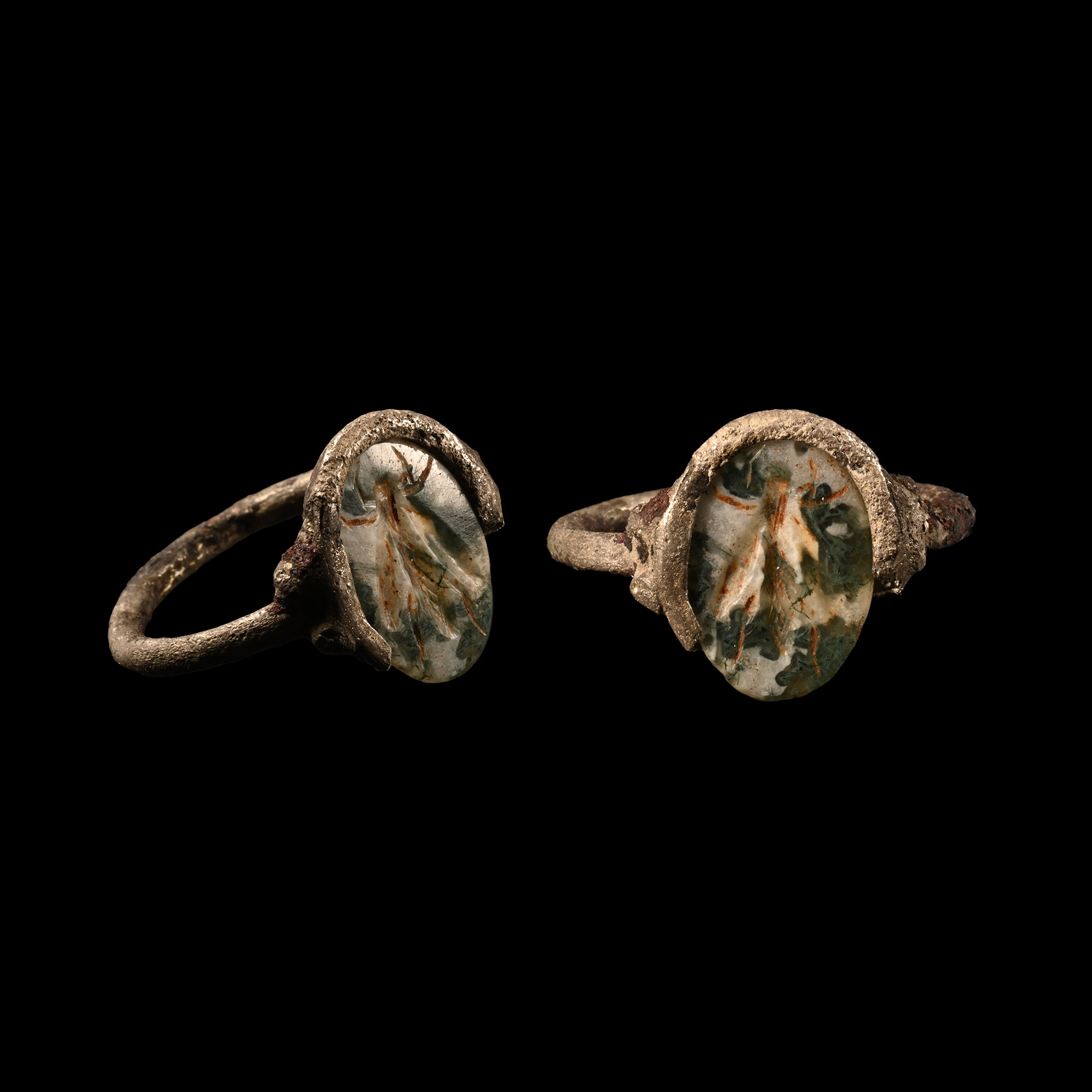
Roman Silver Ring with Fly Gemstone
3RD-4TH CENTURY A.D.
7/8 in. (3.31 grams, 23.14 mm overall, 18.48 mm internal diameter (approximate size British M 1/2, USA 6 1/4, Europe 13.09, Japan 12)).
With a round-section hoop; closed oval setting with moss agate(?) intaglio engraved with a fly with hatched abdomen.
ProvenanceAcquired 1980-2015.
Ex Abelita family collection.
TimeLine Auctions follows a vetting process to ensure the authenticity and legality of all items, reinforcing our commitment to integrity and responsible trading. Each antiquity, antique, and coin lot undergoes thorough examination by a vetting committee of at least ten external specialists, professional trade association members, scientists, and archaeologists: Our Vetting Process
AUCTIONS:
TimeLine is a leading auction house specialising in antiquities, ancient art, collectables, natural history, coins, medals, and books. Our auctions offer museums, collectors, historians, and enthusiasts the opportunity to acquire unique and historically significant pieces.
-
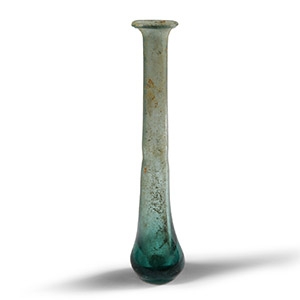
Roman Tall Green Glass Vial
Late 3rd century A.D.Estimate: £100 - 140 (+bp*)
Opening Bid: £50
Slightly bulbous with flat base, tall narrow piriform neck, splayed rim with an in-folded lip. 60 grams, 15 cm high
Acquired 1980-2015. Ex Abelita family collection.
During the early Roman period the glass-making techniques used by the Greeks were continued. Much of the glass was buried and as a result acquired an attractive lustrous patination. Roman glass became a medium for the promotion of the emperor and Imperial propaganda, as well as being used as container for various uses. Glass blowing, a new technique, meant that quantities of identical bottles could be produced. -
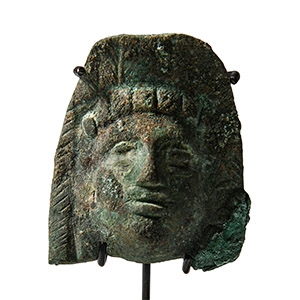
Roman Bronze Actor's Mask Appliqué
Circa 1st-2nd century A.D.Sold for (Inc. bp): £195
With D-shaped flange surrounding the face in place of braided hair, small female face with fleshy features, eyes recessed to accept silver insert; mounted on a custom-made stand. 280 grams total, 88 mm high including stand
Ex P.A., Hertfordshire, UK, specialist collection of Greek art, 1980-1990s. -
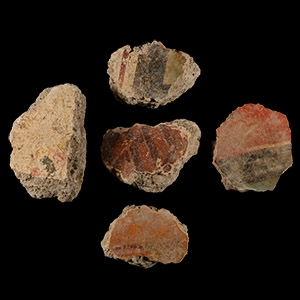
Roman Fresco Painted Wall Plaster Collection
1st century A.D.Sold for (Inc. bp): £130
Comprising five pieces in cream, orange, blue and red with painted architectural lines; one with floral decoration and one with a shaded 'grid' making it look three-dimensional. 622 grams total, 73 - 98 mm
Acquired in the 19th century. Ex Jeger collection, Switzerland.
