
Loading, please wait...
LOT 0652
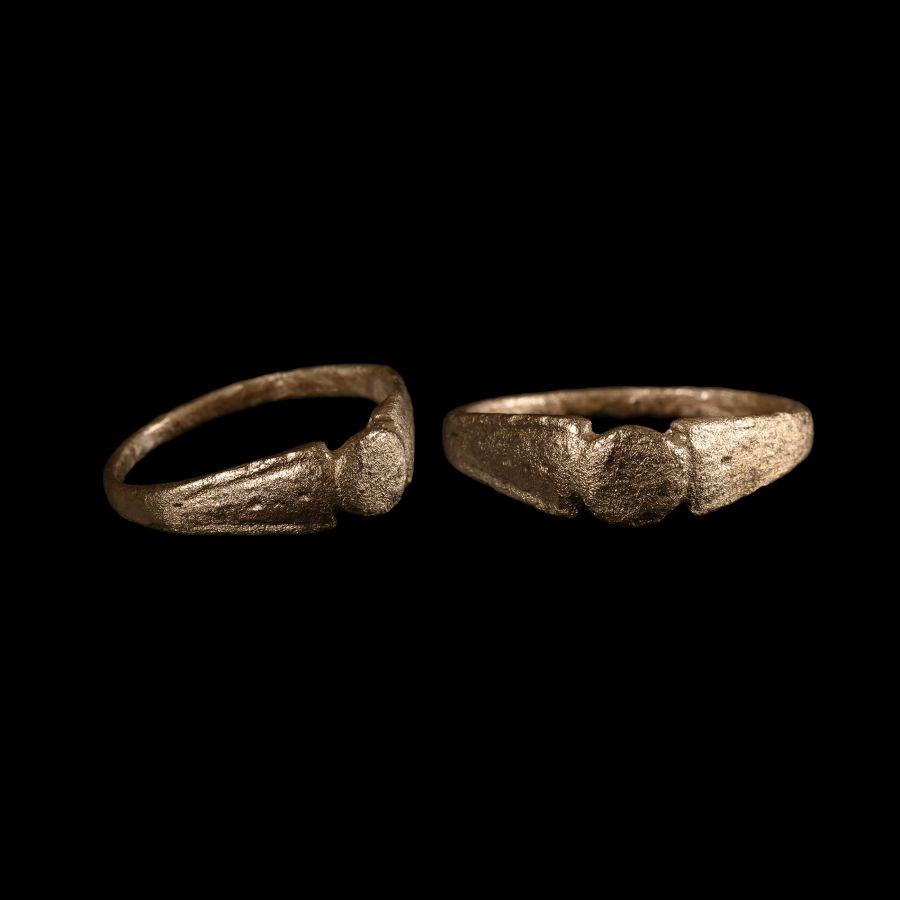
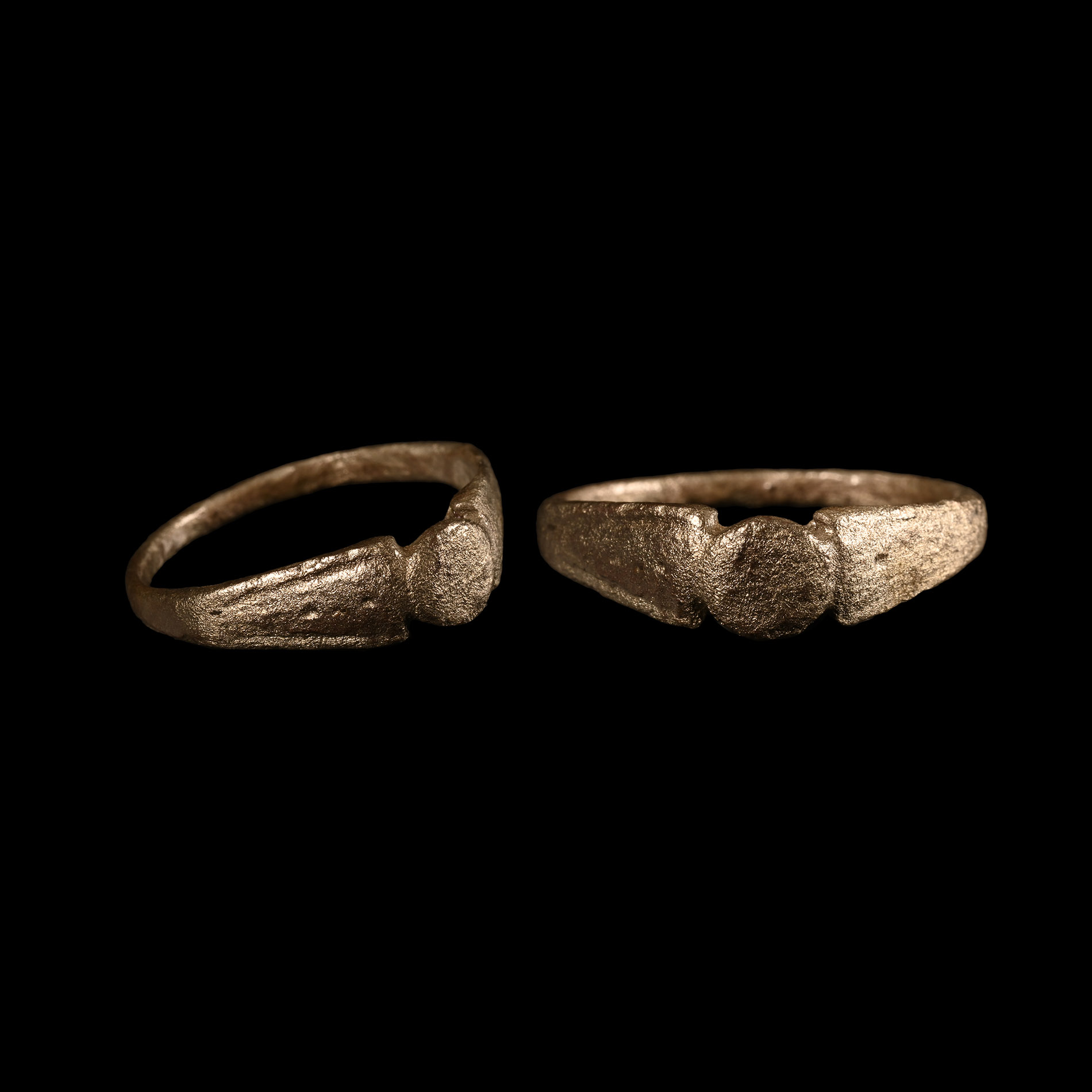
Roman Silver Ring with Expanding Shoulders
1ST-4TH CENTURY A.D.
3/4 in. (1.43 grams, 19.68 mm overall, 17.15 mm internal diameter (approximate size British M, USA 6, Europe 12.46, Japan 12)).
With a D-section hoop; angular, expanding shoulders with pellet decoration supporting a round bezel. [No Reserve]
ProvenanceAcquired in the 1980s-1990s.
Property of a Nottinghamshire gentleman.
TimeLine Auctions follows a vetting process to ensure the authenticity and legality of all items, reinforcing our commitment to integrity and responsible trading. Each antiquity, antique, and coin lot undergoes thorough examination by a vetting committee of at least ten external specialists, professional trade association members, scientists, and archaeologists: Our Vetting Process
AUCTIONS:
TimeLine is a leading auction house specialising in antiquities, ancient art, collectables, natural history, coins, medals, and books. Our auctions offer museums, collectors, historians, and enthusiasts the opportunity to acquire unique and historically significant pieces.
-
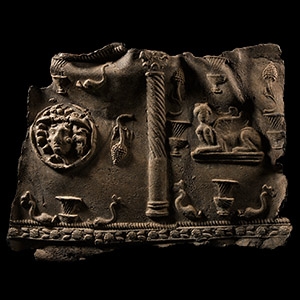
Roman Lead Sarcophagus Panel with Sphinxes, Dolphins and Masks of Medusa
2nd-3rd century A.D.Sold for (Inc. bp): £4,420
Decorated with a high-relief pattern comprising sphinxes, dolphins and masks of Medusa in fields between columns; ropework and floral border strips with laurel leaves. 6.4 kg, 41 cm wide
From a West Sussex, UK, collection, 1990s.
There were many ways of burying bodies during the Roman Empire. Although the majority were buried without coffins, there is evidence for wooden coffins, lead-framed wooden coffins, tile burials and lead and stone coffins. This item belongs to types widespread in the Eastern Mediterranean. The panel is decorated with a columned structure, and within each section are symbols of the outer-world, including gorgons, sphinx and dolphins. The sphinx, having a human head and breasts, legs and paws of a lion, and wings of a bird, was generally associated with protecting imperial tombs and temples. The roundels featuring the head of Medusa, known for her potent gazes that could turn one to stone, was favoured on sarcophagi and architectural ornaments because it was believed that her image would protect those within. The dolphin was considered to ferry the souls of the dead to the afterlife. Very often these sarcophagi were connected by a pipe to the ground above so that mourners could pour in offerings into the grave. -
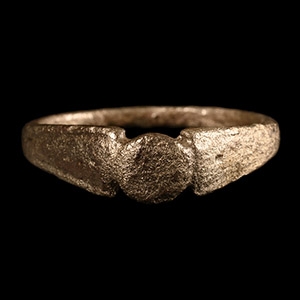
Roman Silver Ring with Expanding Shoulders
1st-4th century A.D.Sold for (Inc. bp): £33
With a D-section hoop; angular, expanding shoulders with pellet decoration supporting a round bezel. 1.43 grams, 19.68 mm overall, 17.15 mm internal diameter (approximate size British M, USA 6, Europe 12.46, Japan 12)
Acquired in the 1980s-1990s. Property of a Nottinghamshire gentleman. -
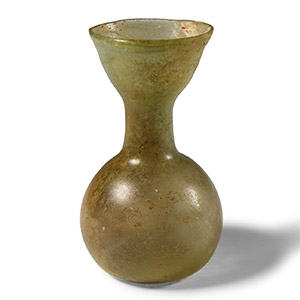
Roman Pale Green Glass Vessel
4th-5th century A.D.Sold for (Inc. bp): £117
In yellow-greenish translucent glass, globular body with flaring funnel neck, dimpled base. 26.8 grams, 87 mm high
Acquired 1980-2015. Ex Abelita family collection.
The type was popular in the late Roman period, especially in the east. Its characteristic trait is an oval body, convex base and a neck with a funnel-like upper part.
