
Loading, please wait...
_900x900.jpg "Roman Silver Ring with Early Christian Gemstone")
_200x200.jpg "Roman Silver Ring with Early Christian Gemstone")
.jpg "Roman Silver Ring with Early Christian Gemstone")
LOT 0896
Roman Silver Ring with Early Christian Gemstone
4TH-6TH CENTURY A.D.
3/4 in. (9.18 grams, 21.91 mm overall, 18.68 mm internal diameter (approximate size British O 1/2, USA 7 1/4, Europe 15.61, Japan 15)).
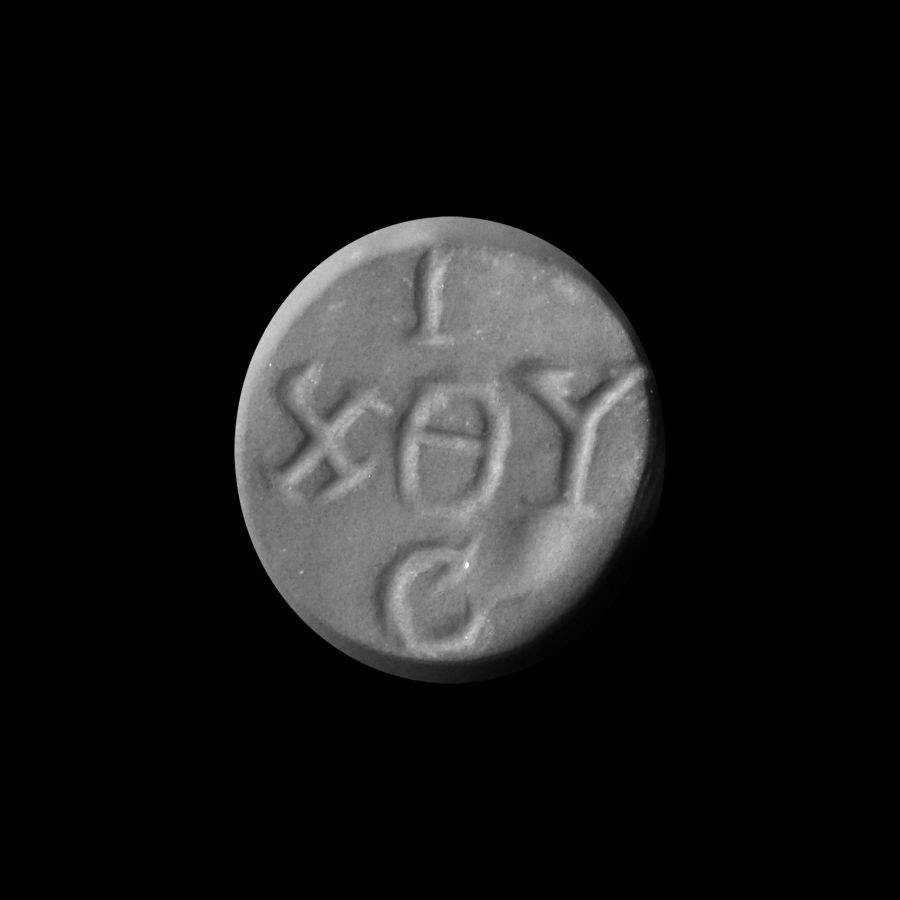
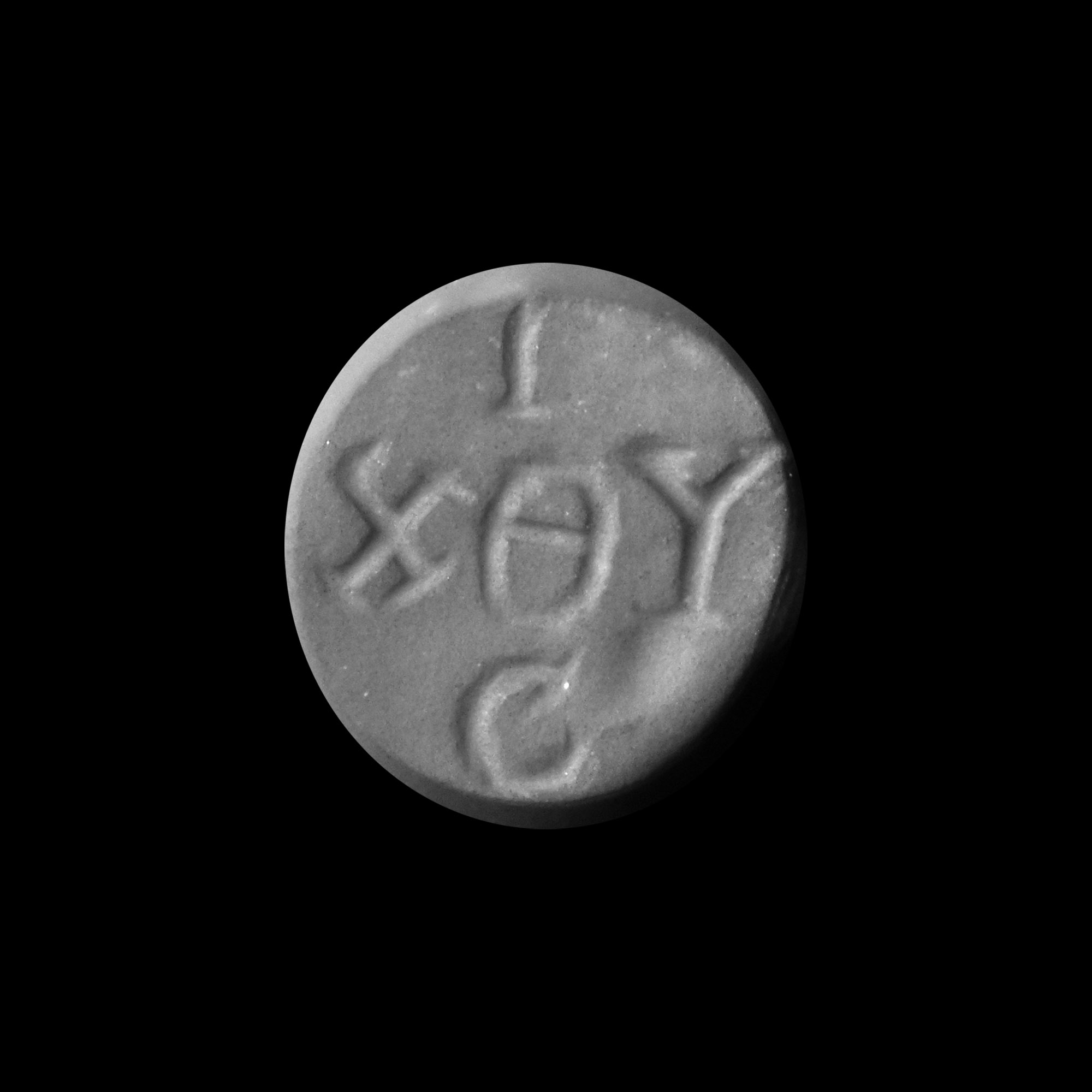
D-section hoop, elliptical in plan, with raised oval bezel set with a jasper intaglio engraved with inverted Greek inscription 'IXΘYC' (ichthys, meaning 'fish"), a Greek acronym for 'Jesus Christ, Son of God; supplied with a museum-quality impression.
ProvenancePrivate collector, acquired in the early 1990s.
Private collection, England.
See Marshall, F. H., Catalogue of the Finger Rings, Greek, Etruscan and Roman in the Departments of Antiquities, British Museum London, 1968, pl.XXIX, no.11, for a similar example.
FootnotesThe term ichthys is the equivalent of the ancient Greek: ixθus, ichthýs ('fish'), used by early Christians to refer to Jesus Christ. For this reason, the fish symbol was very common in the catacombs of Rome. In particular, the ichthys is one of the oldest Christian symbols that has come down to us. Used covertly by Christians to mask their faith from Roman persecutors, when a Christian encountered a stranger whose loyalty he needed to know, he would draw one of the arches that make up the ichthys in the sand. If the stranger completed the sign, the two individuals recognised each other as followers of Christ. The symbol was also drawn on the doors of the houses of Christian families. Its use spread in the 3rd century to personal effects such as the ring offered here.
CONDITIONTimeLine Auctions follows a vetting process to ensure the authenticity and legality of all items, reinforcing our commitment to integrity and responsible trading. Each antiquity, antique, and coin lot undergoes thorough examination by a vetting committee of at least ten external specialists, professional trade association members, scientists, and archaeologists: Our Vetting Process
AUCTIONS:
TimeLine is a leading auction house specialising in antiquities, ancient art, collectables, natural history, coins, medals, and books. Our auctions offer museums, collectors, historians, and enthusiasts the opportunity to acquire unique and historically significant pieces.
-
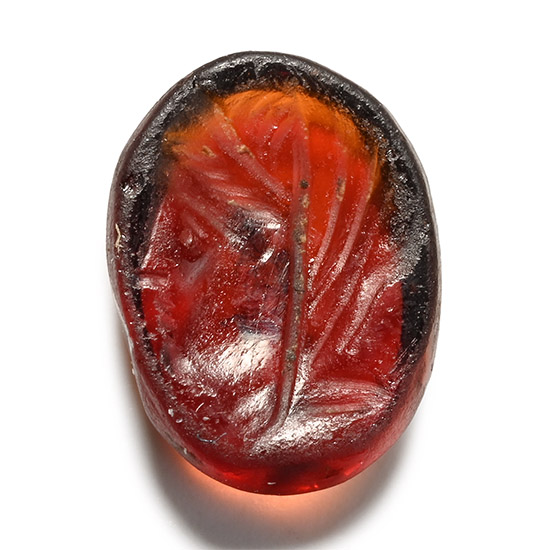
Graeco-Roman Garnet Gemstone with Veiled Head of a Queen
3rd-2nd century B.C.Sold for (Inc. bp): £585
Finely-cut profile bust of a woman with palla folded over her head and neck; possibly Ptolemaic; supplied with a museum-quality impression. 0.36 grams, 9 mm
Private English collection, formed between the late 1970s and early 1990s. Private collection, London, UK. -
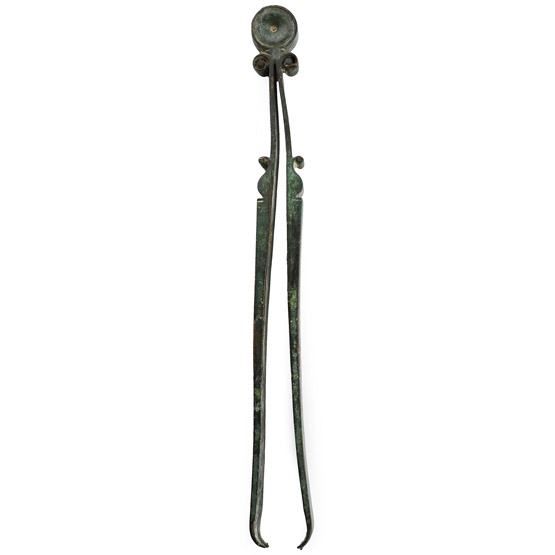
Roman Bronze Serrated Medical Forceps
1st-2nd century A.D.Sold for (Inc. bp): £286
With long rectangular-section arms serrated at the end, finial formed as a disc with scroll decoration; accompanied by a slip reading 'Roman, Decorated Bronze Forceps, C. 1st-2nd century AD. Large, finely decorated pair of bronze forceps, with long, slightly expanding arms & serrated grips, indicating it may have been used as a medical instrument. Provenance: O'Bee Collection, acquired in the 1980's & believed to have been found in East Anglia. Published in Bennets R-22-0106, pg 232. ref. Similar example in Metropolitan Museum of Art, no: 74.51.5435.' 46 grams, 14.2 cm
Believed found in East Anglia, UK. Ex M. O'Bee collection; acquired in the 1980s. Ex Noonans, London, UK. Accompanied by a previous catalogue information slip. -
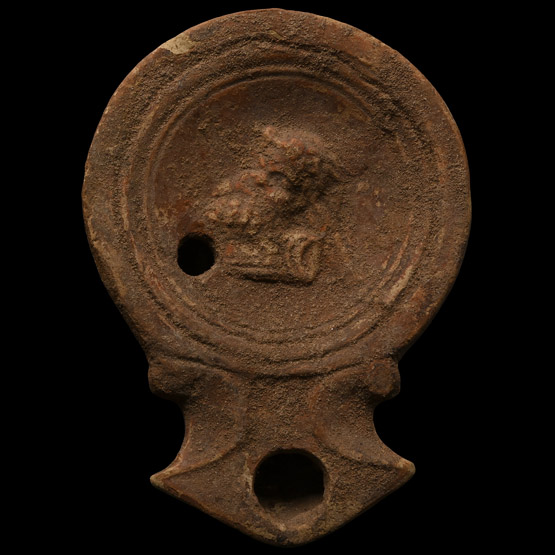
Roman Terracotta Oil Lamp with Bacchus
1st century A.D.Sold for (Inc. bp): £572
Broad discoid body and volute scroll flanking the nozzle; discus with a bearded male bust with a crown of ivy leaves. 45 grams, 94 mm
From the Lloyd and Jeanne Raport collection, Washington, D.C. and Florida, USA, formed between 1972-2000. Acquired through Bonhams, London, UK.
