
Loading, please wait...
LOT 0790
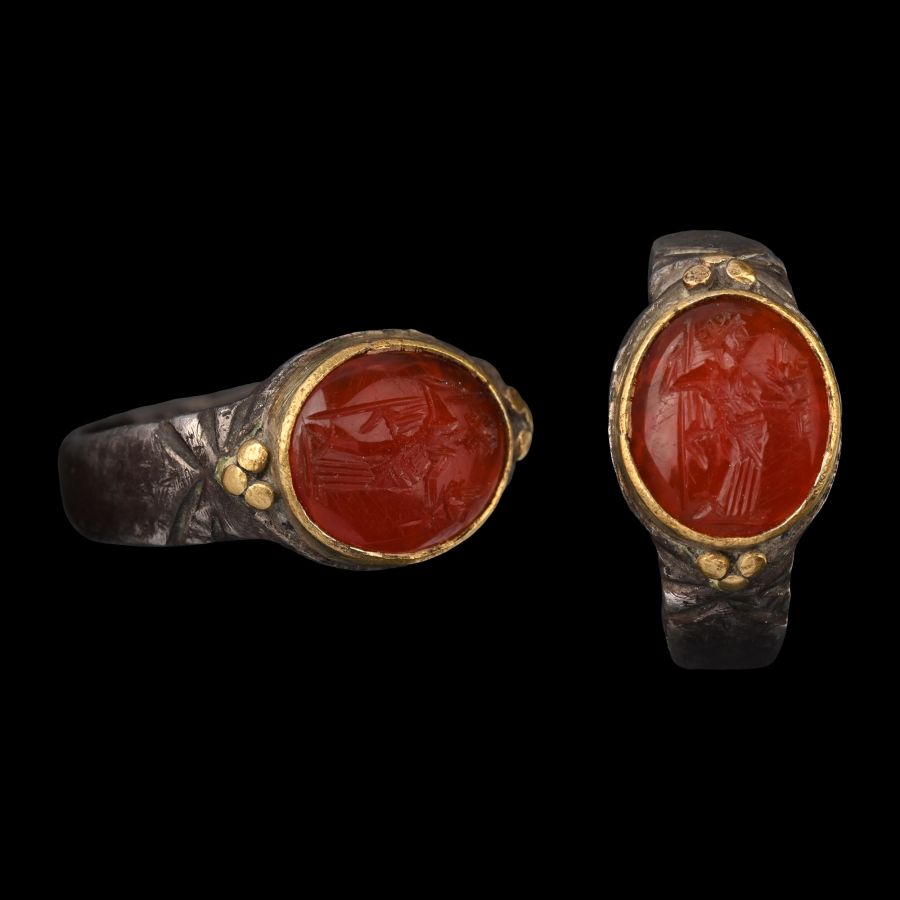
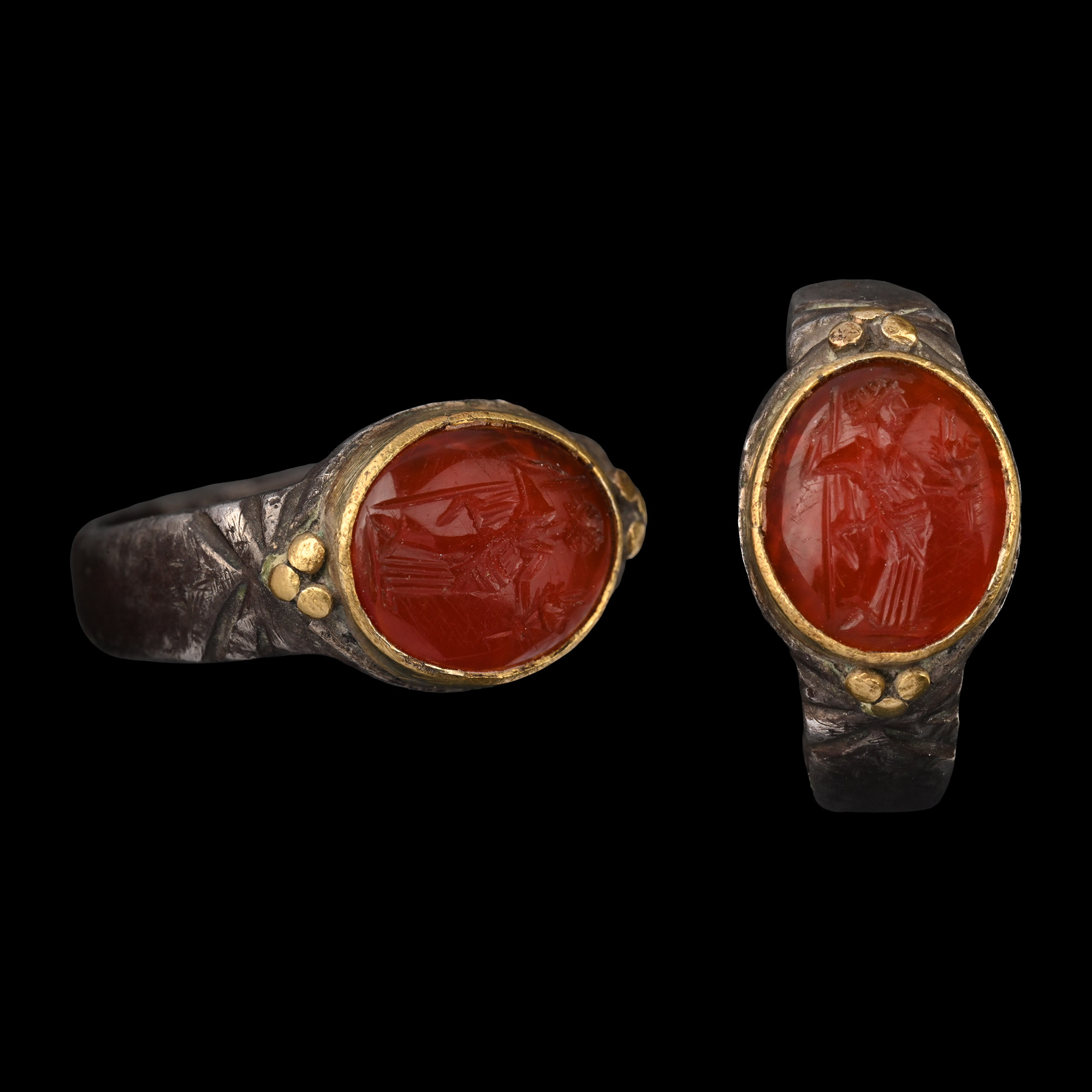
Roman Silver Ring with Carnelian Minerva Gemstone
2ND-3RD CENTURY A.D.
1 in. (4.65 grams, 23.29 mm overall, 17.38 mm internal diameter (approximate size British N 1/2, USA 6 3/4, Europe 14.35, Japan 13)).
With narrow shank, plano-convex section, and incised saltires to the outer face, gilt cell to the bezel with granule clusters, inset intaglio of Minerva standing with spear and cornucopia. [No Reserve]
ProvenanceAcquired on the UK art market before 2000.
Property of an Essex, UK, gentleman.
This lot is accompanied by an illustrated lot declaration signed by the Head of the Antiquities Department, Dr Raffaele D'Amato.
TimeLine Auctions follows a vetting process to ensure the authenticity and legality of all items, reinforcing our commitment to integrity and responsible trading. Each antiquity, antique, and coin lot undergoes thorough examination by a vetting committee of at least ten external specialists, professional trade association members, scientists, and archaeologists: Our Vetting Process
AUCTIONS:
TimeLine is a leading auction house specialising in antiquities, ancient art, collectables, natural history, coins, medals, and books. Our auctions offer museums, collectors, historians, and enthusiasts the opportunity to acquire unique and historically significant pieces.
-
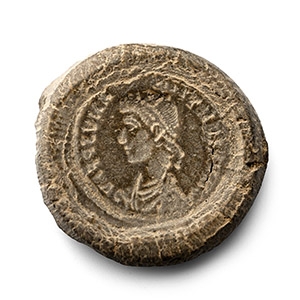
Terracotta Forger's Casting Mould
4th century A.D.Sold for (Inc. bp): £364
Discoid clay mould with impressed design of a coin to each face. 3.46 grams, 24 mm
From the collection of a gentleman, acquired on the London art market in the 1990s. This lot is accompanied by an illustrated lot declaration signed by the Head of the Antiquities Department, Dr Raffaele D'Amato. -
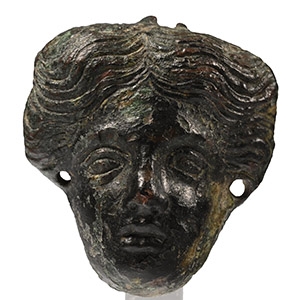
Roman Bronze Female Head Applique
2nd-3rd century A.D.Sold for (Inc. bp): £124
Forehead framed by long centrally parted wavy tresses, almond-shaped eyes with pronounced lids, ears pierced for attachment, smoothed back, remains of suspension loop on top of head; mounted on a custom-made display stand. 25.3 grams total, 61 mm including stand
Ex V.R., Basel, prior to 2000. Accompanied by a copy of an Art Loss Register certificate no.S00034415. This lot is accompanied by an illustrated lot declaration signed by the Head of the Antiquities Department, Dr Raffaele D’Amato. This lot is accompanied by an illustrated lot declaration signed by the Head of the Antiquities Department, Dr Raffaele D'Amato. -
.jpg)
Roman Gold Boat-Shaped Earring Pair
1st-3rd century A.D.Sold for (Inc. bp): £520
Matched pair, each a hollow-formed crescent with filigree closure, cluster of hollow granules to the underside. 5.06 grams total, 28-29 mm
Acquired in the 1994. Private collection, Switzerland, thence by descent. Private collection, since the late 1990s. This lot is accompanied by an illustrated lot declaration signed by the Head of the Antiquities Department, Dr Raffaele D'Amato.
